
Author: empower

  • A Restoration Project of the Deacon Ministry

    A Restoration Project of the Deacon Ministry

    Dr. Wesley has drawn the blueprint for a restoration project of the deacon ministry. Cutting through ministry walls decayed by time and tradition, personality and preference, The Seven restores God’s original design for this servant office. Grounded in Scripture, supported through the testimonies of godly men, this valuable resource will bless new and seasoned ministers, as well as laity, for many years to come.

    Dr. Brian E. Nall, Executive Director
    Pensacola Bay Baptist Association
  • I Run Out to Meet Him!

    I Run Out to Meet Him!

    A trumpet is sounding, I see a bright cloud,
    I hear a great shout, and it’s loud!
    And lightning is filling the sky up above,
    And now I can see Him, my Love!
    My eyes fill with tears, and my heart beats so fast –
    I’ve prayed for this day, and it’s here at last!
    I run out to meet Him, I don’t look around,
    But look at my feet! They are leaving the ground!
    And wonder is filling up all of my soul,
    As the King’s coming closer – BEHOLD!
    I see others above me in robes of pure white –
    He snatches us upward, His presence so bright.
    Those in the graves He allowed to go first,
    My parents, my husband! My heart almost bursts!
    When we’re past the danger, His wrath is poured out,
    The wicked are judged, and saved are the devout.
    I’m singing a new song and given a new name,
    I see all my loved ones, they don’t look the same!
    Their faces are glowing, they arrived ahead of me.
    We’ve left all our cares, and now we are free!
    We’re given gold crowns, and we fall to our knees
    And cast our crowns at His feet – He is pleased.
    Then He shows us the place He’s prepared for us!
    But I’ve got to write this down! I must!
    It was only a dream, but it still is true!
    One day He will come right out of the blue!

    By Nancy Petrey ~ April 16, 2019

  • When Someone Helps the Pastor

    When Someone Helps the Pastor

    When someone helps the pastor,
    THE CHURCH GROWS,
    THE WORD GROWS,
    and THE LEADERS GROW!

    Lonnie Davis Wesley, III, The Seven: Taking a Closer Look at What It Means to Be a Deacon, p. 81
    People are sitting in the church during mass and empty space for text
  • Office Stock Special – Books by Bruce Epperly

    Office Stock Special – Books by Bruce Epperly

    In our office stock special, there are a number of books by Bruce Epperly. No, these are not going out of print, but we normally use print-on-demand, and we have some extra copies right here in our office. So until February 11, 2023, they are available at 50% off.

  • Updated Release Date for The Byzantine Text-Type & New Testament Textual Criticism

    Updated Release Date for The Byzantine Text-Type & New Testament Textual Criticism

    Updated!

    Due to some delays in processing this book for reprint, we are updating the release date from March 11, 2022 to April 8, 2022. Pre-order pricing will remain in place until we are actually shipping books to customers.

    Well, we have had some trouble with this, and so are slipping this again to May 5, 2022. I have received the scans from the reprint pages and am just waiting for some final endorsements to come in. If we have books prior to May 5, we’ll ship, and we’ll hold the pre-order price until then.

    We are looking forward to sharing this important title with our readers.

    You can go to the catalog page to pre-order a copy at the discounted price.

  • Preface to The Byzantine Text-Type & New Testament Textual Criticism

    Preface to The Byzantine Text-Type & New Testament Textual Criticism

    The following preface was prepared for this reprint edition by Dr. David Alan Black.

    Preface

    Most people know that my views about New Testament textual criticism have been greatly influenced by my former colleague in the Greek Department at Biola University, Prof. Harry Sturz. Sturz’s 1976 dissertation (Th.D. Grace Theological Seminary) was published as The Byzantine Text-Type & New Testament Textual Criticism.

    It is masterful work. It was written by a scholar for scholars. And it’s a reminder of just how unpredictable scholarship can be at times. Just when the coaches thought they had their players set up for an off tackle thrust, someone seizes the ball and carries it on a wide sweep around end. This is precisely what happened when Harry Sturz published his book.

    In textual criticism, one enters a discipline that is as much art as it is science, so that what is all too clear to one scholar may be opaque to another. I have known some scholars who also took Harry Sturz’s textual criticism class at Biola and who, for a time, were convinced of the correctness of his views, only to leave the Sturzian fold and return to the camp of the Critical Text — much to the joy, I surmise, of the coaching staff.

    I have never changed my mind.

    Harry Sturz had no personal axe to grind. He neither hoped for nor expected any professional advantages from his work on the Byzantine text. He had been a student of E. C. Colwell when the latter was still teaching at Claremont Graduate School in Southern California. Like Colwell, Sturz always presented his views in a scholarly yet humble way. His work was not a revelation from Mount Sinai but the considered judgment of an intelligent, hardworking scholar. As one reviewer, writing in Novum Testamentum (28.3 [1986] 282-83), has put it:

    Sturz’s book is a carefully documented and painstakingly argued thesis which demonstrates that Westcott and Hort (= WH) were wrong to dismiss the validity of the Byzantine text-type as a legitimate claimant alongside the other text-types to possess the original text.

    Much to his credit, Sturz had the temerity to challenge the status quo and to take up the cudgels of the primary data in search of the truth. His views were (and still are) diametrically opposed to the conception behind the Byzantine Priority view and the Critical Text view alike. With the grim determination of a spawning salmon, he swam up the stream of scholarship. His total sincerity shows through every page of his work. His reputation at Biola was such as to compel respect and attention by all. His conclusion — that the Byzantine text is not edited or secondary in the Westcott-Hort sense — gushed forth from the fountains of his conviction.

    I consider The Byzantine Text-Type & New Testament Textual Criticism to be extremely fair with the evidence, and whenever I teach textual criticism, I always require it to be read alongside other standard works in the field. Sturz’s perspective is, I believe, essential to a correct estimation of the problem. This is all the more important in our day, which is characterized by a burgeoning ambivalence toward all things text-critical. It is the duty of every student of the New Testament to dig up the skeleton of truth, even if only a dozen people in the world care about it.

    Harry Sturz was a gentleman to his fingertips. He would never have thought of imposing his ideas upon his students, who held him in awe. He was a beaver for work despite his age. Unlike so many scholars of his day (and ours), he refused to resort to the ark of groupthink, scampering up its gang plank whenever his views were challenged.

    Harry Sturz’s The Byzantine Text-Type & New Testament Textual Criticism is a magnificent tour de force. In my opinion, it seriously weakens the arguments of both those who elevate the Byzantine text to a position of unquestioned primacy and those who seek to relegate it to the academic rubbish heap. All in all, it pulls the rug from under a great deal of what passes for scholarship today. It is a dangerous book for a young scholar to read, unless one enjoys coolheaded, impersonal logic. It is a coda to an investigative symphony, and for the symphony I am most grateful, even though it remains unfinished.

    David Alan Black
    Bradford Hall, Virginia

    NOTE: The publisher and I decided to republish Harry Sturz’s book as is, even though Sturz was painfully aware that the original edition contained numerous typos. Sturz had in fact notified the publisher of them. Unfortunately for all concerned, the book went to press before the corrections were made. I trust that our reprinting of the book as is will not prevent anyone from interacting with the subject matter.

    An important note on the release date for the book.

    Featured image by Lubos Houska from Pixabay

  • Biography of Dr. Dolly Berthelot

    Biography of Dr. Dolly Berthelot

    Dr. Dolly Berthelot

    Each part of Dr. Dolly Berthelot’s meandering professional and personal life has enriched one another and led to where she is today: an intellectually thriving though physically unpredictable 77-year-old author with countless articles and poems and several quite varying books published across decades—and more now waiting in line. Her career has included innovative public school and university teaching; communication consulting and original seminars with Unity in Diversity emphasis; daily newspaper writer and editor; international magazine travel writing and photography; and art photography.

    Now a widow after 45 years of marriage, “Dr Dolly” adjusted well to the pandemic and enjoys her “mostly writing” life in a warm and friendly high rise condo overlooking beautiful Pensacola Bay. She also works there individually assisting limited select clients with writing, editing, and interpersonal communication. Life story writing and memoirs became her forte, as addressed in mineyourmemories1.com.

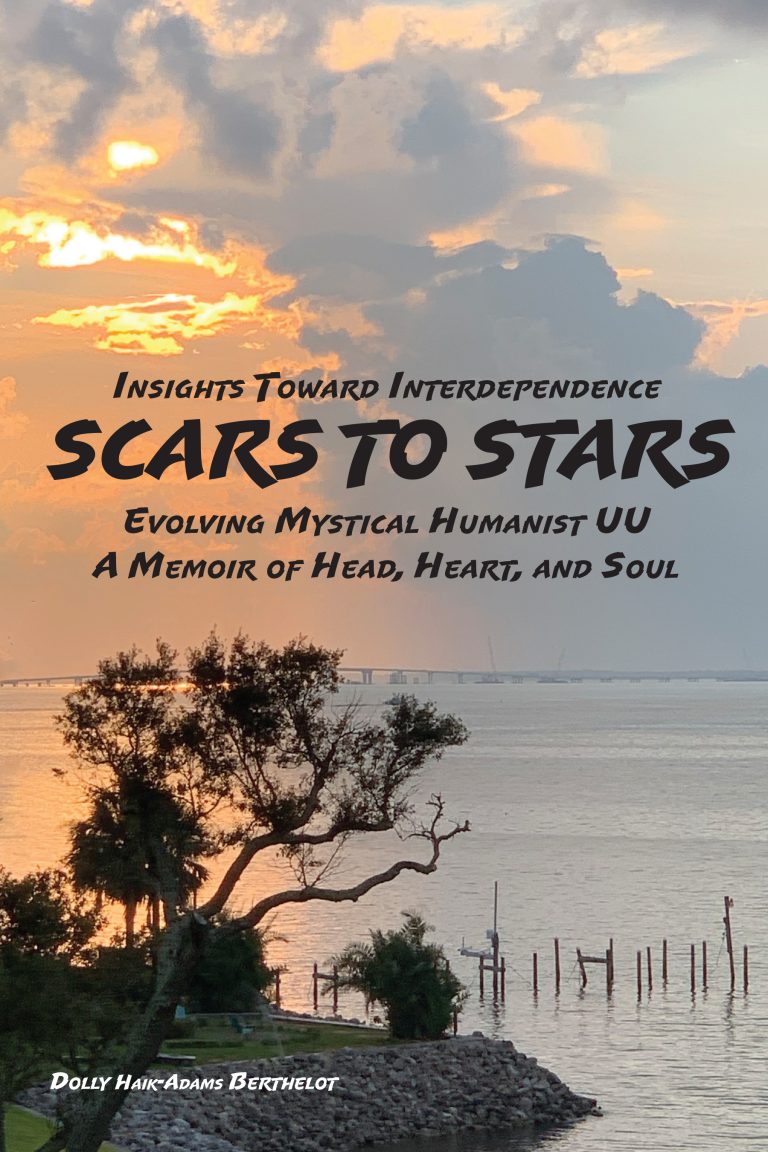
    She conceived the concept Scars to Stars in this book and then recommended it as the standard title for the exciting new Energion series kicked off by SCARS to STARS. She will serve as series consulting editor.

    Her only son lives in Los Angeles.

  • Book Release: Family Secrets – Divine Destinies

    Book Release: Family Secrets – Divine Destinies

    https://www.energiondirect.info/wp-content/uploads/2021/08/press-release-family-secrets.pdf
  • What Was the Law Intended to Do?

    What Was the Law Intended to Do?

    A Response to Steve Kindle

    This post is part of our series, Discussing the Law in Scripture. It is written in response to Steve Kindle’s article The Law’s Inevitable Tension between Ideal and Reality.

    Steve makes a bold and faithful statement here in this article “As noted by scholars from Von Rad, Noth, to Bruggemann, the Law was given as an act of loving grace.” At the same time, this statement is troubling “Has God another plan in mind? Given God’s ability to change direction due to facts on the ground, we can only surmise and for some of us, even hope.”

    I want to explore this last statement a little further and possibly recapture HOPE by offering an alternative view to Steve’s final statement. Steve’s article alludes to the fact that the law failed to deliver what it was purposed to do. Still, I believe it can be proven that the Law was never given to establish a covenantal relationship. Instead, it was given to guide the people as they lived in that covenantal relationship.

    In the above statement, Steve states that God is subject to man’s failures and changes direction out of response. Yet, I think that scripture, including Deuteronomy, points to a sovereign and determinative God. Let’s follow Steve’s leadership and look at Deuteronomic Theology.

    The name of the book Deuteronomy comes from (deutero = second; nomos = law) and is often labeled “a second giving of the law.” This label, coupled with a misunderstanding of the Law and its purposes, creates a misunderstanding of the book. Adding to that confusion is the evocative image chapter seven conjures up of God as a warrior. A word picture was given to the Israelites just as an eagle, shepherd, and parent.

    It is not meant to be descriptive of character but to understand how God acts. Steve quotes Old Testament scholar Walter Bruggemann. Bruggemann advises caution in dismissing the parts of Deuteronomy that present terrifying texts or using them to redefine God’s character. Instead, we should contextualize them by seeing within the historical context of a vicious period and reflects the realities of such times. At the same time, we should see a God whose character portrays wrath.

    The depiction of God’s wrath, rather than being seen as problematic, should be seen as foreshadowing that something more was needed than the Law. Deuteronomy is a book about image-bearing and God calling His people to reflect His glory. At the same time, it Introduces new concepts and a way of living to the Israelites. The book reveals the gospel as defined by showing who God is, what He has done, doing, and doing.

    Deuteronomy contains three sermons from Moses that are meant to give the Israelites a sense of identity. Along with revealing God’s rescuing, forgiving, redeeming, restoring, and sovereign, loving grace. It is the first book to give a face to the covenant established by God.

    The majority of the book and its central theme present the Law (Deuteronomy 5-26) and the consequences of failure (Deuteronomy 27-30). Notice that I start with the Law beginning in chapter five; the first four chapters are a refresher course on God’s goodness, as defined above, presents the gospel. There is also another kind of grace we see that is part of God’s sovereign, loving grace and warning grace.

    Deuteronomy 6:10-12 gives us a beautiful example of that warning grace as Moses tells the Israelites; “You’re going to go into a land that
    you didn’t get by your power, in houses that you didn’t build, in fields that you didn’t plant.” and then “You’re going to forget the God who gave all those things to you, and you’re going to worship false gods.”

    The first eight chapters reveal to us a God who is not subject to the creation, but is determinative, and sovereign (1:6-8, 13-I4, 22-23, 27, 31, 34-39, 2:2-3, 13-14, 17-25, 29-33, 36, 3:2-3, 18, 21-28, 4:1O-13, 19-20, 31, 34-38, 5:6, 30-33, 6:10, 7:1-2, 6-16, 8:6-10, 13-18). Chapters four to six specifically reveal that it is because of the covenant God had made with Adam and Abraham that the Israelites had been brought out of Egypt to travel to the promised land (4;34-38 5:6, 6:10-11.). Then out of a response to God’s sovereign, determinative love, they were to live.

    Deuteronomy tells of the death of Moses. Moses carries significance in the Bible and literary and historical documents across the globe. Noting Moses’s importance is essential in understanding that like all O.T. characters, such as Noah, Jacob, and David, Moses is a typology (In Biblical exegesis topologies help us connect the Old Testament to the New Testament. [Luke 24:27]). Christ is the better Moses (Hebrews 3:3-4).

    Whereas Moses failed because of sin to deliver his people to the promised land, Jesus is the way into the promised land. Christ, though, doesn’t brush aside either Moses or the Law. When asked the greatest commandments, He quotes Moses (Deuteronomy 6:5-6 [Matthew 22;37-40])—establishing a connection to himself, Moses, and the Law while establishing authority. As He points to what the Jews called their Shema, the first prayer every Jew learns.

    He doesn’t dismiss the Law as a plan once tried unsuccessfully but instead establishes that the Law was to be followed as a response to the covenant first established with Adam (Genesis 3:14-15) and Abraham (Genesis 15-17). Faced with temptation, Jesus quotes the Law, as He quotes Deuteronomy 8:3.

    More than eighty times, the apostles cite Deuteronomy, revealing the continuity of scripture. Noteworthy is Paul’s referencing Deuteronomy in his Gospel opus, Romans. The apostle Paul draws on Deuteronomy to show how the Law points out sin (Romans 7:7; Romans 10:6–8, 19 [Deuteronomy 30:12–14]). Paul further connects that the Law guides and teaches us how to love our neighbor (Romans 13:9 [Deuteronomy 5:17–19, 21]). Continue to connect his gospel thesis to Deuteronomy by stressing not to seek personal revenge (Romans 12:19 [Deuteronomy 32:35]) and that the Gentiles would be included (Romans 15:10 [Deuteronomy 32:43]).

    In reviewing Paul’s continuity, it makes other things Paul said relevant to our understanding of the Law found in Deuteronomy.  Beginning with noting that the issue wasn’t the Law, it was that the Law could not produce within the people that which it demanded (Romans 7:10). Paul would further emphasize that the Law was never meant to establish a relationship (Galatians 3). Not only was Paul clear about the Law not being able to deliver, but he emphasizes that Abraham was saved through faith, and those with faith are Abraham’s seed (Galatians 3:6-10[ Genesis 15:6[Romans 4]).

    Continuing further in exploring the themes of grace throughout Deuteronomy as the last book of Torah, it should be noted that it ends on a note of grace. As mentioned already, the wrath of God is a foreshadowing that something more is needed. Chapter 30 picks back up the theme of foreshadowing. Moses notes three things about the future in verse 30.

    Beginning with noting the impossibility of keeping the Law, as stressed in verse one. “When all these blessings and curses I have set before you come on you and you take them to heart wherever the LORD your God disperses you among the nations . . .”

    Before he finishes his final sermon, he tells the Israelites you’re not going to keep the Law, your going to suffer as a result, and part of your suffering will be you’re going to be exiled and separated as nomads. He had already stressed in chapter 28 that the result of their failure would lead to being exiled and separated.

    The second thing Moses notes about the future is that God has a plan of rescue in place, a plan established before the world’s foundation (30:2–5[Ephesians 1:3]). In verse six, he lays this out as He tells them that God will rescue their hearts. Paul not only connects to this chapter in Romans 10, but he echoes the reality that our hearts are circumcised (Romans 2:29) but calls those in Christ the true circumcision (Philippians 3:3). What Moses speaks of here is the gospel, as already defined.

    Circumcision was an external act, but when Moses says God will circumcise their hearts, he’s speaking of an internal circumcision accomplished through Christ. Paul connects further to this circumcision in Colossians 2:11. The cross also points to this sermon of Moses. Christ experiences the covenant curse fully as He is cut off from God in His humanity. Bringing upon Himself the curse Deuteronomy states, again and again, is the result of sin against the covenant made with God.

    In this way, Christ fulfills the Law given through the covenant. He suffers the experience and penalty all lawbreakers deserve.

    Thus we no longer need to fear the circumcision of God, Christ having experienced it, and thus delivering it. Our hearts are circumcised when we accept that we deserved the cross’s brutality and place our faith in Christ’s finished work.

    Finally, in verses 11-15 of chapter thirty, Moses gives us a final futuristic vision. In these verses, it appears that Moses is saying that the Law is not too hard, and if they follow it, they will experience “life and prosperity.” Many read this and determine that the Law is easy, pretty straight forward and not burdensome.

    These final verses allude not to the Law’s straightforwardness but rather to the fact that the Israelites were without excuse, as God had revealed to them already, His will, and how He desired them to live. They did not have to wonder, go looking for, or in a search for God’s will; it had come to them. This is encouragement even for us as believers today.

    Yet, despite appearing just for the Israelites, Paul references this passage to give us a better understanding of Moses in Romans 10:4, 6–9. In doing so, he brings knowledge that the only thing that is not impossible, won’t crush you, won’t send you looking for resolution is the gospel. Jesus accomplished it so that there would be no more condemnation for us who can’t.

    Deuteronomy connects the Jewish faith to the Christian faith as both anticipate when the Deliverer will restore Hope. As Christians, we know Hope is embodied in Christ. Christ speaks not only that He is the way but that He will return to fulfill God’s promises (John 14) as the Deliverer. Paul points to a time when not only will the Gentiles have been brought in, but a remnant of Israelites will be rescued. Here again, he notes that it will not be obedience to the Law but by faith (Romans 11:5-6).

    Throughout the last chapters of Deuteronomy, we see that both faith and obedience are gifts from God. Along with the fulfillment of the covenant is based on God, not man. Covenant fulfillment is a work established and completed by God. It is a gift given freely to the undeserving, often unrepentant, and covenant breakers because this is all there is. This is the gospel found in Deuteronomy.

    Like most of the Old Testament, Deuteronomy disturbs us as it presents God’s wrath and His demand for perfect obedience. It reveals the US, our failure to obey, and our pursuit of other lovers, despite God’s relentless pursuit of US and goodness. It sharply challenges us in loving and treating those we see as possessing or being less, as God does all his covenant children.

    Nonetheless, it presents a vision of hope, promise, and where God has the last word, not our ability to hold up our end of the covenant. Simultaneously, revealing that the promise of covenant restoration and fulfillment should produce a response that says that we are Loved, set apart, loved by the Almighty God. So that He that cares most about His Glory, is glorified through the circumcision of our hearts.

  • Book Extract: I only preach a relational theology

    Book Extract: I only preach a relational theology

    This post is part of our ongoing discussion of the law in scripture. It is extracted from Finding Stability in Uncertain Times by Ron Higdon.

    Finding Stability in Uncertain Times, pp. 89-90

    When Jesus was asked to give the greatest commandment in the Law, his reply essentially combined two Hebrew Scripture passages: “Love the Lord your God with all your heart and with all your soul and with all your mind.” This is the first and greatest commandments. And the second is like it: “Love your neighbor as yourself.” All the law and the Prophets hang on these two commandments (Matthew 22:37-40).

    In combining Deuteronomy 6:5 and Leviticus 19:18, Jesus refused to make religion solely a matter between a person and God. Th e Law (technically “the Law of Moses”) was never intended to
    prescribe ways in which we could be right with God without also being right with the people around us. Th e greatest commandment turns out to be about all relationships: with God, with my neighbor, with myself. Healthy religion (healthy spirituality) does not ignore any of the three.

    When I began my ministry and someone asked what kind of theology I had, I would reply, “I have a relational theology that encompasses the full spectrum.” Th e questioner was usually seeking a list of things I believed (and there are things on such a list) but I still contend that what God is most interested in for all of us is far more than correct belief. In my many different congregational experiences, I have frequently encountered those who had all their theological ducks in a row but didn’t have a positive relationship with many people around them. I often wanted to ask about their theology with these three questions: How are you doing with God?
    How are you doing with others? How are you doing with yourself? Simplistic, yes, but plainly shifting the focus to what life is all about.


Energion Direct
Privacy Overview

This website uses cookies so that we can provide you with the best user experience possible. Cookie information is stored in your browser and performs functions such as recognising you when you return to our website and helping our team to understand which sections of the website you find most interesting and useful.