Author: empower

  • Is Social Justice a Good Thing?

    Is Social Justice a Good Thing?

    cts_wiwwsjOn April 8, 2014, Energion authors Henry Neufeld, Shauna Hyde, and Chris Surber discussed missions in a Google Hangout on Air. You can see the video (without titles) below.

    One of the phrases used frequently in this discussion was “social justice.” Energion author Elgin L. Hushbeck, Jr. was listening, and commented to me that he objected to the term “social justice,” because, he said, once you added the adjective, it was no longer actually justice.
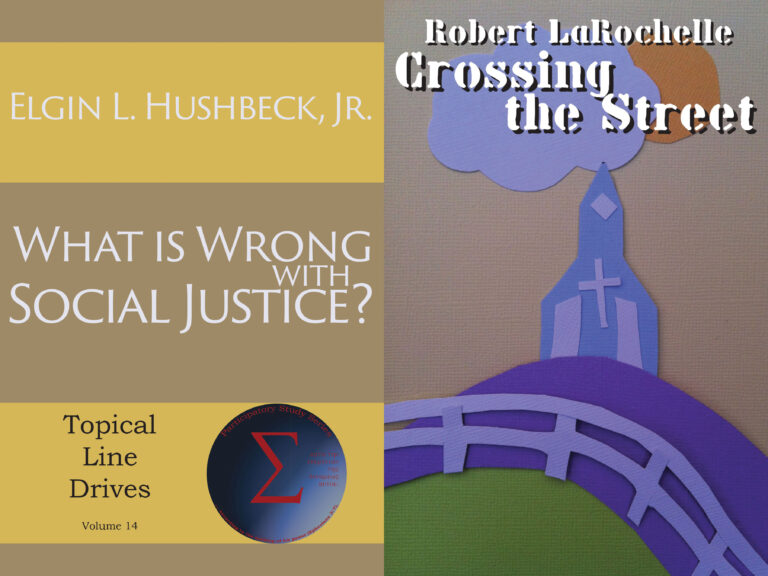
    I, in turn, suggested that this sounded like a good topic for a volume in our new Topical Line Drives series, and the result was the book What is Wrong with Social Justice?.
    Unsurprisingly, other authors disagree with Elgin’s position, and we’ve started a discussion on the topic. Besides the video above, you can read a review of Elgin’s book by Energion author Bob LaRochelle. Here’s some extracts:

    In the interest of full disclosure, it is important that I tell you that over the course of much of my life, I have held the position that social justice is important. In fact, I have long seen the pursuit of social justice as a ‘given’, i.e. as a constitutive aspect of both my religious faith and of my responsibility as an American citizen. I still do!
    ….
    As I read Mr. Hushbeck’s brief work, part of Energion Publication’s Topical Line Drives series, I found myself deeply impressed with the quality of his presentation. His approach to government and his application of Biblical teachings to questions of justice within a society are well thought out and demonstrate strong, heartfelt religious conviction and philosophical consistency. As he notes, some of us who identify as liberals and are Christians all too readily characterize more conservative Christian believers as lacking appropriate compassion for the poor and marginalized. This characterization is often unfair and most certainly does not apply to Mr. Hushbeck.
    ….
    With respect to one of the major social issues of our time, health care, I would contend that there is something UNJUST when one’s health or the health of one’s children might be totally contingent upon one’s income and, in the case of those children, the income of one’s parents.

    Read the whole thing.
    This discussion should not be just about the terminology we use, but rather about how we deal with significant issues in our society, and what those issues are. Is justice to be applied to groups or to individuals? Can we provide health care to all irrespective of income (as the last extract from Bob’s review suggests) and still be “just,” “fair,” or “equitable” in how we deal with individuals?
    Bob LaRochelle and Elgin Hushbeck are going to try to help us work out some of these issues when they discuss this topic in a Google Hangout on Air on October 28, 2014 at 7:00 PM. Don’t miss it!

  • Marriage and Divorce

    by Henry E. Neufeld*
    sanctity of marriage church signOne of the more controversial books I publish is titled Except for Fornication: The Teaching of the Lord Jesus on Divorce and Remarriage. (It’s in the Areopagus Critical Christian Issues series)There are a number of people who have asked me why I chose to publish this book. Come to think of it, I’ve had questions about quite a number of books, but those that are anywhere on the outer edges of my triangle (), very conservative, liberal, charismatic, or _______, generate the most puzzled comments.
    Here are some excellent reasons (in my opinion):

    1. It passes scholarly muster.
    2. It will challenge the way most of us think about a number of scriptures.
    3. It deals with an issue that should be front and center in the church right now.
    4. It’s clear and concise.

    except for fornicationNotice that I left out “I agree with it,” and “you’ll like it.” I suspect most readers won’t. That’s something odd for a publisher to say. But of the goals of ministry—comfort the afflicted and afflict the comfortable—I tend toward afflicting the comfortable. Whether I agree with it is quite irrelevant.
    Today Dave Black, one of the editors of the Areopagus series, posted a note on his blog about this topic. I’m going to quote his post in full (with permission) and invite discussion. (Everything between the horizontal lines is quoted from Dave’s blog.)


    9:48 AM Russ Moore asks a very good question: Is Divorce Equivalent to Homosexuality? His answer is both balanced and biblical. Where I might demur is here:

    But divorce and remarriage is not, beyond that, applicable to the same-sex marriage debate. First of all, there are arguably some circumstances where divorce and remarriage are biblically permitted. Most evangelical Christians acknowledge that sexual immorality can dissolve a marital union, and that innocent party is then free to remarry (Matt. 5:32). The same is true, for most, for abandonment (1 Cor. 7:11-15). If the church did what we ought, our divorce rate would be astoundingly lowered, since vast numbers of divorces do not fit into these categories. Still, we acknowledge that the category of a remarried person after divorce does not, on its face, indicate sin.

    I am curious as to how widely this view represents the thinking of evangelicals on this debated issue. 1) I think a case can be made, scripturally, that even when divorce is justified on biblical grounds, remarriage is still forbidden by Jesus as long as the first spouse is still alive. And 2) an instance of divorce-remarriage (where the first spouse is still living) would, on its face, constitute sin (adultery). The irony is that, while evangelicals are rightly concerned about the homosexual agenda in our society, they are moving away from a high view of marriage, thus leading to what Moore calls “the charge of hypocrisy.”

    The preaching on divorce has been muted and hesitating all too often in our midst. Sometimes this is due to what the Bible calls “fear of man,” ministers and leaders afraid of angering divorced people (or their relatives) in power in congregations. Sometimes it’s due to the fact that divorce simply seems all too normal in this culture; it doesn’t shock us anymore.

    So, my message to my fellow evangelicals, in a nutshell, is this: cherish your marriage! Not in a sinful or prideful way, of course, but simply as a precious gift from God that needs to be nurtured and protected. Be daringly committed to your spouse, and hold fast to the vows you once took before God and others. Warning: Do not read this is as a screed against divorced or divorced/remarried Christians. I know of two divorce situations involving Christian friends of mine that are ripping my heart out right now. Those who have read my book The Jesus Paradigm will have no trouble understanding why I feel so deeply for Christians who struggle in life. I realize that my view on remarriage is a minority view in Christian circles, but given the overall theological, psychological, and spiritual implications of divorce and remarriage, I think this one point of disagreement is worth registering.
    Thanks to Russ for his stimulating and courageous essay. I’m sure those with interest in this topic will read it with great benefit. In the meantime, let’s all keep reading and thinking ….


    So what do you think? How can we cherish our marriages? How can we be true to the teaching of Jesus?
    *I identify myself personally as the author as I express personal opinions. There is a difference, albeit more subtle than average, between my personal views and my company’s policy.

  • Fourfold Gospel Hypothesis: A Call for Discussion

    Fourfold Gospel Hypothesis: A Call for Discussion

    9781893729872fI have a question for our authors and readers: Is the confidence in Markan priority, generally combined with acceptance of ‘Q’ as a source, justified?
    I’m not asking whether you think Markan priority is likely, but rather whether you think the level of confidence in it amongst biblical scholars is justified.
    David Alan Black has just posted a blog about it, which I copied to WhyFourGospels.com (allowing me to link to the specific post), discussing this very question. Dave’s position is not in doubt. I publish his book Why Four Gospels? in which he outlines his case for the fourfold gospel hypothesis.
    I often avoid giving my opinion in these things, but let me just note that I believe one’s view depends to a large extent on how one weighs external vs. internal evidence, and, of course, your evaluation of particular forms of external evidence. If you favor internal evidence, then you’re likely to support Markan priority. If you think it unlikely that the church fathers either knew or accurately reported information about the authorship of New Testament books, you’ll likely support Markan priority. If not, well, not so much!
    I did such study of the New Testament as I did under people who took Markan priority as a given. I was barely aware that there was an alternative, and paid it very little attention. One might think that my mind was changed by publishing a book on the topic, but that actually came second. My belief that Markan priority was essentially a given was shattered by reading William R. Farmer’s The Synoptic Problem. I followed that up with looking at some other material by him and others.
    I am not convinced of everything Dave writes in Why Four Gospels?. I’m less concerned with issues of historicity than he is, I believe. (Note please that I did not say “unconcerned with issues of historicity.” I do believe that historical foundations are important.) But despite some remaining issues, such as that I do not see a convincing explanation for the state of the text of Mark, I think Matthean priority is more probable than that there was a hypothetical document ‘Q’.
    So what think you all?
    Henry Neufeld

  • Is Something Wrong with Social Justice

    Is Something Wrong with Social Justice

    9781631990830We recently released a new book in the Topical Line Drives series, What is Wrong with Social Justice?. In it Elgin Hushbeck, Jr. presents his case that “social justice” is not actual justice. In fact, he claims, it is inimical to true justice.
    Energion author Bob LaRochelle has  a somewhat different view. While he appreciates the tone and quality of Elgin’s argument, he continues to disagree with the main point.
    Join the discussion on Bob’s blog or here.
    Also: Watch here for information on a Google Hangout on Air that will feature Elgin and Bob discussing their differences on this issue. The hangout will be on October 28 at 7 pm central time.

  • What Does Ordination Mean about Church Leadership

    What Does Ordination Mean about Church Leadership

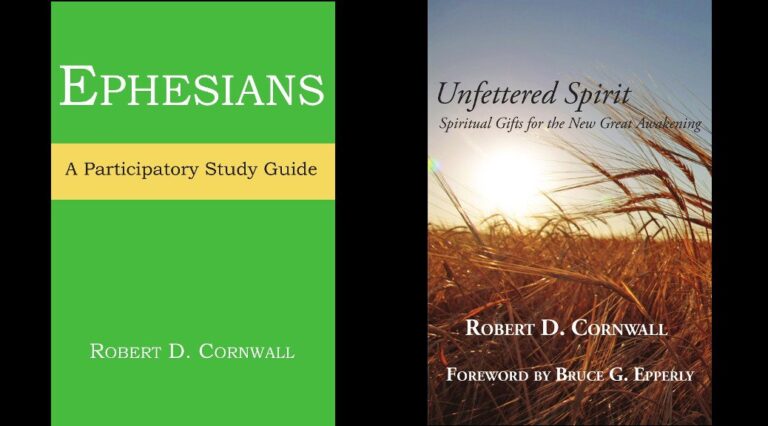
    9781938434594Bob Cornwall, author of Unfettered Spirit: Spiritual Gifts for the New Great Awakening, has published an extract on ordination (The Biblical Call to Ordained Ministry). I think this would be a good launching pad for a discussion of the nature of ordination and what this means about church polity, if anything.
    Read Bob’s post first, but then think about this: Are there any functions of the church that should require the participation of an ordained minister? What are these things? Why does ordination only apply to one called to exercise pastoral gifts? (Does it?)
     

  • On the Pericope Adulterae Conference at Southeastern Baptist Theological Seminary

     
    From Dave Black Online, used by permission.
    7:45 AM Today I’m taking a much-needed break from scholarship. I’m going to spend the next few days getting the farm into shape for the haying season. My new ride mower (that was dead-on-arrival) was replaced yesterday, and I am hoping against hope that this new machine will start. The yard grass is already reaching Eden-like proportions, and I’d rather not bush-hog it if I can avoid it.
    Let me just say a word about this weekend’s Pericope of the Adulteress Conference on campus. A number of factors made it, in my opinion, a fabulous success. First, there was the high quality of scholarship represented by the five speakers.
    pa ndjriroirororThat level of expertise provided the rest of us with an enormous opportunity that is often absent when these matters are being discussed or debated. Second, the lecturers all spoke with the greatest clarity —  and charity. The buzz in the room was definitely a positive one! This is partly because the speakers all knew each other fairly well; some have collaborated on writing projects for years. Constant association with one’s colleagues cannot help but build a sense of genuine collegiality. It is partly because the speakers respected each other, and it showed. Third, it has been shown that the majority of people base their academic positions on exposure to various points of view. Hermeneutics is not so much a crisis; it is more a process. This may well be the most critical aspect of the conference: it both broadened and deepened the conversation in significant ways. Fourth, it is abundantly plain that the vast majority of people who attended left with a deep sense of satisfaction and even joy at having witnessed such cordiality and amiability. Each of our speakers is a warm, committed, unembarrassed Christian, representing different Christian traditions to be sure, but nonetheless “Christian” both in their approach to the text of the New Testament as Scripture and in their deportment.
    Without a doubt, the most interesting speaker this weekend was our own Maurice Robinson, whose status among the textual critics present has achieved, it appears, almost that of Michael the Archangel. mr fwgtwyqiuiqoioqoq
    Maurice’s perspective draws from a lifetime of experience in encountering actual manuscripts rather than from the many books on the subject. Some may find him too detailed, but this is a good fault for a textual critic! For far too many Christians, textual criticism is a meaningless ivory tower pursuit or else simply the prolegomenon to something far more important. Maurice showed us that nothing could be further from the truth. He has spent a career showing average evangelical Christians how important and relevant textual criticism is to our understanding of sacred Scripture.
    I was delighted in the extreme to see many students and “lay persons” in attendance. (The Johannine scholars seem to have stayed away in droves.) pa mbmkb,lblblb
    Just as politics is too important to leave to the politicians, so textual criticism is too important to leave to the experts. They may know more than you do, but you are the ones who will have to decide, week in and week out, whether or not you  teach or preach this disputed word or that debated passage. No, we cannot leave textual criticism to the scholars. Each church member has a job to do. And that job includes personal involvement, to some degree at least, in deciding between textual variants. I dread to think of the opportunities I constantly miss through my failure to dig deeper into the text on this level. Years ago one passage brought this home to me, and it will always stand as an example of the relevance of textual criticism for the church. In some manuscripts of Matt. 5:22 we have a Jesus who condemns all anger, while in other manuscripts we see Him forbidding only causeless (eike) anger. What a difference a little Greek adverb can make! To put it another way, our views about the legitimacy of anger for the Christian are dependent to a very great degree on our understanding of textual criticism. We have to engage in it!
    This is now the third time I’ve helped to organize a conference of this kind on campus, and I must confess to you that all along I’ve had an ulterior motive. We Christians live a good deal of our lives in splendid isolation, rarely interacting with people from differing perspectives or backgrounds. It is sort of a self-imposed monasticism. And it is dangerous. My hope for all of our conferences is that they will become bridge builders. Christians are so varied, and their starting points are so diverse, that it is always good for us to listen to each other. I’m not suggesting for a moment that it is necessary to surrender our long-cherished views or personal convictions in order to engage in dialogue. What I am saying is that none of us has a complete handle on the truth, and so we need modesty. The world is filled with harsh, pushy people who are always trying to sell us something. We are repelled by them, and rightly so. Christianity calls for much more moderation than that. At the same time, Christianity also calls for us to speak with confidence whenever we proclaim the word of God. If that is the case, it follows that we should acquire at least of modicum of facility in the art and science of New Testament textual criticism. No, we may not always know precisely what the original reading is in a place of variation. But at least we can tell our people that we have done our own homework and have made an honest effort to understand the problem for ourselves. Christianity is inescapably intellectual. Engaging in exegesis is not an optional matter for those who “like” that kind of thing. It is an integral part of what it means to be a Christian.
    Evangelical textual criticism is not the kingdom (God forbid!). But it is a tool in God’s kingdom that tries to serve and please the King. New Testament interpretation does not end with textual criticism but it begins with it. No wonder the audience over the weekend seemed so delighted and pleased to have been treated to a clear and enjoyable presentation of the major hypotheses surrounding the PA. I hope the time will come when every serous Christian will join the conversation. An excellent entrée into the discipline is Harold Greenlee’s Introduction to New Testament Criticism. My own New Testament Textual Criticism: A Concise Guide, attempts to introduce the subject in a simple and clear manner. In all this, it is important to remember that we are not trying to undermine anyone’s confidence in his or her translation of the Bible. We are simply trying to bring home to others the awesome responsibility that interpreting the Bible is. New Testament textual criticism is not an end in itself. The hope is that as we study the text of the New Testament we will go on until we find the pearl of great price as part of our search.
    My sincere thanks to all of the wonderful speakers (J. D. Punch, Jennifer Knust, Tommy Wasserman, Chris Keith, Maurice Robinson); to president Danny Akin of SEBTS for his enthusiastic support; and especially to my personal assistant, Mr. Jacob Cerone, whose tireless attention to a myriad of details — sprinkled with a massive amount of live blogging — reminds me daily of why I appreciate him so much.
    P.S. For what it’s worth, my own view is that the PA is original. The inclusion of John 7:53-8:11 is well attested externally; it is early (the Old Latin pushes the reading back into the second century); and the passage is sui generis with the rest of John’s Gospel in terms of vocabulary and style. I’m not much of a fan of internal evidence, but I would accept either the “Liturgical Omission” or the “Ecclesiastical Repression” hypothesis as an adequate explanation for the omission of the PA in some early manuscripts. So, in conclusion, I would most certainly preach/teach this passage as Scripture but let’s be honest — there is no unique “evangelical” stance one can take. The issue is a matter upon which good people (including biblical inerrantists) will continue to disagree.
    P.P.S. I agree with Dr. Robinson that the elephant in the room was the (often unexpressed) predilection for the Alexandrian text type among modern textual scholars. My friend Keith Elliott once called this the “hypnotic affect of Aleph and B.” (I honestly do not know if he continues to use that language to describe this phenomenon.) I believe it is time to lay this misconstrued concept to rest. The NA 28 is no more to be considered an authoritative text than the TR was 150 years ago. At the same time, I think Maurice’s case for Byzantine Priority is very weak. I’d love to believe it, but the evidence is just not there. I tend to lean more toward Harry Sturz’ view (The Byzantine Text Type and New Testament Textual Criticism) that the Byzantine text, because it is unedited in the Westcott and Hort sense, remains a reliable witness to the text of the New Testament but not the only one. Which is why I’ve been speaking to Henry Neufeld of Energion Publications (who is now visiting with me on the farm) about the possibility of him re-issuing Harry’s now out-of-print book.
    henry ngkgogpogpgpgpSo there you have it.
    Keep thinking, reading, discussing, and living the Gospel!
    Dave

  • He is Risen!

    For Easter, we’d like to call attention to today’s sermon by Dr. Bob Cornwall, author of Ephesians: A Participatory Study Guide, Ultimate Allegiance: The Subversive Nature of the Lord’s Prayer, and Unfettered Spirit: Spiritual Gifts for the New Great Awakening. It’s titled Unbelievable News.
    A taste:

    Why is this such unbelievable news?

    I like the way our friend Bruce Epperly puts it:

    The resurrection will always remain a mystery, hidden from rationalists, Enlightenment-thinkers, and literalists. It is always more than we can ask or imagine.

    Too often, when we try to explain the resurrection, we end up domesticating it. And when we do this, we miss the deeper message.


  • Consider Christianity Week: The Reality and Centrality of the Resurrection

    Tonight’s panel can be viewed here. For a complete schedule, see Consider Christianity Week. The panel will begin at 7:00 PM central daylight time.


  • What is Consider Christianity Week

    This discussion will take place tonight, April 6, 2014, at 7:00 PM Central Daylight Time. You can watch it here live, on our YouTube channel or watch the recording later.
    This is our first Google Hangout, so we will be learning!
    Note (4/7/2014): There were quite a few problems, but I think we’ve learned how to do this. Below you’ll see the video of our session that started 45 minutes late. We apologize to all those who intended to listen/watch but were unable to do so.

    Follow Energion Publications on Google+.

  • Science, Religion, and Subjective Evidence

    Science, Religion, and Subjective Evidence

    Five Creation Books from EnergionIn our informal series of books on issues related to creation we’ve discussed how creation is represented in scripture, how one goes about forming a doctrine of creation that is truly Christian, and how someone who accepts evolution might reflect his in worship. Soon we will have a volume on how our understanding of God as creator impacts our lives now, and finally we’ll have a volume that talks about the basic science one needs to know about origins in order to understand the debates on the topic.
    Chris Eyre is one of our editors working out of the UK. He’s been working on editing the manuscript for Creation in Contemporary Experience, which is coming soon. He posted something today regarding science and religion, and the nature of internal or subjective evidence. Where does our experience stand as evidence? (Note that, as a good editor, he does not cite this forthcoming book in his post, but it is closely related.)
    In discussing such concepts of God as “ground of all being,” for example, he notes:

    They also, from my perspective, fail to explain all of the evidence, as they do not give any real insight into the mystical experience, the direct unmediated experience of God, which I take as a piece of evidence, as I mentioned above. They do have a transcendent aspect, which is singularly lacking in scientific materialism, and which is well harmonised with immanence of a sort, but it is a vastly impersonal immanence. The mystical experience is in my experience a vastly personal one, and I don’t find this reflected in “ground of all being” or “being itself” theologies, nor in the extremes of the God-of-absence of, for instance, Peter Rollins.
    I need something which at least explains the mystical experience as I have experienced it, which accounts for the evidence (albeit entirely personal) I have. …

    In his recent book Philosophy for Believers, Edward W. H. Vick occupies an entire chapter (6: Experience and God) on this topic. In this paragraph I hear a reflection of Chris’s discussion:

    For the theist the question of God is involved when the question
    of the purpose of existence is raised. At such point in our lives
    we may be faced with the question of the meaning of the whole,
    when ‘openings into the depths of life’ lead us to ask about the
    ground and goal of our existence. (p. 112)

    So what do you think? Is experience valid evidence? If so, does it operate only for the person who experiences, or can that evidence be shared?

Energion Direct
Privacy Overview

This website uses cookies so that we can provide you with the best user experience possible. Cookie information is stored in your browser and performs functions such as recognising you when you return to our website and helping our team to understand which sections of the website you find most interesting and useful.