Author: empower

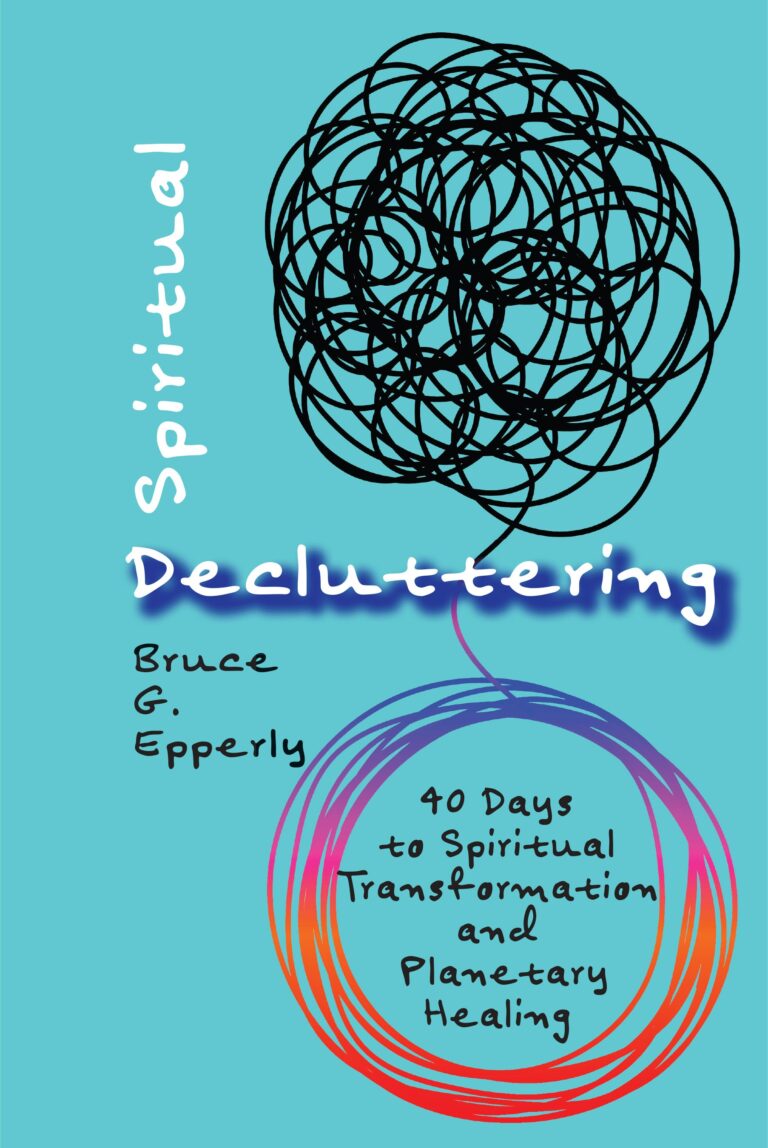
  • Dr. Bruce G. Epperly: Office Stock Specials

    Dr. Bruce G. Epperly: Office Stock Specials

    These specials are currently 50% off on a selected list of books. Dr. Bruce G. Epperly is author of a number of titles with Energion Publications.

  • Dr. Robert D. Cornwall – Office Stock Specials

    Dr. Robert D. Cornwall – Office Stock Specials

    The following books by Dr. Robert D. Cornwall are currently 50% off while in-office stock lasts.

  • SAVING OURSELVES

    SAVING OURSELVES

    Enjoy, share and spread Dr. Dollyโ€™s โ€œSaving Ourselvesโ€โ€”not Coronavirus!

                     By Dolly Berthelot โ€œDr. Dollyโ€ ยฉ2020

    I like Liberty, really I do.
    Justice too.

    And privacy matters to me
    To a prudent degree.
    These very American virtues
    We want to maintain.
    Theyโ€™re worth some struggle,
    Worth some strain.
    Even worth a little pain.

    But a pandemic makes some NEW demands.
    The Future rests in all our hands.
    And in our mouths and noses, you see,
    Where vile germs can flow,
    From you and from me.
    Illness, debilitation, and death,
    Erupting, attacking from our poison breath.

    We each have great power
    To shield ourselves and others too.
    You can save me, and I can save you.
    So letโ€™s save each other,
    Me, you; you, me.
    A little discomfort
    Can change destiny.

    โ€ฆBut only if we all give a damn
    And are willing to do
    All that we can.

    Really, so little is required,
    Merely masks and distancing,
    Till COVIDโ€™s expired.

    Liberty, justice, privacy,
    Not so simple these days.
    Your โ€œfreedomโ€ could mean everyone pays.
    Your โ€œlibertyโ€ may snatch mine away
    And if your โ€œprivacyโ€ hides the monsters you spread,
    Innocent bystanders may soon be dead.
    How is that justice? How is that fair?
    Reality proves we must now beware
    Of risky behaviors we perilously share
    Simply by comingling โ€œbugsโ€ in our air.

    If only we could SEE these foul beasts
    Devouring people for their feasts
    I have no doubt
    Weโ€™d back up with ease
    And likely shout out
    In shock, fear, and pleas,
    To strangers and kin โ€”
    And view nonchalance
    As a serious sin!

    Unfortunately, this invisible foe
    When ignored will continue
    To grow and to grow.

    Whatโ€™s most demanded
    If we are to win,
    Is a deep, deep commitment
    Now to begin:
    Beyond other virtues
    I wish we all would
    Profoundly commit
    To Our Common Good!

    Without that practice
    From people at large,
    Letโ€™s face it, this virus
    Is the Master in Chargeโ€ฆ

    โ€œDr Dolly,โ€ Dolly Berthelot is a semi-retired writer, editor, communication consultant, author, former teacher, professor, and journalist, and long-time Pensacolan. Learn more at drdollyb.com and mineyourmemories1.com.

    AUTHOR NOTE: In late October 2020, my high-rise condo, which had managed to avoid COVID-19 all year, even during the ongoing chaos of Hurricane Sally damage and repairs, suddenly had five cases. I was inspired to write the poem โ€œSaving Ourselvesโ€ while fretting under strict quarantine because of my own exposure to this potentially debilitating and deadly virus. Fortunately, I didnโ€™t catch it, and our complex quickly cooperated to prevent more casesโ€”so farโ€”instead of the catastrophe that could occur. This rhyming verse addresses our mutual responsibility as individuals and as a community, a nation, and a world, to protect ourselves and others during this pandemic. If you would like to hear the poem read aloud, check YOUTube for โ€œSaving Ourselvesโ€ by Dolly Berthelot, AKA professionally as Dr. Dolly. You are encouraged to share the work online, orally, and in print for educational, motivational, or other noncommercial purposesโ€”properly credited, of course. 

    (Featured Image: Dolly Berthelot, ยฉ 2020)

  • NEW – Free Quiz

    NEW – Free Quiz

    NEW SELFSHAPESโ„ข QUIZ, now free on Energion Direct. One of Energion Publications’ particularly creative authors has developed an innovative, intuitive system using her 8 geometric shape โ€œcharactersโ€ to help people understand, appreciate, and benefit from natural inclinations in themselves and others. You can get a taste of Dr. Dollyโ€™s SELFSHAPESโ„ข now thru this free quiz. And, of course, please share with anyone you think might enjoy it and benefit personally or professionally.

    Take the Quiz!
  • Discourse on the Practicality of Elder Responsibilities

    Discourse on the Practicality of Elder Responsibilities


    by Pat Badstibner, President of World Prayr, Inc.
    This document was created for The Mill Church leadership as they transition from a staff led to an elder/CTM (deacon) led church order. They are also changing their message to a more gospel-centric one. As they do, they want a gospel-centered leadership model to build on and they believe this article lays the foundation. Energion Publications is publishing it because we believe that gospel-centered leadership fits superbly into the third keyword of our mission statement, “Empower!” Gospel-centered leadership is empowering to all believers because it is also God-centered (Philippians 2:12-13).


    โ€œThe authority by which the Christian leader leads is not power but love, not force but example, not coercion but reasoned persuasion. Leaders have power, but power is safe only in the hands of those who humble themselves to serve.โ€

    John Stott

    Therefore, go and make disciples of all nations, baptizing them in the name of the Father and of the Son and of the Holy Spirit, – Matthew 28:19

    Leadership is the art of influence. As an ambassador (2 Corinthians 5:20), a priest (1 Peter 2:9), an excellent one (Psalm 16:3) and one who is the praise of the glory of God (Ephesians 1:12), we have been called to be influencers for the kingdom in the ordinary and the extraordinary. As we exhibit the love and grace of the trinity, we will be influencers (Ephesians 4:4-6).

    As the Holy Spirit works out the life of Christ (Philippians 2:12-13) allowing us to bear fruit, the outflowing of that fruit will not only be greater influence but an increasing desire to influence (Galatians 5:22-24) and  impact others for the glory of God (Philippians 2:14-18). When Christ gave the disciples the command to go out in the world and make disciples, he was calling them to be influencers and to make other influencers.

    It has been stated that siblings who grow up in a family of older siblings will often learn to talk and walk sooner, than those who do not, there are always exceptions. Nonetheless, the reason this phenomenon  occurs in families is the influence of the older siblings. When a three-year-old influences a baby to walk they have exhibited the art of influence and thus leadership. In like manner, setting an example of leadership, Paul tells the Corinthians to follow him as he follows Christ (1 Corinthians 11:1).

    Leadership in organizations is found in relational leaders and in those who lead strategically. Both do so though through influence.  Leadership can be found in among friends and family as one leads as an example of showing grace, mercy, love, forgiveness and exhibiting how to glorify God in all things (1 Corinthians 10:31). Often it is said that leaders are born, this may indeed be true. However, the believer has two births and on the second birth (John 3:7) Christ gave all the ability to influence.

    Even if that influence is exhibited only in a one on one relationship showing someone how to read the Bible or pray. The greatest way we are called to lead is in helping others know what real worship is. Now how do we worship? This quote from Brother Lawrence answers that; 

    โ€œThe time of business does not differ with me from the time of prayer; and in the noise and clatter of my kitchen, while several persons are at the same time calling for different things, I possess God in as great tranquility as if I were on my knees.โ€ โ€“ Brother Lawrence. Practicing The Presence of God.

    In this way we both give God our whole heart, soul and mind and love others as God loves them (Matthew 22:36-37). As it is in increasing in the knowledge (Philippians 1:9, Ephesians 3:14-21) that the God who knows us loves us without question that worship is inspired (1 John 4:19). Worship that is the aroma of our lives as we express gratefulness for that love with every breath.

    Any model of leadership that doesnโ€™t have that as itโ€™s central purpose is broken. Our broken leadership models and understanding of leadership started in the garden. Can you imagine the garden? It was beautiful, serene and peaceful. The perfect habitat to coexist, commune, worship, and experience the Almighty.

    Our original parents did not ask, โ€œWho Am I?โ€ They knew. They were the ones created in His image. They were His representation, the ones that walked with the triune God and the cherished ones.

    They were the apple of His eye, his excellent ones, the ones he rejoiced over and sang over. His prized creations, the jewels of heaven and the physical exhibition of His Glory. They did not ask, โ€œWhy Am I here?โ€ They knew.

    They existed to worship the Father, Son, and Holy Spirit. Their very breath was to reflect the holiness and beauty of the Godhead. They were there as part of Godโ€™s agenda, he was not there to fit in theirs. They were there not to be great or declare how to be great but to exalt the greatness of the living God. Their work, play, and relationship were to showcase the attributes of the One.

    Their lives were not their own. Paradise was not created for them. They and paradise were the reflection of what God is. They and it were perfect. Thus they had no need to ask; โ€œIs there more than this?โ€ Every moment of their lives was concerned with worship and enjoying connection with each other.  They did not compartmentalize their lives, every moment of their life was about enjoying the very presence of God.

    This is why God was not a benefit or a concept that made life work, easier or helped them fill what they felt was missing in their life, He was their all. Then because of disbelief sin entered (John 16:9, Hebrews 3:19). Once disbelief enters, life is no longer found in God alone. And we begin to think and trust in our ability to find the answers to the questions our parents once knew.

    Trying to find the answers ourselves or within ourselves leaves us on a never-ending search. A search that sets us on a journey to establish our identity and significance by what we do or donโ€™t do or what we produce as a result of our leadership. A Journey to establish, prove and state our identity and significance in our leadership of others through self-aggrandizement.

    Falsely believing that the best way to do this is to divide our life is into time segments as we divide, work, time with familyย  from worship and the enjoyment of God. In segmenting our lives we still may not still find rest as the very segmentation only brings the need to fulfill another kind of law, as we fight for balance. Hindering the enjoyment of God in every moment of life, as we only allow such enjoyment to be experienced in the segment of life that has been created for such a purpose.ย  Interesting thing about our parents whether their time was labelled as ours is or not, they had the same amount of time as day and evening made their day, as it does ours. The only difference was in the purpose of their day, their purpose was to commune with each other and God, ours seems to be more involved in a search for what was lost.ย ย ย  ย ย ย 

    This search only ends as our understanding of the height, width and depth of God’s holiness and love grows (Ephesians 3:14-21). The more our understanding increases of this love the greater our desire to exhibit this love to others will be. In our growing desire to exhibit not only Godโ€™s love but His holiness the less we care if others see us fail, stumble or notice us (1John 1:5-10), after all itโ€™s not about us. Where there is failure in leadership as the result of sin somewhere either in the leader or the ones, they are leading there is a lack of understanding the love of God. 

    This knowledge and understanding brings awareness that real leadership is not found in the doing (Psalm 147:10-11). In doing so much as we labor and exhaust ourselves in trying to please both God and man. Laboring from a position of placing false hope in that others notice what we are doing (Hebrews 6:19) or we ourselves feel good about what we are doing in order to feel right.


    Laboring to prove ourselves enough, capable, reliant, independent or sufficient. This form of labor places us on a hamster wheel consistently running to reach a seemingly never-ending quest for that which we need, love.


    The hamster wheel of life will often find us forgetting that Christ has called us to rest in Him (Matthew 11:28-30). A rest that can only be found in living LOVED, not to be loved. This is the good news the gospel brings to us who are called to be influencers and the news we must remind ourselves of daily in order to be effective influencers. This is why part of the return journey to paradise is taking our minds and spirits beyond what we accomplish or are doing and back to experiencing God in every moment.

    Once the perfect demanding Law left us fearful, disbelieving and laboring tirelessly to fulfill its demand. Now that we are โ€œIn Christ,โ€ that same Law that once labelled us as failures now reveals to us what real leadership looks like. It provides a picture and a description of what it is to be a leader that God has enabled to lead even in the ordinary and mundane. This is why gospel leadership is not about doing less or more.

    It is about rediscovering that which our parents knew, the enjoyment of God in every moment of our life and as a result helping  others know that same joy in their lives. John tells us that Christ accomplished so much that the โ€œwhole world would not have room for the books that would be written,โ€ in three years (John 21:25). Whether shipwrecked or in prison Paul labored tirelessly for the kingdom and on behalf of others (1 Corinthians 15:9-10, 2 Corinthians 11:23-33). Besides our parents knowing time as we do, this provides further proof that rest is not found just in the absence of activity but in our reasons for why we are active.

    Even in our rest (Yes, Indeed yet us know the peace of isolation, bodily and mind rest and the laughter of triviality (Mark: 38-40).) we must worship God, and, in our labor, we must ask what our purpose is. As it is not the busyness of activity that makes us weary, but the driving need to be involved in the art of busyness just to be enough and establish life.  Labor surely brings the need for rest but the weariness that comes from the consistent struggle to establish significance, make ourselves enough or establish life is what wears on us the most. Only as we labor, with gospel intentionality do we truly find rest. A gospel intentionality that allows us to find rest as we experience the sweetness of worship even in our busyness and help others discover sweetness in worship no matter how loud the demands in their life are screaming at the moment.    

    Gospel-centered leaders are those who know longer lead by using others but lead in seeking connection as they know that they and others experience sweetness of worship and the love of God through such connection. This is why the labor of gospel-centered leader is found in being an influencer who is helping others find sweetness of worship in connection with God first and others next. The result of such labor will be helping others know that no matter the activity they find themselves involved in they are learning to be hedonists who find joy and pleasure in communing with the giver of all of life and expressing that joy to others.  Learning to help others learn that gospel-centered rest is found not in being less busy (This is actually an impossibility, as even if our minds are only active we have the same amount of time to fill every day.) but in following our older brother Paulโ€™s example in laboring abundantly in being givers not takers.

    What wonderful news it is for the one who learns that their labor of finding life within themselves can cease because they have been given life (1 John 5:11). News that creates a desire to lead by influencing others to stop laboring to be free and independent but to find freedom and rest in being vessels, howbeit broken and messy ones. Vessels who now are laboring to bring the good news that frees the slaves and sets the captives free (Isaiah 61:1-3) from a life lived in tireless search to be enough.  A vessel used to awaken the hearts of others as they see in our leadership a deeper understanding of the depth of the gospel and what it is to be known by, loved and united to Christ.

    A growing understanding of Christโ€™s love for us will increase a desire in us to outdo others in love, prefer others above ourselves and look beyond our own interests (Romans 12:10, Philippians2:4). Thus where we once had to take to have life now, we give so others may know life. For those who are โ€œIn Christ,โ€ all is worship, a worship that others see even in our labors a sweetness  (Romans 12:1-2, 1 Corinthians 10:31). Those who are not โ€œIn Christ,โ€ are left to lead by focusing on the same things they have always focused on.

    As they pursue with intentionality in labor to achieve and gain. With a focus on getting the work done in order that they and those they lead are found to be significant, objectives are met, and life is established. Christ-cantered leaders no longer have to labor for significance, to establish life or simply to get the task list done. Now as they are empowered by love their doing involves glorifying God, loving others and bringing heaven on earth. This is why their labor is even a sweet spot of worship.    

    Because we are significant, loved and our identity is in Christ we can find rest in knowing that at the end of the day after we have labored because we are the bride of Christ it is not up to us to ensure the results of our labor but that such surety lies with our Bridegroom (Proverbs 16:9, Matthew 6:29-34, 1 Corinthians 3:6-7, Colossians 1:15-16;3:23). This type of leadership requires us to learn to live beyond the senses to what we cannot sense, enabling us to view what we do differently (Colossians 3:1-3). To see that all that is real, right and brings life is not in US, but in the living God.

    The journey is sometimes a marathon and sometimes a sprint. Given that, there will always be different rates and variables in how we run, and our hearts motivations will never be as they should be. Sometimes our labors will bring fruit and other times they will leave us parched from the heat of the law of demands, expectations, responsibilities and todo lists. When the desert gets dry and it will we will need to reach for that long cool drink of clear gospel water, lest the weariness of the desert leaves us passionless.

    As leaders our influence will soar as we grow in our ability to recognize our growing need for the key of the kingdom, GRACE. A key, that continually reveals to us that we are not loved because of how far, how much, or even in how fast we run. Instead we are loved simply on the grounds that the one-way love of the beautiful Bridegroom always flows bountifully and unconditionally.

    This is why the ones with the greatest influence in the kingdom influence through walking in the light of day in admitting their weakness as they reveal how important the key called grace is. Leading others in understanding that Godโ€™s best work is often found not in our success but in our failures. Teaching others that even when things are dark, and weakness is being exhibited more than strength, Godโ€™s love and grace flows prosperously and unrestricted. As the spotlight shines on our doubts and questions, and we should and will have them, may it reveal that our hope lies not in our ability to be leaders of noted exception but that we are learning how much we need the key to the kingdom.

    This same key will lead us to experience suffering, weariness, frustrations and failures as life shattering God encounters. Silently and sometimes with great outbursts these encounters will make us cry out of need for the lover of our souls to speed His love to us. A love that when encountered will never cease to grab our affections. 

    As our affections are grabbed by the Bridegroom we will desire more to love, empower, enable, support, labor besides, encourage and point and tell less. Since we accept that in doings is found the sweetness of our worship and the beauty of connection as it is expressed in helping others grow in their understanding, insight and knowledge of the love that binds it all together. In order that those who they influence are learning that God is more than a concept to help them fill what is missing or make life work. He is the Holy, Holy, Holy who now loves them freely and abundantly.

    He is the one the One that makes all of life sweet. As we exhibit the reality of these truths, we will influence others in knowing how to rest best through practicing the presence of God in every moment of life, no matter how busy. Leaders whose leadership is an act of continuous worship to be givers rather than takers will find refreshment in every movement of life, no matter the ongoing activity. When they fail to worship, and they will the empowering love of the trinity will always enable them to influence best by through living a life of repentance (Romans 2:4) as they realign their hearts to know sweeter worship.

    โ€œIt is not necessary to have great things to do. I turn my little omelet in the pan for the love of God.โ€  – Brother Lawrence. Practicing The Presence of God


    (Featured Image Credit: Adobe Stock #135117421. Not public domain.)

  • The Hidden Fault Line of Expository Preaching

    The Hidden Fault Line of Expository Preaching

    by Pat Badstibner, President of World Prayr, Inc.

    Danger, Danger Will Robison they’re going to preach verse-by-verse this morning.

    Now, before I get started let me say that some of my favorite teachers are expositors and I love good expository preaching, but often it is nothing more than instructions on how to be better, have a better life or change without creating lasting change. Imagine tomorrow that you stumble on a five-page letter I wrote my wife Becky, but rather than starting at the beginning of the letter you start on page 3.  On page three you see me discussing things with Becky that Iโ€™ve been discussing with her for some time.

    You see me giving instructions on things that need to be done, need to be addressed and need to be taken care of. You see me encouraging her to take certain steps, take certain actions and follow up on certain things. Now, if you read the letter you might think; โ€œWOW, Pat sure is bossy.โ€ You might ask, โ€œWhere is the love in this letter?โ€ Not realizing that you have started in the middle of the letter, missing the first two and a half pages in which I proclaim my affection, adulation, and love for Becky. If you had started in the beginning, you would have seen a love so rich you would have seen that the instructions you read on page three were to protect that loving relationship in order that others could see how much love existed between Becky and me.

    There would have been no question in your mind of where the love was or where the affection in my letter was. No longer would you see those instructions as something Becky had to do to earn my love, maintain our relationship or make me happy but you would now see them as a guide to ensure that our love could be experienced in its fullness and depth of sweetness. You may even desire to be in such a loving relationship yourself.

    Yet, because you read my letter out of context, apart from the loving message in the beginning, all that is seen is law and instructions on how Becky was to conduct her life, what her actions should be and what she should do. Rather than seeing Becky as a treasured jewel, loved beyond measure and that which I desire more than my very life, you may walk away feeling that if Becky doesnโ€™t act certain ways, perform the way I want her to my love for her will not be as rich and I will be strongly displeased with her. Rather than seeing that these instructions and directions are there because I love her you may see them as a measuring stick for me as to determine how much I think Becky loves me.

    In the halls of Christendom can be heard those reading page 3 of my letter to Becky without beginning at the beginning of the letter, for example, as they expound on a passage like 1 Peter 4:7-10 uncovering truths, instructions and directions found in this passage. Nonetheless, just as with those who are found reading page three of my letter these truths leave their listeners with the feeling that there are indeed things they can do to improve their lives, be happier, find within themselves the answers to maintaining their relationship with God and ensure that Godโ€™s love flows freely.

    Yet, just as the reader who did not start at the beginning of my letter but page three read my letter out of context so does the expositor who begins in 1 Peter 4:7-10 without reminding their listeners of the gospel truths found 1 Peter 1:1-6. Not only do they take the passage out of context, but the expositor has also failed to meet the need. They surely have given most of their listeners what they want but not what they need.

    On any given Sunday morning in the great lecture halls can be found the Samaritan woman at the well. She has come back to the well to draw from the well the same polluted water she has drawn before. Water that is polluted from the words โ€œdo more, itโ€™s up to you,โ€ โ€œtry harder,โ€ โ€œchange this and step it up.โ€ The water she is drawing can never sustain her, will always leave her thirsting for more and having to return to the same polluted well. Life is not happy, she knows that life is not as it should be, sheโ€™s searching for something that will bring her what she so desperately longs for, to be loved, to matter and to be significant.

    Along with the Samaritan woman can be found the daylong laborers who have labored tirelessly doing all that they thought was right. Yet, they now see others who have not labored as they have and are now secretly crying out unfair. They are unhappy that their lives donโ€™t seem to be as easy as those who appear to have labored less. They are in search of that which will enable them to make their labor easier. They want better instructions for next week so that they will not feel so drained, so tired, so worn out from laboring so tirelessly.

    Along with the Samaritan woman and the daylong laborers is found the self-righteous brother. They have seen their brothers and sisters who showed very little love to the father, who didnโ€™t act the way a son should obtain blessings, their inheritance, their reward, life as they wanted and now, they feel unloved. They feel they have lived life as they should, done all the right things, said all the right things and yet life is not working as they feel it should.

    Not only is life not working as it should, but they also find those who call themselves brothers and sisters getting more, though not living as they should. They are found questioning the Fatherโ€™s love for them, wondering why the Father feels so distant and why it feels that the Fatherโ€™s love is not flowing freely towards them.

    If they have come to the hall to listen to the great orator expound on the truths of 1 Peter 4:7-10 then the Samaritan woman may find herself getting instructions on how to have a better marriage, how to have better communication, how to be a better mate, how to draw water from the polluted well better or how to even change the well they are drawing from to a different well. The daylong laborer will find what they came for, as well. They will surely find instructions on how to improve their labors, how to change their work habits, how to invest their money so that they do not have to work as hard or retire early and how to work differently. The self-righteous better will indeed find; โ€œhow-toโ€ steps on maintaining their relationship with the Father, improving their relationship with the father, removing the restrictions on the relationship with the Father so that love flows freely and how to please the Father so that the Father smiles on them with more favor.  

    The expositor though who only reads from page three of my letter or 1 Peter 4:7-10 has taken truths out of context and thus will do more harm than good. As they leave their listeners with hope in their ability to change, be different, do better and step up their game. Their listeners remain self-reliant, self-sufficient and feeling it lies within them to make life work, easier and maintain their relationship with the Father. They have not dispensed the water that quenches the thirst of the Samaritan woman that causes her to leave stating, โ€œnever has such a man told me such things.โ€

    Surely others have dispensed the same or similar advice that will tell her how to have a happier marriage and make life work. The daylong laborer has been told how to make his labors easier, no doubt. And the self-righteous brother has been given how-to steps in having a closer walk with the Father, right?

    This begs the question will giving them more of what they have heard really change their life or meet what they really need? If the definition of insanity is doing the same things over and over again, while expecting different results then why do we think that hearing hints and shades of the same instructions and directions just packaged differently really will create change in us? Do we really believe that found within those who simply expound on truths that allow us to keep looking within will enable us to experience rest from our labors and increase our knowledge of the love of the Father?

    It is the failure, fault, and weakness of the expositor who gives no thought to the fact that his listeners are made up of the Samaritan woman, the daylong laborer, and the self-righteous brother. Thus giving them nothing more than that which they want, rather what they need. What they want is answers, instructions, and change that will enable them to make life easier, happier and better. What they need is to be broken of such efforts, to reminded over, over and over again that life is found outside of them.

    In order to give this, the expositor must recognize that what their listeners really are in search of is to be loved, significant and to know they matter. The expositor is only able to meet these needs when he begins at the beginning, not the middle. When before going to 1 Peter 4:7-10 he keeps his exposition grounded in the gospel found in 1 Peter 1:1-6.   

    No matter how many times they have started at the beginning of the letter. Only here will the Samaritan woman be awakened to a life-changing love and desire instructions not to gain but to give. The daylong laborer will no longer seek to labor for life but labor because they have found life. And the self-righteous brother is able to see how deeply His Father loves not because they have earned or entitled to it, but because it is a one-way love that comes from the Father and flows freely.

  • Searching for Love

    Searching for Love

    The following video is a sermon preached by Pat Badstibner, president of World Prayr, Inc. He was preaching at The Mill Church in South Carolina. Pat and his team are responsible for the book Walking in God’s Grace.

  • Fulfilling Our Mission – First Video

    Here is the first video regarding how a title fulfills the mission of Energion Publications. We intend eventually to have such a presentation for every title.

  • Lectionary Passages June 23, 2019

    Lectionary Passages June 23, 2019

    Beyond the maelstrom, we experience the still, still voice of God.

    Bruce G. Epperly

    You can read more at The Adventurous Lectionary.

Energion Direct
Privacy Overview

This website uses cookies so that we can provide you with the best user experience possible. Cookie information is stored in your browser and performs functions such as recognising you when you return to our website and helping our team to understand which sections of the website you find most interesting and useful.