Category: Books

  • Subversive Spiritualtiy

    — ย Dr. David Moffett-Moore
    โ€œI pledge allegiance to the flag of the United States of America and to the republic for which it stands: one nation under God, indivisible, with liberty and justice for all.โ€
    These are the words that began all of our school days as we grew up in elementary school. I am confident that each and every one of us would agree, regardless of what area of the country we lived in, we knew these words by heart. A pledge of allegiance is a declaration of loyalty and devotion, as a citizen toward oneโ€™s country. To what do we give our allegiance?
    It is just before the Fourth of July week-end asย I write this, our great patriotic celebration of our nation. We are all proud, glad and grateful to be Americans, to live in the greatest, richest, free-est, most powerful country on earth. What could be better?
    Jesus lays claim to being first in our life, โ€œWhoever does not give up even mother and father, brother and sister, son and daughter, cannot be a disciple of mine,โ€ Doesnโ€™t Jesus make a claim of prior allegiance, even over our country? Isnโ€™t this subversive, a challenge to our loyalty and commitment?
    Dr. Bob Cornwall has a recent Energion book, โ€œUltimate Allegiance: The Subversive Nature of the Lordโ€™s Prayer,โ€ that certainly makes this claim. We cannot give first commitment to both Christ and country; there can only be one number one.
    ManifestoIn the Lordโ€™s Prayer we ask for Godโ€™s kingdom to come and Godโ€™s will to be done, for God to rule in human hearts, on earth as in heaven. We pray for the supplanting of the rule of God over the rule of our democracy. Surely God would be the ultimate benevolent dictator! This supplanting is also a subverting, a turning over of human will to Godโ€™s holy will.
    The Lordโ€™s Prayer is a regular part of our daily lives. Every worship service includes it. The Didache, The Teaching of the Twelve Apostles, of the early church, recommended reciting it three times a day. I expect many of us include it in our daily devotions; we can recite the words without giving thought to their meaning.
    My reading of Dr. Cornwallโ€™s book inspired my approach to Jesusโ€™ Sermon on the Mount in The Jesus Manifesto. Jesus speaks powerful, provocative words and challenge as much as they inspire, yet in their familiarity it is easy for us to gloss over their confrontation of our status quo. I encourage us to pick up Ultimate Allegiance and let its words wake us up to the boldness with which our Lord still speaks in our time and place.


    [slideshow_deploy id=’2755′]
  • Allan R. Bevere: Questioning the Questions

    arbevere-question

    One of the things I have learned as a student of Stanley Hauerwas is to continually question the questions being posed for debate on any issue and not to simply accept the terminology and definitions that frame so much modern theological and ethical discussion.

    From Allan R. Bevere: Faith Seeking Understanding
    (Note to readers: In our new format, titles of posts that are quotes from and links to author blogs will begin with the author’s name.)


    [slideshow_deploy id=’2564′]
  • Bob Cornwall: Public Faith in Strange Times

    Faith in the Public Square

    I do have the opportunity, however, to participate in the election of a President, a member of Congress, and other elected offices. There’s a transit millage on the ballot in November as well. I know that the candidates for these offices are not perfect. They may or may not be religious people. Simply because they are religious, or a member of a particular religion, doesn’t mean they are equipped for office. All I can do is look at them and decide which of these candidates will work for a vision of the common good that fits the vision I believe Christ exemplifies. What we cannot do is tie our faith too closely to any one partisan perspective.

    Read Bob’s entire post at Ponderings on a Faith Journey.
    To see a list of all Bob’s books with Energion Publications, see his author page.

  • Quote of the Day: Who Is Broken?

    Vicar

    The truth that many of us cannot truly accept is that we areย all broken. Not having a bed to sleep in or car to drive does notย define someone as broken. The uneasy truth that I have discoveredย is that some of the most broken people hide in lovely homes, niceย clothes, busy schedules, important jobs, and familiar prejudices.ย They can deny their brokenness and keep on the disguise. Whatย sets people on the fringes apart is that they know and fully own theย truth that they are broken. They have nothing to hide behind, noย lie to offer to disguise the truth, no possessions and titles to divertย unwanted attention. (Shauna Hyde, The Vicar of Tent Town, p. 2)

  • 3 WAYS TO TELL IF YOUโ€™RE IRREDEEMABLE

    3 WAYS TO TELL IF YOUโ€™RE IRREDEEMABLE

    by Nick May

     MINUTEMEN was a book I wrote that repeatedly caused my mom to ask, โ€œHow can you tell a story with no redemption?โ€ She questioned whether or not it was even biblical to do so. I questioned whether or not I even cared. Regardless of my attempts to write stories with no moral or tidy sense of redemption, such elements often have a hard time staying buried for long within lines about real people in authentic situations. Even I couldnโ€™t spin a yarn (knowingly or unknowingly) without some kind of inherent moral compass. Maybe you identify with one of the four dudes from my sophomore title. Just in case, here are 3 ways to tell if youโ€™re irredeemable.
    Your current life path was determined by a girl you no longer know.
    This one is funny, because I assume it could pertain to a male or a female, but I hear more stories about girls attracting guys down ambitious roads that, at some point, bear a flagrant fork in their destinies. Think back for a moment. Are you sitting where youโ€™re sitting today because some girl you liked was a part of something you might have never discovered without her? I think youโ€™ll be surprised at how many of your life choices are a direct result of chasing teenage girls who now have kids that look half like what your potential child would have lookedโ€ฆ
    Somewhere back there, you chose beef stew over birthright.
    Some of us may have taken the shorter route to satisfaction. Maybe we saw that long haul and decided it was just too much gas. Thom, John, Nate and Ezra (the bookโ€™s main characters) each display a piece of this mindset in their own way. Thom believes heโ€™ll never love again, John believes he never should, Nate doesnโ€™t even understand love, and Ezra, well he finds a way to have his stew and eat it too. In each of their cases, the boys give up meaningful commitments in favor of immediate belonging.
    Your long-term plan looks more like an escape plan.
    Thereโ€™s a mess that youโ€™re standing right in the middle of. You made it, now youโ€™re making your bed in it. Maybe you didnโ€™t even make the mess. Maybe you were born into it, like a pig in the pods, and thatโ€™s your excuse. Either way, youโ€™ve probably uttered the phrase: โ€œIโ€™ll be so glad when Iโ€™m out of this townโ€ฆthis jobโ€ฆthis relationship.โ€ Trust me, no plan worth keeping is one that begins with you running away from something.
    If thereโ€™s one thing MINUTEMEN did right, itโ€™s scare folks. It may surprise you that Iโ€™ve never cast a shadow on the door of a strip club, or been inside a rundown beach motel where theyโ€™re cooking crystal meth for frisky hazwopers, but I know, first hand, that messy people most certainly exist, and they absolutely lead messy lives. A lot of us would call these kinds of bottom feeders irredeemable. Iโ€™ll let you judge for yourself.


  • #Loverevolution

    by Shauna Marie Hyde
    (For the complete post, click here)

    fiftyI wonโ€™t lie; I struggle as a Christian pastor. There was a time when I wore my clerical collar with great pride and now sometimes I wonder if I really want to put it on. The Christian church is failing and it is sad to see that we continue to readily accept unwelcoming, judgmental, harsh attitudes as the correct moral approach to people and life. Churches eat their people alive with constant criticism, negativity, lack of commitment and general apathy. We have driven away pretty much anyone 45 years old and younger with our arguing, nastiness, gossipy, holier-than-thou attitudes. Everyone thinks they are in charge but are not required to do any work. Everyone thinks their opinion is the right one, their belief the only one, and how dare you tell them about themselves โ€“ you are to listen to them tell you about you!
    God is not important anymoreโ€ฆand neither is the value of life itself. All that is important are opinion, right of way, and hate. If I wasnโ€™t clergy I wouldnโ€™t go to church today. I am told I cannot do certain things because I am a woman and I am to be a second class citizen even though I have all the same rights, abilities, and often more education than the men in the church. My friends and family who have dark skin, who are poor, uncultured, or labeled as โ€œtrailer trash,โ€ or who are gay are not welcome. Children are โ€œwantedโ€ only if they are perfect, quiet, never make a mess or a sound and are cute. We want everyone to come but not those who stink, dress inappropriately, make a mess, ask for money, say โ€œamenโ€ too loud, and sing off key or sit in our spot.
    What happened to being the one place where sanctuary and safety was offered? What happened to love โ€“ the kind that heals instead of demands perfection (which means to be like us)? What happened to being like Jesus?
    Thatโ€™s what makes it all so sad. We have the answer and we are the best possible solution for the world today. We have just gotten to where we believe in Paul more than Jesus. We think that the law supersedes grace instead of remembering that Christ came to break all the rules and to change the world with grace. If we want to survive and be viewed as having any good street cred we have to start being who we were intended to be – the Body of Christ. We are God with skin on only without the power and ability to determine who will reach Heaven and who is lacking in salvation. For that matter we cannot save people โ€“ only God can. Our job is to make the introduction. My lovelies, this is a wonderful, powerful, and important job to have! We must introduce people to God instead of trying to be God. We must remember that people know what is wrong with them and they are literally dying to know that they are still loveable, worth saving, and valuable to someone. They need to know that they can trust us and that we will accept them for themselves; not for who we tell them they must become in order to win our love. God doesnโ€™t do that, so where did we get the idea that we must do that?
    Christians, let us be like Christ. Let us vow to be his hands and feet in this world. Let us be so filled with love that we are unafraid to sit with sinners, touch lepers, love those who are struggling, and offer hope. Instead of keeping people from church let us go out and remind them they are loved. The next great revival needs to be a #loverevolution!


  • Doug Pagitt Interviews Bruce Epperly on The Talk

    This interview is about Bruce’s recently released book Finding God in Suffering.

  • God Talk

    God Talk

    Energion author Dr. Bob Cornwall is starting a series of sermons on God talk at his church, and he’s posting extensively on the topic on his blog.
    I’m linking to just one post, More God Talk, to get you started, but if you go to his blogs’ home page and review the most recent couple of pages, you’ll get a sampling of some of the material he’s reading and the subjects he’s trying to tackle.
    Join the discussion by posting here, on his blog, or even better write something on your own blog and link, then mention it in a comment here.

  • Is Social Justice a Good Thing?

    Is Social Justice a Good Thing?

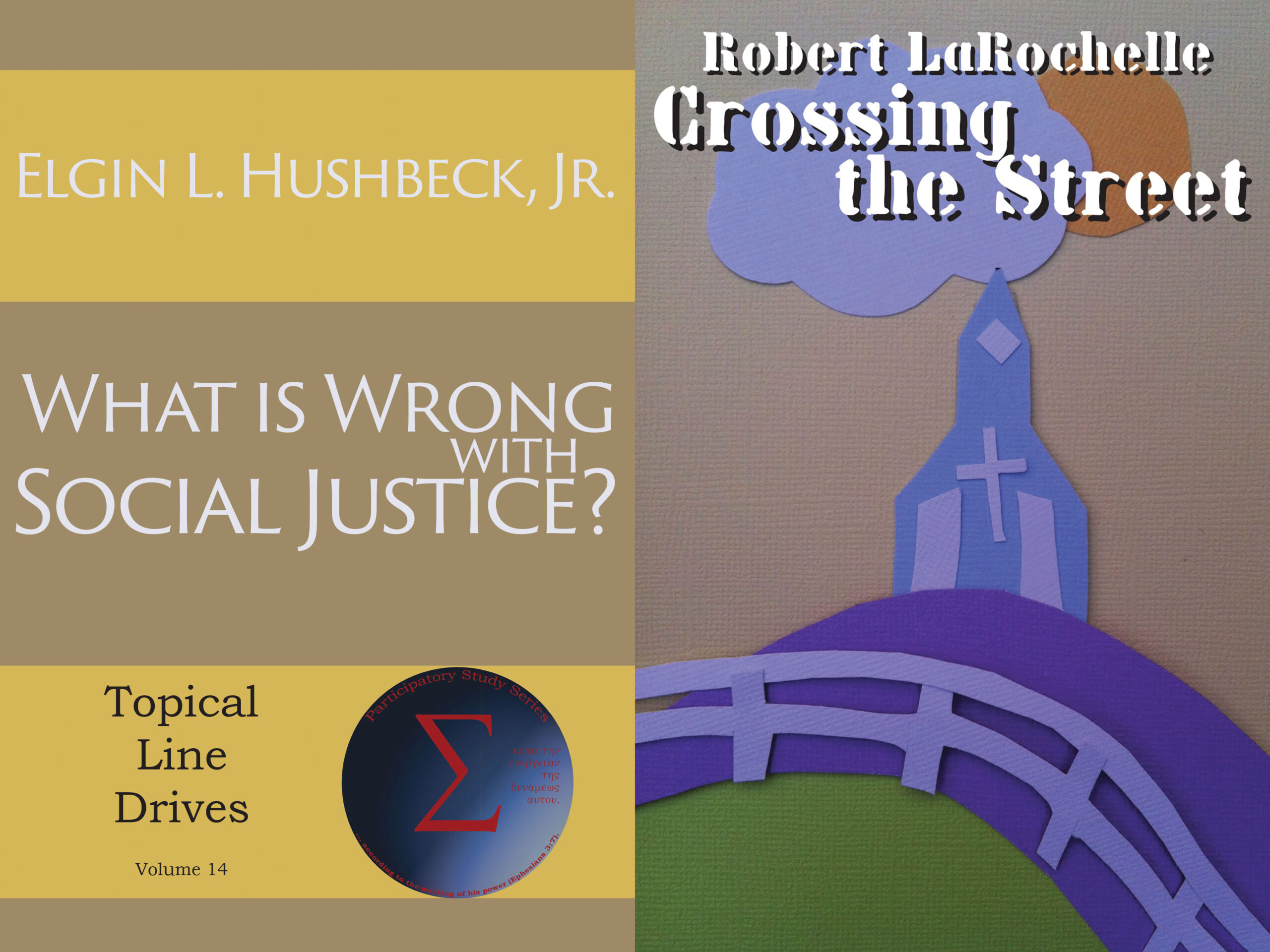
    cts_wiwwsjOn April 8, 2014, Energion authors Henry Neufeld, Shauna Hyde, and Chris Surber discussed missions in a Google Hangout on Air. You can see the video (without titles) below.

    One of the phrases used frequently in this discussion was “social justice.” Energion author Elgin L. Hushbeck, Jr. was listening, and commented to me that he objected to the term “social justice,” because, he said, once you added the adjective, it was no longer actually justice.
    I, in turn, suggested that this sounded like a good topic for a volume in our new Topical Line Drives series, and the result was the book What is Wrong with Social Justice?.
    Unsurprisingly, other authors disagree with Elgin’s position, and we’ve started a discussion on the topic. Besides the video above, you can read a review of Elgin’s book by Energion author Bob LaRochelle. Here’s some extracts:

    In the interest of full disclosure, it is important that I tell you that over the course of much of my life, I have held the position that social justice is important. In fact, I have long seen the pursuit of social justice as a โ€˜givenโ€™, i.e. as a constitutive aspect of both my religious faith and of my responsibility as an American citizen. I still do!
    ….
    As I read Mr. Hushbeckโ€™s brief work, part of Energion Publicationโ€™s Topical Line Drives series, I found myself deeply impressed with the quality of his presentation. His approach to government and his application of Biblical teachings to questions of justice within a society are well thought out and demonstrate strong, heartfelt religious conviction and philosophical consistency. As he notes, some of us who identify as liberals and are Christians all too readily characterize more conservative Christian believers as lacking appropriate compassion for the poor and marginalized. This characterization is often unfair and most certainly does not apply to Mr. Hushbeck.
    ….
    With respect to one of the major social issues of our time, health care, I would contend that there is something UNJUST when oneโ€™s health or the health of oneโ€™s children might be totally contingent upon oneโ€™s income and, in the case of those children, the income of oneโ€™s parents.

    Read the whole thing.
    This discussion should not be just about the terminology we use, but rather about how we deal with significant issues in our society, and what those issues are. Is justice to be applied to groups or to individuals? Can we provide health care to all irrespective of income (as the last extract from Bob’s review suggests) and still be “just,” “fair,” or “equitable” in how we deal with individuals?
    Bob LaRochelle and Elgin Hushbeck are going to try to help us work out some of these issues when they discuss this topic in a Google Hangout on Air on October 28, 2014 at 7:00 PM. Don’t miss it!

  • Fourfold Gospel Hypothesis: A Call for Discussion

    Fourfold Gospel Hypothesis: A Call for Discussion

    9781893729872fI have a question for our authors and readers: Is the confidence in Markan priority, generally combined with acceptance of ‘Q’ as a source, justified?
    I’m not asking whether you think Markan priority is likely, but rather whether you think the level of confidence in it amongst biblical scholars is justified.
    David Alan Black has just posted a blog about it, which I copied to WhyFourGospels.com (allowing me to link to the specific post), discussing this very question. Dave’s position is not in doubt. I publish his book Why Four Gospels? in which he outlines his case for the fourfold gospel hypothesis.
    I often avoid giving my opinion in these things, but let me just note that I believe one’s view depends to a large extent on how one weighs external vs. internal evidence, and, of course, your evaluation of particular forms of external evidence. If you favor internal evidence, then you’re likely to support Markan priority. If you think it unlikely that the church fathers either knew or accurately reported information about the authorship of New Testament books, you’ll likely support Markan priority. If not, well, not so much!
    I did such study of the New Testament as I did under people who took Markan priority as a given. I was barely aware that there was an alternative, and paid it very little attention. One might think that my mind was changed by publishing a book on the topic, but that actually came second. My belief that Markan priority was essentially a given was shattered by reading William R. Farmer’s The Synoptic Problem. I followed that up with looking at some other material by him and others.
    I am not convinced of everything Dave writes in Why Four Gospels?. I’m less concerned with issues of historicity than he is, I believe. (Note please that I did not say “unconcerned with issues of historicity.” I do believe that historical foundations are important.) But despite some remaining issues, such as that I do not see a convincing explanation for the state of the text of Mark, I think Matthean priority is more probable than that there was a hypothetical document ‘Q’.
    So what think you all?
    โ€” Henry Neufeld

Energion Direct
Privacy Overview

This website uses cookies so that we can provide you with the best user experience possible. Cookie information is stored in your browser and performs functions such as recognising you when you return to our website and helping our team to understand which sections of the website you find most interesting and useful.