
We recently released a new book in the Topical Line Drives series, What is Wrong with Social Justice?. In it Elgin Hushbeck, Jr. presents his case that “social justice” is not actual justice. In fact, he claims, it is inimical to true justice.
Energion author Bob LaRochelle has a somewhat different view. While he appreciates the tone and quality of Elgin’s argument, he continues to disagree with the main point.
Join the discussion on Bob’s blog or here.
Also: Watch here for information on a Google Hangout on Air that will feature Elgin and Bob discussing their differences on this issue. The hangout will be on October 28 at 7 pm central time.
Category: Books
-

Science, Religion, and Subjective Evidence
In our informal series of books on issues related to creation we’ve discussed how creation is represented in scripture, how one goes about forming a doctrine of creation that is truly Christian, and how someone who accepts evolution might reflect his in worship. Soon we will have a volume on how our understanding of God as creator impacts our lives now, and finally we’ll have a volume that talks about the basic science one needs to know about origins in order to understand the debates on the topic.
Chris Eyre is one of our editors working out of the UK. He’s been working on editing the manuscript for Creation in Contemporary Experience, which is coming soon. He posted something today regarding science and religion, and the nature of internal or subjective evidence. Where does our experience stand as evidence? (Note that, as a good editor, he does not cite this forthcoming book in his post, but it is closely related.)
In discussing such concepts of God as “ground of all being,” for example, he notes:They also, from my perspective, fail to explain all of the evidence, as they do not give any real insight into the mystical experience, the direct unmediated experience of God, which I take as a piece of evidence, as I mentioned above. They do have a transcendent aspect, which is singularly lacking in scientific materialism, and which is well harmonised with immanence of a sort, but it is a vastly impersonal immanence. The mystical experience is in my experience a vastly personal one, and I don’t find this reflected in “ground of all being” or “being itself” theologies, nor in the extremes of the God-of-absence of, for instance, Peter Rollins.
I need something which at least explains the mystical experience as I have experienced it, which accounts for the evidence (albeit entirely personal) I have. …In his recent book Philosophy for Believers, Edward W. H. Vick occupies an entire chapter (6: Experience and God) on this topic. In this paragraph I hear a reflection of Chris’s discussion:
For the theist the question of God is involved when the question
of the purpose of existence is raised. At such point in our lives
we may be faced with the question of the meaning of the whole,
when ‘openings into the depths of life’ lead us to ask about the
ground and goal of our existence. (p. 112)So what do you think? Is experience valid evidence? If so, does it operate only for the person who experiences, or can that evidence be shared?
-

On Words and Meanings – Link
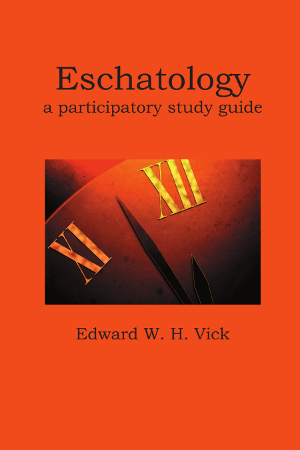
Brian Fulthorp comments on a passage from Eschatology: A Participatory Study Guide.
His conclusion:So the thought for the day is that we need to show respect to words and their various meanings and be sure that we always seek mutual understanding when conversing with others in regards to the Bible and how we talk as Christians.
Amen!
-
Excerpts from The Subversion of Christianity – The Contradictions
According to Henry, this project had its impetus in a comment made by Geoff on his blog while discussing the book Christian Archy by David Alan Black.
In the first chapter of Christian Archy, Black credits Jacques Ellul and Vernard Eller for their contributions to the topic of “Christian Anarchy” and for influencing his own thoughts and writings on the subject. I thought it would be good for us to start this project with a discussion of some of the comments of one of those two influential authors.
The first chapter of Ellul’s book The Subversion of Christianity is called “The Contradictions.” In this chapter, Ellul outlines some the basic problems that he found among the church. For example, he writes:How has it come about that the development of Christianity and the church has given birth to a society, a civilization, a culture that are completely opposite to what we read in the Bible, to what is indisputably the text of the law, the prophets, Jesus and Paul? (p 3)
What Jesus says is that those who hear his words and do them are like the one who builds on the rock. In other words, the rock is hearing and doing. The second part, however, is more restrictive. Those who hear the words he speaks and do not do them are like the one who builds on the sand. Here undoubtedly practice alone is the issue. We can thus say that it is the decisive criterion of life and truth. (p 5)
If Christians are not conformed in their lives to their truth, there is no truth. This is why the accusers of the eighteenth and nineteenth centuries were right to infer the falsity of revelation itself from the practice of the church. This makes us see that in not being what Christ demands we render all revelation false, illusory, ideological, imaginary, and nonsalvific. We are thus forced to be Christians or to recognize the falsity of what we believe. (p 7)
In fabricating Christianity, therefore, Christians have known what they were doing. They have freely chosen this course. They have voluntarily forsaken revelation and the Lord. They have opted for new bondage. They have not aspired to the full gift of the Holy Spirit that would have enabled them to take the new way that he opened up. They have made a different choice and left the Holy Spirit unemployed, idle, present only on sufferance. This is why the burning question is a purely human one: Why have Christians taken this contrary course? What forces, mechanisms, stakes, strategies, or structures have induced this subversion? For human aggrandizement and nothing else. (p 13)
quoted from Jacques Ellul, The Subversion of Christianity (Grand Rapids: Eerdmans, 1986)What are your thoughts on Ellul’s indictment against modern Christianity?