Category: Ethics

  • SAVING OURSELVES

    SAVING OURSELVES

    Enjoy, share and spread Dr. Dollyโ€™s โ€œSaving Ourselvesโ€โ€”not Coronavirus!

                     By Dolly Berthelot โ€œDr. Dollyโ€ ยฉ2020

    I like Liberty, really I do.
    Justice too.

    And privacy matters to me
    To a prudent degree.
    These very American virtues
    We want to maintain.
    Theyโ€™re worth some struggle,
    Worth some strain.
    Even worth a little pain.

    But a pandemic makes some NEW demands.
    The Future rests in all our hands.
    And in our mouths and noses, you see,
    Where vile germs can flow,
    From you and from me.
    Illness, debilitation, and death,
    Erupting, attacking from our poison breath.

    We each have great power
    To shield ourselves and others too.
    You can save me, and I can save you.
    So letโ€™s save each other,
    Me, you; you, me.
    A little discomfort
    Can change destiny.

    โ€ฆBut only if we all give a damn
    And are willing to do
    All that we can.

    Really, so little is required,
    Merely masks and distancing,
    Till COVIDโ€™s expired.

    Liberty, justice, privacy,
    Not so simple these days.
    Your โ€œfreedomโ€ could mean everyone pays.
    Your โ€œlibertyโ€ may snatch mine away
    And if your โ€œprivacyโ€ hides the monsters you spread,
    Innocent bystanders may soon be dead.
    How is that justice? How is that fair?
    Reality proves we must now beware
    Of risky behaviors we perilously share
    Simply by comingling โ€œbugsโ€ in our air.

    If only we could SEE these foul beasts
    Devouring people for their feasts
    I have no doubt
    Weโ€™d back up with ease
    And likely shout out
    In shock, fear, and pleas,
    To strangers and kin โ€”
    And view nonchalance
    As a serious sin!

    Unfortunately, this invisible foe
    When ignored will continue
    To grow and to grow.

    Whatโ€™s most demanded
    If we are to win,
    Is a deep, deep commitment
    Now to begin:
    Beyond other virtues
    I wish we all would
    Profoundly commit
    To Our Common Good!

    Without that practice
    From people at large,
    Letโ€™s face it, this virus
    Is the Master in Chargeโ€ฆ

    โ€œDr Dolly,โ€ Dolly Berthelot is a semi-retired writer, editor, communication consultant, author, former teacher, professor, and journalist, and long-time Pensacolan. Learn more at drdollyb.com and mineyourmemories1.com.

    AUTHOR NOTE: In late October 2020, my high-rise condo, which had managed to avoid COVID-19 all year, even during the ongoing chaos of Hurricane Sally damage and repairs, suddenly had five cases. I was inspired to write the poem โ€œSaving Ourselvesโ€ while fretting under strict quarantine because of my own exposure to this potentially debilitating and deadly virus. Fortunately, I didnโ€™t catch it, and our complex quickly cooperated to prevent more casesโ€”so farโ€”instead of the catastrophe that could occur. This rhyming verse addresses our mutual responsibility as individuals and as a community, a nation, and a world, to protect ourselves and others during this pandemic. If you would like to hear the poem read aloud, check YOUTube for โ€œSaving Ourselvesโ€ by Dolly Berthelot, AKA professionally as Dr. Dolly. You are encouraged to share the work online, orally, and in print for educational, motivational, or other noncommercial purposesโ€”properly credited, of course. 

    (Featured Image: Dolly Berthelot, ยฉ 2020)

  • Evil and Human Freedom

    A brief discussion of ANTONY FLEW, JOHN HICK AND FREEDOM1

    John Hick summarized the traditional freewill defense as an argument with three phases. First, Godโ€™s omnipotence is defined as excluding the capacity to perform what is logically absurd. Secondly, to claim that man is free to assert that he can choose between right and wrong. The possibility of choosing wrong is necessary for beings to be free. Men in fact realize this possibility in doing evil. Thirdly, Hick takes issue with Flew and Mackie, when they suggest that God could have created human creatures so that they would always choose the good.
    Flew pointed out that one of the ways of escaping from the dilemma concerning the goodness and omnipotence of God was to lay emphasis on human freedom. Since men are free they may do good or evil. Thus evil has its source in human freedom, for when they commit evil, men employ their freedom. That God created men free involves that they perform either good or evil. This possibility is realised in that they choose and perform evil.
    Flew argues that this position can be counter-attacked, since it affirms that โ€˜there is a contradiction involved in saying that God might have made people so that they always in fact freely chose the right.โ€™ What Flew means by freedom is that if a person had chosen to do otherwise he would have been able to have done what he so chose. To say he is free โ€˜is not to say that his actions or choices were uncaused or in principle unpredictable: but precisely and only that . . . he did what he did and rejected alternative courses of action without being under any pressure to act in this way.โ€™1 So an action can be both free and predictable in terms of caused causes. A free action is neither uncaused nor unpredictable. The natural order with its laws and causal explanations is such that there were enough known, freely chosen courses of action which could be predicted.
    Flew then argues that if it is logically possible for an action to be both freely chosen and determined by natural causes, there is no contradiction in speaking of God so arranging the laws of nature that all men always as a matter of fact freely choose to do the right.2 Hence the free-will defense cannot accomplish its stated aim: to shift the responsibility for evil from God to man. Moreover, the other lines of defense of theism then become unnecessary. There would be no need for the presence of evil in order to produce virtues, second-order goods. Nor would there be the problem of hell and damnation.3
    In short, the argument against the traditional solution to the problem of evil rests on two assertions about logical possibilities. First, that human behaviour may be determined, that is to say fitted in with and predictable on the basis of the laws of nature. (It would be a different nature from the one which we know, of course.) The notion of caused cause would apply to all human behaviour. Secondly, men always do the right. This does not mean that there would be no temptation. It means that in face of temptation, men will be more successful to resist, indeed that they would always successfully resist.
    God did not realise this possibility. So the original dilemma remains. God is either not all-good or all-powerful, or neither.
    But is it consistent to hold the crucial proposition that men may be free and always freely choose the right because they have be so created by God? Hick takes issue. While it is logically possible that God may have created human creatures so that they would always act rightly to one another, โ€˜it would not be logically possible for God so to make men that they could be guaranteed freely to respond to himself in genuine trust and love.โ€™4 That would be to make the relationship between God and man analogous to that of a hypnotist and his patient/subject. The relationship would not be one of personal trust and devotion. The concept of God would have been so radically altered as to be no longer Christian. Whatever the appearance may be, the actual relationship would be that of manipulator- manipulated.
    Hickโ€™s second objection is that the conception of freedom is inadequate. The theistic position requires a more thoroughgoing definition of freedom, stronger than that freewill is simply absence of external constraints: โ€˜. . . the Christian conception of the divine purpose for man requires as its postulate the stronger notion of free will as a capacity for choice whose outcome is in principle unpredictable.โ€™5
    What is at issue in the nature of the relationship of creature-man to Creator-God? An authentic relationship between Creator and creature demands a creativity on the creatureโ€™s part, โ€˜a genuine though limited autonomy,โ€™6 oblique to philosophical analysis (it must be admitted).7


    Footnotes
    1Antony Flew, โ€˜Divine Omnipotence and Human Freedom,โ€™ New Essays in Philosophical Theology, London: SCM Press,1955. pp. 144-169.
    2Ibid., p. 152.
    3Ibid., p. 155.
    4Hick., Evil and the God of Love. London: Collins, 1975. p. 310.
    5Ibid., p. 304.
    6Ibid., p. 313.
    7The question remains whether in affirming such freedom one must, as Hick argues is the case, assert the inevitability of the Fall. Discussion of the question of the ultimate use or misuse of such freedom will also proceed by introducing further considerations of both a theological and philosophical kind, which will have to be appropriately and critically assessed.
     
     
    [slideshow_deploy id=’2645′]

  • A Very Process Christmas

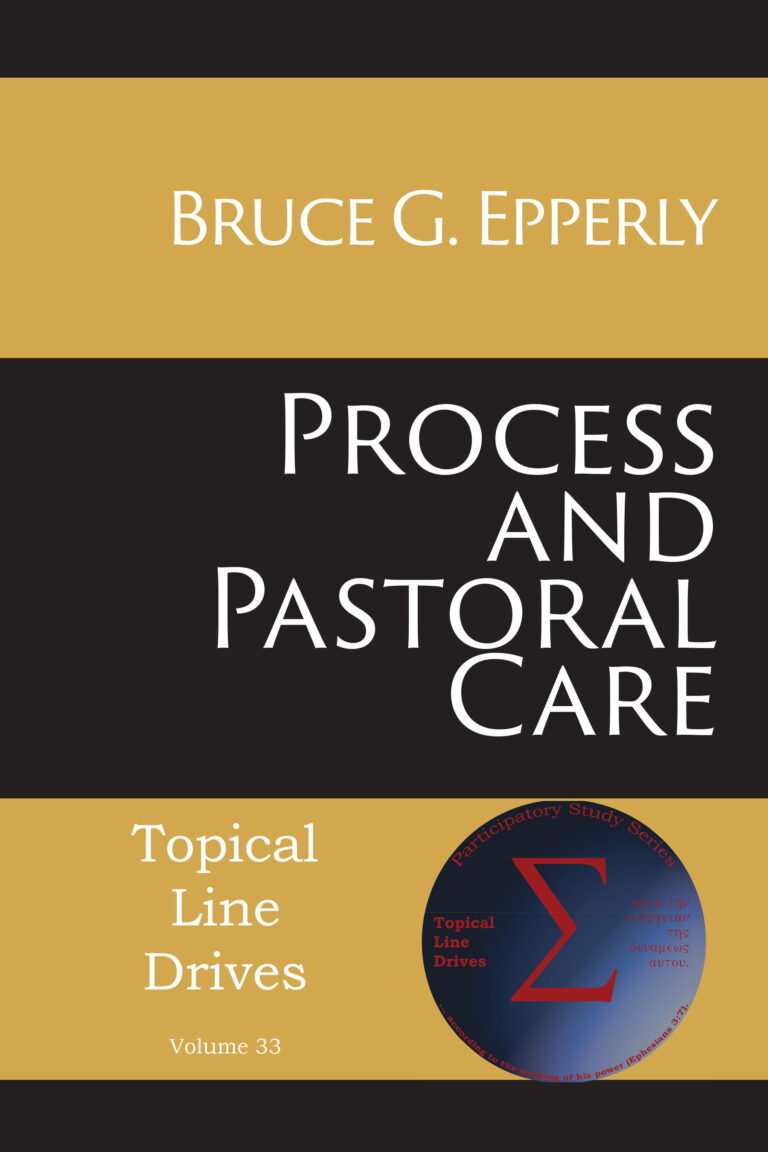
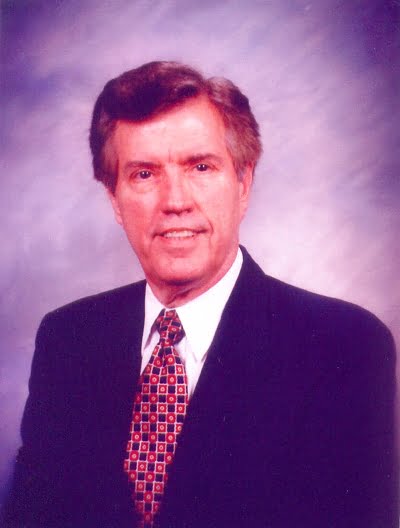
    by Bruce Epperly

    Epperly picLet me be the first person to wish you โ€œA Very Process Christmas.โ€ Process theology and Christmas just seem to fit together. That might surprise you, especially since process theology asserts that God acts naturally, through the regular processes of nature, and not supernaturally, showing up from the outside every so often to overturn the laws of nature to perform a miracle or defeat an enemy. Just the same, process theology joyfully proclaims the birth of Jesus, Mary and Josephโ€™s beloved child, and the boy who grew up to be healer, reconciler, prophet, and world-changer. God was in the stable and God is in our lives, too! Every day is an advent adventure in which can train eyes for signs of new birth in a world of threat and challenge.
    Alfred North Whitehead asserts that the world lives by the incarnation of God. God moves everywhere and in all things, seeking beauty and love. Each moment emerges from Godโ€™s inner inspiration. God midwifes each personโ€™s journey, seeking to bring forth the holiness within. God seeks abundant life for every creature, urging all things toward wholeness.
    The world incarnates God! Emmanuel, โ€œGod with us,โ€ is just as real today as it was in Bethlehemโ€™s stable. A child is born in Bethlehem and a baby cries in a refugee camp, recalling the fact that shortly after Jesusโ€™ birth, the holy family set out on a refugee journey to Egypt.
    Walt Whitman once said, โ€œAll is miracle.โ€ Meister Eckhart affirmed that โ€œall things are words of God.โ€ Julian of Norwich rejoiced that something as small as a hazelnut contained the fullness of Godโ€™s energy. If a hazelnut can emerge from the fullness of God, so can the baby growing in a motherโ€™s womb.
    Process theology proclaims that each moment is an epiphany and every encounter an incarnation. Christ is in us, and we can become Christ-bearers in our place and time.
    Bethlehemโ€™s stable is not an anomaly but the revelation of what God is doing everywhere. Our world is full of wonder, and the same love that grew day by day in Maryโ€™s womb grows in every personโ€™s life.ย ย  God gives life to our souls, but also our cells, even at the moment of conception.
    The birth of Jesus expresses the wonder-full world in which we live. The child in the manger is a miracle child, manifesting Godโ€™s holy light and giving light to all creation. But, my grandchildren and the children in your life are also โ€œmiracles,โ€ energetic incarnations of divine love. They too take birth in an amazing, complicated, and often challenging world.
    At Christmas, we listen for angelic voices, and for process theologians there are angels around every corner. Every moment brings a message from God and divine messengers abound. Godโ€™s angelic messengers speak in our hearts, inviting us to share in the birth of God in our world today.
    God also comes to us as the magi from the East, revealing Godโ€™s many-faceted wisdom giving life to every authentic spiritual quest. The unique revelation of God in Jesus of Nazareth also shines in the holy words and people of other faith traditions.
    Christmas celebrates Godโ€™s birth in a baby in an occupied land. Today, Christโ€™s brothers and sisters will take birth among Syrian refugees, inner city parents, Appalachian coal miners, grieving relatives in San Bernardino, Paris, and Beirut, and suburban households.
    The word lives by the incarnation of God! Look under the Christmas tree and youโ€™ll discover God with us. Have a very process Christmas!

    Bruce Epperly is the author of over 35 books and a number of Energion titles, including โ€œFinding God in Suffering: A Journey with Jobโ€ and โ€œProcess Theology: Embracing Adventure with God.โ€
    https://energiondirect.info/authors/authors-d-k/bruce-epperly
  • "If It's Brokeโ€”Fix It!"

    by Steve Kindle

    I'm Right coverI always enjoy hearing from our foreign missionaries. They all hold in common a belief that God always precedes their arrival at the mission field, and prepares the way. This notion is fraught with theological insights. Not the least of these is that God is with people whom we may consider โ€œlost,โ€ yet, there God is. With charity, we can call this a relationship.
    A human characteristic we all share is the tendency to regard our culture superior to all others. This would include our religions. In America, we regard democracy as the best form of government and actively seek to democratize the rest of the (backward) world. This is certainly true for most adherents of Christianityโ€”we want the whole world to adopt our faith.
    This is, of course, an extension into the modern world of ancient tribalism. Not only do we find the presupposition of โ€œWe are the best,โ€ but also the accompanying fear of those who arenโ€™t like us. Couple this with the capitalistic notion of โ€œwin or loseโ€ and you have the recipe for constant and continuing strife among the religions and peoples of the world.
    Whatโ€™s to be done about this? If you are a hardcore tribalist, you will insist on winning over all. โ€œWe have the truth and you must come to us for salvation,โ€ is the rallying cry. Nothing will change if this predisposition dominates, and it dominates throughout the world. I find it ironic, if not humorous, that those who most exemplify this attitude are the very ones most upset when they find it in others. โ€œRadical fundamentalist Muslimsโ€ deplore evangelistic Christianity. Fundamentalist Christians deplore โ€œradical Muslims.โ€ They are two sides of the same coin.
    It has been said often that the only hope for world peace is that people give up exclusive claims about their own religion and accept that they are not the only ones with the truth. This is surely at least partially true. Religious strife is as ancient as Cain and Abel (the proper way to sacrifice), and as recent as ISIL. Yet it is an impractical solution; it will never happen, at least for the foreseeable future. But this doesnโ€™t mean that the adherents of these religions canโ€™t take this step.
    Gandhi is reputed to have said, โ€œBe the change you want to see.โ€ If you feel that the answer to world peace is acknowledging the value of otherโ€™s truths, at least for themselves if not for you, then by living this out, there is one less person in the world agitating for division. Who knows? It might catch on.
    When I read in the Bhagavad Gita, for instance, โ€œThey alone see truly who see the Lord the same in every creature, who see the deathless in the hearts of all that die. Seeing the same Lord everywhere, they do not harm themselves or others. Thus they attain the supreme goal,โ€ I marvel at the truth therein, and my soul is enlarged. I love meeting people of other Books, and often find my own self failing in comparison to their lives and loves.
    Now I know the objections to this approach are many. โ€œThe Bible saysโ€ฆโ€ and โ€œWe have been given the Great Commission,โ€ just to name two. Fundamentalists will never abandon these โ€œtruths.โ€ Itโ€™s true that the Great Faiths are not teaching the same thing, but I believe that they are capable of producing the same kind of personโ€”loving, considerate of the earth, peacefulโ€”and that is the point, after all, isnโ€™t it? In fact, if Christianity produces hateful people, willing to kill others for its โ€œtruthโ€, who condemn all who disagree, and hold them in contempt, why bother with it?
    If I must go into all the world and preach the gospel, I will affirm that God loves all people, that God wants all people to love each other, and that God supports all who obey the Great Commandments regardless of where it is found or who said it. And you know what? God will already be there ahead of me, teaching the world in its own way the Truth.


  • Felix culpa: โ€œa good mistakeโ€

    by Kent Ira Groff

    Table Talk coverSometimes you can reflect on a failed project or a dumb little thing you did last weekโ€”in light of St. Augustineโ€™s concept of felix culpa. Often itโ€™s translated, โ€œhappy fault or fortunate fault,โ€ referring to the fault/fall of Adam and Eve, which becomes the occasion for each of us to realize the โ€œgrace in the gritโ€ as each of us leaves the garden our own less than perfect lives. I like to translate it โ€œa good mistake.โ€
    Only retroactively do we see good coming out of a failed experiment. But even to frame failure as an โ€œexperimentโ€ begins to redeem it. Thomas Edison could say he didnโ€™t fail, but found 1,000 ways how not to make the light bulb. Proactively, what we can do is pray to notice flecks of grace in the gaff or the goofโ€”that it can become a good mistake.
    โ€œDrops of experienceโ€ are never wasted, according to mathematician philosopher Alfred North Whitehead. When you lose computer data on new members or drive two hours to a hospital to visit a cancer patient who was just discharged or eke away hours learning new technology for a website, tell yourself: All that time I spent praying for new members or for folks with cancer or for our congregation to connect with tech generations.
    Hereโ€™s a really good mistake. In September 1928 Alexander Fleming returned to the laboratory of St. Maryโ€™s Hospital in London after being on holiday for a couple of weeks. He discovered Petri dishes that his students mistakenly left in an incubator had formed mold in the dank atmosphere. Fleming noticedโ€”and noticing is the miracle of any genuine discoveryโ€”that the mold had killed a ring of bacteria. Flemingโ€™s surprise discovery of penicillin is a real life story of how a good mistake created the gift of healing for generations. His vacation led to his vocation.
    Micromanaging. The need to control people and situations is one of the demonic expressions of perfectionism. At the root of the demon of micromanaging lies a secret fear of shame: I donโ€™t want anotherโ€™s half-botched job to reflect poorly on my own self-competence. Another demon behind micromanaging is failing to trust in God by not trusting people.
    Humility in a strange way is actually spiritual self-confidence: confidence that you can celebrate the gifts of others, rather than belittle them, while at the same time claiming your own. Itโ€™s a God-confidence that there are enough gifts for both your neighbor and you to claim your potential for the good of the cosmos, without exploiting or belittling each other. And thatโ€™s a good definition of Greek telios: matureโ€”even though not perfect.
    Spiritual Practice: โ€œLet It Beโ€ Listen to the Beatlesโ€™ song โ€œLet It Beโ€ (on iTunes or CD). โ€œMother Maryโ€ refers to Paul McCartneyโ€™s dream of his mother, who died when he was fourteen. The title also can be heard as a subtle take on Maryโ€™s response when the angel Gabriel announced she would bear a childโ€”seemingly impossible: โ€œLet it be to me according to your wordโ€ (Luke 1:38). As you hear โ€œLet it beโ€ฆโ€ in your mind imagine letting go of an issue that you canโ€™t control, or accepting a challenge that may want to โ€œbirthโ€ itself in you.


  • Liberty vs Law

    Liberty vs Law

    by Elgin Hushbeck

    Democracy coverA recent Global Christian Perspectives focused on the subject of rights and during the discussion the claim was made that liberty is not a biblical concept (@ 35:45). Personally I found this to be surprising. I believe liberty, and the nearly synonymous freedom, goes to the very heart of the Bibleโ€™s message. God created us with the ability, not just to react, but to make choices, the most important of which is whether or not we choose to love and serve him.
    Then there is the verse that on the Liberty Bell: Leviticus 25:10 โ€œSet aside and consecrate the fiftieth year to declare liberty throughout the land for all of its inhabitants. It is to be a jubilee for you.โ€ Why bother declaring liberty throughout the land if liberty was not important?
    In the New Testament Paul writes in Galatians 5:23 โ€œFor you, brothers, were called to freedom. Only do not turn your freedom into an opportunity to gratify your flesh, but through love make it your habit to serve one another.โ€ 2 Cor 3:17 says โ€œNow the Lord is the Spirit, and where the Lord’s Spirit is, there is freedom.โ€
    The defining event of the Old Testament is the Exodus, where God brought his people out of slavery, and in fact a state of slavery is pretty much the opposite of liberty. The defining event of the New Testament is the death, burial and resurrection of Jesus by which we are set free from the bondage of sin (Romans 6:7), and brought into the liberty spoken of in the verses above.
    Now perhaps some will counter with Roman 6:18 โ€œAnd since you have been freed from sin, you have become slaves of righteousness.โ€ This is true. The freedom we have in Christ is not a freedom to do whatever we want. As Paul says โ€œShould we go on sinning because we are not under Law but under grace? Of course not!โ€ (Romans 6:15).
    But it would seem that many are uncomfortable with liberty. If people are free to make choices, they might make choices that we disagree with. They might choose to do something other than what we think they should.
    The history of both Judaism and the Church is full of those who have sought to create a whole range of new rules to limit peopleโ€™s freedoms. Thus, over the years Judaism, surrounded the 613 laws of the OT with thousands of additional laws. Christians down through the ages have also had a tendency to add new rules that Christians should follow such as prohibitions on drinking, smoking and dancing.
    This problem of seeking to limit freedom has afflicted both the right and the left. But in recent years those on the left have begun to push a new form of legalism. Not only do they seek to add a series of religious rules and regulations that we should follow as Christians, now they want to put the power of the government behind their rules and force everyone to follow their new legalism under threat of violence. If any should object to the phrase โ€œthreat of violenceโ€ here, they are neglecting that this is what government does. If you do not believe this, just say no to the government and see what happens should you resist.
    For me, this is a real problem. Galatians 5:1 says โ€œThe Messiah has set us free so that we may enjoy the benefits of freedom.โ€ Liberalism seeks to put us again under a yoke of a law of their making. They justify this claiming that they are only seeking to legislate biblical principles, such as helping the poor, or that the Bible demands 100% of our money and that justifies a high rate of taxation.
    Yet I would argue that there is a significant difference between voluntarily choosing to give to the poor because you seek to follow the teaching of our Lord on the one hand and having the state automatically take money out of my paycheck that I do not see, so they can spend it on programs I am unaware of to help people I do not know.
    The studies on giving and happiness are clear. There is a reason conservative tend to give more of their time and money to charity than liberals. In addition they are as a general rule happier. As Christians do we have an obligation to help the poor? Of course we do. But the fact that we, as followers of Jesus, have an obligation does not mean that we should make this a function of the state, funded by taxes, which at least in the United States are paid by an ever decreasing number of the people. In the United States, for example, for the bottom 40% of those filing income tax returns, the income โ€œtaxโ€ is actually a source of income rather than something they pay, as they get more money back in refunds and credits than they actually paid in.
    Then there is the problem that the government makes what would have been a gift of charity and an expression of the love of Christ working through us, into an entitlement that is demanded. These entitlements often build a dependence that is itself a new form of bondage.
    As such I do not believe that our obligations as Christians should be transformed into mandates from the state. To do so makes a mockery of the liberty that God has given us and is often detrimental to all involved.


  • 3 WAYS TO TELL IF YOUโ€™RE IRREDEEMABLE

    3 WAYS TO TELL IF YOUโ€™RE IRREDEEMABLE

    by Nick May

     MINUTEMEN was a book I wrote that repeatedly caused my mom to ask, โ€œHow can you tell a story with no redemption?โ€ She questioned whether or not it was even biblical to do so. I questioned whether or not I even cared. Regardless of my attempts to write stories with no moral or tidy sense of redemption, such elements often have a hard time staying buried for long within lines about real people in authentic situations. Even I couldnโ€™t spin a yarn (knowingly or unknowingly) without some kind of inherent moral compass. Maybe you identify with one of the four dudes from my sophomore title. Just in case, here are 3 ways to tell if youโ€™re irredeemable.
    Your current life path was determined by a girl you no longer know.
    This one is funny, because I assume it could pertain to a male or a female, but I hear more stories about girls attracting guys down ambitious roads that, at some point, bear a flagrant fork in their destinies. Think back for a moment. Are you sitting where youโ€™re sitting today because some girl you liked was a part of something you might have never discovered without her? I think youโ€™ll be surprised at how many of your life choices are a direct result of chasing teenage girls who now have kids that look half like what your potential child would have lookedโ€ฆ
    Somewhere back there, you chose beef stew over birthright.
    Some of us may have taken the shorter route to satisfaction. Maybe we saw that long haul and decided it was just too much gas. Thom, John, Nate and Ezra (the bookโ€™s main characters) each display a piece of this mindset in their own way. Thom believes heโ€™ll never love again, John believes he never should, Nate doesnโ€™t even understand love, and Ezra, well he finds a way to have his stew and eat it too. In each of their cases, the boys give up meaningful commitments in favor of immediate belonging.
    Your long-term plan looks more like an escape plan.
    Thereโ€™s a mess that youโ€™re standing right in the middle of. You made it, now youโ€™re making your bed in it. Maybe you didnโ€™t even make the mess. Maybe you were born into it, like a pig in the pods, and thatโ€™s your excuse. Either way, youโ€™ve probably uttered the phrase: โ€œIโ€™ll be so glad when Iโ€™m out of this townโ€ฆthis jobโ€ฆthis relationship.โ€ Trust me, no plan worth keeping is one that begins with you running away from something.
    If thereโ€™s one thing MINUTEMEN did right, itโ€™s scare folks. It may surprise you that Iโ€™ve never cast a shadow on the door of a strip club, or been inside a rundown beach motel where theyโ€™re cooking crystal meth for frisky hazwopers, but I know, first hand, that messy people most certainly exist, and they absolutely lead messy lives. A lot of us would call these kinds of bottom feeders irredeemable. Iโ€™ll let you judge for yourself.


  • What did Jesus say?

    What did Jesus say?

    by David Cartwright

    ย ย ย ย ย ย ย Coverย ย  Of the three questions that drive my quest for an answer concerning the paradoxical teachings of Jesus, โ€œWhat did Jesus say?โ€ would seem to be the easiest to answer. On the surface, โ€œWhat did Jesus mean?โ€, and โ€œWhat would Jesus do?โ€, surely require more reflection and discernment. Not so, Iโ€™ve found, during my study of these sayings of Jesus. In fact, all fifteen sermons in my book deal with the question, โ€œWhat did Jesus say?โ€ with varying degrees of difficulty and success. Whether it is โ€œTo Speak or Not to Speakโ€, โ€œA Public or Private Affairโ€, or โ€œTo Turn the Cheekโ€, each is a representation of the on-going struggle to uncover what Jesus actually said.
    An example can be found in complimentary passages from the gospels of Matthew and Luke. I am thinking right now of a passage that I could have included in my book, but for some reason at the time of writing, escaped my search. It all has to do with loving oneโ€™s enemies. The discussion can be found in Matthew 5, The Sermon on the Mount, and Luke 6, The Sermon on the Plain. Both report Jesus saying, โ€œLove your enemies.โ€ Matthew 5: 44 puts it this way, โ€œLove our enemies and pray for those who persecute you.โ€ Luke 6: 27: โ€œBut I say to you that hear, love your enemies, do good to those who hate you.โ€ So far, so good, as far as I can tell. But then we come to Matthew 5: 47, โ€œAnd if you salute only your brethren, what more are you doing than others? Do not even the Gentiles do the same?โ€ Compare Luke 6: 34: โ€œAnd if you lend to those from whom you hope to receive, what credit is that to you? Even sinners lend to sinners, to receive as much again.โ€ Notice that Matthew, a Jewish Christian, uses the loaded word, โ€œGentiles.โ€ Luke, a Gentile himself, uses the much more generic word, โ€œsinners.โ€ What did Jesus actually say? One of these, or perhaps, both? And to make matters even more puzzling, this is one of those places in scripture that we call โ€œQ,โ€ where Matthew and Luke are evidently following a source that is not in the gospel of Mark. Conceivably, Jesus may have said something that neither Matthew nor Luke chose to incorporate in their reports. My hunch is, that is all we can know until we find the lost source โ€œQ.โ€ It seems clear to me that both Matthew and Luke chose words that their audiences would or could relate to.
    But thereโ€™s an even more intriguing saying that also reflects the biases of these two gospel writers. In Matthew 5: 48, Jesus says, โ€œYou, therefore, must be perfect, as your heavenly Father is perfect.โ€ While Luke 5: 36 concludes, โ€œBe merciful, even as your Father is merciful.โ€ Which is it? Or both? Or again, did Jesus say something entirely different that neither gospel writer chose to use? As I said before, we simply do not know.
    For myself, I can see how Jesus may have at one point in his ministry said, โ€œBe perfect,โ€ and at another time, โ€œBe merciful.โ€ The overarching point of agreement is that Jesus is telling us that we should emulate these qualities of our heavenly Father. We should strive to be as perfect (complete) and as merciful (compassionate) as God is and desires us to become.
    Iโ€™m glad for this opportunity to expand my thought, as I wish I had spent some time on these sayings and included them in my book. Which is only to say that my quest to answer the three questions continues.


  • what did jesus mean?

    by David Cartwright

    ย Coverย ย ย ย ย ย ย ย  Itโ€™s funny what we remember and what we forget. Some things stick with us for a lifetime. Others refuse to come to light. One insight that has stayed with me now for fifty years is a comment one of my professors made while I was in divinity school. The class was discussing various views of the doctrine of the Eucharist. Speaking of Reformation viewpoints, the professor said, โ€œWhat you have to realize is that Lutherโ€™s question was, โ€œWhat does the text say?โ€ Calvinโ€™s question was, โ€œWhat does the text mean?โ€ That is the basis of their disagreement on Jesusโ€™ words, โ€œThis is my body.โ€ Luther came away from the text with a doctrine of the ubiquitous presence of Christ in the elements, while Calvin believed in a memorial interpretation. After all, as Calvin put it, Christโ€™s body cannot be in the elements since Jesus ascended into Heaven. Needless to say, the discussion has continued to this day, with a sordid history of in-hospitality on both sides of the divide. What did Jesus mean when he said, โ€œThis is my body.โ€?
    Well, thatโ€™s not the only scriptural saying of Jesus we could reflect on. Thereโ€™s an interesting place in the Gospel of Luke (Chapter 22) that suggests that some of Jesusโ€™ disciples were carrying weapons. Earlier in Chapter 10, Jesus had explicitly told his disciples to go out with no bag, no purse, no sandals. Now he tells them to sell their cloak and buy a sword. Picking up on this, the disciples say โ€œLook, Lord, here are two swords,โ€ most likely the ever-present near-Eastern dagger. Jesus replies, โ€œIt is enough.โ€ What on earth could he mean? Does he mean that two swords are enough? Thatโ€™s all they need. Some commentators say no. These commentators say that this is not what Jesus meant at all. Others take a slightly different tack. They say that when Jesus saw that even his disciples were carrying swords, his heart was broken. They hadnโ€™t gotten his message of non-violence. Still others say that Jesus is simply acknowledging that there is no way around violence in this world. โ€œLet them have their way.โ€ And sadly, even his disciples will be a part of it.
    Obviously, the interpretation of this passage continues to cause us to reflect on the question, โ€œWhat did Jesus mean?โ€ The Two Sword passage has been used by some to justify going to war and by others to justify having nothing to do with war. Personally, I can see how these scriptures might apply both to situations of war and of non-violence. That is why I personally cannot conclude that Jesus is a pacifist, as many believe; nor do I think heโ€™s an insurrectionist, as at least one is saying these days. Taken together with other things Jesus had to say, these scriptures help me see what the other side is talking about. Specifically, Luke 10 and Luke 22 taken together at least force us to ask the right questions, if not ultimately arriving at the answers weโ€™re looking for. For instance, what are we to make of the use of drones in air strikes? What would Jesus think of this? As a Christian, all I can say is that finally itโ€™s up to us to make the hard decision based on what we think Jesus means. That is the one thing I am confident that Jesus asks of us.
    Next time: What did Jesus say?


  • What would Jesus do?

    by David Cartwright

    ย ย Coverย ย ย ย ย ย ย  In my book on the paradoxical teachings of Jesus, there are three questions that prompted my quest for answers and shaped the course of all fifteen meditations on the sayings of Jesus. โ€œWhat did Jesus say?โ€, โ€œWhat did Jesus mean?โ€, and โ€œWhat would Jesus do?โ€ Although, thatโ€™s the most helpful order to deal with the questions, most often that is not the way these questions are experienced. Usually, I find that most of us proceed the other way around. We begin with โ€œWhat would Jesus do?โ€ Then turn to โ€œWhat did Jesus mean?โ€
    And finally arrive at the most basic one, โ€œWhat did Jesus say?โ€ Maybe, because the most common approach appears to begin with the most obvious and least difficult. For my part, thereโ€™s enough obscurity and difficulty all along the way. However, in these three posts, I have decided to begin with the usual experience of the action question, โ€œWhat would Jesus do?โ€
    Not too long ago, it was very popular in many Christian circles to wear a little wrist band with the initials, WWJD. As a pastor, I remember seeing many young people in my congregation with these bracelets. Also, around the same time, there were visible yellow wrists bands with the words, LIVE STRONG, a promotion of Lance Armstrong, when he was at his best and highest in popularity. These are two approaches to living the good life. One, a call to reflection, and the other, an admonition to perfection. Neither of these approaches provides a concrete answer or program on how exactly one is to go about this. The best thing about both of these approaches is that they leave the specific outcome up to the person wearing the bracelet. We all know what happened to Lance Armstrong, and I havenโ€™t seen many of those bracelets around recently. For that matter, I havenโ€™t seen a WWJD wrist band in a long while either. Still as a Christian pastor, I think that these approaches are not altogether off the beaten track to good ethical living.
    But looking for a definitive answer from Jesus can be quite challenging. For many times, itโ€™s not all that clear what Jesus would do, and often times it gets down to โ€œit all depends.โ€ Take for instance, the matter of the response to Jesusโ€™ healings. One time Jesus tells a man cured of leprosy not to tell anyone about what has happened (Mark 4) However, at another time, Jesus seems perfectly content to let another cured man go and spread the good news (Mark 5). What are we to make of this? It just so happens that the first man is a Jew in Jewish territory, and it is early in Jesusโ€™ ministry, and Jesus is trying to be on good terms with the authorities. To the other cured man, a Gentile in โ€œthe Gerasenesโ€, Jesus seems to be saying that the man can speak his piece, because at the moment the environment is receptive to what Jesus is about.
    What would Jesus do? And what would Jesus do today in the 21st century? It all depends. But one thing is clear. There is always an appropriate response, but it may differ under specific circumstances.
    Next time: What did Jesus mean?


Energion Direct
Privacy Overview

This website uses cookies so that we can provide you with the best user experience possible. Cookie information is stored in your browser and performs functions such as recognising you when you return to our website and helping our team to understand which sections of the website you find most interesting and useful.