Category: Hermeneutics

  • A REAL PROBLEM IN THE CHRISTIAN CHURCH

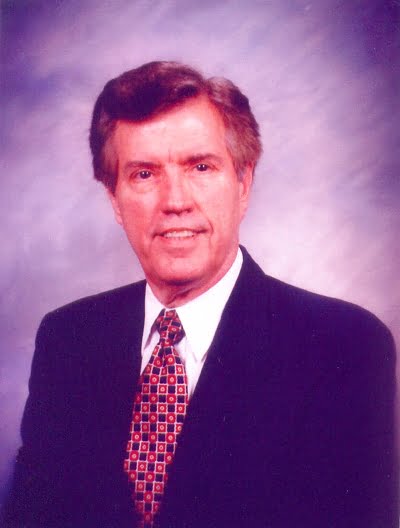
    by Rev. Dr. Robert R. LaRochelle

    CrossingTo be honest with you, my original intent in writing this article was to do a followup look at the visit of Pope Francis to the United States. I was planning to look at Catholicism and Protestantism in relation to one another at this point nearly 500 years after the onset of the Reformation. As many readers of this page know, I have written extensively about Protestant- Catholic relations in three different books published by Energion: my autobiographically based Crossing the Street, as well as the Topical Line Drives titles What Roman Catholics Need to know about Protestants and What Protestants Need to know about Roman Catholics.
    As part of this post, I intended to reflect upon the lingering anti-Catholicism that exists within some pockets of Protestant Christianity. Yet, upon further reflection and based upon my reading of several posts and discussions in this space over the last couple of months, I have concluded that there is something even more problematic within the Christian church.
    Christian FUNDAMENTALISM and its partner BIBLICAL LITERALISM continue to be real problems within the Christian community. Through their assertions, those espousing the fundamentalist, literalist approach to the Bible render dialogue difficult within the Christian community and the opportunity for healthy interfaith relationships essentially nil.
    Fundamentalism is marked by the age old conviction that, in reading the Bible, we should be governed by the principle that, in effect, God said it, we believe it and thatโ€™s final! Now, while it might be nice if religious faith were as simple as that, we know that it is not. We understand that the Bible often contradicts itself in both facts and theology, i.e., there are different views of God and Godโ€™s activity within the Bible. Also there are moral issues which are problematic, e.g., some passages which are used to defend slavery, segregation and the subjugation of women. Then there is the assertion that there is absolute moral authority found in the Bible as applicable to each and every contemporary social issue we face, most recently evidenced in debates about gay rights.
    Literally interpreted Biblical Christianity points us in the direction of espousing a God who is too small, a God in whose eternal presence we will bask ONLY if we assert faith in Jesus as our personal Lord and Savior. Extreme Fundamentalism renders the faith of Jews, Muslims, Buddhists and Hindus inadequate in terms of the attainment of salvation. It renders the path to everlasting life as lacking depth or substance. In my book A Home United, also published by Energion, I affirm the importance of love in the relationships/marriages of those from different perspectives, a love grounded in Godโ€™s love for us. Biblical Fundamentalists would disparage that claim- and I think that is a problem. It is the transcendent love of a God who transcends all that has both created and sustained humanity, the world and this universe in which we all reside. It is this love which is the true ground of our very being!
    Fundamentalists have defended some of the most abhorrent practices in the life of our nation- and they continue to do so. They have made serious ecumenical and interfaith dialogue less possible than it ought to be.
    As a starting point for discussion, I suggest a serious reading of John Shelby Spongโ€™s book Rescuing the Bible from Fundamentalism. If you read it or have read it, I would welcome your comments here as well as anything you have to say about this post.
    THANKS for giving this topic some thought!!………………
    ย 

  • Going Deeper in Bible Study

    by Henry Neufeld, Publisher

    Learning coverRecently I was listening to an explanation of a Bible passage by a writer who shall remain nameless. In the course of this explanation it became clear that the writer had an overriding agenda, and by that I mean an agenda that overrode the story told in the text. It became his story as he repeatedly informed his readers of what other, less enlightened people believed the passage meant and then strongly affirmed that if we studied the passage โ€œmore deeplyโ€ we would discover that his conclusion was the correct one.
    The problem was that at no point in his explanation did he explain what there was โ€œdeeperโ€ in the passage that would support his particular interpretation. He simply affirmed and reaffirmed that if we would just look deeper we would see that his conclusion was inevitable.
    I should note that my own understanding of the passage clashed vigorously with his. It could be that Iโ€™m biased. But I never heard him point to any particular element of the passage in question that would suggest his understanding over what he was describing as the dominant one for the passage, one that he thought was very wrong and even dangerous. I actually think both his and the traditional understandings leave something to be desired. But that passage is not my subject.
    Similarly, I have heard many proclaim that if one just looks at a passage in context, one will discover that it means something quite different than it appears to mean on the surface. Much less frequently the person speaking will explain just what context is in view (historical, grammatical, structural, literary, etc.) and just how that context changes the surface meaning.
    Donโ€™t get me wrong here. The most obvious surface meaning of a scripture is very frequently not what the original author intended. If seen in proper historical, cultural, and literary context it may well mean something different. But these elements of context are something that a serious student needs to discover and then express. And thereโ€™s another important context: The context of our own experience and biases.
    I do not intend in this essay to propose methods of Bible study. Iโ€™ve written two books that are relevant to this process: Learning and Living Scripture (with Dr. Geoffrey Lentz) and When People Speak for God. What Iโ€™m suggesting here is that if we go deeper we have to ask โ€œin what wayโ€? If we study the context we need to outline the connections that we make and how those questions impact our understanding. If we are trying to see things from a broader perspective, what is that perspective?
    When I was in college taking a major in Biblical Languages, I encountered the historical-critical method. I also immediately encountered the controversy that there is around this. One was surrendering the notion that God had inspired the Bible if one used the historical-critical method. On the other hand, one was denying the intellect and going against science if one avoided it.
    I at first embraced this method for a simple reason: It was pursuing what I had thought was the goal of Bible study. Letโ€™s get closer to the sources and thus get at the real truth. Form criticism could take me back to original forms of a saying so that I could hear it more like it was when it was first spoken. Redaction criticism let me look at the process of producing a book in the form in which it appeared in scripture. Source criticism let me look at documents that preceded the ones I actually had in front of me.
    I was digging back into history. I was getting closer to the source. I had never framed it in this way, but God was at the source, and if I could just get right back there I would know precisely what God had to say to me without any doubt.
    But then inadequacies began to show up in my new-found methods. Source criticism might explain how there were two creation stories and how they might differ, but if source criticism was the explanation for the differences, what explained the fact that they had been combined into one document? If they were too different to have been written by the same person, why could the documents written by two persons be combined, successfully, into one by yet another person. Was this latter person too stupid to see the differences? Did he just not care?
    Enter canonical criticism. Letโ€™s look at the text as we have it in its canonical form, the form accepted by the community of faith over time. In this case, I look at the text as it is and ask what I can learn from the current form. This is all very nice, but I had to ask myself if the current form is the important thing, then why does it have such a tangled past? If the current form is so good, were those who lived with its predecessors spiritually crippled?
    While I could certainly pick holes in just about any critical theory, I could also see the ways they picked holes in some of the traditional views of how we got biblical books. There was plenty of room to critique the details of the sources of the Pentateuch, such as dating and the exact boundaries between them, but at the same time sources could explain the reason why many things were there that otherwise made no sense.
    It was at this point in my thinking that I started to refer to โ€œcritical methodologiesโ€ rather than โ€œhistorical-critical method.โ€ No, thatโ€™s not original with me, but I donโ€™t even remember when I first encountered it. It just seemed to fit the need.
    Early in my studies I had some difficulty with the criticisms of one methodology by practitioners of another. Then I began to note that people tended to grab hold of one particular approach and stick with it. To a person with a hammer everything is a nail. To a form critic, everything was orally transmitted. To the redaction critic, there must have been a process of editing. To the source critic, all books have sources. And to the advocate of canonical criticism, it was obvious that the canonical form of the text, accepted by the church as Holy Scripture, was the one to study.
    So I went back to sources. Not document sources. Not historical first sources. Philosophical sources. Where do I start in my exploration of the Bible? My starting point is this: I believe God is active in history. Iโ€™m going to again bypass all the issues of why I believe this and in what way I believe God is active. I will simply note on the latter point that I prefer to say both that God can intervene, but that this intervention is more an internal process that we might ever imagine. (On this point, see Edward W. H. Vick, History and Christian Faith, though I had not read his book when I first took up this approach.)
    If God is active in history, why would I believe that God was more active in one piece of history than another? More precisely, why would I believe that God was more active at one point in the history of the text than at another?
    And thus I got a new definition of โ€œgoing deeper.โ€ I now consider it important to go deeper into the history of the text, not as I did when a college student trying to get closer to the mouth of God, but rather to see God in action in the production of the text. Form criticism, to the extent it works, takes me to a point where I can see, through a glass darkly, early people telling stories of their God around a camp fire. Sources let me see communities that contributed to my community bringing Godโ€™s stories together. Redaction criticism let me look at those communities trying to bring their variant stories of Godโ€™s activity into one stream.
    In turn, once there was a text to be transmitted in writing, the variants in the text told me the story of transmission and preservation. I can certainly use text-critical principles to get a text closest to the original, but in those variants I can also see Godโ€™s people struggle with the meaning of that text. Instead of becoming concerned about errorsโ€”and there are many errors in transmissionโ€”I started to see each document as somebodyโ€™s Bible, or a portion of it. However much I might treat it as a source of data, textual variants, for someone, the manuscript in front of me was Godโ€™s Word.
    As people then create translations and editions, instead of seeing some corruption of an early source, I see Godโ€™s people both passing on and shaping the story of Godโ€™s action while at the same time shaping it for generations to come.
    This is just one strand of the way we read and tell the story of Godโ€™s people. God is no longer, for me, the distant person that I search for at the end of a long process, whether the historical-critical process I learned in academic work, or the historical-grammatical study I learned when I was younger. God is, for me, the one who is in and through everything, who spoke and yet speaks, who is obscured in the tales of old, and often equally obscured in ours, who may be clearly seen in some events in the past, but may also be clearly seen in my own home.
    And then as I tell that story and shape that story, I know that God will still be active.
    Bible study, in this sense, is not a spectator sport. Itโ€™s a participatory sport. Donโ€™t get upset that Iโ€™m calling it sport. Itโ€™s often one of the greatest sports that there is. To use examples from baseball, as we interpret, we can throw balls and strikes. We can hit a ball in a way that looks hopeless, but due to someone elseโ€™s error nonetheless it results in a run. Or we can do everything perfectly in terms of technique and still get nowhere.
    And because God is with our study every bit as much as he was with the most ancient source, we donโ€™t have to worry. We can go ahead and play at whatever skill level. Just remember that none of us play the game to perfection.

  • WRONG ASSUMPTIONS ABOUT JESUS AND ISRAEL

    Care RootsChristians who have not realized and valued the Jewish roots of the Church can have wrong assumptions about Jesus. For instance, a famous work of art, โ€œThe Last Supperโ€ by Leonardo daVinci, is in error in almost every historical detail, but the Church has never questioned this depiction of the Lord Jesus Christ and His disciples. Dwight Pryor of The Center for Judaic Christian Studies points out that The Last Supper was actually a Passover Seder, and the correct setting is in the evening, commemorating the night the death angel โ€œpassed overโ€ the homes of the Israelites as they were preparing to flee Egypt. In the painting fish and bread are served, but the food Jesus and His disciples had was matza (unleavened bread) and a lamb from the Temple sacrifices. In the painting Jesus is seated upright at the center of a long table. However, Jesus and his disciples would have been reclining on the floor on cushions, leaning around a u-shaped table called a triclinium. Jesus, the guest of honor, would have been placed in the second position from the right end. Instead, daVinci painted โ€œthirteen Europeans in Renaissance clothing having a midday meal in an Italian palace!โ€ says Pryor. Jesus was robbed of His Jewish identity!
    We lost the awareness of the Jewishness of Jesus and of Christianity when the Church began changing from a fully Jewish membership (about ten years after Pentecost) to a Gentile religion, especially after the dispersion of the Jews following the Second Jewish Revolt of A.D. 135. A famous Jewish evangelist, Jonathan Bernis of Jewish Voice Ministries, said that before his eyes were opened to see the true identity of Jesus of Nazareth, he thought Jesus was the son of Mr. and Mrs. Christ! His false assumption was similar to that of the brothers of Joseph when they were sent from Canaan by their father Jacob to Egypt to buy grain during the famine. Joseph, the Prime Minister of Egypt, appeared to them to be a Gentile. How shocked they were later when he revealed himself as their own brother! (Gen. 42-45) Just as Joseph was โ€œreceivedโ€ as โ€œSaviorโ€ from the famine by the Gentile Egyptians, in the same way Jesus was received as Savior from sin by the Gentiles. But the time is coming and is already here when the Jewish people will recognize their Jewish Messiah, just as Josephโ€™s brothers finally recognized him, โ€œand all Israel will be savedโ€ (Rom. 11:25-26).
    Christians can have wrong assumptions about Israel also. Many wrongly assume that the Arabs and Jews should share the land equally, but they donโ€™t take into account that the covenants God made with Abraham, Isaac, and Jacob (name changed to Israel) regarding the land are everlasting covenants. Those who donโ€™t respect the authority of the Bible but lean on their human understanding have made wrong assumptions. God made generous provisions of land for the Arabs, descendants of Ishmael and Esau, but His covenant was with Abraham, Isaac, and Jacob/Israel (Gen. 17: 18-21). Moreover, He identified Himself to Moses as the God of Abraham, Isaac, and Jacob, saying โ€œThis is My name forever, and this is My memorial to all generationsโ€ (Ex. 3:15). Their descendants, the Jews, were promised the Holy Land, which was first defined to Abraham as the land from the Nile River to the Euphrates River (Gen. 15:18). That includes the so-called โ€œWest Bankโ€ (Judea and Samaria) where many Jews have bravely settled and claimed their biblical inheritance in the midst of hostile Muslims.
    Even though the Palestinians continue to threaten that they will push Israel into the Sea, God has guaranteed that Israel will exist as long as the sun, moon and stars exist! (Jer. 31:35-36) The Muslims do not want a state alongside the state of Israel; they want a land devoid of Jews. It is not a territorial dispute, because the 22 Arab nations have over eight million square miles of land (rich with oil), and Israel has only eight thousand, six hundred thirty square miles. God has deeded the land to Israel, a fact which the world rejects, because they reject the authority of Godโ€™s Word.
    The Palestinian-Israeli conflict is actually a religious, and indeed, a spiritual conflict.ย  All peace plans have and will fail because of misunderstanding this.ย  When Israel was recreated in the center of the Islamic heartland in 1948, demonstrating that the Bible, and not the Qurโ€™an, was Godโ€™s true Word, this was a direct challenge to Islam.ย  The Qurโ€™an demands that jihad be waged until Israel is wiped out.ย  Today the Covenant of the Hamas states, “Israel will exist and will continue to exist until Islam will obliterate it, just as it obliterated others before it.” (The Martyr, Imam Hassan al-Banna, of blessed memory).ย  The Islamic Resistance Movement believes that the land of Palestine is an Islamic Waqf consecrated for future Muslim generations until Judgement Day. It, or any part of it, should not be squandered: it, or any part of it, should not be given up. There is no solution for the Palestinian question except through Jihad. Initiatives, proposals and international conferences are all a waste of time and vain endeavors.”ย  This Covenant is based on Mohammedโ€™s โ€œhadithโ€ (sayings and laws transmitted orally) in which He claimed the Final Hour will not come until Muslims slaughter Jews, and even the rocks and trees will betray the Jews hiding behind them.ย  This portrayal of the Final Hour means a Muslim, who by faith has to believe in the Hour, has to also believe in this mass slaughter of Jewsโ€ (http://www.mideastweb.org/hamas.htm).
    Again, this is a spiritual conflict.
    The world falsely assumes that the conflict has a human solution, but the Bible says otherwise. The flash point for the conflict centers on the Temple Mount in Jerusalem, where Satan has been planning to set up his throne ever since he was kicked out of heaven (Rev. 12: 7-9; Isa. 14:12-14; Matt. 24:15-16; II Thess. 2: 3-4). The Lord Jesus will return to that holy place, vanquish Satan and all His enemies, and begin His reign over all the earth in New Jerusalem (Zech. 14; Rev. 19-22).
    New Jerusalem will be a Jewish place with the names of the twelve tribes of Israel written on the twelve gates of the city! The wall of the city will have twelve foundations with the names of the twelve Jewish apostles of the Lamb on them. It would be wise for Christians to get rid of their false assumptions about Jesus and Israel, Godโ€™s Holy Land, and begin rehearsing for our heavenly destiny by caring about our Jewish roots!
    What are some ways you can begin to show that you care about the Jewish roots of the Church?


  • "If It's Brokeโ€”Fix It!"

    by Steve Kindle

    I'm Right coverI always enjoy hearing from our foreign missionaries. They all hold in common a belief that God always precedes their arrival at the mission field, and prepares the way. This notion is fraught with theological insights. Not the least of these is that God is with people whom we may consider โ€œlost,โ€ yet, there God is. With charity, we can call this a relationship.
    A human characteristic we all share is the tendency to regard our culture superior to all others. This would include our religions. In America, we regard democracy as the best form of government and actively seek to democratize the rest of the (backward) world. This is certainly true for most adherents of Christianityโ€”we want the whole world to adopt our faith.
    This is, of course, an extension into the modern world of ancient tribalism. Not only do we find the presupposition of โ€œWe are the best,โ€ but also the accompanying fear of those who arenโ€™t like us. Couple this with the capitalistic notion of โ€œwin or loseโ€ and you have the recipe for constant and continuing strife among the religions and peoples of the world.
    Whatโ€™s to be done about this? If you are a hardcore tribalist, you will insist on winning over all. โ€œWe have the truth and you must come to us for salvation,โ€ is the rallying cry. Nothing will change if this predisposition dominates, and it dominates throughout the world. I find it ironic, if not humorous, that those who most exemplify this attitude are the very ones most upset when they find it in others. โ€œRadical fundamentalist Muslimsโ€ deplore evangelistic Christianity. Fundamentalist Christians deplore โ€œradical Muslims.โ€ They are two sides of the same coin.
    It has been said often that the only hope for world peace is that people give up exclusive claims about their own religion and accept that they are not the only ones with the truth. This is surely at least partially true. Religious strife is as ancient as Cain and Abel (the proper way to sacrifice), and as recent as ISIL. Yet it is an impractical solution; it will never happen, at least for the foreseeable future. But this doesnโ€™t mean that the adherents of these religions canโ€™t take this step.
    Gandhi is reputed to have said, โ€œBe the change you want to see.โ€ If you feel that the answer to world peace is acknowledging the value of otherโ€™s truths, at least for themselves if not for you, then by living this out, there is one less person in the world agitating for division. Who knows? It might catch on.
    When I read in the Bhagavad Gita, for instance, โ€œThey alone see truly who see the Lord the same in every creature, who see the deathless in the hearts of all that die. Seeing the same Lord everywhere, they do not harm themselves or others. Thus they attain the supreme goal,โ€ I marvel at the truth therein, and my soul is enlarged. I love meeting people of other Books, and often find my own self failing in comparison to their lives and loves.
    Now I know the objections to this approach are many. โ€œThe Bible saysโ€ฆโ€ and โ€œWe have been given the Great Commission,โ€ just to name two. Fundamentalists will never abandon these โ€œtruths.โ€ Itโ€™s true that the Great Faiths are not teaching the same thing, but I believe that they are capable of producing the same kind of personโ€”loving, considerate of the earth, peacefulโ€”and that is the point, after all, isnโ€™t it? In fact, if Christianity produces hateful people, willing to kill others for its โ€œtruthโ€, who condemn all who disagree, and hold them in contempt, why bother with it?
    If I must go into all the world and preach the gospel, I will affirm that God loves all people, that God wants all people to love each other, and that God supports all who obey the Great Commandments regardless of where it is found or who said it. And you know what? God will already be there ahead of me, teaching the world in its own way the Truth.


  • Why I Donโ€™t Argue for Inerrancy โ€“ Too Much

    Why I Donโ€™t Argue for Inerrancy โ€“ Too Much

    by Elgin Hushbeck

    I believe the Bible to be the inerrant word of God. While I believe the Bible to be inerrant, rarely do I argue for inerrancy.   First off, let me briefly explain what I mean by the Bible is the inerrant word of God. While it is possible to be much more explicit, basically I believe that the Bible as written by the Apostles and Prophets is correct in all that the authors intended it to say. (Those wishing a more in-depth discussion should google The Chicago Statement on Biblical Inerrancy, or get Norman Geislerโ€™s excellent book, Inerrancy).

    Note that this brief definition avoids all of the problems of textual issues, translations, and interpretation and in fact most of the issues that are behind a lot of disagreements we have as Christians. This is in fact part of the reason I do not argue for Inerrancy, though my main reasons fall into two categories, one for non-Christians and one for Christians.

    Why I donโ€™t argue inerrancy with non-Christians.

    For Non-Christians, this is pretty straight forward and easy. It is pointless, I donโ€™t need to, and in fact it only makes things harder.   Inerrancy is a theological doctrine, grounded on many beliefs, some of which are an integral part of being a Christian. For example, a key underpinning for inerrancy is the belief in the existence of God. Thus how can one argue for inerrancy with an atheist?

    More importantly, when dealing with non-Christians, inerrancy is not required. That one does not need to accept inerrancy is amply demonstrated by those Christians who reject the doctrine. Thus for me, why would I want to put a potential stumbling block in the path of someone who needs Christ?

    Not only is it not required it makes things harder. Even when I was an atheist I never bought the argument that if there is even one error in the Bible the entire book should be tossed out. Apply that rule universally, we would not have any books. When I claim inerrancy, I take on an impossible burden of proof. How could I ever demonstrate that there was not even a single error in any of the books? I couldnโ€™t.

    Instead of taking on this impossible burden, when dealing with non-believers I discuss reliability, not inerrancy. If the Bible is reliable when it talks about the life, ministry, death and resurrection of Jesus, and the implications of this in our lives, what else do I need? Showing the Bible is reliable is actually fairly straight forward, and it is the critics who have to come up with special rules and exceptions so as to avoid conclusions they do not wish to reach. (See my books, Evidence for the Bible, and Christianity and Secularism) Finally, when you get right down to it, the problem of conversion is not a rational problem of arguments and evidence. It is a spiritual problem of the heart.

    Why I donโ€™t argue inerrancy with Christians.

    While the above reasons are valid when talking with non-Christians, they donโ€™t apply, or apply only secondarily with other Christians. With other Christians my reasons for not arguing inerrancy center around relevance. In short inerrancy simply does not come up that often. As I stated above, a key feature of the definition of inerrancy is that it avoids all the problems of textual issues, translations, and interpretation. While that is good for the doctrine of inerrancy, it does not help when settling other doctrinal disagreements and it is just a fact that there are doctrinal disagreements even among those who those hold to inerrancy. Thus inerrancy is usually the last place I go when attempting to resolve doctrinal disputes.
    In addition, Inerrancy is not a clear teaching of scripture in the sense that there is a passage that says: the Bible is inerrant. While I believe there is a solid scriptural basis, there remain a few steps of faith and issues of interpretation, and so I can see where rational people could reach a different conclusion.

    So does all this mean that I think the doctrine is unimportant? Not at all. But I think there is a deeper issue here: How do we see ourselves in relation to Godโ€™s word. Do we sit in judgment of Godโ€™s word or does Godโ€™s word sit in judgment of us?

    There are those verses in the Bible that I wish were not there; verses that do not conform to my understanding of the way I think things should be. It would be far easier to say, โ€œthat apostle didnโ€™t know any better,โ€ or โ€œthat prophet made a mistake,โ€ so I could simply ignore the passage. A key โ€œdisadvantageโ€ of inerrancy is that this is not an option. On the other hand, there are a lot of people who profess inerrancy and yet avoid all such troublesome issues simply because they do not read the Bible in the first place.

    Instead I must wrestle with the text, digging deeper, trying to understand the background and the setting, trying to figure out why God would say such a thing. Most of all, I must pray for understanding, seeking the guidance of the Holy Spirit. Granted, this is no guarantee. At the end of the process it is still not hard to find ways to ignore troublesome and difficult passages. The line between being a judge of the text, and being judged by the text is often quite fine, and I do not make any claims of perfection in this area.

    So even though I believe in the doctrine of inerrancy, I rarely argue for it. Instead, I argue that we place ourselves under, not over, the word of God. That we wrestle with those passages that we find difficult, and that by doing so we let the Holy Spirit transform our lives.


  • The Way Out: Finding Our Way Home

    by Steve Kindle

    I'm Right coverIn my two previous posts, I attempted to make the case that finding a way for everyone to agree on how to understand the Bible is an impossibility. For various reasons, such as language nuances, psychological makeup, differing worldviews, hidden agendas and the like, we are presently, and probably always will be, unable to see eye to eye. This is true not only of the mundane (What swallowed Jonah?) and certainly the โ€œessentials of the faithโ€.
    I donโ€™t see this inability to understand alike as a problem, per se. In the first place, it is a gross misunderstanding of human nature. We are all very different and come to scripture with all those differences intact. To expect conformity is to downgrade humans to the status of androids. Part of being created in the image of God is the ability to think for ourselves, unlike other animals.
    Secondly, the idea that a text can yield only one true interpretation is to misunderstand even how the Bible works. Only one example is necessary, that of how Matthew plucked meaning from Old Testament passages that could never have been conceived of by their original authors or hearers. (You may want to fall back on Matthew โ€œbeing guided by the Holy Spirit,โ€ yet more meaning was in those texts than one.) Some of us may legitimately see things that others miss.
    Thirdly, as long as the hermeneutic circle exists (in order to understand the Bible, one must understand every verse in the Bible. In order to understand every verse in the Bible, one must understand the whole Bible), there will never be a comprehensive or complete interpretation. In the meantime, we struggle.
    So, in a world where ultimate assurance of a given interpretation is wanting, what are we to do? We need to acknowledge the value of disagreement. Disagreement is inevitable and therefore necessary. Necessary? Yes, as it points to the limitations of the human capacity to discern ultimate truth. Itโ€™s another way of acknowledging that we need each other. Your strengths may shore up my weaknesses and vice versa. But this can only happen if we allow it to.
    The problem is not disagreement. Disagreements often arise because some interpreters fail to recognize their own baggage that they bring to the task, and believe they are operating in a โ€œbaggage free zone,โ€ where oneโ€™s assumptions, if they are thought of at all, are assumed to be true, untainted by human error. The real problem is when those with a point of view insist all others must conform to it. This is the original sin of Fundamentalism. โ€œI derived my interpretation from the Bible, therefore it is equal to the Bible itself.โ€ R. W. Dale noted way back in 1889 โ€œthat to put a meaning of [oneโ€™s] own into a Bible sentence and to claim Divine authority for it, was just as bad as to put a sentence of [one’s] own into the Bible and to claim Divine authority for it.” We need to be constantly reminded that in Protestantism there are no popes.
    Where we go wrong, it seems to me, is not respecting human finitude. We must begin with the proposition that regardless of the beauty and sublimity of a particular interpretation, there is no perfect, absolute, final understanding. Even though we may reach profound heights, we still see in a mirror, dimly. The threat to the church is not different outcomes, but those who would insist on their particular understanding at the expense of all others. The โ€œone who knowsโ€ is like the person holding one piece of the jigsaw puzzle believing itโ€™s the whole picture. Paul warned us about those who think of themselves more highly than they ought. Humility before the Bible is a prime requisite of meaningful interpretation. Diversity (spice) is inevitable, and to try to force everyone into the same mold is not only futile, it goes against what it means to be human. And, I believe, Christian.


  • The way in: how we got to be who we are

    by Steve Kindle

    I'm Right coverThe history of philosophy has been aptly summed up thus: โ€œNo matter what is considered the ultimate in metaphysical understanding today, tomorrow it will be replaced by another received as the ultimate in metaphysical understanding.โ€ The same can be said for how the Bible has been interpreted throughout the centuries. I ask you, when was the last time you heard a sermon detailing truth derived from the allegorical method of interpretation? Could we say never?
    I recently led a seminar on the four Gospels. You can be sure I didnโ€™t follow Irenaeusโ€™s lead (the leader of the church in France circa 70 CE) who declared that, “There actually are only four authentic gospels. And this is obviously true because there are four corners of the universe and there are four principal winds, and therefore there can be only four gospels that are authentic.โ€ Somehow that logic escapes me, yet it was obvious to Irenaeus.
    Psalm 19:4b-6 states, In the heavens he has set a tent for the sun, 5which comes out like a bridegroom from his wedding canopy, and like a strong man runs its course with joy. 6Its rising is from the end of the heavens, and its circuit to the end of them; and nothing is hid from its heat.
    Before the Copernican revolution was finally accepted as โ€œthe way things are,โ€ biblical interpreters were excused for taking this passage literally. Today, however, few, if any, would want to make a geocentric case. I cite these examples because as worldviews change, so does the manner in which the Bible is interpreted. It could be no other way, as how we look at the world informs how we interpret the Bible.
    Being born into the world is like moving into a fully furnished house that was completely designed, decorated, and landscaped with no input from you. No thought was given to your taste, interests, preferences, needs or desires. You had no say whatsoever in any regard to your new abode. Our individual part of the world is like that. We had no choice as to our country of origin, language, form of government, even our religion. All of these preceded us in our world. The childโ€™s whine that โ€œItโ€™s not fair!โ€ is our first recognition of this reality. No, the world is not set up with us in mind.
    The world we inhabit presents itself to us as the โ€œgivens,โ€ the things we take for granted, the things that โ€œjust are the way they are.โ€ I doubt you worry too much that the sun may not rise tomorrow, or that the laws of aerodynamics may change mid-flight. Most of us reading this are well situated in our Newtonian universe.
    Generally speaking, we seldom give much thought to how we live, or why we do the things we do, or why things are the way they are. We accept our โ€œhousesโ€ as they are presented to us and generally donโ€™t object to much that is there. We easily accommodate the world around us, and this has been true from the beginning of human life. Whether this is good or bad is beside the point. Itโ€™s the way it is. This only becomes a problem when we fail to recognize that we are not self-made, that our opinions, sense of the real, values, and even mores are preconditioned in us. It is virtually impossible for us to completely step out of ourselves and examine our a prioris. And, failing to do so, we truly believe we are able to read the Bible without any encumbrances whatsoever, that we understand what we are reading as though it came from an angel from heaven. With Irenaeus, itโ€™s just so obvious!
    It needs to be stated very forcefully and unequivocally that NO ONE looks at the world totally objectively. Although our โ€œworld housesโ€ are all arranged differently, we all inhabit one. That means that all of us share one thing in common: our worlds, of necessity, will be seen differently. We cannot escape this; it is part of the human condition. This is one of the major reasons we see the Bible differently, and why those differences are often incomprehensible from another point of view.
    I believe that confidence in oneโ€™s opinions increases in direct proportion to the lack of perception of the forces that make us who we are. Conversely, as we become more alert to these forces, we find agreement of our views by others less important than the relationships formed themselves, that truth is found in grace more than in (elusive) absolutes, and that humility before the text opens more widows to heaven than any interpretive scheme. The answer to our differences is found in valuing the person more than needing to devalue that person’s opinions. But this is only possible if we don’t think of ourselves (and our opinions) more highly than we ought.
    Tomorrowโ€™s post: โ€œThe Way Out: Finding Our Way Homeโ€


  • What did Jesus say?

    What did Jesus say?

    by David Cartwright

    ย ย ย ย ย ย ย Coverย ย  Of the three questions that drive my quest for an answer concerning the paradoxical teachings of Jesus, โ€œWhat did Jesus say?โ€ would seem to be the easiest to answer. On the surface, โ€œWhat did Jesus mean?โ€, and โ€œWhat would Jesus do?โ€, surely require more reflection and discernment. Not so, Iโ€™ve found, during my study of these sayings of Jesus. In fact, all fifteen sermons in my book deal with the question, โ€œWhat did Jesus say?โ€ with varying degrees of difficulty and success. Whether it is โ€œTo Speak or Not to Speakโ€, โ€œA Public or Private Affairโ€, or โ€œTo Turn the Cheekโ€, each is a representation of the on-going struggle to uncover what Jesus actually said.
    An example can be found in complimentary passages from the gospels of Matthew and Luke. I am thinking right now of a passage that I could have included in my book, but for some reason at the time of writing, escaped my search. It all has to do with loving oneโ€™s enemies. The discussion can be found in Matthew 5, The Sermon on the Mount, and Luke 6, The Sermon on the Plain. Both report Jesus saying, โ€œLove your enemies.โ€ Matthew 5: 44 puts it this way, โ€œLove our enemies and pray for those who persecute you.โ€ Luke 6: 27: โ€œBut I say to you that hear, love your enemies, do good to those who hate you.โ€ So far, so good, as far as I can tell. But then we come to Matthew 5: 47, โ€œAnd if you salute only your brethren, what more are you doing than others? Do not even the Gentiles do the same?โ€ Compare Luke 6: 34: โ€œAnd if you lend to those from whom you hope to receive, what credit is that to you? Even sinners lend to sinners, to receive as much again.โ€ Notice that Matthew, a Jewish Christian, uses the loaded word, โ€œGentiles.โ€ Luke, a Gentile himself, uses the much more generic word, โ€œsinners.โ€ What did Jesus actually say? One of these, or perhaps, both? And to make matters even more puzzling, this is one of those places in scripture that we call โ€œQ,โ€ where Matthew and Luke are evidently following a source that is not in the gospel of Mark. Conceivably, Jesus may have said something that neither Matthew nor Luke chose to incorporate in their reports. My hunch is, that is all we can know until we find the lost source โ€œQ.โ€ It seems clear to me that both Matthew and Luke chose words that their audiences would or could relate to.
    But thereโ€™s an even more intriguing saying that also reflects the biases of these two gospel writers. In Matthew 5: 48, Jesus says, โ€œYou, therefore, must be perfect, as your heavenly Father is perfect.โ€ While Luke 5: 36 concludes, โ€œBe merciful, even as your Father is merciful.โ€ Which is it? Or both? Or again, did Jesus say something entirely different that neither gospel writer chose to use? As I said before, we simply do not know.
    For myself, I can see how Jesus may have at one point in his ministry said, โ€œBe perfect,โ€ and at another time, โ€œBe merciful.โ€ The overarching point of agreement is that Jesus is telling us that we should emulate these qualities of our heavenly Father. We should strive to be as perfect (complete) and as merciful (compassionate) as God is and desires us to become.
    Iโ€™m glad for this opportunity to expand my thought, as I wish I had spent some time on these sayings and included them in my book. Which is only to say that my quest to answer the three questions continues.


  • what did jesus mean?

    by David Cartwright

    ย Coverย ย ย ย ย ย ย ย  Itโ€™s funny what we remember and what we forget. Some things stick with us for a lifetime. Others refuse to come to light. One insight that has stayed with me now for fifty years is a comment one of my professors made while I was in divinity school. The class was discussing various views of the doctrine of the Eucharist. Speaking of Reformation viewpoints, the professor said, โ€œWhat you have to realize is that Lutherโ€™s question was, โ€œWhat does the text say?โ€ Calvinโ€™s question was, โ€œWhat does the text mean?โ€ That is the basis of their disagreement on Jesusโ€™ words, โ€œThis is my body.โ€ Luther came away from the text with a doctrine of the ubiquitous presence of Christ in the elements, while Calvin believed in a memorial interpretation. After all, as Calvin put it, Christโ€™s body cannot be in the elements since Jesus ascended into Heaven. Needless to say, the discussion has continued to this day, with a sordid history of in-hospitality on both sides of the divide. What did Jesus mean when he said, โ€œThis is my body.โ€?
    Well, thatโ€™s not the only scriptural saying of Jesus we could reflect on. Thereโ€™s an interesting place in the Gospel of Luke (Chapter 22) that suggests that some of Jesusโ€™ disciples were carrying weapons. Earlier in Chapter 10, Jesus had explicitly told his disciples to go out with no bag, no purse, no sandals. Now he tells them to sell their cloak and buy a sword. Picking up on this, the disciples say โ€œLook, Lord, here are two swords,โ€ most likely the ever-present near-Eastern dagger. Jesus replies, โ€œIt is enough.โ€ What on earth could he mean? Does he mean that two swords are enough? Thatโ€™s all they need. Some commentators say no. These commentators say that this is not what Jesus meant at all. Others take a slightly different tack. They say that when Jesus saw that even his disciples were carrying swords, his heart was broken. They hadnโ€™t gotten his message of non-violence. Still others say that Jesus is simply acknowledging that there is no way around violence in this world. โ€œLet them have their way.โ€ And sadly, even his disciples will be a part of it.
    Obviously, the interpretation of this passage continues to cause us to reflect on the question, โ€œWhat did Jesus mean?โ€ The Two Sword passage has been used by some to justify going to war and by others to justify having nothing to do with war. Personally, I can see how these scriptures might apply both to situations of war and of non-violence. That is why I personally cannot conclude that Jesus is a pacifist, as many believe; nor do I think heโ€™s an insurrectionist, as at least one is saying these days. Taken together with other things Jesus had to say, these scriptures help me see what the other side is talking about. Specifically, Luke 10 and Luke 22 taken together at least force us to ask the right questions, if not ultimately arriving at the answers weโ€™re looking for. For instance, what are we to make of the use of drones in air strikes? What would Jesus think of this? As a Christian, all I can say is that finally itโ€™s up to us to make the hard decision based on what we think Jesus means. That is the one thing I am confident that Jesus asks of us.
    Next time: What did Jesus say?


  • What would Jesus do?

    by David Cartwright

    ย ย Coverย ย ย ย ย ย ย  In my book on the paradoxical teachings of Jesus, there are three questions that prompted my quest for answers and shaped the course of all fifteen meditations on the sayings of Jesus. โ€œWhat did Jesus say?โ€, โ€œWhat did Jesus mean?โ€, and โ€œWhat would Jesus do?โ€ Although, thatโ€™s the most helpful order to deal with the questions, most often that is not the way these questions are experienced. Usually, I find that most of us proceed the other way around. We begin with โ€œWhat would Jesus do?โ€ Then turn to โ€œWhat did Jesus mean?โ€
    And finally arrive at the most basic one, โ€œWhat did Jesus say?โ€ Maybe, because the most common approach appears to begin with the most obvious and least difficult. For my part, thereโ€™s enough obscurity and difficulty all along the way. However, in these three posts, I have decided to begin with the usual experience of the action question, โ€œWhat would Jesus do?โ€
    Not too long ago, it was very popular in many Christian circles to wear a little wrist band with the initials, WWJD. As a pastor, I remember seeing many young people in my congregation with these bracelets. Also, around the same time, there were visible yellow wrists bands with the words, LIVE STRONG, a promotion of Lance Armstrong, when he was at his best and highest in popularity. These are two approaches to living the good life. One, a call to reflection, and the other, an admonition to perfection. Neither of these approaches provides a concrete answer or program on how exactly one is to go about this. The best thing about both of these approaches is that they leave the specific outcome up to the person wearing the bracelet. We all know what happened to Lance Armstrong, and I havenโ€™t seen many of those bracelets around recently. For that matter, I havenโ€™t seen a WWJD wrist band in a long while either. Still as a Christian pastor, I think that these approaches are not altogether off the beaten track to good ethical living.
    But looking for a definitive answer from Jesus can be quite challenging. For many times, itโ€™s not all that clear what Jesus would do, and often times it gets down to โ€œit all depends.โ€ Take for instance, the matter of the response to Jesusโ€™ healings. One time Jesus tells a man cured of leprosy not to tell anyone about what has happened (Mark 4) However, at another time, Jesus seems perfectly content to let another cured man go and spread the good news (Mark 5). What are we to make of this? It just so happens that the first man is a Jew in Jewish territory, and it is early in Jesusโ€™ ministry, and Jesus is trying to be on good terms with the authorities. To the other cured man, a Gentile in โ€œthe Gerasenesโ€, Jesus seems to be saying that the man can speak his piece, because at the moment the environment is receptive to what Jesus is about.
    What would Jesus do? And what would Jesus do today in the 21st century? It all depends. But one thing is clear. There is always an appropriate response, but it may differ under specific circumstances.
    Next time: What did Jesus mean?


Energion Direct
Privacy Overview

This website uses cookies so that we can provide you with the best user experience possible. Cookie information is stored in your browser and performs functions such as recognising you when you return to our website and helping our team to understand which sections of the website you find most interesting and useful.