Blog

  • Just how is God "recreating the world"?

    By Steve Kindle

    Somewhere in the world there should be a society consciously and deliberately devoted to the task of seeing how love can be make real and demonstrating love in practice….If God, as we believe, is truly revealed in the life of Christ, the most important thing [to God] is the creation of centers of loving fellowship, which in turn infect the world. Whether the world can be redeemed in this way we do not know. But it is at least clear that there is no other way. ~Elton Trueblood

    One of the most difficult realities for American Christians to accept is that nothing, and I mean NOTHING belongs to anybody. Every thing in the universe is the Lord’s. And every person. It’s difficult because we all conduct our lives in the midst of a consumer society that rewards acquisitiveness and power over others. As the bumper sticker proudly announces, “The one with the most toys wins.” So we live our lives competing against one another, and when we win, we feel very entitled to ownership of the spoils. As one of my parishioners put it when asked to help support a local “safety net” initiative, “I worked hard for what I have and no one’s going to take it from me.”
    No wonder congregations are uneasy during “Pledge Season.”
    Another strong disincentive for understanding biblical stewardship is that it has largely been reduced to issues of money. Our “Stewardship Moments” are confined to urging congregants to increase their annual monetary pledges. And on a typical Sunday, the worship leader may include the “many ways we give in addition to our bills and checks,” yet, the focus is on what goes into the collection plate.
    The only thing that can turn this around is a comprehensive understanding of stewardship that relocates the Christian from a consumer of church services to a caretaker in partnership with God of all that God gives us to manage on God’s behalf.
    Human beings were created for a high purpose—to collaborate with God in “tilling and keeping.” To till means to derive from creation what it is intended to yield for sustenance and comfort. To keep means to manage the tilling in such a way that those generations who follow will be able to derive from tilling the same level of sustenance and comfort. This two-fold process is intended to maintain a self-sustaining world into perpetuity, but only as long as we remember who owns it, and that it is not ours to usurp for our own advantage.
    God intended for Israel to be “a light to the nations,” a light that displayed for all to see how living by God’s intentions for the world would result in shalom, well-being for all.  The psalmists envisioned a time when all the world would ascend the hill to Jerusalem for instruction in God’s ways. Today the church’s calling  is to model a way of life built on, in Trueblood’s words, “the creation of centers of loving fellowship, which in turn infect the world.”

    My book is an effort to lift up this majestic calling that we humans are privileged to undertake by looking carefully at the biblical material, coming to see the world as God would have it, see how some of the Scriptures’ traditional meanings need to be reassessed, as well as find rich meaning in otherwise overlooked verses. I even provide a sermon in the final section.


    Here’s a link to a serious book review by a Bob Cornwall: http://www.bobcornwall.com/search?q=Stewardship

    Stewardship: God Way of Recreating the World can be ordered from Energion Publications at http://direct.energion.co/authors/authors-d-k/steve-kindle
  • What does it mean to be God's steward?

    By Steve Kindle


    For every wild animal of the forest is mine, the cattle on a thousand hills.
    I know all the birds of the air, and all that moves in the field is mine.
    If I were hungry, I would not tell you, for the world and all that is in it is mine.
    ~Psalm 50
    The earth is the Lord’s and all that is in it, the world, and those who live in it.
    ~Psalm 24

    We begin with Psalm 50. The psalmist creates a scene where God calls the worshipers to reflect on who God is (the summoner of all the earth) and who Israel is (a people of the covenant). God’s people are called to judgment; they have violated their covenant. So far are they from honoring God, God will not honor their rituals of worship. Their sacrifices and rituals are rejected until they are accompanied by right actions and a spirit of thankfulness for what God provides.
    Righteous Jews understood this well and incorporated it into their daily blessing of food. These words were very likely said by Jesus as he “gave thanks” on the night he was betrayed. “Blessed are You, Holy One our God, King of the Universe, who brings forth bread from the earth.”[1] In this prayer is the twofold recognition that God is the owner of everything and the provider for everyone.
    Why has God the right to demand this recognition? Because God, by virtue of being creator of the world, owns everything in it. No bull or goat or anything that might be sacrificed to God was not already God’s. God cannot be given anything that comes from the earth; it is already God’s. The only thing that remains beyond the grasp of God is Israel’s thankfulness as expressed in keeping the covenant. It is only in honoring God’s covenant—through thankful obedience—that true worship is offered. This is no less true for those who would worship God today. What God receives from creation through this thankful obedience is stewardship of the Earth.
    Where do such audacious claims come from? How could this psalmist so easily put these words into the very mouth of God? Because the author of Psalm 50 is steeped in Israel’s traditions of creation. The psalmist is reflecting on Genesis 1:1, In the beginning when God created the heavens and the earth. God is the owner by virtue of being the creator. Humans have failed God because they forgot this (you who forgot God), and their relationship to God as owner and they as stewards.
    How does Genesis depict the relationship of God to humanity and humanity to God? First of all, by distinguishing between the nature of Adam (humanity) and creatures. Adam is created in the image of God. Given the many options for how to understand what this means, Gerhard von Rad sums up its practical import.
    “…one will admit that the text speaks less of the nature of God’s image than of its purpose. There is less said about the gift itself than about the task….Just as powerful earthly kings, to indicate their claim to dominion, erect an image of themselves in the provinces of their empire where they do not personally appear, so man is placed upon earth in God’s image as God’s sovereign emblem. He is really only God’s representative, summoned to maintain and enforce God’s claim to dominion over the earth.”[2]
    Here, then, is what our appointment as stewards means: to treat creation as God would have it. Why humans are elected to this position may be impossible to say. What is possible to say is that we are not given carte blanche to treat the creation as if we were the creator and its purpose is to serve our ends. Quite to the contrary. We are the managers of God’s estate and are required to fulfill our mission as God would have it done through appropriate tilling and keeping.
    David Cotter expresses this point well. “To be in God’s image means to be blessed with the responsibility of ruling the world in such a way that it is the ordered, good, life-giving place that God intends it to be. As God is to the universe—so humanity is to the world.”[3] This is what it means to be God’s stewards.


    [1] Rabbi David Zaslow, Jesus: First Century Rabbi (Brewster, Massachusetts: Paraclete Press, 2014), p.xiv.
    [2] Gerhard von Rad, Genesis: A commentary (Philadelphia: The Westminster Press,1972), pp. 59-60.
    [3] David W. Cotter, Genesis (Collegeville, Minnesota: The Liturgical Press, 2003) p.18.
    Here’s a link to a comprehensive book review by  Bob Cornwall: http://www.bobcornwall.com/search?q=Stewardship

    Stewardship: God Way of Recreating the World can be ordered from Energion Publications at http://direct.energion.co/authors/authors-d-k/steve-kindle
  • “It’s Barely August. Why Am I Talking about Stewardship Now?”

    By Steve Kindle

    (For the complete post, click here)

     Surprisingly, the church is responsible for leading the word stewardship astray. Brainwashed from pulpit and pew, stewardship has traded its vocation of serving the world for a preoccupation with saving the church. Not until it is rescued from this…can stewardship share in God’s ‘healing of the nations’ (Rev. 22:2). ~Rhodes Thompson, Stewards Shaped by Grace

    Why? The short answer: Because keeping it off the table until the pledge drive destroys any hope of its success. A comprehensive understanding of stewardship is called for as its limited application yields limited results in a world that is desperate for comprehensive solutions.
    Utter the word “stewardship” in most congregations and thoughts of “Here we go again, more pleading for money,” or “I hope I’m not asked to be on that committee; I hate asking for money,” chill a congregation.  Stewardship is presently equated with money, and money with church budgets. Stewardship drives ironically drive out the incentive for giving by equating it with church need instead of God’s way of recreating the world.
    There is little disagreement that our world is as close to self-destruction as it has ever been, humanity included. It is unnecessary to list the wars, political conflicts, diseases, ecological disasters, and the like; we are all too familiar with a daily rehearsal of our plight. What there is little or no agreement on is the way out. How will we, as the human race, (homo sapiens, or “the wise humans”) find our way out of our mutually shared predicament and into a world of wholeness and abundance that the Hebrews named shalom? Is there any wisdom available to us that can lead the way?
    Jews and Christians have at their disposal a wisdom that is comprehensive enough to meet the challenges of our time. We understand this wisdom to be a gift from God as we have received it through the Hebrew and Christian scriptures.  The only problem is that we have abandoned it long ago. At least we in the West have, who traded in our bountiful inheritance for a mess of meager pottage known as the consumerist society, and the promotion of the individual over the greater good for all.
    My book, Stewardship: God’s Way of Recreating the World, offers a challenge and an appeal. Its challenge is to reconnect with the ancient wisdom that first conceived of a world after God’s own heart. Its appeal is to take up the mission we pray for so often, “Your will be done on earth as it is in heaven.”  God’s will for God’s creation is not hidden or kept solely for the initiate. It is not beyond the ability of the lowliest disciple or too inconsequential for the highest. To rediscover and then implement our sapiential heritage is not only vital, it is our highest calling as humans, and the way out of our current and continuing crisis.
    In the next two posts, I will offer a comprehensive view of stewardship that will reconnect us and our congregations with the most important work for our day: collaborating with God in the work of recreating the world. This is not a topic that can wait ’till November! I encourage you to engage these posts with your own observations and critiques, and I look forward to hearing from you. And do pass them on if you find them valuable. Thank you!
    Here’s a link to a comprehensive book review by  Bob Cornwall: http://www.bobcornwall.com/search?q=Stewardship

    Stewardship: God Way of Recreating the World can be ordered from Energion Publications at http://direct.energion.co/authors/authors-d-k/steve-kindle
  • Writers naturally want to share–You benefit

    Very soon you will be reading posts from Energion authors who have thought long and hard about issues facing the church and individuals, and put their helpful conclusions into books.  As the publisher of these writings, Energion wants to share with our readers some of these resources that you may have overlooked.
    Beginning August 3rd, each author who chooses to participate will provide three posts.  We hope you will read these and then offer your own helpful responses.  And if you discover value, there will be links for purchasing.
    So, here’s to good writing and good reading to come!

  • Watch This Space

    A new and highly collaborative program is about to be unveiled for this blog. If you are an Energion author, you will receive an email in the next few days announcing the program and soliciting your participation.
    Energion’s stable of 70 authors have published books across the theological spectrum and have raised questions and sought answers to the most important issues facing the church.  WATCH THIS SPACE and engage in the discussion of these issues. You may not always agree, but you will be challenged every day.

  • Doug Pagitt Interviews Bruce Epperly on The Talk

    This interview is about Bruce’s recently released book Finding God in Suffering.

  • God Talk

    God Talk

    Energion author Dr. Bob Cornwall is starting a series of sermons on God talk at his church, and he’s posting extensively on the topic on his blog.
    I’m linking to just one post, More God Talk, to get you started, but if you go to his blogs’ home page and review the most recent couple of pages, you’ll get a sampling of some of the material he’s reading and the subjects he’s trying to tackle.
    Join the discussion by posting here, on his blog, or even better write something on your own blog and link, then mention it in a comment here.

  • When Should You Talk about Textual Criticism?

    When Should You Talk about Textual Criticism?

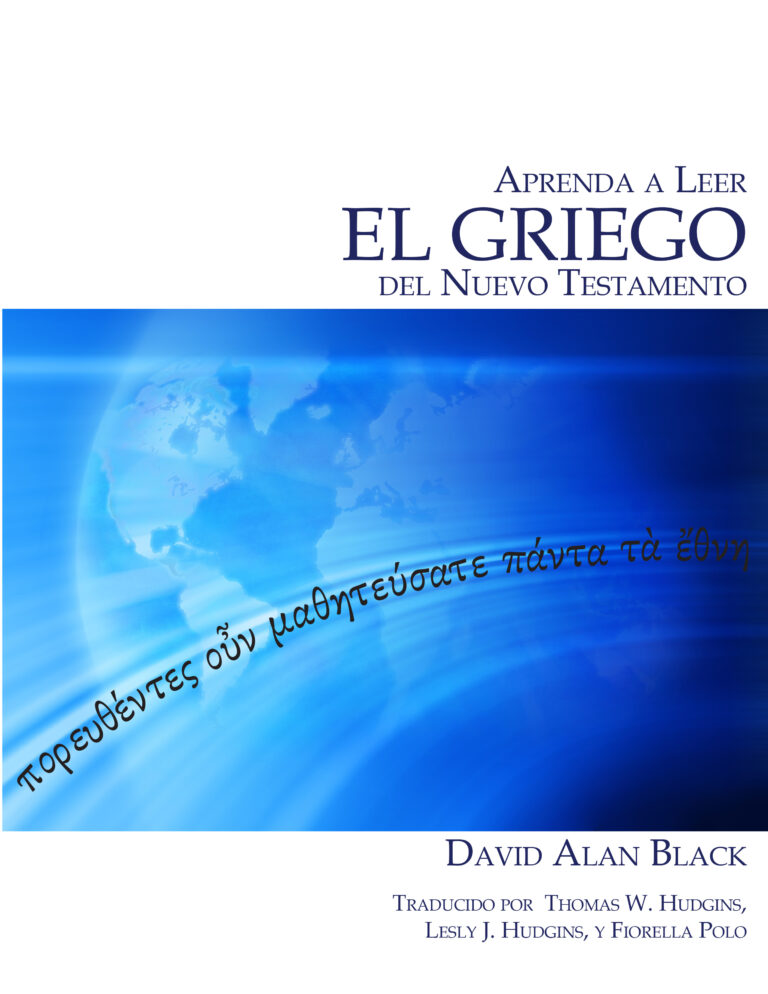
    Aprenda a Leer el Griego del Nuevo TestamentoThomas Hudgins, translator of the forthcoming book Aprenda a Leer el Griego del Nuevo Testamento by David Alan Black asks a question on his blog that I think might interest many of our authors and readers:
    When Should A Bible Teacher Talk About Text-Critical Issues? Or Should He (or She)?
    I’ve made some comments of my own at my Threads from Henry’s Web blog.

  • Is There A War on Christmas? —NO!

    [EDITOR’S NOTE: This post is part of our series on controversial questions.  A YES post ran yesterday.  Join in by posting your comments.]

    by Rev. Dr. Robert R. LaRochelle

    Bob LaRochelleWhen I think of WAR, declared or undeclared, the following actions and attitudes come to mind:

    1. There is something or someone to attack, obliterate or defend against
    2. In addition, peaceful means to resolve whatever conflicts that precipitated this ‘war’ have been exhausted.

    As I see it, those claiming that within our culture there is a ‘war’ on Christmas have misappropriated the use of the word ‘war’. Yet, apart from any exercise in semantics here, it is important to understand why some make the claim that such a reality exists and to examine the evidence they might cite. With that in mind, I list some evidence I have heard stated from those who argue that we are currently in the midst of such a war:

    • Organized groups have contested the placement of Christmas displays such as nativity scenes on public property
    • Workers in many companies are told not to say ‘ Merry Christmas’ to customers. Instead, they are encouraged to say ‘Happy Holidays’.
    • Some companies, e.g., Starbucks, have gone so far as to remove any imagery from their products which might convey any notion of such a holiday as Christmas.
    • Children in public schools may not participate in school sponsored Christmas pageants or, in many cases, not sing particular Christmas music in their Holiday concerts.

    As a practicing Christian and a Christian pastor, I look at it this way:
    Christmas is important to me. My wife and I celebrate it within our home. When we were raising our three children, we did our very best to make each Christmas a Christ-centered occasion. Over the years, our home has been decorated with Christian symbols honoring both Christmas and Advent. At my place of worship, I pray, sing and preach about the importance and meaning of the birth of Jesus. Most importantly, I try to live my life in accordance with His life and His teachings.
    However, the simple fact is that MY faith in Jesus, who He is and what His teachings mean, IS MY FAITH. Without denying that His values may have influenced our founders ( though that is oftentimes an underdeveloped idea), we must also recognize that we, the United States, are a constitutional democracy in which we have both freedom OF religion and freedom FROM religion.
    Were the efforts of those who do not celebrate Christmas to infringe upon the practice of any Christian and her/his right to celebrate it, you could make a case that one’s religious freedom is being trampled upon. Depending on the extent and the range of this activity, you might even make a case for an organized ‘war like’ action.
    However, NONE of the concerns expressed by those in our culture who seek to adhere to the principles of separation of church and state impede Christian individuals and their beloved from the free practice of their faith. In fact, these principles provide for the possibility of a peaceful coexistence between and among those of different religious perspectives.
    My view is that those non-Christian AND Christian opponents of inappropriate public display of a PARTICULAR religion are NOT engaged in any ‘war against Christmas’. Instead, they are acting in accord with the unique constitutional principles of the United States of America. At a time when some political candidates are sowing seeds of religious intolerance and division, we need reminders from people within the Christian community that our faith in Jesus is not dependent upon its public approval. It need not be legislated nor elevated to the level of the nation’s ‘official’ or ‘preferred’ religion in order to touch the hearts and souls of its adherents.
    So, then, I would contend that there really is no war going on here. Instead, there is a worthwhile dialogue about the proper exercise of religious freedom in a nation that has enshrined this notion and value in those cherished documents that inspire our legislation and our practice.


    Bob’s books can be viewed and ordered here: https://energiondirect.info/authors/authors-l-m/bob-larochelle
  • The Importance of the Local Church

    The Importance of the Local Church

    Bob LaRochelle (Crossing the Street, So Much Older Then …) points us to an interview with Rev. Loren Mead, founder of the Alban Institute, in which he talks about the importance of the local church. Here’s a taste:

    What I saw was a church that largely discounted the life of the local congregation. At the time, in the 1960s, clergy were leaving in large numbers to go into all kinds of social work and whatnot. I was clear that that was not the way to go, that we needed strong local churches.

    Read the whole interview. What do you think? How important is the local congregation. If it’s important, how do we build it up?

Energion Direct
Privacy Overview

This website uses cookies so that we can provide you with the best user experience possible. Cookie information is stored in your browser and performs functions such as recognising you when you return to our website and helping our team to understand which sections of the website you find most interesting and useful.