What is it like in that church across the street? When “that church” is Roman Catholic and the person asking the question is a Protestant, this question can be very hard to answer. Do you actually know what Catholics do? Do you know what they believe? What difference does it make? Rev. Dr. Robert LaRochelle is extraordinarily well qualified to answer the question. He grew up and was educated in the Roman Catholic Church. He was ordained a deacon. Eventually he chose to move to a Protestant denomination and is now an ordained minister in the United Church of Christ. But he isn’t an angry ex-Catholic. In this book he will list for you the key beliefs and practices that distinguish protestants from Roman Catholics. But this book is not just a catalog of differences and similarities. Bob LaRochelle approaches this topic with a serious interest in dialog, in learning from one another, and in ecumenical outreach. This book is intended for any Christian, but it will be especially useful to parents in multi-faith households, to church congregations with an interest in Christian community, and to religious education programs. It is a companion volume to the forthcoming book What Roman Catholics Need to Know about Protestants, also by Bob LaRochelle.
Imprint: Energion Publications
Our main Energion Imprint
-
What Roman Catholics Need to Know about Protestants
What is it like in that church across the street? When “that church” is Protestant and the person asking the question is a Roman Catholic, this question can be very hard to answer. In this book Bob LaRochelle will list for you the key beliefs and practices that distinguish Protestants from Roman Catholics. But this book is not just a catalog of differences and similarities. He approaches this topic with a serious interest in dialog, in learning from one another, and in ecumenical outreach. This book is intended for any Christian, but it will be especially useful to parents in multi-faith households, to church congregations with an interest in Christian community, and to religious education programs.
-
What’s God Really Like
God loves to be sought after! And it’s the exploration of the mysteries of who He really is that will not only create in you a holy curiosity and awe, but will also combat boredom in your life. There is nothing you can experience that is more invigorating than having God reveal Himself to you. — S. J. Hill
Bring your Bible and sit down to explore; get to know what God is really like!
The way we think of God will impact our experience and our ability to live a fulfilling Christian life. The way a teacher thinks and teaches about God can be either helpful or very destructive to those he or she teaches.
Pastor and teacher S. J. Hill is deeply conscious of this critical topic and has spent years studying it and writing about it. He believes that understanding our loving, rejoicing, creating, and relating God is critical to our spiritual lives and our witness. Using scripture, history, and his own experience he lays out a view of a God who loves and nurtures. This is not a God who is weak and wishy-washy, but rather a God whose love and grace lead us and empower us to live holier lives.
Imagine what could happen in our churches if we gave witness to a God such as this!
-
What’s in a Version?
What goes into translating the Bible? How can a layperson choose a Bible translation and edition from the enormous number available, particularly in the English language.
Author Henry E. Neufeld writes about Bible translations from his knowledge as a student of Biblical languages, and his experience teaching them to laypeople and discussing them on the internet. He addresses the questions that readers have, rather than just translation theory questions that might interest translators.
Many people have questions about translations because they do not understand how translations are produced, so the views of translators are important. Much of the material available is either polarizing or is provided to advocate a particular version. Every version comes with publisher hype. What should the reader believe?
What’s in a Version? strives to provide a basis for lay students to understand how translations are made so they can understand the arguments and become confident of the Bible version they choose to use for reading and study. Ultimately, the author’s aim is to help readers find the version they will read, consistent with his belief that it doesn’t matter how accurate an unread Bible is.
This book is aimed at a lay audience, but can also be helpful for Sunday School teachers and pastors who want to communicate biblical material effectively with congregations, classes, and small groups.
-
What’s in a Version? (ePub)
What goes into translating the Bible? How can a layperson choose a Bible translation and edition from the enormous number available, particularly in the English language.
Author Henry E. Neufeld writes about Bible translations from his knowledge as a student of Biblical languages, and his experience teaching them to laypeople and discussing them on the internet. He addresses the questions that readers have, rather than just translation theory questions that might interest translators.
Many people have questions about translations because they do not understand how translations are produced, so the views of translators are important. Much of the material available is either polarizing or is provided to advocate a particular version. Every version comes with publisher hype. What should the reader believe?
What’s in a Version? strives to provide a basis for lay students to understand how translations are made so they can understand the arguments and become confident of the Bible version they choose to use for reading and study. Ultimately, the author’s aim is to help readers find the version they will read, consistent with his belief that it doesn’t matter how accurate an unread Bible is.
This book is aimed at a lay audience, but can also be helpful for Sunday School teachers and pastors who want to communicate biblical material effectively with congregations, classes, and small groups.
[kadence_element id=”17548″] -
When People Speak for God
When someone claims they have a message from God, how do you decide whether to believe them?
This question has been with people of faith at least since Abraham heard someone-God, as it turned out-telling him to leave home and go to a place he would be shown. Other people have left their homes thinking God was guiding them, and have ended up with nothing but trouble. How do you tell the difference? And what about books? When someone claims a book is inspired by God how do you determine whether they are right or wrong? Very often the author will be telling you that your eternal destination depends on believing what they say, and yet others will say that their book is wrong. Is it possible to know who is correct?
Interpretations of those books can be equally difficult to judge. People with special interpretations of scripture often claim just as much authority as those who claim to be prophets. If you reject their interpretation, you are rejecting God himself. How do you make a wise decision?
Writer and Bible teacher Henry Neufeld wrestles with those questions. You may not like some of the answers, but you will be challenged as he calls each of us to focus first on the conversation with God and then to be responsible for learning God’s will for our individual life.
-
Where Is Your Allegiance
Lay persons in the church might be forgiven for imagining that the book of Revelation cannot be understood. There are many different interpretive schemes proposed, and hundreds of variations within those schemes.
But the reader who is willing to spend the time will find real treasures in the study of this book, and Paul Himes has provided an excellent guide to some of the most important passages, as he looks at the messages to the seven churches, and even more importantly at the One who is sending those messages, based on the vision in the first chapter and the ways in which the churches are addressed.
Dr. Himes provides key background information and then takes a serious look at the details of the text, but he does so in a way that is clear and that points the reader to ways of approaching the text more seriously on his or her own. For those who want to follow the trail further, the footnotes are extensive.
Since, as the author tells us on page 5, ..”. one cannot begin to grapple with the eschatology of Revelation until one has submitted to the Christology of Revelation” this book provides an excellent point of entry for someone who wants to take a new and refreshing look at this important book. Here one can study the Christ of revelation (Christology), the church He ordained (ecclesiology), and go from there to the purpose and destination He has for that church (eschatology).
-
Which Voice Will You Follow
Even when it comes to our faith, voices seem to come from many directions, urging us to follow them. How do we decide what is real and what is false?
Christian voices are mixed with fundamental certainty to agnostic Christianity, biblical literalism and inerrancy to prosperity gospel, the only true church to come as you are and leave as you came invitations, narrow-minded beliefs to anything goes philosophy, or an eternal quest for the truth with an openness to a growing faith. – William P. Tuck
Prolific writer, William P. Tuck, brings his insight from years as pastor and mentor. He pulls no punches and seems to look the leader right in eye with his candor and desire to bring each person closer to the real deal, Jesus Christ. This book is a comprehensive presentation of how to live the Christian life faithfully with an effective witness to the world around us.
How God speaks, the temptations that distract us, praying, hearing God answer in various ways, are all part of Tuck’s sharing. Jesus called us to be Light and Salt. What voice will you follow to be Jesus’ Light?
-
Whispers of Rest in the Storm
Can you honestly say that you know how to rest? Truly rest — physically, emotionally, spiritually?
Devotions come in many styles and sizes. Some are like a bucket of cold water thrown at you in your bed, prodding you to wake up, get going, and meet the challenges of the day. Others give you something to think about, and tend to come back to you as you go about your daily activities. A devotion can be long, designed for the person who has an hour or so of quiet time with God in the morning, while others are short, trimmed to size for the person who wants to catch a message at a glance.
In Whispers of Rest in the Storm Matthea Glass manages a nearly impossible task: Writing a devotional that is both relaxing and challenging. The challenge is to put your burdens in God’s hands and rest in your Savior through each day.
Each devotional looks at things that might keep us from resting, from trusting, and thus from being who God wants us to be. Each will be challenging in its own way, but each challenge points to God’s grace and invites the reader to trust and rest.
This is a book for everyone, because everyone has difficulty with truly trusting in God’s grace and resting. But it is especially written for those who are anxious about many things and need to remember each day that God will never leave or give up on us. His grace, unconditional love, is always there and sufficient for our need, so that they can rest.
Illustrated in full color.
-
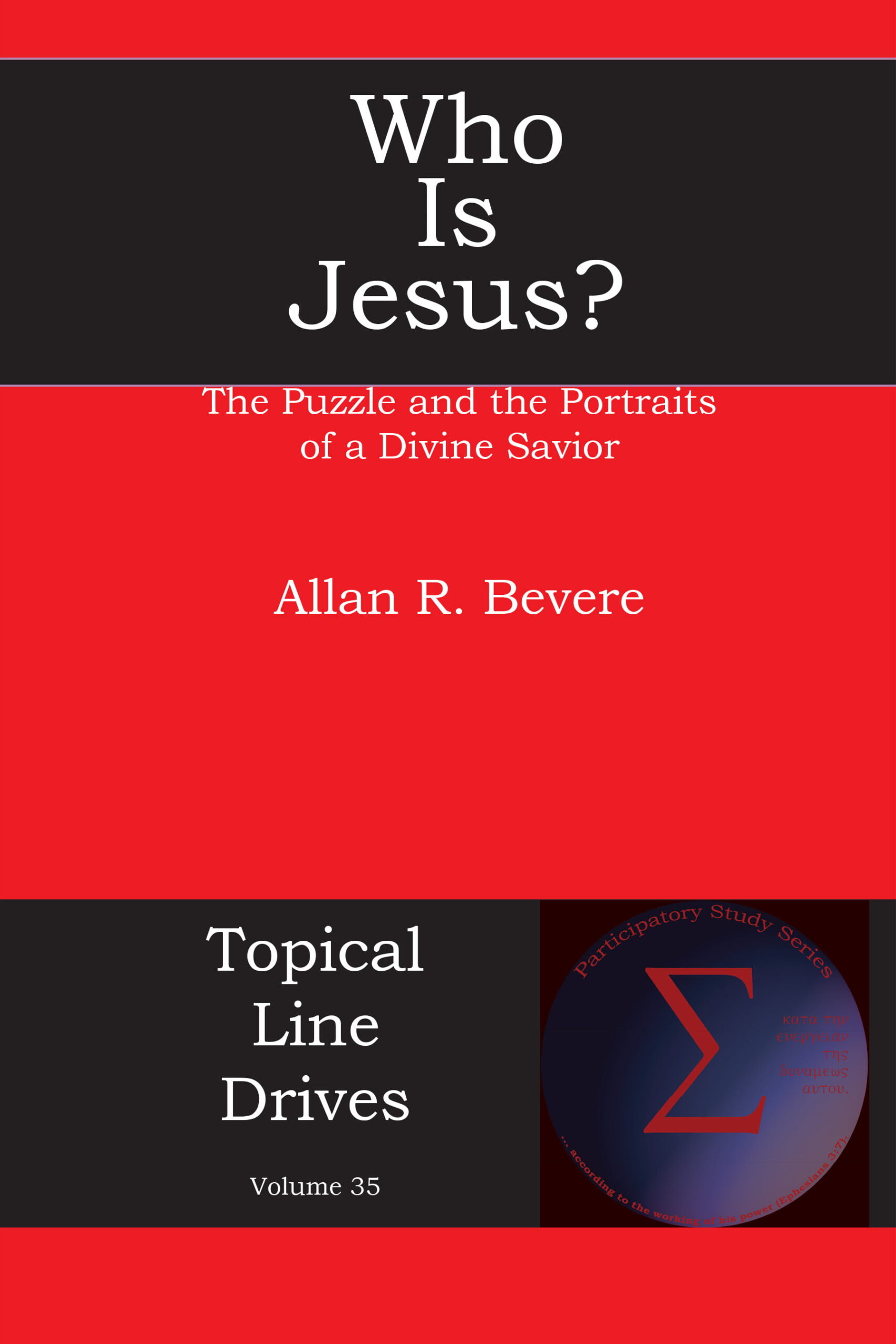
Who is Jesus? The Puzzle and the Portraits of a Divine Savior
At Easter, major magazines and blogs publish articles claiming to tell us who Jesus was. Every few weeks we see a new book making similar claims. Is it possible to know?
In Who Is Jesus, Allan Bevere addresses this question from the point of view of a person of faith who takes seriously the gospels and early Christian tradition as documentation of events and of serious theological reflection on those events. According to Bevere, Christian theology was neither an invention, nor a set of random speculations unrelated to reality. Rather, they were the response of early Christianity to the experience of Jesus and the historical pictures as presented in the canonical gospels.
From a discussion of the Old Testament record through illumination of the christological controversies of the first five centuries of Christian history, this book provides a clear description of how orthodox Christian scholarship can bring together the varied evidence in order to present a coherent picture.
This book is good for individual reading, or could easily provide readings and an outline for a small group study.
-
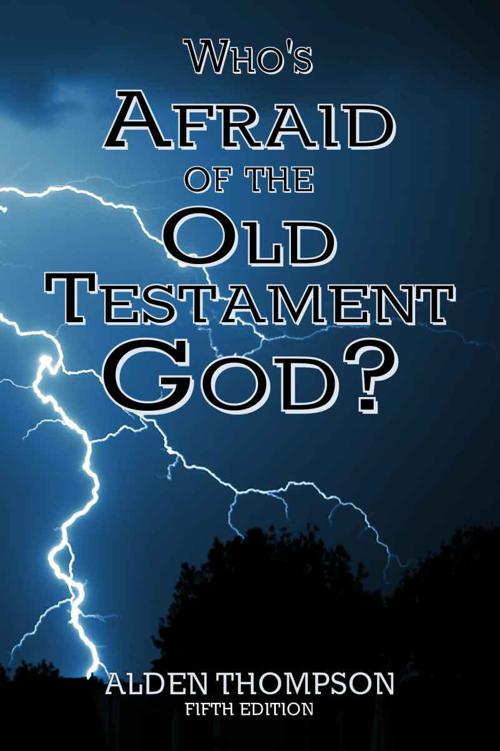
Who’s Afraid of the Old Testament God?
The Old Testament God generally has a rather poor reputation, even in Christian circles. But as the author points out, The Old Testament Scriptures can remain alive and will lead us to a fresh appreciation of all that God has done for us.
Targeted to thoughtful readers, this book addresses a cluster of issues often troubling for the person who seeks to understand the Old Testament.
Who’s Afraid of the Old Testament God? speaks very frankly about some of these “problems,” things like sin and the fall, Satan, “moral blemish” passages, strange laws, etc.
The chapter titles follow:
- Don’t let your New Testament get in the way of your Old Testament
- Behold it was very good and then it all turned sour
- Whatever happened to Satan in the Old Testament
- Strange people need strange laws
- Could you invite a Canaanite home to lunch?
- The worst story in the Old Testament – Judges 19-21
- The best story in the Old Testament – the Messiah
- What kind of prayers would you publish if you were God?
This new, fifth edition leaves the text unchanged, but has larger type and wider margins.
-
Why Christians Should Care about Their Jewish Roots
Why should you care about the Jewish roots of Christianity?
Jesus was Jewish. Most of the Bible was written by Jews and in Hebrew. Most of the early Christian leaders were Jews. Even Paul, called the Apostle to the Gentiles, would visit the synagogue first and preach there, and he wrote with great passion about his hope for his own people. Many modern Christians have forgotten about their Jewish roots. They may not formally rip pieces out of their Bibles, but much like the early Christian heretic Marcion, they act as though these portions of scripture no longer apply. They don’t read them, study them, preach from them, or apply them. As a result, they often do not understand the New Testament correctly.
Nancy Petrey has a passion both for the Jewish people and for calling Christians to understand their Jewish roots. In the pages of this short book, you’ll get a taste of the way in which Christian history and belief has Jewish roots.
You’ll be blessed if you learn to recognize those roots.


