Mission Key: Discernment

To others is given the ability to discern spirits.
(1 Corinthians 12:10)

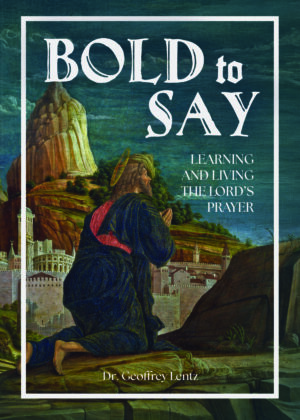
  • Bold to Say

    Bold to Say

    Is your prayer life stuck?

    Bold To Say shakes up traditional views and reveals the radical, even weird, power of the Lord’s Prayer. Dr. Geoffrey Lentz challenges readers to move beyond comfortable routines and embrace the revolutionary nature of this ancient prayer.

    More than a simple recitation, it’s a call to surrender, transformation, and a bold encounter with a God who is both transcendent and intimately present.

    Prepare to have your assumptions challenged and your faith ignited.

  • Seeking Truth

    Seeking Truth

    We live in a world that is not governed by Truth. Disagreements surround us. Recent Presidential elections are hotly contested and won by the narrowest of margins. Charges of misinformation, fake news, and bias abound. Everyone claims they are correct; they have the Truth.

    Seeking Truth looks at both the philosophical and practical issues of Truth to understand how we come to know what we know and why we disagree so much. More importantly, it lays out how we can disagree in ways that avoid division and polarization and instead move to build a consensus on the Truth.

    Seeking Truth addresses things like how to think about what you believe, how to handle disagreement and errors positively, how do you know if you are open-minded, and how to make better decisions.

    Seeking Truth uses a lot of examples to make this case. To avoid current disputes, most are drawn from history, as people in various times and settings sought to understand how nature works, what happened in a particular event, or what is the best way to proceed or govern ourselves. Science, history, politics, business, all of these areas involve Truth in one way or another.

    Seeking Truth will help you become a better thinker, a more critical thinker, and one who moves closer to the Truth.

  • The Battle for Eternity

    The Battle for Eternity

    There is a conflict raging around you. The spiritual realm does not sleep, take vacations, or take breaks; it is a continuous war for the souls of humanity,. Are you armed for the fight?

    In The Battle for Eternity, J. Hamilton Weston delivers an urgent wake-up call to believers, warning that the end times are nearer now than ever before. Moving beyond a basic understanding of good and evil, Weston exposes the specific tactics of the adversary—from the blinding deception of Satan to the dangers of becoming a “lukewarm” church,. He argues that many Christians are oblivious to the spiritual war raging every moment of every day, and that ignorance is a vulnerability the enemy is all too eager to exploit,.

    This book is a tactical manual for spiritual survival and victory. Drawing on deep scriptural research, Weston guides you through the essential arsenal required for the Christian soldier:

    • The Invincible Obedient: Discover how total submission to God makes you a force the enemy cannot dismantle.
    • The Armor of God: Learn to gird yourself with truth, righteousness, and the shield of faith to quench the fiery darts of the wicked one,.
    • The Weapons of Warfare: Master the use of prayer, the Holy Spirit, and the Word of God to pull down strongholds,.
    • The Divine Promise: Find courage in the “I AM” promises of Jesus and the assurance that God is your divine protector who fights your battles for you,.

    You cannot avoid this conflict, but you do not have to fight it alone. Whether you are facing giants like Goliath or the subtle whispers of discouragement, this book reveals that the victory has already been won through the blood of the Lamb,. Prepare to stand firm, overcome the world, and claim the rewards of the faithful.

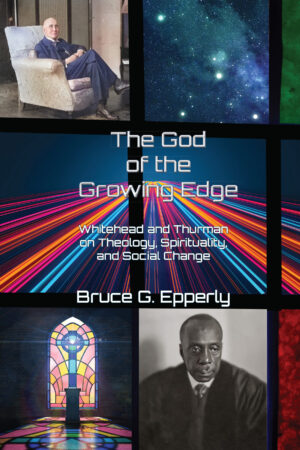
  • The God of the Growing Edge

    The God of the Growing Edge

    What can we learn by combining the wisdom of two major theological pioneers of the 20th century?

    The God of the Growing Edge: Whitehead and Thurman on Theology, Spirituality, and Social Change explores the intersecting spiritual visions of two such towering figures: Alfred North Whitehead, the eminent philosopher and process theologian, and Howard Thurman, the influential African American mystic, theologian, and civil rights leader. This book offers a timely resource for contemplative activists seeking a deeper integration of spirituality and social transformation in our turbulent times.

    While Whitehead, a privileged white academic, developed an intricate metaphysical system describing a dynamic and relational universe, Thurman, experiencing firsthand the brutal realities of racism and injustice, articulated a profound mystical theology centered on empathy, social action, and the inherent worth of every individual. Despite their vastly different backgrounds, both converged on a vision of God as a dynamic presence intimately involved in the world’s unfolding.

    Whitehead’s process theology portrays God not as a static, distant sovereign but as a fellow sufferer who understands, a “poet of the universe” luring creation toward greater beauty, truth, and goodness. God is the ultimate empath, valuing every moment of experience and nurturing the freedom and creativity of all beings. This dynamic vision challenges static, authoritarian images of God that have fueled division and injustice throughout history.

    Thurman, deeply influenced by his experience of growing up in the Jim Crow South, emphasized the inherent dignity of every person as bearing the image of God. His mystical spirituality, shaped by the wisdom of the spirituals and the courageous witness of the civil rights movement, grounded social activism in the experience of God’s love and liberating presence. Thurman’s vision of an interconnected universe, where every creature reflects God’s glory, calls for a radical commitment to justice, compassion, and the pursuit of Beloved Community.

    The God of the Growing Edge examines these intersecting visions, highlighting their complementary strengths. Whitehead’s metaphysics provides a robust intellectual framework for understanding a universe of interconnectedness, change, and possibility, while Thurman’s lived experience of oppression and spiritual resistance infuses this framework with prophetic urgency and practical wisdom. Together, they offer a powerful and timely message for today’s world, inspiring:

    • A renewed understanding of God: moving beyond static, impersonal images to embrace a God of relationality, empathy, and creative love.
    • A deeper connection between spirituality and action: uniting personal transformation with a commitment to social justice and planetary well-being.
    • A more inclusive vision of humanity: recognizing the inherent worth and dignity of every individual, regardless of background or circumstance.
    • A vibrant sense of hope and resilience: finding strength and inspiration in the face of personal and global challenges.

    This book is not merely an academic study but a personal and spiritual exploration. Drawing on the author’s own experiences as a theologian, minister, and activist, The God of the Growing Edge invites readers to embark on a “holy adventure” guided by the wisdom of Whitehead and Thurman. It offers practical spiritual practices at the end of each chapter, along with powerful prayers by Thurman, to help readers integrate these insights into their daily lives. By exploring the “growing edge” of faith, this book offers a compelling path toward a more just, compassionate, and sustainable future.

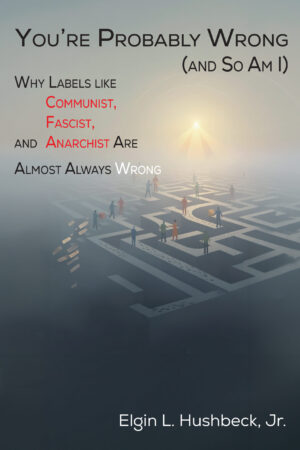
  • You’re Probably Wrong (And So Am I)

    You’re Probably Wrong (And So Am I)

    In a polarized world where name-calling and accusations split the country into various factions, it is incredibly tempting to think that anyone who disagrees with you is simply uninformed or fundamentally flawed.

    While it is easy to assume that those with opposing views are ignorant or ill-intentioned, Elgin L. Hushbeck, Jr. argues in You’re Probably Wrong (And So Am I) that the reality is far more complex. Disagreements are often not about one side being “right” and the other “wrong,” but rather stem from our inherent lack of perfect knowledge and the different ways we process information. By recognizing that our personal views are often an amalgam of facts, opinions, and ingrained errors, we can move past the assumption of deficiency in others and begin to understand the true roots of our social discord.

    Many political disputes are actually clashes over definitions and foundational values rather than simple facts. For instance, a debate over “tax burden” might reveal that both sides are factually correct, yet they are using entirely different definitions of what a tax entails. Furthermore, the book explores how the fundamental political divide is often a delicate balancing act between the mutually exclusive values of liberty and equality. Because an increase in one often requires a decrease in the other, intelligent and compassionate people will naturally reach different conclusions based on which value they prioritize.

    Hushbeck further clarifies the political landscape by tracing our modern labels back to the competing ideals of the French and American Revolutions. He demonstrates that the conventional political spectrum is often nonsensical, particularly in its placement of Fascism on the far right. By revealing that Fascism actually originated as a left-wing rejection of individual liberty in favor of total state control, the book explains why labels like “Communist,” “Fascist,” and “Anarchist” are almost always historically inaccurate and toxic to genuine discourse. Instead, he proposes a clearer framework that separates democratic debates over government size from the authoritarian spectrum of absolute control.

    The only way to resolve these deep-seated disagreements is through honest, open discussion that seeks to clarify definitions and uncover underlying foundations. Pick up your copy of You’re Probably Wrong (And So Am I) today to move beyond the name-calling and start practicing the principles of effective dialogue. By learning to tolerate opposing views and prioritizing truth over partisan bickering, we can finally move toward a better understanding of one another and the complex world we share.

  • Philosophy for Believers

    Philosophy for Believers

    For a serious book of philosophy, where better to begin to canvass various philosophical concepts and arguments than in relation to what is so familiar to every one of us –– the fact that we all have many and varied beliefs.

    The book is an introduction of philosophy, indeed intended as an introductory textbook. The author, as he wrote it, had both the teacher and the student in mind. He hopes it will prove a worthy contribution in the college, seminary and university classroom, both interesting and serious.

    As well as thirteen clearly written chapters introducing the various topics, it is also provided with helpful summaries, tutorials, and work sheets.

    In considering belief we raise many of the central problems philosophers have discussed: knowledge, truth, justification, rationality, meaning, explanation, self deception, interpretation, reality, cause and effect, personal identity, theories, laws, hypotheses, the self, survival, God.

    Since belief is a universal phenomenon, it has unfortunately become common to understand the unqualified term ‘believer’ of the religious person. It seems strange to ask the question, ‘Are you a believer?’ outside the religious context. But we do when we are thinking of a particular theory or ideology or political attitude. We sometimes want to know whether she is ‘one of us!’ The author sometimes finds it convenient to illustrate his exposition by referring to religious beliefs. One does not have to be a religious believer to see that it is relevant and indeed interesting to do so. The history of philosophy provides many classical examples of such discussion.

    The book is of wide general interest. As well as doing service in the classroom, it will also prove its worth within other contexts. It will serve the aims of serious discussion groups, as well as providing a basis for regular and earnest individual study. We hope also that it will find a place with inquiring people of religious faith.

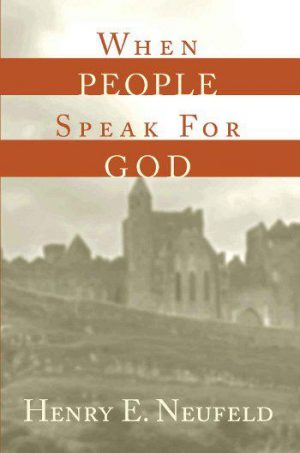
  • When People Speak for God (ePub)

    When People Speak for God (ePub)

    When someone claims they have a message from God, how do you decide whether to believe them?

    This question has been with people of faith at least since Abraham heard someone-God, as it turned out-telling him to leave home and go to a place he would be shown. Other people have left their homes thinking God was guiding them, and have ended up with nothing but trouble. How do you tell the difference? And what about books? When someone claims a book is inspired by God how do you determine whether they are right or wrong? Very often the author will be telling you that your eternal destination depends on believing what they say, and yet others will say that their book is wrong. Is it possible to know who is correct?

    Interpretations of those books can be equally difficult to judge. People with special interpretations of scripture often claim just as much authority as those who claim to be prophets. If you reject their interpretation, you are rejecting God himself. How do you make a wise decision?

    Writer and Bible teacher Henry Neufeld wrestles with those questions. You may not like some of the answers, but you will be challenged as he calls each of us to focus first on the conversation with God and then to be responsible for learning God’s will for our individual life.

Energion Direct
Privacy Overview

This website uses cookies so that we can provide you with the best user experience possible. Cookie information is stored in your browser and performs functions such as recognising you when you return to our website and helping our team to understand which sections of the website you find most interesting and useful.