
Tag: Bob LaRochelle
-
Couples Should Talk about Religion
by Rev. Dr. Robert R. LaRochelle
[ene_ptp]I recently wrote a book entitled A HOME UNITED ( Energion, 2015) in which I contend that, among the many important topics for conversation and communication for couples, the topic of religion is one that should not be ignored. I also make the observation that it often is because many people deem it to be so divisive and controversial that it could create discomfort within the relationship. Sadly, when one looks at how religion has all too often been understood and used, one can certainly see how people would not want it to be an impediment in a relationship that has the potential to be lasting.
While I understand the hesitancy involved in creating obstacles and ruining what is and could be a very good thing, I would also contend that there are MANY good reasons, even necessary reasons, to put the topic of religion on the table. It belongs among the many important topics couples discuss as their love unfolds and they explore the possibility of sharing life together.
For your consideration, I list some of the reasons:- Understanding another’s religious values is a way of getting to know the inner life of a person well. As couples reveal themselves to each other, that revelation includes the values they share and what really makes them tick.
- In a relationship, each person, while being committed to their partner, remains an individual. Religious conviction is a very important part of many individuals’ lives. To bury that important part of oneself in the name of avoiding discomfort carries with it the potential for a greater discomfort down the road.
- If a relationship eventually leads to children, decisions need to be made regarding raising those children religiously. In order to avoid the situation where this becomes a divisive matter for the couple, it helps to put it on the list of important issues to explore as the relationship grows deeper and a child is not imminent.
I would also add that, in some family situations, members of the couple’s extended family might have such strong opinions on the subject that their attempt to exert influence may be discomforting to the couple. A couple is strengthened in this situation if ongoing, in-depth communication on this issue is part of their relationship.
My book, A Home United, is written as a resource for couples and those who work with them. For couples, I offer questions and pose scenarios for them to explore. These are intended to help them come to an understanding of religious values in the other and to assist them in making good, conscientious decisions. For those who work in premarital counseling, including those in church premarital programs, this book offers material to help these leaders and counselors move couples in the direction of having important and necessary discussions.
These comments and the book apply to ALL couples seeking to share a life together, including those in same sex relationships! [slideshow_deploy id=’2576′]
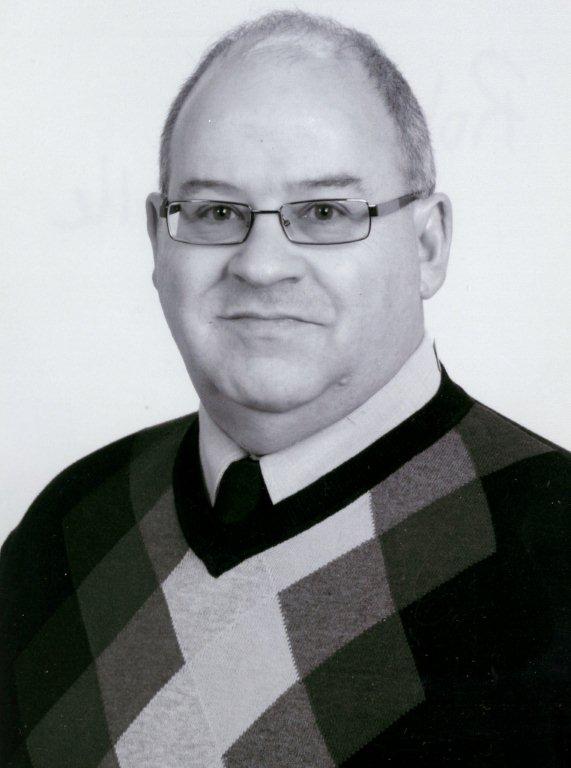
For more about author Robert R. LaRochelle, click on his picture. Click on a book cover to get more information about that book.
-

Please Find a Way to Promote Christian Unity
— Rev. Dr. Robert R. LaRochelle
In the community where I serve as pastor of a local church, my congregation is hosting a service next week to celebrate the Week of Christian Unity. I am excited that several local Christian congregations, both Protestant and Roman Catholic, are joining in this important effort. I am likewise pleased that the service itself will reflect the variety of worship traditions that are part of worldwide Christian practice.It bothers me as well that there does not appear to be enough shared study both of our common Christian resources and of each others’ Christian tradition.I am concerned that, on the local level throughout our country, the impetus for services in which Christians from different churches worship together has waned. It bothers me as well that there does not appear to be enough shared study both of our common Christian resources and of each others’ Christian tradition.
In the early days after the Second Vatican Council in the 1960’s, local Protestant, Catholic and Orthodox congregations throughout our nation and the world worked furiously to find ways to pray together, study together, and serve together. These efforts have had a lingering positive impact in many communities, especially in the area of Christian outreach and service. In many localities, such as mine, ecumenical and interfaith organizations continue to meet the real life needs of individuals and families. However, I feel that we need to rekindle the desire to find more and more ways to work together on all fronts.… each of our individual traditions has offered particular insights into the nature of being Christian.As a Roman Catholic for the first forty five years of my life and now as a Protestant clergyperson for the last twelve, I am deeply convinced that we need to find ways to understand our commonalities and to celebrate them. I also believe that, over the course of time, each of our individual traditions has offered particular insights into the nature of being Christian, as well as methodologies for putting Christianity into practice. In my view, it is important that we share these ways of expressing faith and our own practices of worship! I encourage the reader to do whatever you can on your own local level in order to make that happen!
A Christian Unity service can most certainly be held at any time of the year!Even if it is too late to set something up for this upcoming Week of Christian Unity (January 18-25), please consider finding ways to partner with other Christians in your local community or neighborhood. A Christian Unity service can most certainly be held at any time of the year!  Perhaps you and others can find ways to encourage study and dialogue around the commonalities and differences between Protestants and Catholics and Orthodox. There are study materials available, including many from Energion Publications!
Please consider doing all that you can to help put Jesus’ prayer into practice, the heartfelt prayer that those who follow Him may find a way to really be ONE! -

An Early Look at the Leadership of Pope Francis
By: Rev. Dr. Robert R. LaRochelle
In my book Crossing the Street, released by Energion Publications in 2012, I attempt to show the relationship of Catholicism and Protestantism to one another. I also advocate for the importance of recognizing the strong ‘ecumenical center’ that most Christians share in common. I encourage both Catholics and Protestants and their leaders to take active steps in getting to understand each other’s tradition far better than is all too often the case.
Since I wrote that book, a significant event has happened in the Roman Catholic Church. On March 13 of this year, the Papal conclave selected a new church leader, i.e. a new Pope. In my view, each pontificate plays an incredibly significant role in presenting the face of Catholicism to the world. In Crossing the Street, I demonstrate the important differences in the papacies of Popes John XXIII and John Paul II. I also make the claim that contemporary Catholics can often be readily identified as either ‘John Paul II’ or‘John XXIII’ Catholics. Those more inclined to align themselves with John Paul II are sympathetic to the post Vatican II church’s movement away from innovation and toward doctrinal and liturgical uniformity. Those in the John XXIII camp tend to bemoan what they see as a halt to necessary changes in the church, changes which reflect, in their view, a healthy openness, inclusiveness, and ecumenicity.
What is absolutely fascinating is what the new Pope proceeded to do quite recently. In what many saw as a stunning move, he announced that the church was going to canonize (i.e. declare as saints) both John XXIII and John Paul II. Interestingly enough, the announcement that John Paul would be declared a saint in the near future was anything but a surprise. Catholic traditionalists have been promoting this in recent years and had a strong advocate in Pope Emeritus Benedict XVI. It was generally acknowledged in church circles as inevitable.
On the other hand, many Catholic progressives were concerned that the cause of John XXIII had fallen by the wayside. In the same way, Catholics of this persuasion have expressed similar concerns regarding the interest (or lack thereof) in canonizing Dorothy Day, Oscar Romero or the women martyrs of El Salvador, including the American laywoman Jean Donovan. Thus the decision to include John XXIII in this announcement, despite the glaring absence of the second miracle required by ordinary church law for canonization, was seen as a pleasant surprise.
Now, while I understand full well that a Protestant might be troubled by the theology that undergirds the canonization process, the fact remains that in this joint selection Pope Francis sent a signal to those within the Catholic Church and those outside of it. In effect, Pope Francis was affirming that there is variety and pluralism within Catholicism. In essence, he demonstrated that the Catholic Church is not as either/or as some inside of it would like it to be or some outside of it it believe that it is! This decision strikes me as a powerful affirmation of what some might call a ‘big tent’ view of the Catholic Church, a term whose origins are found in describing American political parties. Others in the church might say that this is in keeping with the ‘ Here Comes Everybody’ approach to Catholicism, a phrase coined by the Irish literary giant James Joyce.
This recognition of pluralism is exhibited in the recent release of Francis’ first encyclical, Lumen Fidei. In an unprecedented move, this Papal letter to the world represented the joint efforts of both Francis and his predecessor, Benedict XVI. A close reading of the letter demonstrates a diversity of influences. Some have actually gone so far as to speculate as to who wrote which parts. Though they did not sit down to co-author this work, the finished product, in Francis’ name, represents perspectives which, if not different from his own, at least show evidence of differing starting points and emphasis.
Pope Francis I has already drawn the attention of the world in his outspoken advocacy of the importance of church leadership in setting good example and siding with those who are poor. On the day I am writing this, Francis has scolded priests and nuns who drive around with the latest model of automobile. He has affirmed the goodness of all people of good will, including those who might not believe in God. On the other hand, he has not, as yet, made any significant moves to change any of the controversial policies of the church. Thus to brand him a progressive or someone not attuned to a traditional Catholicism would not be fair.
It will be interesting, however, to see how and where this Pope evolves over the course of his pontificate. Will his tendency toward openness and his true sense of the inclusiveness of the entire Catholic tradition, evidenced in the canonization announcement and the encyclical, eventually lead to a rethinking of some long standing church policies? Only time will tell, but, for now, it is fair to say that in Francis, both Catholics and Protestants can find a significant religious leader, one deeply committed to bearing witness to Jesus in this needy and broken world!
Stay tuned!!! ….
Rev. Dr. Robert R. LaRochelle is pastor of Second Congregational Church, UCC, Manchester, CT. He is the author of Energion titles So Much Older Then …, Crossing the Street, and the forthcoming Til We Lay Our Trophies Down (2015).