

Tag: Bruce Epperly

  • Office Stock Special – Books by Bruce Epperly

    Office Stock Special – Books by Bruce Epperly

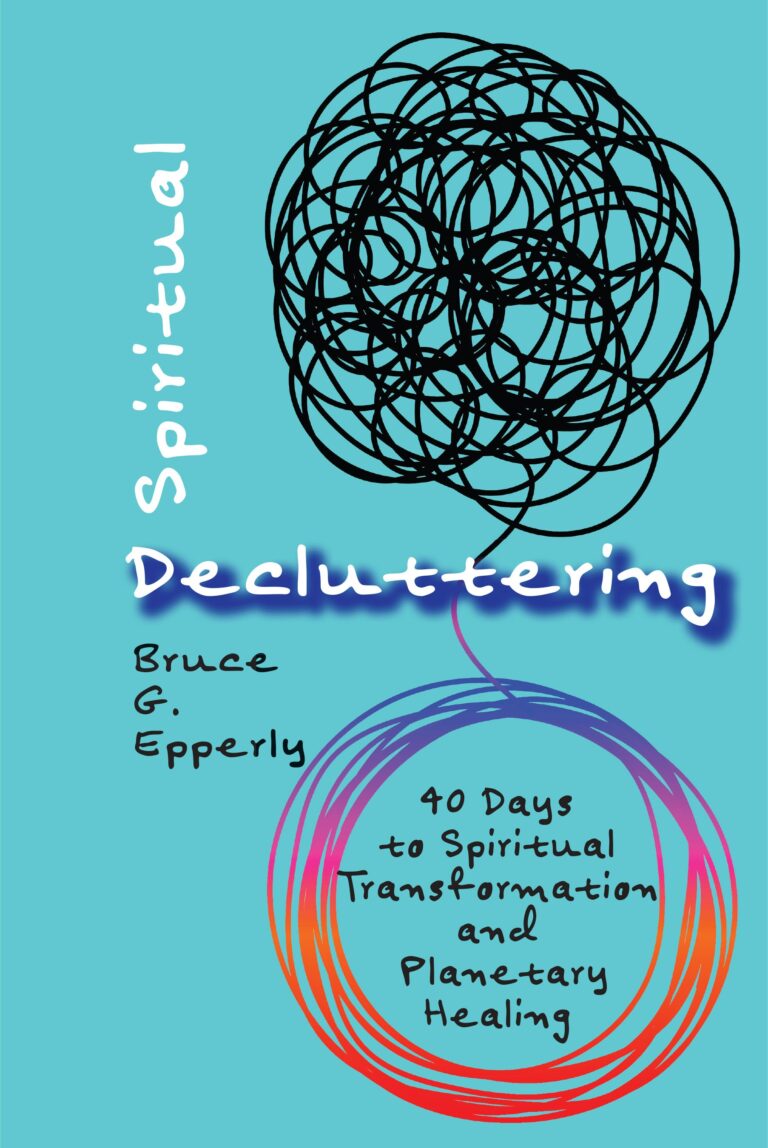
    In our office stock special, there are a number of books by Bruce Epperly. No, these are not going out of print, but we normally use print-on-demand, and we have some extra copies right here in our office. So until February 11, 2023, they are available at 50% off.
  • Dr. Bruce G. Epperly: Office Stock Specials

    Dr. Bruce G. Epperly: Office Stock Specials

    These specials are currently 50% off on a selected list of books. Dr. Bruce G. Epperly is author of a number of titles with Energion Publications.

  • Henry Neufeld: Perspectives on Paul – Paul's Gospel vs. Another Gospel IV

    Lightning in dark skyYes, this is the fourth video in what was supposed to be a single session. This should let me take up less time on future lessons because of the foundation laid here. This will also continue for one more session, so next week will be #5. – Henry

     
    And remember the resources page, where I have interviews now with Bruce Epperly and Herold Weiss on the question “Who Was Paul?”. Future interviews will include Allan Bevere, David Alan Black, and others.


    [slideshow_deploy id=’2364′]

  • Bruce Epperly: Jonah and a Changing God

    9781631992933Two weeks ago I had to delay our Tuesday night hangout due to technical difficulties and once I had completed the interview, we didn’t get it posted here. So today, we’re posting a make-up hangout. In this video I interview Dr. Bruce Epperly, author of Jonah: When God Changes. You can tell from the title that it’s a challenging little book, just like the book of Jonah itself.
    Here’s the video:


    [slideshow_deploy id=’2461′]

  • Bruce G. Epperly: Spiritual Transformation and Philippians

    by Dr. Bruce G. Epperly, pastor, professor, and author of Philippians: A Participatory Study GuideFInding God in Suffering: A Journey with JobJonah: When God ChangesProcess Theology: Embracing Adventure with God and more!

    Rejoice in the Lord always; again I will say, Rejoice. Let your gentleness be known to everyone. The Lord is near. Do not worry about anything, but in everything by prayer and supplication with thanksgiving let your requests be made known to God. And the peace of God, which surpasses all understanding, will guard your hearts and your minds in Christ Jesus. Finally, beloved, whatever is true, whatever is honorable, whatever is just, whatever is pure, whatever is pleasing, whatever is commendable, if there is any excellence and if there is anything worthy of praise, think about these things. Keep on doing the things that you have learned and received and heard and seen in me, and the God of peace will be with you.                        – Philippians 4:4-9

    Recently, I coined the term “theospirituality” to describe the interplay of our theological visions and our spiritual practices. I believe that the apostle Paul is a master of theospirituality, especially in his Letter to the Philippians. He makes the following assertions in the course of the text:

    • God will bring the good work God has begun in our lives to fulfillment and it will be abundant. (1:3-11)
    • Christ’s mind dwells in us. (Philippians 2:5-11)
    • Christ’s mind is relational and affirmative, and grounded in love and not fear. (2:5-11)
    • Our salvation or wholeness is a matter of God’s grace and our agency. (2:12)
    • God is intimate. (4:5)
    • God empowers us to respond to every situation. “I can do all things.” (4:13)
    • God will provide for our every need. (4:19)

    Paul’s Philippian vision is grounded in his belief that God is with us, moving in our lives, providing us with wisdom and energy, and inviting us to be God’s partners in bringing beauty to the world.

    Paul also provides us with a way to experience his vision of reality that involves an integration of practice and action. As a matter of fact for Paul everything we do is a spiritual practice. Central to Paul’s spiritual formation is a life of constant prayer. For Paul prayer is a state of mind, transcending mere words. Pray about everything, small and large. Ask God for what you need and give thanks for your blessings. Don’t worry, but place everything in God’s hands. Make a commitment to live joyfully. This was good news in Philippi; it is good news today!

    Perhaps, more telling for our time is Paul’s counsel to “think about these things,” to live affirmatively rather than negatively. This is a challenge these days: we are constantly surrounded by negativity. Politicians bully, insult each other, and tell us to be very afraid. The 24/7 news cycle gives us language of doom and gloom, and imagines a dystopian future for all of us. Even weather reports on sunny days speak of news from the “storm desk” and see a drop of rain as a potential crisis.
    We can’t escape the realities of negativity, but we need not be ruled by them. In a world, shaped by negativity, Paul counsels us to live affirmatively, guarding our minds by positive thinking: “whatever is true, whatever is honorable, whatever is just, whatever is pure, whatever is pleasing, whatever is commendable.” This is the power of affirmative faith that transforms our minds, and opens us to God’s presence in our lives.
    For Paul, the Christian life is joyful. But, joy is not an accident, but a matter of intentionality. God’s grace permeates all things, and we can, by our openness, awaken to that grace in every moment of our lives.


  • Bruce Epperly: Philippians and Facebook Etiquette for Christians

    by Dr. Bruce G. Epperly, pastor, professor and author of Process Theology: Embracing Adventure with GodFinding God in Suffering: A Journey with JobTransforming Acts: Acts of the Apostles as a 21st Century GospelRuth and Esther: Women of Agency and Adventure, and more!
    A number of years ago, I wrote a piece in which I asserted that Facebook provides an opportunity for people to affirm the holiness of everyday. Now, in this election year, I have a different perspective. Yes, I still believe that Facebook reflects the moment by moment wonder of living and our gratitude for life itself in its quotidian activities. As such, Facebook can contribute to our spiritual growth and our empathy with others’ spiritual journeys. It can create community and renew friendships.
    But, Facebook has become over the past year a place of venom, insult, and impoliteness in which people regularly post responses with words they would never say in face to face encounters. In the past few months, I have had someone drop the F-bomb on my wall in response to my affirmation of President Obama and another person refer to me as ignorant when my position differed from his. I have found that you can even talk about the weather and receive a contrary response. I have been insulted by the left for being too moderate and the right for being too progressive. I have received disparaging remarks from Clinton, Sanders, and Trump supporters, all of whom have questioned my good faith. Moreover I see the commandment not to bear false witness routinely violated by persons who would otherwise claim to be honest followers of Jesus. Lies about political figures or distortions of facts are routinely posted by otherwise decent people, sometimes just a few minutes after leaving church.
    9781893729971mI believe that the words of Philippians 4:4-9 provide good counsel for Facebook users who claim to be followers of Jesus. First, Philippians counsels “let your gentleness be known to everyone.” This is surely good spiritual counsel for Facebook users: When you post, it is appropriate to answer a few fundamental questions: Does your post have an irenic spirit? Do you respond in terms of policy, beliefs, and issues, and not in terms of personality? Do you assume that your position is limited – that’s the reality of perspective and sin – and not absolutely right? Do your posts evidence respect for those with whom you dialogue, formerly known as the “loyal opposition.”
    Philippians tell us to be gentle even when you disagree. Are you adding joy to the world, as Paul counsels, or do your posts create alienation between people?
    Paul also says, “whatever is honorable, whatever is just, whatever is pure, whatever is pleasing, whatever is commendable, if there is any excellence and anything worthy of praise, think about these things.” In other words, live affirmatively and speak affirmatively. In the political realm, focus on the positives of your candidate’s position and not the negatives of the other candidate. Don’t post news items without checking for their accuracy. While I don’t post news items often, I always go to factcheck.org, polifact.com or snopes.com before posting something about whose veracity about I’m uncertain. While these sites aren’t perfect, they are generally free of bias and give positive and negative evaluations of both conservative and liberal candidates.
    Philippians reminds us to look for the best in others and try to understand contrasting positions before challenging them. Other persons may be just as sure of their position as you are sure of your own. Further, people of differing viewpoints also love their nation and seek the highest good for our country. Try to avoid name calling even if it is tempting to say “Lyin’ Donald Trump” or “Crooked Hillary Clinton.”
    Don’t claim expertise where you have none. I tend to use terms these days such as “I have a contrasting position” or “I believe otherwise” or “we will have to disagree on this” rather than any sort of invective. After all, I could be wrong and in the spirit of Niebuhr, I need to look for the truth in my neighbor’s falsehood and the falsehood in my own truth. All perspectives are limited, finite, and prone to self-interest. Moreover, sin infects even our highest motives.
    Finally, ask yourself the following questions before posting or responding: Is this true or accurate? Is it healing? Will it only add fuel to the fire of polarization? Does it glorify God and contribute to a “more perfect union”?
    We need to follow our better angels, as Lincoln counseled, and this applies to Facebook, the election, and every aspect of our lives. Above all, let us who claim to be Christians be persons who are instruments of peace, following the pathway of Jesus, and leaning not to our own perspective but following God’s greater vision, so that we might be healthy activists and hospitable in our disagreements, and claim our vocation as God’s healing partners in our troubled world.
     
    [slideshow_deploy id=’2461′]

  • Call, Response, and Creativity: A Process Interpretation of Philippians 2:12-13

    by Bruce Epperly

     
    GracePaul is the theologian of grace.  God’s grace transformed his life, turning him from persecutor to proclaimer, and assuring him that he was a new creation, despite his past behavior.  Over the years, many who see themselves as Pauline theologically believe that God does everything and that we do nothing.  Left to our own devices, we are lost, completely self-centered, and without virtue.  We can claim nothing of our own but must attribute every good work to God.  An example of this occurred when I congratulated a seminarian on her fine sermon.  Her immediate response was, “It wasn’t me.  It was all God.”  I was tempted to say, “I thought I saw you preaching, not God.”  And, I wondered how she would respond if her sermon was roundly criticized.  Would she have given glory to God or cast herself entirely on God’s mercy, confessing her own sinfulness and inability to do anything apart from God’s grace?
    I believe that Paul is the apostle of creativity as well as grace. In Philippians 2:12-13, Paul sounds much more Wesleyan, almost a process theologian, and not the more passive Lutheran or Calvinist he’s often made out to be. “Work out your own salvation with fear and trembling; for it is God who is at work in you, enabling you both to will and to work for his good pleasure” or, as I paraphrase these words, “Work out your salvation with awe and excitement, for God is moving energetically in your life, inspiring you to follow and embody God’s vision.”
    Philippians 2:12-13 suggests a dynamic call and response.  God calls us with possibilities, aiming us in each moment toward beauty and taking us from individualistic self-interest to world loyalty.  God’s grace is prior but aims us toward creativity and freedom.  God wants us to do more rather than less, and places the future of our planet primarily in our hands, though undergirded by divine possibility.
    There is a divine-human dance of call and response.  God is in the business of inspiring us to be more than we could have asked or imagined of ourselves.  God seeks maximal creativity and freedom congruent with the well-being of creation.
    God wants us to be active and is happy for us to be proud of our achievements in the same way as a parent wants her or his child to build on the upbringing  he or she has received and go places the parent has not imagined.  The world God is creating moment by moment is not a zero sum universe in which human achievement takes away from God’s power.  It is an open system in which the more that we do positively, the more God is able to do in the universe.  When we are faithful, we open up new possibilities for divine action in the world.
    Grace is always prior, but our responses invite God to make new responses.  Grace liberates, inspires, and activates new freedoms.  We are more in line with grace when we become graceful creators ourselves.  Accordingly, we can positively say about a sermon or any other achievement, “I’m proud that my sermon made a difference.  God and I were working on this together, and we both deserve credit.” And we can imagine God in the congregation saying, “Atta boy, Atta girl, you did well. You have blessing to do more!”
    Yes, God is working in all things.  Yes, God wants us to affirm the fruits of our labors, giving thanks for grace, and making a commitment to do more for God’s glory and the well-being of the world.  (For more on this theme, see Process Theology: Embracing Adventure with God and Philippians: A Participatory Study Guide)
    [slideshow_deploy id=’2461′]

    Click on any picture for more information or to order


  • Welcoming the Immigrant? Wisdom and Guidance from the Book of Ruth

    by Bruce Epperly

     
    [ene_ptp]The outcry against immigrants is great these days. Candidates vie with one another in terms of who will be harshest in responding to undocumented workers in our land and how to most vigorously protect our southern border from hordes of immigrants from Mexico and Central America. “Build a wall!” one candidate shouts. And, if the Mexicans don’t pay for it, he continues, “We will build one ten feet higher!” Immigrants are blamed for everything from unemployment to terrorism. Even Syrian immigrant children, properly vetted, are seen as threats to national security. Christian politicians are seen as weak whenever they propose a compassionate approach to immigrants and undocumented workers.
    For those who know the Bible, Ruth is not just a sweet love story. It’s a story of immigration in its many dimensions. The story begins with Naomi and Elimelech leaving Bethlehem for Moab to escape starvation. Famine hurts the working poor and the lower middle class hardest.   When there is no choice, people leave their homelands not because they want to, but because they have to, simply to survive. Naomi and Elimelech, like today’s immigrants, cross the border to Moab. We don’t know how they were received, but like so many immigrants today, they work hard, raise a family, and establish themselves in their new land. Their two boys even marry Moabite girls. We don’t know how Naomi or Elimelech felt about this mixed marriage, or how Orpah’s or Ruth’s families responded to their daughters marrying Israelites, but ultimately the two couples were accepted by both families, we suspect.
    Tragedy strikes. All three males die, and three women are left without means of support in a patriarchal society. Hoping to avoid starvation once more, Naomi sets off to her homeland, this time with extra baggage, a childless Moabite widow. Both women band together out of love, but also simply to survive.
    We don’t know if Ruth was accepted at first by the women and men of Bethlehem. She was, after all, a Moabite, and Moabites were viewed as spiritually inferior and morally suspect. Their women were sexually promiscuous, they worshipped other gods, and they were seen as military enemies throughout history. But, as the story goes: Ruth and Boaz meet and marry, have a son, who eventually becomes the grandfather of the great king David. Imagine, David, Israel’s greatest ruler, the descendant of a mixed marriage!
    The story goes on. Centuries later, another child is born, Jesus our Savior, a descendant of this immigrant woman. To add to the drama, this child’s parents flee to Egypt, immigrants themselves, to escape danger like so many immigrant families today. Did the holy family survive in Egypt because someone provided hospitality to strangers and immigrants?
    Christians, especially preachers and politicians, would do well to read their bibles. Sadly, many Christians embrace racist attitudes rather than rational hospitality. They sink to the lowest common denominator, clapping and shouting approval to anti-immigrant harangues and opposing any support for the “least of these,” little children in search of safety and shelter.
    Ruth reminds us that when we welcome immigrants, we may just be welcoming Jesus’ ancestors. Jesus challenges us to see his face in the “least of these” and goes even further to proclaim that God feels the joy and pain of the most vulnerable people we meet.
    A bumper sticker announces, “Honk, if you love Jesus.” In response, another bumper sticker proclaims, “If you love Jesus, seek justice, any fool can honk!” Today’s Christians would do well to go “back to the Bible” and learn lessons of hospitality to immigrants. This doesn’t mean that we make our border porous. It does mean that after properly vetting immigrants, we welcome them into our land as God’s beloved children, who will bless us and our nation by their gifts. (For more on the story of Ruth, see Ruth and Esther: Women of Agency and Adventure, Energion, 2016)
    [slideshow_deploy id=’2461′]

  • Universalism in a Pluralistic Age—Part Two

    A Wideness in God’s Mercy: God’s Personal Universalism

    by Bruce Epperly

     
    Epperly picAs he looks over Jerusalem, Jesus compares himself to a mother hen, whose desire is to protect her chicks. For Jesus, God’s love is like a mother – or a father – who is willing to do anything to save her child. Indeed, divine love is so great it goes to the cross for us and our salvation.
    God loves too much, at least in the estimate of many preachers and theologians. They can’t imagine a god who chooses to have no enemies, who rescues the perishing and cares for the dying, even when they’ve gone astray. But, that’s precisely what God does: God rescues the wayward sheep, the coin caught in the cracks, and a son who purposely snubs his father. (see Luke 15) If anyone is not saved, it is surely not God’s doing or intention. “All who call upon God’s name will be saved” (Romans 10:13). What is it about “all” these preachers and theologians don’t get? [ene_ptp]
    While I have gained from the work of Augustine and Calvin, their vision of an omnipotent deity who is fully responsible for our salvation and either overlooks or predestines the majority of humankind is a far cry from Jesus’ message. Further, the notion that our salvation depends on the recitation of a few sentences is equally distant from the all-embracing love of God. For grace to be grace, there can be no conditions. There may be consequences as a result of our behaviors, but nothing we can do can nullify God’s love for us.   God never gives up on us, even when we give up on God. That’s the love of a parent, the love of a mother for her death row son, the love of a father for his addicted daughter. Isn’t God’s love as great as ours?
    Divine universalism takes two forms: God’s intent to save all persons and God’s desire to be known by all creatures. In the first case, God’s love never ends and has no limits in time or space.   Not even death can defeat God’s love. This is in contrast to the beliefs of many orthodox Christians who see death as stronger than God, that is, if we die in sin or without a relationship with God, God gives up on us.
    For God, death is a “comma” and not a “period.” Beyond the grave, I believe, God continues to work in our lives, enabling us to grow in love and grace and to eventually say “yes” to the One who loved us into life and received us in our deaths.
    In the second case, God provides many ways for us to know God. God reveals Godself in every culture, historical epoch, and religious tradition. It is my belief that the omni-active, omnipresent God, is the ultimate source of spiritual diversity. God’s revelations are tailor made to the world’s differing cultures. Buddhism, Hinduism, and Islam are not falls from grace, but revelations of divine love appropriate to their time and place. Moreover, the world’s various religious traditions are dynamic, not static, and evolving in relationship to culture and history. Today, the world’s religions are evolving as a result of their encounters with one another. This is as much a result of God’s doing as our own.
    Furthermore, God approaches each person uniquely. God’s call is adjusted to who we are and to our spiritual maturity. In God’s universal love, God is the ultimate relativist, seeking a personal relationship with each unique human. God is a “different god” depending our life situation. That’s what it means for God to have a personal relationship with us.
    I hope to expand on these universalist reflections later, but in the meantime, I solicit your questions and thoughts as we seek to be attentive to the One who loves us into life and whose love companions us into an everlasting adventure.
    [slideshow_deploy id=’2461′]


  • Universalism in a Pluralistic Age—Part One

    by Bruce G. Epperly

     
    Epperly picWhen I was a child, there was only one flavor of religion in our small town. We are all Christians, and though Catholics  were forbidden to go into Protestant churches and Protestants weren’t welcome in our town’s Catholic Church, we all shared some variation of Christianity. There might have been a few atheists and agnostics and perhaps a Jewish family in my hometown, but they were quiet about their beliefs. Virtually all the churches believed that there was no salvation apart from a relationship with Christ and his church.
    Today, the world is very different. Christianity is no longer the only option. A click of the mouse can introduce you to hundreds of religious options, and a growing number of people identify themselves as “spiritual but not religious,” gathering their insights from a variety of perspectives, usually shaped by American optimism – Buddhist, Hindu, Sufi, New Age. My congregation sponsors programs on yoga and reiki healing touch, both of which have roots in non-Christian faith traditions, and members read books by Buddhists such as the Dalai Lama and Thich Nhat Hanh. [ene_ptp]
    Pluralism is a reality in the marketplace of religions, and a growing number of Christians, including evangelical ]Christians, believe persons outside the faith can experience salvation.  Their positive experience of non-Christians in their dorms, in the medical community, and in the news has opened them to the good faith of persons outside Christianity. This growing universalism has led to cries of relativism and the demise of North American Christianity from fundamentalist preachers and the recent censure of the American Episcopal Church by Southern hemisphere Anglicans for its welcoming of gay and lesbian priests and affirmation of same-sex marriage.
    We can’t turn back the clock to a religiously homogeneous time. In fact, fidelity to God may compel us to recognize truth and salvation outside the Christian witness. The question is: how to open to wider visions of inspiration and salvation without jettisoning the truths of our own faith?
    The bible is a good place to begin, but a careful reading of the bible leaves us with as many questions as answers in the area of universalism. The bible tends to recognize the superiority of the Hebraic tradition over its pagan neighbors. However, scripture also affirms the piety of pagans and their ability to respond to God’s call to repentance, even though it is unclear that they change spiritual affiliations. (See the Book of Jonah, in particular.) While the New Testament affirms the universality of Jesus’ message of salvation, it also suggests that all will be saved as a result of the cross, affirms the continuing witness of God among the Jewish community, and recognizes the universality of divine revelation. Salvation occurs as a result of a relationship with Jesus, many passages affirm, but this relationship is seen as ethical as well as doctrinal, that is, affirming the way of Jesus as well as belief in Jesus as Messiah. Moreover, the Prologue to John’s Gospel clearly notes that the light of the world (Christ) enlightens all people, without distinguishing between followers of Jesus and other faiths. Paul’s speech at the Areopagus proclaims the spiritual superiority of Christ, but also recognizes that revelation is found in Greek philosophy’s claim that God is the one in whom we live and move and have our being. These passages balance the more exclusivist statements of scripture, which limit salvation and truth to those who explicitly call on the name of Jesus.
    Over the past 2000 years, Christian theologians have wrestled with the realities of pluralism, including pluralism in the Christian church. Heterodox, or heretical, factions have suffered persecution and excommunication. Nearly everyone has an ancestor who has been excommunicated for their heretical viewpoints by one faction or another of our faith. Today, some Roman Catholics still claim that they possess the fullness of Christianity, while certain Christian sects wonder if Catholics will be saved as a result of their purported worship of Mary and the Pope! Needless to say, these are not helpful options in a pluralistic age.
    Our own Christian faith suggests a constantly enlarging circle of affirmation. Most Christians recognize diverse expressions of their own faith and are willing to learn from one another’s traditions. We are coming to believe that faith is not static but evolves as new light descends on our scriptures and theological beliefs.
    Still, we struggle with questions of truth and salvation within and beyond our faith tradition.   In the next installment, my focus will be theological in orientation, grounded in my belief that religious truth is manifold as the result of the interplay of divine revelation and human response.

    [Editor’s Note: Part Two runs tomorrow.]

    [slideshow_deploy id=’2461′]
     

Energion Direct
Privacy Overview

This website uses cookies so that we can provide you with the best user experience possible. Cookie information is stored in your browser and performs functions such as recognising you when you return to our website and helping our team to understand which sections of the website you find most interesting and useful.