
Tag: David Moffett-Moore

  • Book Extract: Good Intentions

    Book Extract: Good Intentions

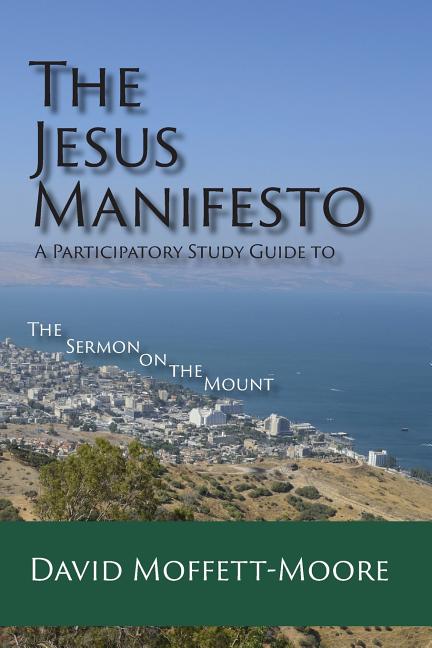
    This book extract is posted as part of the discussion on the law in scripture. It is taken from The Jesus Manifesto: A Participatory Study Guide to the Sermon on the Mount.

    Jesus says, “I come, not to abolish, but to fulfill.” It seems hard to tell the difference. In either case, they are ended. Fulfilling the law means completing it, accomplishing it, perfecting it, thus end- ing it. After saying this, Jesus gives six examples, “You have heard it said, but I say unto you … ” Do not murder becomes do not be angry, do not commit adultery becomes do not lust. Laws regarding divorce, oaths, revenge and loving are at least reinterpreted if not done away with.

    In a sense, Jesus is using the second of Stephen Covey’s Seven Habits of Highly Effective People:
    “Begin with the end in mind.” Remembering the point and purpose of the law, the spirit and not just the text.

    Choosing to obey is a conscious decision. We live in the midst of widespread lawlessness.
    Corporations ignore commonly accept- ed accounting principles, industry standards and environmental impact for the sake of the bottom line. Do we always come to a full and complete stop at the intersection or do we slow down and roll through? How many cars go through an intersection after the light has turned red? I’ve counted as many as six! How many times, and by what speed, do we exceed the posted speed limit? All of these seemingly minor daily choices decide if we are law abiding or lawless.

    The Jews had 613 laws to observe and obey. I lived for a while in a neighborhood near an Orthodox synagogue. Every Friday af- ternoon driveways would fill up with out of town cars as family arrived for the Sabbath observance. Driving on the Sabbath was forbidden and walking was restricted. I attended a class in seminary led by a rabbi. For our final session, he invited us to his synagogue for a tour and a meal. When the entrée was presented we knew immediately he was Reformed; he served a beef and cheese casserole. In strict kosher, meat and milk dishes must remain totally separated, in preparation and in serving. One of my New Testament professors spent some time in Israel and explained that the elevators stopped on every odd-numbered floor. On the Sabbath, he could get out on the 5th floor and walk down to his apartment on the 4th, but he could not get out on the 3rd and walk up a flight — too much work!

    Jesus says “The Sabbath was made for man and not man for the Sabbath.” Paul writes in Romans 14 that some may honor one day over another and others observe all days the same, some account some food unclean and others consider all foods clean. Peter’s vision is recorded in Acts 10, where God says “Don’t call anything I have made unclean!”

    The law on writing goes into great detail, regarding which hand is used, what liquid is used, what
    language is used or what is written upon, if two letters can be read together, it is a sin.
    Different examples of unlawful writing are described. Only if the writing is not permanent might it
    not be unlawful. This is only one of the 613 laws; there are 612 to go!

    Of course, we could keep all 613 and still be a grouch. Keeping track of them all might in itself
    make us a grouch. Jesus’ one law is the law of love: love God, love your neighbor, love yourself,
    love one another. We can’t love and be a grouch!

    Marcus Borg’s Conflict, Holiness and Politics in the Teachings of Jesus explains that Jesus and the
    Pharisees agreed on the call to and the importance of holiness. They disagreed on what was holiness. The Pharisees held that purity was holiness, and so separated themselves from others. Jesus believed compassion was holiness, and therefore went out to and welcomed all.

    When Jesus says, “You have heard it said, but I say,” he raises the bar; he calls us to a higher
    code, a greater standard. Jesus says intention counts as much as action, that what goes on inwardly is as important as what goes on outwardly. He calls us to be authentic, to be true to ourselves.

    We’ve heard the expression, “Your actions speak so loud I cannot hear your words.” How we behave is more important than, and a truer statement of, what we believe. Jesus challenges us to end the law, not by abolishing it but by accomplishing it, even in our hearts.

    In the Kevin Costner movie, Robin Hood: Prince of Thieves, there is a line from Morgan Freeman’s
    character, Azeem the Magnificent, “There are no perfect men in this world, only perfect
    intentions.” No perfect actions, only perfect intentions. I doubt it. I doubt that I have ever had
    perfect intentions. Even in obeying the speed limit. I see myself as a patriotic American and law-abiding citizen and a good role model. I also don’t want to get caught! If I have mixed intentions
    in deciding how fast to drive, I have mixed intentions in everything.

    Jesus calls us to resonance, to allow God to sound through us. “Let your ‘Yes’ be yes and your ‘No’ be no.” As questions of obedience reveal the complexity of our will, the Law reveals the clarity of God’s will. “Will” means the longing, yearning, desiring of God. When I think of “law,” I think of something cold, uncaring, implacable. When I think of the yearning and desiring of God, I think of something warm, soft, loving, and living. Let the law live, let it be written not on tablets of stone but the tablets of our hearts.

    Jesus does not dispense with obedience, rather he invites it to be our loving response to God’s
    loving desire for us, offering a new life, new way, new world, where our daily lives bear true
    obedience even as a tree bears good fruit. Jesus invites us to resonance, where our lives
    reverberate with the yearning of God, where intention and action are in sync, where will and
    witness are one, where the inner and the outer match.

    Jesus also invites us to reverence, to fulfilling the law and the prophets, to respecting the law
    and the gospel, to see the law of God as the love of God. Reverence means great respect, honor,
    even affection. We are called to revere our brother and sister, our accuser
    and guard, the stranger and our spouse. Reverence for all life.

  • David Moffett-Moore: Book Review of "The Making of an Ordinary Saint" by Nathan Foster

    Book Review by Dr. David Moffett-Moore
    The Making of an Ordinary Saint: My Journey from Frustration to Joy with the Spiritual Disciplines. Nathan Foster. Baker Books. Grand Rapids. 2014.

    Nathan Foster is the adult son of Richard Foster, author of the classic Celebration of Discipline: The Path to Spiritual Growth. This book is his reflection and response to his father, as well as to his father’s well known tome. Celebration was written in 1978, has sold over two million copies in English and been translated into twenty-five other languages. Along with others, it motivated Richard Foster to form “Renovare,” an international and ecumenical community promoting personal spiritual renewal. I expect everyone reading this review has also read Celebration or at least heard of it.
    I grew up as a preacher’s kid, with all the subliminal strings attached to that relationship. Imagine growing up as the child of one of the most influential spiritual writers of the late twentieth century. Poor Nathan barely stood a chance. I remember seeing a matched set of tee shirts, one saying “Saint: Someone married to a Martyr” and the other “Martyr: Someone married to a Saint.” Somewhere in this dynamic tension, Nathan had to find his own way.
    The book is very much a contemporary exploration of the classic spiritual disciplines, each taken in Nathan’s own way. There is ample personal sharing; it is always “on the way,” not “in the way.” Nathan’s personal sharing of his reaction to each discipline, whether as a rebellious youth, wandering young adult, or a more settled disciple, makes the discipline more personal and more relevant. Without being obvious, he has updated his father’s efforts.
    Nathan includes the same twelve disciplines his father identified, but sets them in his own order, making his own path among them. In Nathan’s order, they are: submission, fasting, study, solitude, meditation, confession, simplicity, service, prayer, guidance, worship and celebration. Though the two books take different paths through the disciplines, they both end with celebration! In this telling, Nathan offers an explanation of the discipline, his experience of that discipline, and then identifies a saint who is an example of each discipline. I enjoyed the honesty and humility exhibited by his willingness to share from his own journey, his own frustrations and struggles, his own path to his own peace. Nathan’s sharing is not as a spiritual exhibitionist, but rather invitational, inviting the reader to share in the journey.
    The church I serve has several “Christ Care” groups, members who meet twice a month for devotion, sharing, mutual support and study. Two of those groups are currently using this book as their study book. Every two weeks they read a chapter and share their responses, questions and reflections on the text. The concept of “spiritual disciplines” and “spiritual formation” as formally structured is new for them and both groups are thoroughly enjoying this introduction.
    Nathan has an earlier book, Wisdom Chaser: finding my Father at 14,000 Feet,” in which he shares his experience of getting re-acquainted with his father as an adult himself, by climbing the “Fourteens” in the Colorado Rockies, mountaintops at least 14,000 feet high (Intervarsity Press, 2010). This book is equally well written in Nathan’s very personal, reflective, conversational style. I thoroughly enjoyed reading it and, as a father of two adult sons myself, was touched by its shared intimacy.
    I encourage anyone who has read Richard Foster’s Celebration of Discipline to read Nathan Foster’s contemporary update of his father’s work. Anyone who has not read Celebration and is interested in or curious about spiritual formation or spiritual disciplines would enjoy reading Nathan’s offering and benefit by it. I found it informing and enjoyable.


    [slideshow_deploy id=’2755′]

  • Prayer and the Nation

    The Jesus ManifestoOur Tuesday night hangout was actually recorded around 1 pm central time yesterday. I had a great conversation about prayer, especially prayer in a time of crisis and prayer for our nation with Dr. David Moffett-Moore. What good does prayer do? How does prayer relate to action? You may be surprised at some or Dave’s answers to my questions.


    [slideshow_deploy id=’2755′]

Energion Direct
Privacy Overview

This website uses cookies so that we can provide you with the best user experience possible. Cookie information is stored in your browser and performs functions such as recognising you when you return to our website and helping our team to understand which sections of the website you find most interesting and useful.