
Tag: gospel

  • Book Extract: The Story of Moses, Exodus, and Sinai

    Book Extract: The Story of Moses, Exodus, and Sinai

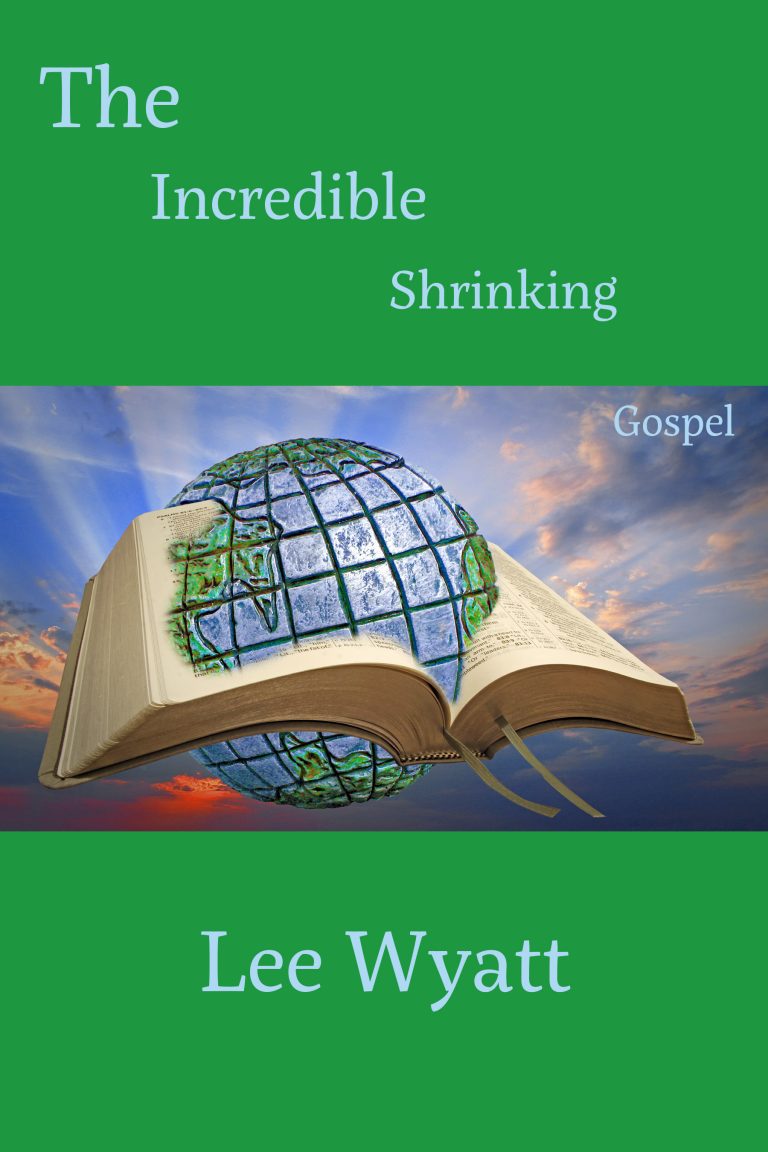
    This book extract is posted as part of our discussion on the law in scripture. It is extracted from Lee Wyatt’s book The Incredible Shrinking Gospel.

    Note: This section of the book is introduced as Jesus, as a child, hearing the stories of his people from Hebrew scripture.

    Freedom for God: The Story of Moses, Exodus, and Sinai

    Jesus continues to listen as his peopleโ€™s story unfolds in a new chapter. Through the vagaries of history and under the providence of God, Abrahamโ€™s family ends up in Egypt under the sponsorship of Joseph (Jacobโ€™s exiled son turned chief administrator of Pharoahโ€™s empire) to weather a famine. After Josephโ€™s death, however, a new Pharaoh grew anxious at the Israelitesโ€™ increasing numbers and began oppressing them with harsh labor. The people cry out to God
    and God gives them Moses.

    Moses emerges as the Israelitesโ€™ leader and challenges Pharaoh to let his people go in the name of YHWH.71 After failed negotiations, a series of divine plagues do the trick and the people leave
    Egypt. Pharaoh changes his mind, however, chases them down, and soon the people are trapped โ€“ the sea behind them, Pharaohโ€™s troops in front of them. YHWH, however, delivers his people with a mighty act, opening the sea for his people to cross and then closing it back again on their Egyptian pursuers. After journeying for some time in the desert, Moses and the people arrive at Mt. Sinai.

    There God formally ratifies his relationship with them, establishing a covenant through Moses at the heart of which lie the Ten Words.72 These words constitute the people God has graciously chosen and redeemed as his distinctive covenant people among all peoples and nations, a people through whose life together God and Godโ€™s way will be made known to the world.73 The Ten Words form the distinctive life of the people around worship (the words or commandments
    prohibiting idolatry (basic issue), graven images (sin of and against the eyes), false language toward God (sin of and against the tongue), and Sabbath (sin of and against the body).

    And from this worship of YHWH flows the community life that pleases YHWH and reflects his character abroad (the remaining six Words). These Ten Words (and all the other laws given to Israel) are not requirements to merit salvation or gain entry into Godโ€™s people. God has already seen to that by calling Israel and redeeming the people from Egypt. Redemption has been accomplished; the relationship between YHWH and the people secured by his gracious love and mercy (formalized in the Abrahamic Covenant). The Ten Words guide the people in living out the proper response to such great salvation. As is sometimes said today, these commandments
    are not given for Israel to keep to โ€œget inโ€ to covenant with God, rather they are given to help them โ€œstay in,โ€ that is, function effectively and faithfully as Godโ€™s covenant people. Thus this Mosaic Covenant made at Mt. Sinai is conditional upon obedience to achieve its purposes of showing forth the life designed by God to the world. However, it is not determinative for salvation, that is, membership in the people of God.

    But what kind of world does God desire? What shape is human life to take? How are the Israelites to model this distinctive calling they have received to be the prototype of what YHWH intends for everyone?

    Hidden away in the book of Leviticus (and I say โ€œhidden awayโ€ because so few people ever read Leviticus anymore), Jesus listens to a stunning and provocative display of the fundamental
    dynamics of the model Israel was to be for the world. So stunning and provocative, in fact, that Israel itself never quite managed to live it out. So powerfully did this Levitical vision mark Jesus that he picks up the substance and symbolism of this divine dream as the banner under which he marches as he announces and inaugurates the Empire of God. This model is known as the โ€œJubileeโ€ laws and they are found in Leviticus 25.

    In essence, these laws required Israel as a society to build into its pattern of life legal mechanisms that, when practiced, would display YHWHโ€™s compassionate justice as the only viable means to genuine human flourishing. These laws promote justice because they show right relationships functioning at every level of society. They are compassionate because they weave a network of these right relationships in which the well-being of the community is fostered only when everyone cares for the well-being of each other, especially the well-being of weak, vulnerable, and needy.

    The core of these laws requires a fundamental reorientation of Israel once every generation.74 First, slaves were to be freed. All were to have the chance to produce and contribute as they were gifted and able to the common future of Israel as Godโ€™s people. Second, all land was to be returned to the family to which it had been given when Joshua and his generation first settled the land. As the basic form of capital in an agrarian economy, land was fundamental to any hope of long-term economic viability. As a consequence, every fiftieth year, Israel was to economically empower each family to be productive members of the community. Haves and have nots were
    not to be a permanent of life in the community God desires. All this is, of course, rooted in the proper worship of YHWH.75

    You may well imagine that those who had benefited and grown comfortable throughout those forty-nine years might not be too anxious for such a โ€œleveling.โ€ And they would most likely have
    sufficient political and economic clout to sabotage it. And that apparently is just what happened. We have no evidence that the Jubilee was ever enacted. And we have only to look within our
    own hearts to know why! Nevertheless, the Jubilee remains โ€œon the booksโ€ as Godโ€™s as yet unfulfilled dream for his people. And Jesus, once captivated by this monumental vision, could not help but cast his own vision as a reinterpretation of its imagery and substance for his โ€œEmpire of Godโ€ movement.76


    Footnotes

    71 The personal, covenant name of God revealed to Moses at the burning bush (Exodus 3:14). Jews do not pronounce this sacred name but substitute โ€œLordโ€ whenever it appears in the biblical text. I will use the four consonants without vowels to respect Jewish convictions concerning this
    word.

    72 Traditionally called the Ten Commandments though the Hebrew text of Exodus simply calls them the โ€œten words.โ€

    73 Deuteronomy 4:5-8.

    74 That is, after seven sabbatical years have passed, sabbatical years being every seventh year. Thus every fiftieth year was to be a Jubilee year. Or it could have been the forty-ninth year depending on how one reads the evidence.

    75 Leviticus 25:18.

    76 In this respect, the Sermon on the Mount (Matthew 5-7) might serve as Jesusโ€™ basic reinterpretation of Jubilee.

  • The Law Is Not Soggy Cornflakes

    The Law Is Not Soggy Cornflakes

    This post is being reposted in response to my friends Alden Thompson and Elgin Hushbeck in the discussion on the law. Their posts to be found here
    https://www.energiondirect.info/2021/03/22/the-law-as-gospel/
    and here
    https://hushbeck.com/blog/2021/03/alden-thompson-and-the-law-as-gospel/

    Both have addressed a significant area of contention with me, the issue of Christians neglecting the Law’s distinct purposes. While I believe they addressed the need for the Law in the believer’s life, I think Alden’s title may point to the fact that greater clarity may still be needed regarding the need to separate the gospel from the Law, allowing both to retain their distinctiveness. As the gospel is not Law, and the Law is not the gospel.

    I do want to thank them both for pointing out the importance of this issue. Elgin raised the question of how to produce the love the Law commands? I believe this question gives further credence to the importance of this discussion.

    For me, the answer is found in retaining the bark of the Law. As it chases us to the gospel where we discover we are loved, and the knowledge of that brings that love out of us (1 John 4:10-19).

    This is also why both the gospel and the Law are needed daily like daily vitamins.

    I have dealt with these issues more extensively in God’s Law Is Not Soggy Cornflakes.

  • Grace Before Law

    Grace Before Law

    A book extract from Who’s Afraid of the Old Testament God?

    This beautiful aspect of God’s way with man can be summarized in the phrase: “grace before law.” Now that may sound strange to those of us who are accustomed to thinking of law as
    something which condemns, something which must be followed by the good news of saving grace. In that way of thinking, law is, of course, bad news. Furthermore if that is the way I insist on
    looking at law and grace, I will never make peace with law; it will always rub me the wrong way. What then does “grace before law” mean? Just this: When God comes to us, his first approach is not law, but grace. Before we ever do anything for him or even in response to him, grace is there as his free gift. The classic New Testament passage in this respect is Romans 5: ”While we were
    still weak” (vs. 6), “while we were yet sinners” (vs. 8), “while we were enemies” (vs. 10), ”we were reconciled to God by the death of his Son” (vs. 10). We did nothing to merit such a gift. While we
    were yet shaking our fist in God’s face he did something that could touch our lives and make us whole. Once our lives have thus been touched by his goodness, we are able to recognize that this great God also wants to show us how to live and that his law is part of his plan for our life. But now the sting has been taken out of law because we have first been touched by grace. As the Gospel of John records: “If you love me, you will keep my commandments” John 14:15). If we let ourselves be touched by his love, we cannot help but love him and then the natural result is to follow in the path that he has given us for our happiness.

    Now since this is a book about the Old Testament, I should hasten to add that the familiar picture of grace before law in the New Testament is paralleled in the Old, and right at the focal point of the Old Testament record, Israel’s deliverance from Egypt. The amazing story of God’s deliverance of his people shows that they had not one shred of merit to offer him. Even their faith was very
    much smaller than that of a mustard seed. But God delivered them from Egypt. He rolled back the waters of the sea. Then and only then, did he bring them to Sinai and the law. But it was the memory of God’s mighty deliverance that placed that smoking mountain in perspective. Even though the people did not always see the full glory of the law nor recognize God’s gracious purpose in speaking with them, there was at least one man who did. The man who was right at the heart of it all, the man who led Israel out of slavery and through the sea, that man Moses, did see the glory and beauty of the law. His heart had been touched by the grace of God so he could exclaim:

    ”For what great nation is there that has a god so near to it as the Lord our God is to us, whenever we call upon him? And what great nation is there, that has statutes and ordinances so righteous as all this law which I set before you this day?” (Deut. 4:7-8).

    Yes, all those strange laws in the Old Testament were still good news. They did not represent God’s ideal, for God was not dealing with ideal people. His great desire for them, as for us, is to be able to inscribe his law on the heart. Then we will no longer face that potential aggravation which is always lurking in the imperative. Then we can revel in the new covenant experience, an experience which enables us to live from the heart and with joy.

    In the meantime, whenever I find myself chafing under the divine imperative, I find it so very helpful to retrace the steps from Sinai back to the Red Sea and there catch a fresh vision of the great God who first delivered his people and then brought them to Sinai. Or in terms of the New Testament, I find the sting of the imperative simply vanishing in the knowledge that while I was still his enemy, he died for me.

    From Who’s Afraid of the Old Testament God?, pp. 79-81

  • From DOBE to BEDO

    From DOBE to BEDO

    By Pat Badstibner, World Prayr, Inc.

    This article has been updated as a response in the series Discussing the Law in Scripture. See that page for a detailed directory of articles in this discussion. The initial article in that discussion is The Law as Gospel.

    There is something about having a mission statement for a mission that says, โ€œHelping Christians act like Christians.โ€ Such a mission statement creates mental images of Tom Cruise in Mission Impossible for me as I picture Tom Cruise jumping over motorcycles, walking down the side of a multi-story glass building, and other insanely impossible stunts. Yet, our minds are often so focused on Do that such a mission statement is the way we usually think.

    This type of thinking once so predominately ruled my life that when faced with not being able to DO, I found myself standing on a bridge one night ready to jump, late one evening. An award-winning artist, my life was defined by being able to do DO. Now, I was facing not being able to be the man I once was. The very thing my identity and significance were found in I was faced with losing.   

    Dozens depended on my ability to perform for their livelihood and the ability to feed their families. As my churchโ€™s largest employer, I was also a leader among men known for his ability to help Christians act like Christians. This was who I was until diagnosed with a crippling disease. A disease that left me with an uncertain future, wondering why God was mad at me, and feeling like I would let dozens and my church down. Entering a world of silence with doctors predicting I may never be able to walk without some aid, much less DO again!

    As I stood on that bridge, there were five prominent thoughts in my mind;

    • I wanted to end the tremendous emotional and physical pain I was in.
    • Was God mad at me?
    • Hadnโ€™t I done everything right?
    • Why did it not seem enough? Why did I get the feeling that it wasnโ€™t enough?
    • Was God throwing me on the trash heap of life, was he done with me?
    • How could I face anyone? What would they think of me now that I couldnโ€™t DO?

    My dear friend Henry said it best recently. โ€œThe devil is a gambler; he gambled on the jump. Grace won that night.โ€

    I didnโ€™t have the answers that night, and the pain of not knowing the answers to those questions was as painful as the physical pain I was feeling. Yet, looking back, it was not the bright lights that hit me in the face from the emergency road crew keeping me from jumping that night but Godโ€™s loving sovereignty. It was Godโ€™s loving sovereignty as he broke my self-righteousness, my idea of obedience, my self-sufficiency, and my idea of what a Christian should be to instill a different message. A message of hope and change.

    One Without The Other Doesnโ€™t Work

    A message that focuses on both the gospel and the Law and reveals the necessity for both. Without a correct understanding of the Law, the gospel is not valid. Without the Law, we cannot express what we have discovered through the gospel in our life. Yet, the Law without the gospel is nothing more than a powerless to-do list unable to accomplish anything but make one weary from living life. I know firsthand about being tired from trying to be enough, to be right in the eyes of other Christians and God. My team and my family were indeed weary from my to-do lists and my insistence they perform to an unreachable standard.

    I had grown up with a Christianity that was all about DO. That night on the bridge, tens of thousands of hours of study and what is now sixteen years later has brought a different message. A message that has created what my family calls Dadisms. โ€œIt isnโ€™t if you donโ€™t get the gospel right, you donโ€™t get anything right. It is if you donโ€™t get the Law right, you donโ€™t get anything right, including the gospel.โ€

    The Breakdown Begins

    The first breakdown in getting the Law right occurs in the game โ€œWhose Standard Is It?โ€ Where contestants are left to themselves to set the standard of Godโ€™s Law. After deciding the standard, each contestant can then use their determination to judge themselves and others. As one can see in this game, the lawโ€™s standard becomes subjective to each contestantโ€™s subjective judgment. 

    Creating a Law that now has a consistent change variable, a change determined by each playerโ€™s external circumstances and life experiences. When the standard of the Law is changed, we are left with no choice but to change Godโ€™s character. Instead of a God who acts independently, and perfectly we are left with a God defined by each playerโ€™s life experiences in the game. Hereโ€™s the catch though, all of us are playing the game.

    The Game We All Know And Play

    This is the game of life we all play. Once, we had no choice but to play this game, as we defined not only God but ourselves by our ability to play. Thus, it is the most natural thing to accept an ever-changing subjective law as we expect everyone and ourselves to hold to these standards. When we donโ€™t, we live out of fear, we labor to control, suffer shame, loss of love, loss of connection, and we create divisions, even within ourselves. 

    When we change the standard of the Law from one objectively demanding utter perfection from us to one of being subjective, we also change the gospel. Instead of a gospel that tells us that we are all moral failures, and none of them are enough, we find a gospel that pushes us to be more, do more and do better. Instead of a gospel that tells us our answers lie elsewhere outside of us, its message now places us on a tireless hamster wheel. When we rob the Law of its objective demand of perfection and thus robbing of its voice so that it ceases to scream at us of its impossibility, we will quickly fall into that which is most natural to us.

    We Must Let It Scream

    It is natural to us to want to be right, to find sufficiency and rightness in ourselves. This leads one to Find Oneโ€™s significance in being obedient and walking the right life. Only by trusting in a law that no longer defines God, His character, or His actions can we even begin to lay claim to finding significance in such a life. Only a Law that screams failure at us can break us of such a natural bent to find significance or reason to matter in what we do, rather than what Christ did.

    Those who ignore the voice of the Law screaming failure at them find no reason to run continuously to the gospel (Gal 3:24-25) or explore its depth to a deeper level (Romans 8). For them, the gospel is a one-time done event. Such thinking, as previously noted, always leaves them imprisoned on the hamster wheel, running to be enough within themselves.

    All You Need Is A Little More

    As they labor to meet not only their expectations, everyone elseโ€™s but what they see as Godโ€™s as they run harder and harder to be more or prove themselves enough within their abilities. Only discovering, as John Paul Getty once remarked when asked how much money is enough, โ€œjust a little more.โ€ Except now the question isnโ€™t about how much money is enough, but โ€œWhat more do I need to do?โ€

    They may pretend that the law is not screaming at them or hear the law laughing at them running on the hamster wheel; they may even state such, as they remain caught up on the hamster wheel of performance and perfectionism. Yet as the law screams louder to the falsity of such claims, they run faster as they remain unwilling to walk into the light with oneโ€™s failures, weaknesses, and sins (1 John 1:5-10) with both God and man, hindering the fellowship of both.  

    The Struggle Is Real

    Even sixteen years later, the idol of self pushes against what I know to be true about the gospel. As I labor with all of Godโ€™s elect to prove myself capable so that I might, Iโ€™m among those who are on the right side of Christianityโ€”feeling the pangs of shame-driven guilt when I fall short of some imaginary standard. I find nothing that separates me from others as we labor in unison with a natural bent towards self-righteousness and self-sufficiency in our self-motivated efforts to be enough.

    Those grace messages that do not call us to face our weaknesses or failures forget essential truths. Truths that remind us that there are two parts to the equation of โ€œHis grace is sufficient for my weakness (2 Corinthians 12:9).โ€ The first part everyone seems to understand, but the second part of knowing oneโ€™s weakness either we or ignoring or unclear. Along with forgetting that grace is given to those who have heard the voice of the Law that they are not enough, nor will the most uprightness, the rightest person, the most together of us ever be enough alone (Psalm 138:6; Proverbs 3:34; Proverbs 29:23; Matthew 23:12; Luke 1:52; James 4:6; 1 Peter 5:5). 

    These messages attract like moths to light, not realizing that such light may endanger them.  The following statement regarding society as a whole reflects this truth.

    โ€œBolstering, maintaining, and protecting self-esteem is the sacred cow of modern society. Itโ€™s a grievous evil to do anything that might cause others to feel bad about themselves or their performance.โ€ – Dan Rockwell.ย ย 

    The Message We Want Is Not The Need

    Those who long ago downgraded the voice of the Law in such a way that it only gives them instructions on how to run better on the hamster wheel of life hunger and thirst to hear more of the words that tell them how to perform better, do more, be more pleasing and more worthy. As they scream out, โ€œGive me instructions on how to improve, how to do better, then I can surely hold on to the hope that Iโ€™m improving.โ€ โ€œTell me what to do,โ€ their ego screams as it clamors for that which it falsely believes makes them significant, makes them enough, makes them matter.

    Of course, it is not their ego they think they hear, but simply directions on proving themselves pleasing, they will say.

    The longing for some form of righteousness is not an aberration perpetrated by capital-R Religion but a foundation of what it means to be human. –ย Seculosity: How Career, Parenting, Technology, Food, Politics, and Romance Became Our New Religion and What to Do About It. – David Zahlย ย 

    Possibly never coming to understand that such behavioral, morality-based teaching only keeps hidden the real bread and water that will quench their hunger and thirst to be enough, to matter, to be counted significant (John 6:35). To their detriment, they have flocked to those teachers who have left them without knowledge, The knowledge that l rightness comes not from within themselves, but outside of them (Hosea 4). It is not instruction in how to do better, manage their behavior, perform better or do more they need first.

    The Course They Need

    It is a course on how to hear the bark of the Law daily as it robs one of all hope in improvement of oneself to be enough. Instruction in how to listen to the voice of the Law denies any attempt to find solace in thinking that God is quite satisfied, try-hard, do your best, or give it your best shot mentality. Anything short of such a course will leave them on the same tireless hamster wheel theyโ€™ve been stuck on.

    Only such a course of instruction that leads them to grow less self-dependent and more dependent on the One who gave the ultimate performance enables them to change the questions that lead to new discoveries. Discoveries that point to the top performance that closed the application process for performers of the year. A performance that has now allowed all other performers to rest from the weariness of the hamster wheel (Matthew 11:28-30).

    Change Always Requires Risk

    Only when we take the risk to step off the hamster wheel of laboring to be special, significant, and made of the right stuff will our answers to the question of โ€œWhy Are We Significantโ€ shift from; being about what we are doing and what others believe about us. When our lives are no longer based on making all the right calls, being right, or having it all together, only then will our focus shift away from ourselves to another apart from us. As our focus shifts, we discover life-changing beauty in the knowledge that because God has declared us His song of glory, the praise of His grace, His Crown Jewels, the reflection of the Trinity, and the beloved of the Son, we no longer need fear being exposed. Found out or seen as not having the right stuff.

    These discoveries help us understand that when Christ said, โ€œIt Is Finished,โ€ he told us we could stop working to be enough. And accept that He had now made us enough. Here is where we discover the beauty that we no longer must find within ourselves the ability to be right or enough to have a sense of our righteousness but accept that we have Christโ€™s (2Corinthians 5:21). Our failure to respond and live life from the knowledge of these truths leaves our focus inward. As our focus remains inward, we are left with no choice but to maintain the predominant determining factor of our identity, worth, value, and significance based on our ability to run.

    The Real Battle

    This is the war that rages in us and why we, like Paul, are coveters. It is why we long to hear those โ€œto-doโ€ messages and why we focus so hard on being right, winning, and being seen as enough. Why is this so?

    It is what we lost in the garden. In the garden, we lost the knowledge that we were accepted, loved, and known. Since then, our curvature has been inward as we covet that which we deeply desire and turn to other lovers (Idols) to recover lost love. A curvature inward is always sin, as we focus on ourselves. The more we accept that we are deeply loved in Christ and are enough is when we will slowly experience our focus shifting away from us towards God and others. 

    The Real Beauty Of The Law

    Then instead of the Law being a vessel of self-service to regain what we lost, it reveals the grace contained within as it gives us instruction in the art of loveโ€”teaching us to love the One who loved us first (1John 4:19) back and love others. We no longer have to change the Law for our purposes, but now can choose to outdo others in love (Matthew 22:35-40; Romans 12:9-21). Instead of laboring towards what we feel are our rights, entitled to or deserving, we now can choose sacrificial labor on behalf of others.

    With the transformation of our minds, we move away from finding hope within ourselves to be right to ask, โ€œHow do I express that which I now am?โ€ย  Creating a mind shift that moves us from DOBE to BEDO.ย ย Grow to realize that Colossians 1:10 is not an instruction on how to do more, but because we are more instruction on how to exhibit that we believe we are. Only as we give up any hope in a righteousness of our own, can we help others find the real source of righteousness, beginning with ourselves.

  • Discourse on the Practicality of Elder Responsibilities

    Discourse on the Practicality of Elder Responsibilities


    by Pat Badstibner, President of World Prayr, Inc.
    This document was created for The Mill Church leadership as they transition from a staff led to an elder/CTM (deacon) led church order. They are also changing their message to a more gospel-centric one. As they do, they want a gospel-centered leadership model to build on and they believe this article lays the foundation. Energion Publications is publishing it because we believe that gospel-centered leadership fits superbly into the third keyword of our mission statement, “Empower!” Gospel-centered leadership is empowering to all believers because it is also God-centered (Philippians 2:12-13).


    โ€œThe authority by which the Christian leader leads is not power but love, not force but example, not coercion but reasoned persuasion. Leaders have power, but power is safe only in the hands of those who humble themselves to serve.โ€

    John Stott

    Therefore, go and make disciples of all nations, baptizing them in the name of the Father and of the Son and of the Holy Spirit, – Matthew 28:19

    Leadership is the art of influence. As an ambassador (2 Corinthians 5:20), a priest (1 Peter 2:9), an excellent one (Psalm 16:3) and one who is the praise of the glory of God (Ephesians 1:12), we have been called to be influencers for the kingdom in the ordinary and the extraordinary. As we exhibit the love and grace of the trinity, we will be influencers (Ephesians 4:4-6).

    As the Holy Spirit works out the life of Christ (Philippians 2:12-13) allowing us to bear fruit, the outflowing of that fruit will not only be greater influence but an increasing desire to influence (Galatians 5:22-24) and  impact others for the glory of God (Philippians 2:14-18). When Christ gave the disciples the command to go out in the world and make disciples, he was calling them to be influencers and to make other influencers.

    It has been stated that siblings who grow up in a family of older siblings will often learn to talk and walk sooner, than those who do not, there are always exceptions. Nonetheless, the reason this phenomenon  occurs in families is the influence of the older siblings. When a three-year-old influences a baby to walk they have exhibited the art of influence and thus leadership. In like manner, setting an example of leadership, Paul tells the Corinthians to follow him as he follows Christ (1 Corinthians 11:1).

    Leadership in organizations is found in relational leaders and in those who lead strategically. Both do so though through influence.  Leadership can be found in among friends and family as one leads as an example of showing grace, mercy, love, forgiveness and exhibiting how to glorify God in all things (1 Corinthians 10:31). Often it is said that leaders are born, this may indeed be true. However, the believer has two births and on the second birth (John 3:7) Christ gave all the ability to influence.

    Even if that influence is exhibited only in a one on one relationship showing someone how to read the Bible or pray. The greatest way we are called to lead is in helping others know what real worship is. Now how do we worship? This quote from Brother Lawrence answers that; 

    โ€œThe time of business does not differ with me from the time of prayer; and in the noise and clatter of my kitchen, while several persons are at the same time calling for different things, I possess God in as great tranquility as if I were on my knees.โ€ โ€“ Brother Lawrence. Practicing The Presence of God.

    In this way we both give God our whole heart, soul and mind and love others as God loves them (Matthew 22:36-37). As it is in increasing in the knowledge (Philippians 1:9, Ephesians 3:14-21) that the God who knows us loves us without question that worship is inspired (1 John 4:19). Worship that is the aroma of our lives as we express gratefulness for that love with every breath.

    Any model of leadership that doesnโ€™t have that as itโ€™s central purpose is broken. Our broken leadership models and understanding of leadership started in the garden. Can you imagine the garden? It was beautiful, serene and peaceful. The perfect habitat to coexist, commune, worship, and experience the Almighty.

    Our original parents did not ask, โ€œWho Am I?โ€ They knew. They were the ones created in His image. They were His representation, the ones that walked with the triune God and the cherished ones.

    They were the apple of His eye, his excellent ones, the ones he rejoiced over and sang over. His prized creations, the jewels of heaven and the physical exhibition of His Glory. They did not ask, โ€œWhy Am I here?โ€ They knew.

    They existed to worship the Father, Son, and Holy Spirit. Their very breath was to reflect the holiness and beauty of the Godhead. They were there as part of Godโ€™s agenda, he was not there to fit in theirs. They were there not to be great or declare how to be great but to exalt the greatness of the living God. Their work, play, and relationship were to showcase the attributes of the One.

    Their lives were not their own. Paradise was not created for them. They and paradise were the reflection of what God is. They and it were perfect. Thus they had no need to ask; โ€œIs there more than this?โ€ Every moment of their lives was concerned with worship and enjoying connection with each other.  They did not compartmentalize their lives, every moment of their life was about enjoying the very presence of God.

    This is why God was not a benefit or a concept that made life work, easier or helped them fill what they felt was missing in their life, He was their all. Then because of disbelief sin entered (John 16:9, Hebrews 3:19). Once disbelief enters, life is no longer found in God alone. And we begin to think and trust in our ability to find the answers to the questions our parents once knew.

    Trying to find the answers ourselves or within ourselves leaves us on a never-ending search. A search that sets us on a journey to establish our identity and significance by what we do or donโ€™t do or what we produce as a result of our leadership. A Journey to establish, prove and state our identity and significance in our leadership of others through self-aggrandizement.

    Falsely believing that the best way to do this is to divide our life is into time segments as we divide, work, time with familyย  from worship and the enjoyment of God. In segmenting our lives we still may not still find rest as the very segmentation only brings the need to fulfill another kind of law, as we fight for balance. Hindering the enjoyment of God in every moment of life, as we only allow such enjoyment to be experienced in the segment of life that has been created for such a purpose.ย  Interesting thing about our parents whether their time was labelled as ours is or not, they had the same amount of time as day and evening made their day, as it does ours. The only difference was in the purpose of their day, their purpose was to commune with each other and God, ours seems to be more involved in a search for what was lost.ย ย ย  ย ย ย 

    This search only ends as our understanding of the height, width and depth of God’s holiness and love grows (Ephesians 3:14-21). The more our understanding increases of this love the greater our desire to exhibit this love to others will be. In our growing desire to exhibit not only Godโ€™s love but His holiness the less we care if others see us fail, stumble or notice us (1John 1:5-10), after all itโ€™s not about us. Where there is failure in leadership as the result of sin somewhere either in the leader or the ones, they are leading there is a lack of understanding the love of God. 

    This knowledge and understanding brings awareness that real leadership is not found in the doing (Psalm 147:10-11). In doing so much as we labor and exhaust ourselves in trying to please both God and man. Laboring from a position of placing false hope in that others notice what we are doing (Hebrews 6:19) or we ourselves feel good about what we are doing in order to feel right.


    Laboring to prove ourselves enough, capable, reliant, independent or sufficient. This form of labor places us on a hamster wheel consistently running to reach a seemingly never-ending quest for that which we need, love.


    The hamster wheel of life will often find us forgetting that Christ has called us to rest in Him (Matthew 11:28-30). A rest that can only be found in living LOVED, not to be loved. This is the good news the gospel brings to us who are called to be influencers and the news we must remind ourselves of daily in order to be effective influencers. This is why part of the return journey to paradise is taking our minds and spirits beyond what we accomplish or are doing and back to experiencing God in every moment.

    Once the perfect demanding Law left us fearful, disbelieving and laboring tirelessly to fulfill its demand. Now that we are โ€œIn Christ,โ€ that same Law that once labelled us as failures now reveals to us what real leadership looks like. It provides a picture and a description of what it is to be a leader that God has enabled to lead even in the ordinary and mundane. This is why gospel leadership is not about doing less or more.

    It is about rediscovering that which our parents knew, the enjoyment of God in every moment of our life and as a result helping  others know that same joy in their lives. John tells us that Christ accomplished so much that the โ€œwhole world would not have room for the books that would be written,โ€ in three years (John 21:25). Whether shipwrecked or in prison Paul labored tirelessly for the kingdom and on behalf of others (1 Corinthians 15:9-10, 2 Corinthians 11:23-33). Besides our parents knowing time as we do, this provides further proof that rest is not found just in the absence of activity but in our reasons for why we are active.

    Even in our rest (Yes, Indeed yet us know the peace of isolation, bodily and mind rest and the laughter of triviality (Mark: 38-40).) we must worship God, and, in our labor, we must ask what our purpose is. As it is not the busyness of activity that makes us weary, but the driving need to be involved in the art of busyness just to be enough and establish life.  Labor surely brings the need for rest but the weariness that comes from the consistent struggle to establish significance, make ourselves enough or establish life is what wears on us the most. Only as we labor, with gospel intentionality do we truly find rest. A gospel intentionality that allows us to find rest as we experience the sweetness of worship even in our busyness and help others discover sweetness in worship no matter how loud the demands in their life are screaming at the moment.    

    Gospel-centered leaders are those who know longer lead by using others but lead in seeking connection as they know that they and others experience sweetness of worship and the love of God through such connection. This is why the labor of gospel-centered leader is found in being an influencer who is helping others find sweetness of worship in connection with God first and others next. The result of such labor will be helping others know that no matter the activity they find themselves involved in they are learning to be hedonists who find joy and pleasure in communing with the giver of all of life and expressing that joy to others.  Learning to help others learn that gospel-centered rest is found not in being less busy (This is actually an impossibility, as even if our minds are only active we have the same amount of time to fill every day.) but in following our older brother Paulโ€™s example in laboring abundantly in being givers not takers.

    What wonderful news it is for the one who learns that their labor of finding life within themselves can cease because they have been given life (1 John 5:11). News that creates a desire to lead by influencing others to stop laboring to be free and independent but to find freedom and rest in being vessels, howbeit broken and messy ones. Vessels who now are laboring to bring the good news that frees the slaves and sets the captives free (Isaiah 61:1-3) from a life lived in tireless search to be enough.  A vessel used to awaken the hearts of others as they see in our leadership a deeper understanding of the depth of the gospel and what it is to be known by, loved and united to Christ.

    A growing understanding of Christโ€™s love for us will increase a desire in us to outdo others in love, prefer others above ourselves and look beyond our own interests (Romans 12:10, Philippians2:4). Thus where we once had to take to have life now, we give so others may know life. For those who are โ€œIn Christ,โ€ all is worship, a worship that others see even in our labors a sweetness  (Romans 12:1-2, 1 Corinthians 10:31). Those who are not โ€œIn Christ,โ€ are left to lead by focusing on the same things they have always focused on.

    As they pursue with intentionality in labor to achieve and gain. With a focus on getting the work done in order that they and those they lead are found to be significant, objectives are met, and life is established. Christ-cantered leaders no longer have to labor for significance, to establish life or simply to get the task list done. Now as they are empowered by love their doing involves glorifying God, loving others and bringing heaven on earth. This is why their labor is even a sweet spot of worship.    

    Because we are significant, loved and our identity is in Christ we can find rest in knowing that at the end of the day after we have labored because we are the bride of Christ it is not up to us to ensure the results of our labor but that such surety lies with our Bridegroom (Proverbs 16:9, Matthew 6:29-34, 1 Corinthians 3:6-7, Colossians 1:15-16;3:23). This type of leadership requires us to learn to live beyond the senses to what we cannot sense, enabling us to view what we do differently (Colossians 3:1-3). To see that all that is real, right and brings life is not in US, but in the living God.

    The journey is sometimes a marathon and sometimes a sprint. Given that, there will always be different rates and variables in how we run, and our hearts motivations will never be as they should be. Sometimes our labors will bring fruit and other times they will leave us parched from the heat of the law of demands, expectations, responsibilities and todo lists. When the desert gets dry and it will we will need to reach for that long cool drink of clear gospel water, lest the weariness of the desert leaves us passionless.

    As leaders our influence will soar as we grow in our ability to recognize our growing need for the key of the kingdom, GRACE. A key, that continually reveals to us that we are not loved because of how far, how much, or even in how fast we run. Instead we are loved simply on the grounds that the one-way love of the beautiful Bridegroom always flows bountifully and unconditionally.

    This is why the ones with the greatest influence in the kingdom influence through walking in the light of day in admitting their weakness as they reveal how important the key called grace is. Leading others in understanding that Godโ€™s best work is often found not in our success but in our failures. Teaching others that even when things are dark, and weakness is being exhibited more than strength, Godโ€™s love and grace flows prosperously and unrestricted. As the spotlight shines on our doubts and questions, and we should and will have them, may it reveal that our hope lies not in our ability to be leaders of noted exception but that we are learning how much we need the key to the kingdom.

    This same key will lead us to experience suffering, weariness, frustrations and failures as life shattering God encounters. Silently and sometimes with great outbursts these encounters will make us cry out of need for the lover of our souls to speed His love to us. A love that when encountered will never cease to grab our affections. 

    As our affections are grabbed by the Bridegroom we will desire more to love, empower, enable, support, labor besides, encourage and point and tell less. Since we accept that in doings is found the sweetness of our worship and the beauty of connection as it is expressed in helping others grow in their understanding, insight and knowledge of the love that binds it all together. In order that those who they influence are learning that God is more than a concept to help them fill what is missing or make life work. He is the Holy, Holy, Holy who now loves them freely and abundantly.

    He is the one the One that makes all of life sweet. As we exhibit the reality of these truths, we will influence others in knowing how to rest best through practicing the presence of God in every moment of life, no matter how busy. Leaders whose leadership is an act of continuous worship to be givers rather than takers will find refreshment in every movement of life, no matter the ongoing activity. When they fail to worship, and they will the empowering love of the trinity will always enable them to influence best by through living a life of repentance (Romans 2:4) as they realign their hearts to know sweeter worship.

    โ€œIt is not necessary to have great things to do. I turn my little omelet in the pan for the love of God.โ€  – Brother Lawrence. Practicing The Presence of God


    (Featured Image Credit: Adobe Stock #135117421. Not public domain.)

  • God’s Law Is Not Soggy Corn Flakes

    God’s Law Is Not Soggy Corn Flakes

    The law drives us to the Gospel. The Gospel saves us from the curse of the law but in turn directs us back to the law to search its spirit, its goodness and its beauty. The law of God is still a lamp unto our feet. Without it we stumble and trip and grope in darkness.โ€ – R.C. Sproul

    Intro

    Grace is one of Godโ€™s many characteristics and quite possibly the one that best defines Him. Found both in the law and gospel is Godโ€™s love and grace. His grace enables us to live the law, while his gospel declares who we are now in Him, so that we can see in spite of our failure to keep His law perfectly, weโ€™re still one of His children. Weโ€™re still the apple of His eye, because we have been given Christโ€™s merits.  We define grace as Godโ€™s unmerited favor. We define gospel as that which he has proclaimed. So, in other words we might say that grace is who He is, how He speaks and what he does.Gospel is that which he has said.

    What you believe to be Godโ€™s law may be nothing more than what has been presented as manโ€™s understanding of Godโ€™s law.  In Godโ€™s Word we can find a lot of words, but in truth everything God has said in his word can be broken down into two words. Those two words are โ€œLawโ€ and โ€œGospel.โ€ Now, ask yourself if everything God says can be broken down into two words, shouldnโ€™t we know how to tell the difference? So, letโ€™s see if we canโ€™t make that just a little easier. 

    โ€œVirtually the whole of the scriptures and the understanding of the whole of theologyโ€“the entire Christian life, even โ€“ depends upon the true understanding of the law and the gospel.โ€   – Martin Luther

     What Is The Law

    In simple terms the law is what God has told men to do and what not to do. As a result He enabled him to live in fellowship with Him for all eternity.

    In an expanded term it is that which God gives which holds back evil, disorder and brings civility to men. It is that which condemns, accuses and judges. The law, also shows us the character of God, along with how God designed life to work. The law drives us to the beautiful One the gospel tells us about and then shows us how to reveal that same beauty to others.  .

    Looking back at that paragraph, we see that the law has three purposes.

    • Pedagogical – It accuses us and shows us our sin (a mirror). (Romans 7:7-12; James 1:22-25 )
    • Civil –  It helps to control violent outbursts of sin and keeps order in the world (a curb). Consider a policeman .(Exodus 20; Romans 13:1-7; 1 Timothy 1:2-3)
    • moral/normative – It teaches us as Christians what we should and should not do to live a God-pleasing life (a guide). It is the stepping stones of the law that reveal to us, how to live this life daily. While there are many passages one could specifically use here a key passage that shows that there is a process and it is indeed like stepping stones is 2 Peter 1:5-8. The moral law always demands perfection. 

    What Does That Mean

    It is said that gospel means, โ€œgood newsโ€ and while the law is definitely not bad news, it brings with it bad news. Because it tells us, that without Christ, just how really rotten we are, how corrupted we are and how miserable we are. Not to mention, it shows us that in Godโ€™s eyes we are a horrible, defiled, less than human, zombie of a creature. Thus showing us our need for Christ.

    While it continues to bring bad news in our lives as believers, as it reveals to us continually that we keep missing the goal of perfection. Within that bad news is found โ€œgood news,โ€ as it now makes us gasp for grace to reach for the gospel, repeatedly. Albeit, it also becomes good news in our lives as believers, as it reveals to us the way to unparalleled joy and life unimagined as we learn to delight in Godโ€™s Word, His law, as a perfect guide.   

    The mirror of the law shatters our self-made images of our preconceived self-importance, goodness, self-righteousness and deflates our egos. As it reveals that, it is not others who abuse, misuse, and are ungrateful for Godโ€™s love and grace the most, but ourselves. Only when we remove the law’s demand for perfection, are we able to use it for behavioral modification.

    By behavioural modification we mean as a tool, by itself, without the gospel, to get others to live differently, do better, be more. In other words; to not abuse, or misuse Godโ€™s grace. We do this when we use the moral use of Godโ€™s law incorrectly.

    No Credit Here

    We so desperately want in this life some props, credit for getting something right, for doing something that we can get โ€œattaboys,โ€ โ€œpats on the backโ€ for. Nonetheless, when we look to the law as a perfect guide of the law, we are robbed of all abilities to claim anything. As, the guide keeps reminding and revealing where we keep falling and forgetting that Jesus forgave us (2 Peter 1:8-9).

    The mirror of the law never allows us to misrepresent ourselves either to ourselves or others and always keeps us from putting others down and lifting ourselves up. The minute that we begin to speak of the sins of others, before our own, itโ€™s time to ask the mirror who is the fairest of them all, which always points us to the gospel. Because as the mirror answers, โ€œOH, Queen,โ€ โ€œOH, King,โ€ โ€œit is not you, for it is the โ€œFair Oneโ€ in you that you see.โ€ 

    A High View Of Godโ€™s Law Creates Affections, Obedience and Joy  

    If we mix the purpose of the law, we create a blackish law (Keeping in mind that the color black is a mixture of all colors combined.), which is why it is often like mudpies, when we throw the law of God at one another with words like, โ€œCan you believe they are doing that?,โ€ or โ€œNo, good Christian acts like that!,โ€ or โ€œHow can you call yourself a Christian and live like that?โ€

    These statements, variations, degrees or any sentiments like them reveal a lack of understanding of the distinct purposes of Godโ€™s law. Along with its continued demand for perfection. The law never leaves any believer unaccused, unjudged, or unscathed. It enables Satan to make us active participants in the dream of Martin Luther, in our own dream.

    As, Satan draws up a list revealing all of our sins,and then asks, us, โ€œAre you sure God loves a Mess like you?โ€ The law points us to the fact that the only answer, the only hope for the answer to that question does not lie in our abilities, but in that Christ’s blood has purchased the answer to the lawโ€™s accusations and allows us to return an answer to Satan and others, let me tell you a few more, because In Christ I am โ€œFORGIVENโ€. (Romans 5:9; Ephesians 4:32; Colossians 1:20; 3:13; Hebrews 9:22; 10:19) .  

    Letโ€™s Play The Limbo

    It is not a view of the law that lowers it, makes it soft and pliable, easy to do that gives us comfort, creates within us a humble spirit (Matthew 5:3) and heart obedience (Romans 6:17), but one that retains a Costly High View of Godโ€™s Law. It is impossible to have a high view of Godโ€™s law and a high view of oneself at the same time.

    When we mix the law, robbing it of itโ€™s beauty, uniqueness and distinctiveness, the end result is always a softer, kinder, gentler, meeker, more flexible milk toast – kind of law. If it were cereal, it would be corn flakes that have sat in a bowl of milk for a day.

    Not, to mention that as long as we search for a sense of life in trying to match up, measure up, or live up to a law that enables us to claim some merit or some ability, or some righteousness from it, we will ultimately need to lower the law more and more and effectively we end up playing the limbo with it. Which always results in us cheapening the law or us having a low view of the law that drove Christ to the cross. 

    The Lawโ€™s Real Purpose

    This type of law keeps us from really understanding and knowing who God is. Not to mention, that it keeps us from understanding what he has said, is the best way to life and to know where we should find our deepest joy. So, a softer law, a law that does not keep reminding us of our sin leaves us in the same place that no law does, unable to really discover the source of real joy, real life and to know why we were created. Any time we look at another and point a finger, we have lowered the law, given ourselves some merit and stated that when Christ said, โ€œIt Was Finished,โ€ that we donโ€™t believe him.

    It is only as we realize that Christ neither came to remove or change the law or remove its demand for perfection (Romans 3:20-31), that we become grateful, and desire to hear again and again and again, the story of our rescue and that our homesickness increases. Only, when we have a High view of Godโ€™s law will we be left unable to find any hope, righteousness, merit or credit in it, that we will continue to reach out for the merit, righteousness and hope found in Christ. Only a law that reminds us not only of our sin, but of the righteous perfect God, reminds of who God is and what he desires,.and how deeply he loves us.  

    This is why Paul said that He delights in the moral, perfect, demanding, exacting, accusing law of God, as his guide (Romans 7:22), not because he could live it perfectly, boast of any ability to come to the point that he could consciously not sin (2 Corinthians 3:4-6), or no one could see sin in his life (Philippians 3:9), or because he had achieved some level, degree or variance of perfection. Quite the contrary, but because it drove him back to the gospel. Albeit, it should be said that he delighted in it because the law also shows us the way to joy unparalleled and life unimagined as he reveals to us how the creator, sustainer and the sovereign God designed for life to work.

    โ€œThe law reflects the parameters of Godโ€™s desireโ€”not the parameters of his love. When those two get confused, then the law is used improperly.โ€ – Dr Steve Brown

  • Bruce G. Epperly: Spiritual Transformation and Philippians

    by Dr. Bruce G. Epperly, pastor, professor, and author of Philippians: A Participatory Study GuideFInding God in Suffering: A Journey with JobJonah: When God ChangesProcess Theology: Embracing Adventure with God and more!

    Rejoice in the Lord always; again I will say, Rejoice. Let your gentleness be known to everyone. The Lord is near. Do not worry about anything, but in everything by prayer and supplication with thanksgiving let your requests be made known to God. And the peace of God, which surpasses all understanding, will guard your hearts and your minds in Christ Jesus. Finally, beloved, whatever is true, whatever is honorable, whatever is just, whatever is pure, whatever is pleasing, whatever is commendable, if there is any excellence and if there is anything worthy of praise, think about these things. Keep on doing the things that you have learned and received and heard and seen in me, and the God of peace will be with you.                        – Philippians 4:4-9

    Recently, I coined the term โ€œtheospiritualityโ€ to describe the interplay of our theological visions and our spiritual practices. I believe that the apostle Paul is a master of theospirituality, especially in his Letter to the Philippians. He makes the following assertions in the course of the text:

    • God will bring the good work God has begun in our lives to fulfillment and it will be abundant. (1:3-11)
    • Christโ€™s mind dwells in us. (Philippians 2:5-11)
    • Christโ€™s mind is relational and affirmative, and grounded in love and not fear. (2:5-11)
    • Our salvation or wholeness is a matter of Godโ€™s grace and our agency. (2:12)
    • God is intimate. (4:5)
    • God empowers us to respond to every situation. โ€œI can do all things.โ€ (4:13)
    • God will provide for our every need. (4:19)

    Paulโ€™s Philippian vision is grounded in his belief that God is with us, moving in our lives, providing us with wisdom and energy, and inviting us to be Godโ€™s partners in bringing beauty to the world.

    Paul also provides us with a way to experience his vision of reality that involves an integration of practice and action. As a matter of fact for Paul everything we do is a spiritual practice. Central to Paulโ€™s spiritual formation is a life of constant prayer. For Paul prayer is a state of mind, transcending mere words. Pray about everything, small and large. Ask God for what you need and give thanks for your blessings. Donโ€™t worry, but place everything in Godโ€™s hands. Make a commitment to live joyfully. This was good news in Philippi; it is good news today!

    Perhaps, more telling for our time is Paulโ€™s counsel to โ€œthink about these things,โ€ to live affirmatively rather than negatively. This is a challenge these days: we are constantly surrounded by negativity. Politicians bully, insult each other, and tell us to be very afraid. The 24/7 news cycle gives us language of doom and gloom, and imagines a dystopian future for all of us. Even weather reports on sunny days speak of news from the โ€œstorm deskโ€ and see a drop of rain as a potential crisis.
    We canโ€™t escape the realities of negativity, but we need not be ruled by them. In a world, shaped by negativity, Paul counsels us to live affirmatively, guarding our minds by positive thinking: โ€œwhatever is true, whatever is honorable, whatever is just, whatever is pure, whatever is pleasing, whatever is commendable.โ€ This is the power of affirmative faith that transforms our minds, and opens us to Godโ€™s presence in our lives.
    For Paul, the Christian life is joyful. But, joy is not an accident, but a matter of intentionality. Godโ€™s grace permeates all things, and we can, by our openness, awaken to that grace in every moment of our lives.


  • Is Theology No Longer Needed?

    weiss101513-cropped and sized by: Herold Weiss
    Those who see themselves as the rescuers of the primitive gospel most likely proclaim a gospel that is only a century and a half old, and as such is quite irrelevant to those who do not sing in the choir of their churches. Claiming to have rescued the โ€œeternal veritiesโ€ of the Gospel they are actually proclaiming โ€œtruthsโ€ that are no different from the ephemeral truths of science. As is well known, all the truths of science are subject to change when new evidence comes to light. It is sobering to recognize that not too long ago eugenics, lobotomies and lie detectors were considered to be based on scientific truths, but fortunately they have been discarded as demonstrations of premature abuses of trust.
    The history of theology is also full of debris left by the banks of the river of time. That the incarnate Son of God was considered by some to be the amalgamation of a human body and spirit with a divine mind (Logos) has been forgotten. That the Christian life is to be promoted by fear of Purgatory, in fact that there is such a place as Purgatory, is no longer held by most Catholic theologians. No one these days gets exited discussing the truth of consubstantiation versus transubstantiation. Most Christians donโ€™t even know what the words mean. The same is true of the classic definition of the Trinity, even though Western and Eastern Christianity broke company charging each other of having a wrong doctrine of the Trinity. Sectarian movements have introduced new doctrines like the Rapture, the Investigative Judgment, Baptism on Behalf of the Dead, etc., but these have remained anomalous sectarian truths.
    In his struggles with those who insisted that the Jesus Movement should remain a sect within Judaism, Paul, in his letter to the Galatians, three times says that he is defending the โ€œtruth of the Gospel.โ€ The key word in the debate is โ€œcircumcision.โ€ Is Paul saying that the truth of the Gospel is that Christians need not be circumcised? Of course not. For him, the truth of the Gospel is that the cross and the resurrection of Christ did not give Judaism a new definition, or a new lease on life. These acts of God constituted a new creation. The power of the Spirit that raised Christ from the dead, now gives new life in the Spirit to all those who participate in Christโ€™s death and resurrection. In other words, the truth of the Gospel is not a piece of information to be defended, but an experience to be lived.
    [ene_ptp]These considerations make evident that the Gospel cannot be locked in some of its past formulations. Even the mantra of โ€œrighteousness by faithโ€ is now seen as a truth that needed very much to be proclaimed when it was, but which today is misused for modern agendas. The Gospel is not tied to any time, place or culture. It is capable of being expressed in any and all cultures, and needs to be expressed anew by each new generation of believers in their own culture. As the power that makes it possible to live in Christ guided by the Spirit, the Gospel needs to be proclaimed in terms that fit the conditions of human life at any given time and place. If believers are to live, as Paul says, โ€œin a manner that is worthy of the Gospel,โ€ the Gospel must be relevant to the conditions in which Christians live. This means that the will of God that is to be done on earth must be discerned by each generation. If the Gospel is the power that makes it possible to do the will of God, and each new generation finds itself living in a world that is different from the one in which their parents lived, then the actual performance of the will of God must be informed by a clear vision of what it demands from those living โ€œnow.โ€ No generation lives at the time of the previous one. It is, therefore, impossible for the proclamation of the Gospel to be effective if it is bound to the past. Even if the death and the resurrection of Christ is a past event, it is also a present event in the lives of those who have died and been risen with him. The reality of this event is โ€œthe truth of the gospel.โ€ The most pernicious temptation is to tie the Gospel to a formula and live as one pleases because what the formula says is not relevant to life today.
    9781631992223mThe Gospel is not information written on stone. The Gospel is power to live transposing faith and hope into acts of love that make the Risen Christ present in the world of quotidian living. This means that the task of Christian theology is never done. As the discourse that explains the will of God for today, theology is always in need of being done. One of the best known traditional definitions, given by Anselm in the XI century, says that theology is โ€œfaith seeking understanding.โ€ Faith in God is the positive answer of the whole person to an encounter with God. As such it is a personโ€™s immediate response to the call of God. This experience takes form at the level of the being who is now living in Christ, the whole person responds to Godโ€™s call and finds satisfaction and security in the new creation. Once the act of faith has taken place, the person then feels the need to examine what the experience involved by processing the memory of it through the mind. Going over the experience trying to make sense and determining its implications is the work of theology. It establishes the consequences and explores the meaning of living as a response to the call of God. In other words, theology is second level discourse about God. As such, theology is always in need of being done anew because, while God is always the same, each new generation faces God from a different situation, and each member of every generation has a peculiar faith response to God. Thus, every believer does theology in order to understand what life in Godโ€™s presence is all about โ€œnow.โ€
    Theology is the act of reflecting on the significance, the implications and the consequences of having faith in the promise of God in Christ. This reflection has immediate consequences on the manner in which the one who has faith in God lives. Each believer, however, also talks with other believers and reads what previous believers say about life with God to evaluate his own understanding of God. Besides, theology needs to be done to coordinate the mind of the community of faith with the mind of the fellow human beings who need to know that God loves them. In our own time, when we are experiencing dramatic changes in the way in which we live on account of the rapidity with which scientific and technological advances are changing the way in which all humans around the world live, the need for imaginative and creative theological reflection is paramount. The significance of life in Christ needs to be explained to those who find themselves loaded with the burdens of post-modern life so that they too may experience the dynamic force of the Gospel to bring freedom and joy. Christians must be most seriously engaged in the task of making the life of faith understandable to unbelievers and believers alike. This cannot be accomplished by reliance on the theological formulations of the past centuries. It demands a presentation of the Gospel that is current and relevant to the situations in which women and men find themselves today. It is, therefore, quite evident that the doing of theology is never finished.


    [slideshow_deploy id=’2675′]

  • An Inconvenient History Lesson

    by Herold Weiss

    GospelHaving discussed with some seriousness critical topics of interest to Christians who value what the Bible has to say about them, I think it is time for me to take an ironic pen in hand and draw a caricature of the history of the Gospel. Caricatures distinguish themselves by taking a feature and exaggerating it out of proportion. As such, caricatures can be mean, and may give offense to those who see themselves as the victims of someoneโ€™s lack of respect for authority, or malicious distortion of the past. On the other hand, caricatures may also be valid ways to call attention to aspects of the truth that are often overlooked, or are distorted in order to promote a particular version of reality. While the appreciation of caricatures requires a sense of humor, once their picaresque dress is recognized they may be the best way to bring to the forefront an issue worthy of serious consideration. In this case caricatures are used as the basis for a thesis about the Gospel.
    Thus, with tongue in cheek, I offer my condensed history of the Gospel in twenty five words . . . or more:
    The Gospel of Christ was power to do the will of the God who gives life to the dead.
    The Greeks made it a mystical philosophy.
    The Romans made it a legal state.
    The Russians made it an icon paraded for veneration.
    The Germans made it a proletarian revolution.
    The Spaniards made it a colonial instrument for the subjugation of native peoples.
    The Portuguese made it what consecrated their imaginary multicontinental nation.
    The Dutch made it the protector of a profitable laisse faire.
    The English made it an agent for mercantile empire building.
    The Americans made it a financial enterprise for the benefit of shareholders.
    The Mainline Churches made it a bourgeois living standard.
    The Conservatives made it an idol with traditional authority.
    The Liberals made it a cultural monument to be evaluated.
    The Fundamentalists made it a divine message that can be manipulated.
    The Evangelicals made it the means for a romantic forever-friendship with Jesus.
    The Charismatics made it the escape hatch to another world.
    The Apocalypticists made it a mystery locked in a safe to which only they have the key.
    Throughout history the Gospel of Christ has been in need of being rescued from its purveyors.
    [slideshow_deploy id=’2675′]

  • Missions – What about It?

    (Today’s post is from Pastor D. Kevin Brown. Pastor Brown is author of the book Rite of Passage, forthcoming from Energion Publications. He blogs at, you guessed it,ย  D Kevin Brown’s Blog.)
    Last year in the association in which the church I pastor is a member, there was reported 200 people baptized with total receipts of almost $8 million. Do you know what that tells me? That tells me we as an association spent almost $40,000 per person to get them baptized and brought to Jesus. This is well above the per capita family income of a typical family in our county! Thatโ€™s an amazing statistic! If you think we spent $40,000 on evangelism and missions per person to reach them, you would be mistaken. We spend our money tithing to ourselves. We spend money on our โ€œfun.โ€ Most churches (and ours is no different and weโ€™re working on it), spend as much money on literature, supplies and utilities as we do on missions. God help us for our misplaced priorities!
    The Bible says in 2 Chronicles 7:14:

    If my people, who are called by my name, will humble themselves and pray and seek my face and turn from their wicked ways, then will I hear from heaven and will forgive their sin and will heal their land.

    Itโ€™s up to us, the Church, to start reaching this nation again. I read recently in the NC Baptist โ€œConnectโ€ magazine that a church that has been around for 10-15 years or more gains nearly 80% of their new members by transfer growth (thatโ€™s swapping members), while a church that is a new church plant will gain nearly 60-80% of their new members from folks that have never attended church anywhere and are most likely lost. Why? Because the older churches get lazy!
    You see, we have to pay off our buildings, in which we see less than a couple handfuls of people saved each year. We have to pay for our buses and our vans, as they cart us to and fro from activity to activity that reaches few if any with the gospel. We must pay for our burgeoning staffs (because the lay people donโ€™t want to do much of anything anymore.) It seems weโ€™d rather pay to have it done than get our hands dirty. Itโ€™s almost like people are saying: โ€œDonโ€™t try this at homeโ€”let the professionals do it, because it may be dangerous for our health.โ€
    We continue to fund a myriad of programs (of which, many are so ineffective for reaching people with the gospel that weโ€™re afraid to ask why we still have them), yet we hang on to these sacred cows because weโ€™re afraid of a little blood just so we can keep the flock happy. And all the while, the new church plant is nimble enough and may I say hungry enough to โ€œseek and save that which is lost,โ€ because they โ€œdonโ€™t know any better.โ€ They arenโ€™t burdened down yet with all the stuff that a โ€œgoodโ€ church is supposed to have.
    We are involved in a warโ€”a war for the hearts, souls, and minds of our children and our families. The Church in the last 50 years has failed to transmit its religious heritage to the next generation. Sermons, in many of our churches across America, are now more โ€œtherapeuticโ€ than instructional; our worship services have become grounded more in what we โ€œfeelโ€ than in what we think and know about Scripture.
    Why is it that the Church, by and large, no longer represents the power of the โ€œactionโ€ of God in the world?โ€ Iโ€™ll tell you why. Because we have compromised the gospel. The Church has quit training and evangelizing. The church is literally dying a slow death in America; that is imperceptible to most, but nonetheless is happening simply because we are not reproducing ourselves. Church attendance continues to drop in America and weโ€™re down now to around 30% of Americans attending services on a given Sunday. You see, the goal of Christianity must be to advance Godโ€™s kingdom on earth. Let me be very clear. The purpose of the Church is to be Godโ€™s โ€œmissionary peopleโ€ in the world. We are to be adding to the flockโ€ฆnot just fattening those that are already in the flock, those who are already safe and sound.
    Isn’t it time to seriously look at all of our programs and ministries and ask if they are effective and if theyโ€™re notโ€ฆthen, letโ€™s pull out the butcher knife. I am firmly convinced there is no partnership in Christ without partnership in missions. Are we mission-minded? Is it really our TOP priority or just โ€œoneโ€ of many priorities in our churches?
    Oh have we forgotten our mission? If we are going to be relevant to this โ€œlost and dyingโ€ world, we are going to have to remember what our purpose is and what our mission is to be. Weโ€™ve got to care about and love what Jesus loved. What did He love? Not a โ€œwhat,โ€ but a โ€œwho.โ€ People, people, people! He said, โ€œI have come to seek and to save that which is lost.โ€ Thatโ€™s our mission! As congregations, we must intentionally live as Godโ€™s missionary people. Itโ€™s only then that the church will emerge to become what Christ created it to be and itโ€™s only then that we will truly be salt and light and see dramatic changes within the cultural fabric of our churches and thus, this nation. The purpose of the body of Christ is to make Jesus visible to the world Monday through Saturdayโ€ฆnot just to ourselves on Sunday. Are we on mission at our jobs in our schools on the ball fields and dance studios? You donโ€™t have to be a preacher or missionary to be in the โ€œministry.โ€ We are all ambassadors of the Gospelโ€ฆremember?
    But, if weโ€™re going to be on mission then we must overcome a significant hurdle. What is that? The great American Dream? Has the Church in this nation become like the church of Laodicea. Rev. 3:17 shows us this type of church: โ€œWe are rich, having acquired great wealth and are in need of nothing? But we donโ€™t realize that we are wretched, pitiful, poor, blind and naked.โ€ Jesus called that church lukewarm and it makes Him sick to His stomach to the point of vomiting. Is that what He sees when He looks at us? Oh, please forgive us Lord!
    You know when you boil it down; it all comes down to priorities doesnโ€™t it? We must remember who we are and what we are to be about as the Church. After all, arenโ€™t we the body of Christ? We must remember we are to be His hands and feet. The Apostle Paul tells us so in Ephesians 3:11-12:

    It was he who gave some to be apostles, some to be prophets, some to be evangelists, and some to be pastors and teachers, to prepare God’s people for works of service, so that the body of Christ may be built upโ€ฆ

    So, it’s my job as a pastor to equip. Right? That’s what we just read…yet…churches expect the pastors to do everything in many cases. And do you know what else? People like me, (pastors and preachers), have made things this way. Weโ€™ve spoiled our people. Think about it. The average pastor puts in around 15-20 hours a week in message preparation. He gets paid on average a salary of around $45,000 a year, (Iโ€™m estimating here), and there are somewhere around 310,000 churches in the U.S. Add all that up, and youโ€™ll see that every week American churches invest right at $140 million in preaching. Thatโ€™s a major investment, and whatโ€™s the return on that investment? Church attendance is on the decline. The percentage of people claiming to know Christ is plummeting, and the moral fiber of our culture is ripping apart. Canโ€™t we see that weโ€™re missing the boat as Christians and as churches?
    Preaching alone is good, but it wonโ€™t save the masses. We must personally be ambassadors for Christ as we daily โ€œtake up our crosses and follow Jesus and bear fruit for Him.โ€ We must be paramedics with the Gospel (take it to them), not just ambulances (trying to get them to a building). Once we lead them to Jesus, we must disciple them. But, discipling is hard. Itโ€™s time-consuming and not easy because we have to roll up our sleeves and invest in otherโ€™s lives.
    So, will we do it? Will we do the hard things and make our churches mission-minded? Will we brandish the knife and slaughter some sacred cows and stop tithing to ourselves? Will we become more concerned about what is happening outside the walls of our churches instead of paying for our own comforts inside those walls? I pray we will. And I pray that missions will once again become our top priority just as it was our Saviorโ€™s.

Energion Direct
Privacy Overview

This website uses cookies so that we can provide you with the best user experience possible. Cookie information is stored in your browser and performs functions such as recognising you when you return to our website and helping our team to understand which sections of the website you find most interesting and useful.