
Tag: Paul

  • Book Extract: Paul and James on Salvation and the Law

    Book Extract: Paul and James on Salvation and the Law

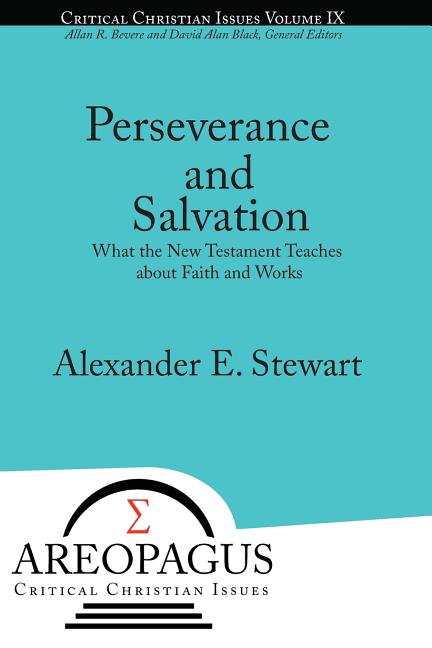
    This extract is from pages 62-63 of Alexander Stewart‘s book Perseverance and Salvation in the Areopagus Critical Christian Issues series. It is posted as part of the discussion on the law.

    It is an irony of history that the only place in the Bible where the battle-cry of the Protestant Reformation, “faith alone” (sola fide), explicitly occurs is James 2:24, a text which plainly says the
    exact opposite.

    Is James right or is Paul right? Many Christians since the Protestant Reformation have clearly chosen Paul over James, but I have been arguing in this chapter that there is no reason to choose between them. They are both contained within the New Testament and neither should be used to marginalize the other. We desperately need to hear both messages. This is the diversity of Scripture whereby different authors wrote to different audiences at different times for different purposes.

    James wrote to people who claimed to have faith but used their faith as an excuse for laziness and inaction. James makes the strong point that a faith that is not accompanied by a transformed
    life is empty and useless. On the other hand, Paul wrote to mixed Jew/Gentile churches
    who were struggling with the relationship of works, particularly the works of the law, to salvation. The particular challenge in Paul’s context is the claim that Jewish works of the law were required
    in order to be right with God and be included within the people of God. Paul strongly argues that such works are not required for justification, but that God justifies all (Jew and Gentile) on the
    basis of faith in Jesus Christ with no requirement of works. Paul very strongly elsewhere focuses on the necessity of good works in the life of a believer (“the obedience of faith” in Romans 1:5; 16:26; “created in Christ Jesus for good works” in Ephesians 2:10; “work out your own salvation” in Philippians 2:12).

    Despite the different audiences, the reconciliation of James and Paul should not depend on the way they use the words “faith,” “works,” and “justify” with different meanings. Paul’s argument
    against works cannot be limited completely to the ceremonial and ritual works of the law, and Paul and James’ understanding of final justification is basically equivalent. It is true that Paul would never have conceived of saving faith as mere intellectual assent to orthodox doctrine (see the demons of James 2:19), but that point by itself does not result in reconciliation.

    I propose that the key to reconciliation should rather be sought in recognition of the distinction between merit and grace. Paul’s broad argument is directed against meritorious works: works engaged in to merit, deserve, or earn justification and salvation. This is what Paul seems to be opposing in Titus 3:5: “he saved us, not because of works done by us in righteousness, but according to his own mercy, by the washing of regeneration and renewal of the Holy Spirit, whom he poured out on us richly through Jesus Christ our Savior, so that being justified by his grace we might become heirs according to the hope of eternal life.” Salvation is not by human
    achievement or righteous works. We do not and never will deserve it. It is based solely on God’s mercy and grace.

    James’ teaching seems to make works equal in importance to faith in the reception of salvation, but denies merit to both faith and works. Salvation is God’s choice and gift (James 1:18). Paul
    likewise often positively linked faith and non-meritorious works (Romans 1:5; 2:6–8; 6:17–18; 1 Corinthians 13:2; Galatians 5:6; 6:7–10; 1 Thessalonians 1:3). This solution seems to offer the best
    hope of emphasizing the unity of Paul and James without distorting the clear thrust of James’ words.

  • Video Interview: Dr. Thomas Hudgins on Who Was Paul?

    Henry Neufeld, Energion Owner/Editor
    Last night I had the privilege of interviewing Dr. Thomas Hudgins on the question, “Who was Paul?” Thomas has a different perspective from the previous authors I interviewed, which you’ll discover in the interview. I’d particularly call your attention to the answer starting at 29:03 regarding what Paul might say to the church in America today, and 33:30 regarding the use of Hebrews as a source for Paul.
    This is the fourth interview, and all four done so far can be found on my Resources for Studying Paul page. I have also been referencing these interviews in my Thursday night series regarding perspectives on Paul. Previous interviews were with Dr. Bruce Epperly, Dr. Herold Weiss, and Dr. Bob Cornwall.
    Here’s the interview with Thomas. You can read a written form of the responses (not a transcript) here.

    I’d also like to add here a link to The Authorship of Hebrews: The Case for Paul, by Dr. David Alan Black, which is referenced in the interview.


    (Featured image credit: Openclipart.org.)

  • Henry Neufeld: Perspectives on Paul – Paul's Gospel vs. Another Gospel IV

    Lightning in dark skyYes, this is the fourth video in what was supposed to be a single session. This should let me take up less time on future lessons because of the foundation laid here. This will also continue for one more session, so next week will be #5. – Henry

     
    And remember the resources page, where I have interviews now with Bruce Epperly and Herold Weiss on the question “Who Was Paul?”. Future interviews will include Allan Bevere, David Alan Black, and others.


    [slideshow_deploy id=’2364′]

  • Henry Neufeld: Perspectives on Paul – Paul, an Apostle (Video)

    Lightning in dark skyLast night I managed to talk about just one verse, Galatians 1:1, and I’m not finished. You can read my introductory notes on my blog. I’ll be following that discussion up with some further notes on authority and what makes an apostle.
    For the Energion Publications books related to this study, see the Biblical Studies – Paul category.


    [slideshow_deploy id=’2364′]

  • Henry Neufeld: Perspectives on Paul Study

    Lightning in dark skyWe’re starting a new feature for EDN as we build up to the full schedule we hope to follow for the site. Each Thursday night Energion Publications owner Henry Neufeld offers a Bible study via YouTube. It lasts about 30 minutes, and last night he started a new series looking at Paul, the sources of his theology, and his message. These studies will now be posted each Friday morning here on the Energion Discussion Network. You will see announcements regarding this series on Henry’s personal blog, Threads from Henry’s Web.

Energion Direct
Privacy Overview

This website uses cookies so that we can provide you with the best user experience possible. Cookie information is stored in your browser and performs functions such as recognising you when you return to our website and helping our team to understand which sections of the website you find most interesting and useful.