Tag: theology

  • Bob LaRochelle: The Value of Raising Serious Questions

    Bob LaRochelle: The Value of Raising Serious Questions

    BobResponse #1 to Philosophy for Believers.
    I very much appreciated the way in which Dr. Vick begins what I think is a wonderful book. With the simple statement, ‘We all have many and varied beliefs’, he opens up for us an in-depth philosophical exploration of the nature and dynamics of faith and belief. In my view, he leads us into a process of serious self examination on both the intellectual and the spiritual levels.
    The statement itself expresses a simple reality. Whether one looks at the wider world around us or at our local communities, one cannot help but recognize that there is a pluralism of belief systems that coexist with one another. Some might be inclined to bemoan this reality and would prefer to help lead people to the ‘truth’ as they understand it, usually posited by them as objective reality from a source outside of themselves.
    In my view, the simple fact is that when we are born, we are thrust into a world which is mysterious to us. As we grow and develop, the specifics of that mystery unfold. Simply because we are human and are capable of thinking, many questions come into our minds as we experience life. We wonder about how life began and who or what might have been there at its beginning. Facing the simple fact that such a thing as death exists, we ask questions about what happens to us individually and collectively after we die. Recognizing the fact of our finite limitedness, we wonder about the inherent meaning to be found in how we live our days.
    As I see it, that which we call RELIGION is our personal response to the mysteries of life as set within the wider context of the MYSTERY that is life itself. Within the world as we know it, there exist many and varied responses to these mysteries of ORIGIN (Where did I and we come from?), DESTINY (where am/are I/we going?), and MEANING (what is the purpose of it all while we are here?).

    I can gladly claim that in honest response to that mystery, faith emerges, faith in the One whose greatness cannot be fully grasped or explained over the course of our mortal existence.

    The different approaches to this mystery are evidenced in a variety of different ways.  They certainly shape the theologies that are part and parcel of the multiplicity of world religions. They also emerge in the various creative processes in which human beings engage. Profound philosophical positions on life’s greatest mysteries are to be found in literary works, dramatic performances and the art work and music of different cultures. Whether one explores Shakespeare’s great soliloquies, the absurdist dialogue in Beckett or Ionesco, or the lyrics of a Bob Dylan, one sees human beings responding to life’s mysteries in many and varied ways.
    Writing as a believing Christian and as a pastor in the church, I find myself observing this multiplicity of responses within the Christian community as well. The fact that there is some diversity of approaches within Christianity is troublesome to those who are convinced that the objective answers are clear and that the work of the church involves presenting that objective truth to others so that they accept it for their own well being and salvation. Sadly, there are some in the churches who dismiss honest intellectual inquiry and the value of raising serious questions. They see this as antithetical to the the practice of religion and even to faith itself.
    Over the course of church history, some church communities have focused on the church itself as the definer of objective truth. They have encouraged their adherents to look to the church for the specific answers to the great mysteries of life and thus to the important decisions they must make in their own personal lives.
    In reaction to this, other church communities, concerned that the institutional church had strayed too far from the Word of God as found in Scripture, have focused on turning to the Bible as the source of objective reality and truth.
    Thus historically, within the Christian church, there has been tension between those who have advocated that truth may be found in turning to the Bible without benefit of church teaching and others who have argued that Scripture must be interpreted in light of ongoing tradition.
    Simply put, some Christians believe that one can find objective truth by turning to specific interpretations of faith by the church. Others believe that truth is found by simply looking inside the Bible. Both positions emerge from the deeper position that God has intended either the church or the Bible to be the vehicle by which objective truth is conveyed.
    As I see it, both views assume that mystery can be defined clearly either through interaction with the sacred text or by adherence to the rules and doctrine of the community. Ongoing tensions exist within the Christian community between these adherents and those who see these issues and questions as far more complex, involving the use of intellect (God given, I would contend) and the exercise of human conscience.
    These brief comments are not intended as a fully developed commentary on the place of Scripture and tradition in the life of the individual believer. Instead I am attempting to state how Dr. Vick’s simple assertion that there exists in our world  a diversity and multiplicity of beliefs resonates with the core reality of human experience- that we are thrust into the world and, as we grow, we ask questions, questions about the BIG QUESTIONS- life, death, the meaning of it all…..
    As a result of people coming up with different answers to these questions, there has emerged a wide variety of philosophical approaches and systems throughout the course of human history. We have seen the work of an Aquinas who has spelled out specific proofs for the existence of God and the actual qualities of that deity. On the other end, we note the work of those existentialists for whom the presence of the divine has essentially been dismissed.
    These differing philosophical positions have led to diverse theologies as there is a fine line between the two disciplines. Within the rather large continuum of positions, we each take our stands, philosophically and theologically.
    In essence, Dr. Vick’s opening remarks state the obvious. In my view, there is a relationship between the fact that there are different beliefs and that life itself is a mystery. Having said that,  I can gladly claim that in honest response to that mystery, faith emerges, faith in the One whose greatness cannot be fully grasped or explained over the course of our mortal existence.


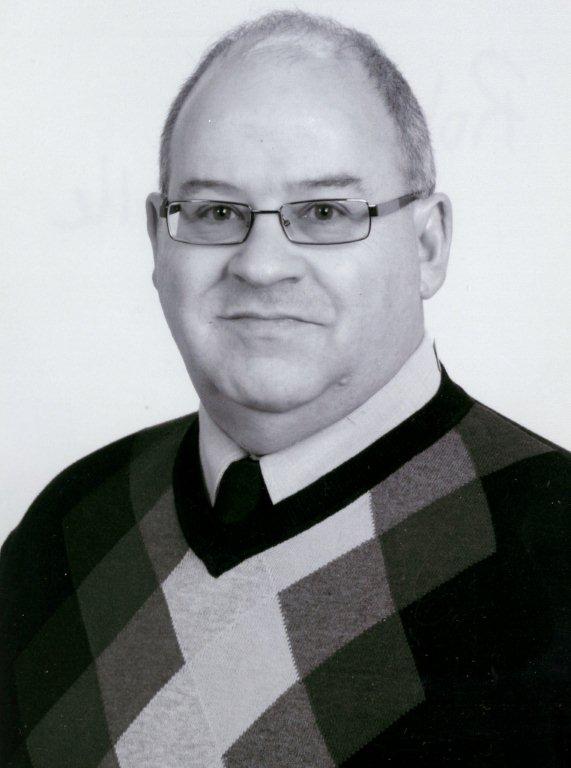
    Dr. Bob LaRochelle is a pastor, educator and an author. His Energion titles are Crossing the Street, So Much Older Then …, and the forthcoming What Protestants Need to Know about Roman Catholics. Early next year, there will be a companion volume to the last book, What Roman Catholics Need to Know about Protestants.

  • Responding to Philosophy for Believers

    9781938434549mI have asked two Energion authors for an extended response to our recent release, Philosophy for Believers by Edward W. H. Vick. These responses will be posted once each month for the next 13 months, covering all thirteen chapters of the book.
    There are two purposes for these responses. The first is to discuss and respond to the approach taken in the book. But the second is more important. It is to see how to people who are in the trenches, so to speak, apply this material in their work.
    Dr. Bob LaRochelle is a pastor, educator and an author. His Energion titles are Crossing the Street, So Much Older Then …, and the forthcoming What Protestants Need to Know about Roman Catholics. Early next year, there will be a companion volume to the last book, What Roman Catholics Need to Know about Protestants.
    Elgin Hushbeck, Jr. is both a Christian apologist and a businessman. He is author of Energion titles Evidence for the Bible, Christianity and Secularism, and Preserving Democracy.
    Each response will be published as a separate post using the category Philosophy for Believers. They will be posted near the end of each month.
    Feel free to comment on these topics. We’d love discussion. If you blog about the topic at or around the same time, we will be happy to post a link here to your post. Join the discussion in whatever way works best for you.

    Publication Dates:

    Nov. 1
    Nov. 29
    Jan. 31
    Feb. 28
    Mar. 28
    May 2
    May 30
    June 27
    Aug. 1
    Aug. 29
    Oct. 3
    Oct. 31
    Nov. 28

    Topics

    1. The first sentence is: We all have many and varied beliefs. Dr. Vick builds the book around this point, saying there is a difference in the meaning of various types of beliefs and how they are justified, but they are nonetheless “beliefs.” Many skeptics, on the other hand, would maintain that there is a much greater distinction between belief in a scientific and a religious context. Since this is a fundamental idea for the entire book, how do you respond to this? Do you find Vick’s approach to this topic viable? Helpful? (Elgin Husbheck’s Response, Bob LaRochelle’s Response)
    2. The crucial question for a Christian in the second chapter is the relationship between testimony, belief, and knowledge. How important is historical testimony to your beliefs as a Christian? What about contemporary testimony, for example, claims of a miracle? (I note here that I can no longer see this as a liberal vs. conservative issue with liberal author Bruce Epperly maintaining that Jesus did, in fact, heal [Healing Marks, Energion, 2013], and also that God can and does act in the world. So I’m not asking “Do you believe in miracle stories in the Bible?” but rather “How does the testimony of others relate to your belief, whatever that belief is?”) (Bob LaRochelle’s Response, Elgin Hushbeck’s Response)
    3. There are a number of crucial issues in this chapter, but I think the best place to respond is on the issue of “proof” and “belief,” question #19 in the book exercises. “Fred believes that he can prove the existence of God. He believes that to believe in God you have to be able to prove that God exists. Frederica believes neither of these. What is the issue between them?” (Bob LaRochelle’s Response, Elgin Hushbeck’s Response)
    4. I’m taking question #4 from the exercises: “What is a ‘world-view’? Do you have a world-view? Is there a common modern world-view about the cosmos?” Then I would add, “How important is “world-view” to the way we respond to new information?
    5. Again, from the exercises, this time question #6: “Should we distinguish between different kinds of explanation, for example: common sense explanation, ad hoc explanation, scientific explanation, historical explanation? Do these or some of them have anything in common? Do different subject matters require different kinds of explanation?” I would be most interested in looking at the difference (if any) between explanation of a religious claim, a historical claim based (potentially) on the supernatural, and scientific claims.
    6. This time building from question 3, though you may want to include 4: “Does religious experience provide us with a reason for believing in God? Specify an argument from religious experience to the existence and activity of God.” The handling of religious experience is key to Dr. Vick’s thinking, not only in this book, but in others, such as his From Inspiration to Understanding: Reading the Bible Seriously and Faithfully (Energion, 2012). If you have not, and would like to read that, I’ll be happy to send a copy.
    7. I’m going to use question #1 from the exercises: “Relate the doctrine of God’s providence to the conviction of the uniformity of nature, and the consistency of natural law.” I use this because it is one I hear rather frequently, and there are a number of different explanations.
    8. I don’t have a specific question to raise, but rather a section, #8, pp. 167-168 on open theism. Relate open theism, process theology, and more traditional understandings of God’s foreknowledge. This might get too broad, but if you try to stick to understanding providence in connection with the apparent uniformity of nature (if that is correct), it should narrow things down a bit. You probably should avoid getting into the Calvinist vs. Arminian debate, though perhaps you can’t!
    9. I’m taking the question from the chapter summary: “But is it possible to tell ourselves a lie and then believe the lie we tell ourselves? Is such irrationality a feature of human life?”
    10. From the chapter summary: “An explanation of how to account for mental activity cannot speak only in biological terms of brain activity. We may not neglect the fact that our experiences have a particular quality of ‘feeling’.” Does Dr. Vick successfully take us to the conclusion that the mind is more than biological function?
    11. Does the concept of “identity” matter to you in your understanding of the afterlife, resurrection, or similar concepts?
    12. I’d almost like to make up another question, but the one asked in the chapter summary is too classic to ignore: “How does the occurrence of miracles relate to well established natural or scientific laws?”
    13. State your basic understanding of how faith and science relate, if they do. Can there be conflict if both are done properly? How should it be resolved.
  • Transforming (Mainline) Congregations II

    Today we continue the series of interviews with Energion authors on transforming mainline congregations. Last week Dr. Bruce Epperly responded to the interview questions. Today, Dr. Bob LaRochelle, pastor of Second Congregational Church, Manchester, Connecticut, (United Church of Christ), and author of Part Time Pastor, Full Time Church (Pilgrim Press, 2012), Crossing the Street (Energion Publications, 2012), and the forthcoming book So Much Older Then (Energion Publications, 2013).
    1. How do you take a church with an old, historical landmark building and a congregation of maybe 50 on a really good Sunday, average age about 60, and transform it into a living, growing faith community?
    This resonates with my current situation. I believe it involves the following:
    1. Attentiveness to good preaching and worship
    2. Active, intentional engagement of participants in the process of INVITING others into participation
    3. Stepped up visible presence in the local community and wider communities, including exploration of technological options, possibly including the use of cable TV
    4. A church retreat offered once a year. I describe that in my book Part Time Pastor, Full Time Church (Pilgrim Press, 2012)
    5. Looking to create youth opportunities that bring young people and their friends onto your property!

    Establish a personal pastoral relationship.

    2. How can you engage someone brought up as a scientific rationalist in (say) the last 30 years in your church sufficiently long to enable them to have some kind of transformative experience, and how do you get them to stay?
    Establish a personal pastoral relationship, invite to be an active participant in educational programming-
    3. Can a charismatic, evangelical. mission-based church find a home for a post-modernist theologian/mystic?
    I believe so, though I would caution that it must also be a church that takes intellectual inquiry seriously and is open to different expressions and to serious inquiry. The church must be seen as less than monolithic in approach. Overall, I think most churches benefit from pluralism in worship styles.
    4. What are the possible roles for young people in a church in renewal? Would you give them opportunities to read, speak, lead a service, provide music, etc.? In other words, how fully can those in their teens (and even younger) participate in leading renewal?
    Young people are CRUCIAL in church renewal…. They should be engaged in all church committees, including board of deacons…. Yes on reading, music and PREACHING! Churches should be seen as comfortable places for youth.

    Churches should be seen as comfortable places for youth.

    5. What role would theological or doctrinal distinctives play in such a church? Is the particular theological flavor of the church important?
    It is. Personally, I like a ‘big tent’ approach as exemplified in Augustine and John XXIII- ‘In things, essential, unity; In things, doubtful, liberty; In all things, charity.’ I say this understanding fully well that people will quarrel over essentials….

    I also understand that those from a particular doctrinal perspective simply have to seek communities more conducive to their flavor.

    6. What role does liturgy play in church renewal? Is it important whether the church is formal or informal, “high church” or “low church,” or what style of music is used?
    Liturgy is crucial. It both expresses who the church is and is the key contact point each week. I think BLENDED is best and the ecumenical potential of it enormous. High, low or whatever, there are some keys: It can’t be rote or routine, preaching and music should be done well, the service should hang together in terms of readings, music and liturgical style. People need to prepare worship with the sense that the entire service preaches the Word.
    7. Can a pastor in a church that is part of a denomination lead that church in renewal? Do denominational politics prevent the kinds of creative actions that are necessary for church renewal?
    Yes to the first question. With respect to the second, I think it is easier wherever local autonomy is operative. However, I have found much impetus for renewal in the work of denominational leadership also.
    8. How can a pastor assigned to a new church discern the needs of that church and find the path to renewal for that specific congregation?
    In my denomination, we are not assigned. The needs and paths to renewal can be discovered through the search process. I talk about this in Part Time Pastor Full Time Church.
    9. What is the role of the pastor’s personal prayer and devotional life (or that of the lay leadership)?
    Simply put, it is CRUCIAL!
    10. What is the role of the pastor’s academic and professional development in church renewal?

    Renewal should be rooted in good theology.

    CRUCIAL as well. Renewal should be rooted in good theology. Strong theological knowledge and a working knowledge of the history of the church and renewal movements within it are crucial as well. I also believe openness to the WHOLE Christian tradition is necessary. I believe, as example, that Catholics and Protestants have for too long lived inside their own houses. This led me to want to write Crossing the Street (Energion, 2012) I strongly recommend a serious reading of Hans Kung’s On Being a Christian as well. The Scandal of the Evangelical Mind by Mark Noll is a good cautionary work with respect to the need for pastoral leaders who take study seriously!
    11. What spiritual practices can transform congregational life?
    expanding the use of different styles of services and rites e.g. Healing, Taize, Blessing of Animals, sprinkling rites ways of doing Communion…. The list could go on and on…. Basically, utilizing resources from the broad, ecumenical tradition … not being bound to perceived denominational worship styles
    – Spiritual Retreat opportunities
    – Opportunities for sharing with respect to the sermon…. I even explore doing this within the service of worship in my new book So Much Older Then (Energion 2013). Minimally, providing opportunities for after worship sermon discussion
    – Opportunities for service to others with opportunities to REFLECT upon that service the shared praxis approach.
     

Energion Direct
Privacy Overview

This website uses cookies so that we can provide you with the best user experience possible. Cookie information is stored in your browser and performs functions such as recognising you when you return to our website and helping our team to understand which sections of the website you find most interesting and useful.