
Tag: works

  • Book Extract: Paul and James on Salvation and the Law

    Book Extract: Paul and James on Salvation and the Law

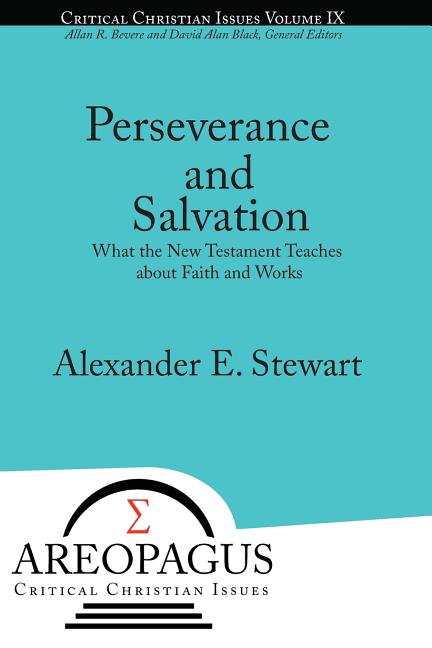
    This extract is from pages 62-63 of Alexander Stewart‘s book Perseverance and Salvation in the Areopagus Critical Christian Issues series. It is posted as part of the discussion on the law.

    It is an irony of history that the only place in the Bible where the battle-cry of the Protestant Reformation, “faith alone” (sola fide), explicitly occurs is James 2:24, a text which plainly says the
    exact opposite.

    Is James right or is Paul right? Many Christians since the Protestant Reformation have clearly chosen Paul over James, but I have been arguing in this chapter that there is no reason to choose between them. They are both contained within the New Testament and neither should be used to marginalize the other. We desperately need to hear both messages. This is the diversity of Scripture whereby different authors wrote to different audiences at different times for different purposes.

    James wrote to people who claimed to have faith but used their faith as an excuse for laziness and inaction. James makes the strong point that a faith that is not accompanied by a transformed
    life is empty and useless. On the other hand, Paul wrote to mixed Jew/Gentile churches
    who were struggling with the relationship of works, particularly the works of the law, to salvation. The particular challenge in Paul’s context is the claim that Jewish works of the law were required
    in order to be right with God and be included within the people of God. Paul strongly argues that such works are not required for justification, but that God justifies all (Jew and Gentile) on the
    basis of faith in Jesus Christ with no requirement of works. Paul very strongly elsewhere focuses on the necessity of good works in the life of a believer (“the obedience of faith” in Romans 1:5; 16:26; “created in Christ Jesus for good works” in Ephesians 2:10; “work out your own salvation” in Philippians 2:12).

    Despite the different audiences, the reconciliation of James and Paul should not depend on the way they use the words “faith,” “works,” and “justify” with different meanings. Paul’s argument
    against works cannot be limited completely to the ceremonial and ritual works of the law, and Paul and James’ understanding of final justification is basically equivalent. It is true that Paul would never have conceived of saving faith as mere intellectual assent to orthodox doctrine (see the demons of James 2:19), but that point by itself does not result in reconciliation.

    I propose that the key to reconciliation should rather be sought in recognition of the distinction between merit and grace. Paul’s broad argument is directed against meritorious works: works engaged in to merit, deserve, or earn justification and salvation. This is what Paul seems to be opposing in Titus 3:5: “he saved us, not because of works done by us in righteousness, but according to his own mercy, by the washing of regeneration and renewal of the Holy Spirit, whom he poured out on us richly through Jesus Christ our Savior, so that being justified by his grace we might become heirs according to the hope of eternal life.” Salvation is not by human
    achievement or righteous works. We do not and never will deserve it. It is based solely on God’s mercy and grace.

    James’ teaching seems to make works equal in importance to faith in the reception of salvation, but denies merit to both faith and works. Salvation is God’s choice and gift (James 1:18). Paul
    likewise often positively linked faith and non-meritorious works (Romans 1:5; 2:6–8; 6:17–18; 1 Corinthians 13:2; Galatians 5:6; 6:7–10; 1 Thessalonians 1:3). This solution seems to offer the best
    hope of emphasizing the unity of Paul and James without distorting the clear thrust of James’ words.

  • Call, Response, and Creativity: A Process Interpretation of Philippians 2:12-13

    by Bruce Epperly

     
    GracePaul is the theologian of grace.  God’s grace transformed his life, turning him from persecutor to proclaimer, and assuring him that he was a new creation, despite his past behavior.  Over the years, many who see themselves as Pauline theologically believe that God does everything and that we do nothing.  Left to our own devices, we are lost, completely self-centered, and without virtue.  We can claim nothing of our own but must attribute every good work to God.  An example of this occurred when I congratulated a seminarian on her fine sermon.  Her immediate response was, “It wasn’t me.  It was all God.”  I was tempted to say, “I thought I saw you preaching, not God.”  And, I wondered how she would respond if her sermon was roundly criticized.  Would she have given glory to God or cast herself entirely on God’s mercy, confessing her own sinfulness and inability to do anything apart from God’s grace?
    I believe that Paul is the apostle of creativity as well as grace. In Philippians 2:12-13, Paul sounds much more Wesleyan, almost a process theologian, and not the more passive Lutheran or Calvinist he’s often made out to be. “Work out your own salvation with fear and trembling; for it is God who is at work in you, enabling you both to will and to work for his good pleasure” or, as I paraphrase these words, “Work out your salvation with awe and excitement, for God is moving energetically in your life, inspiring you to follow and embody God’s vision.”
    Philippians 2:12-13 suggests a dynamic call and response.  God calls us with possibilities, aiming us in each moment toward beauty and taking us from individualistic self-interest to world loyalty.  God’s grace is prior but aims us toward creativity and freedom.  God wants us to do more rather than less, and places the future of our planet primarily in our hands, though undergirded by divine possibility.
    There is a divine-human dance of call and response.  God is in the business of inspiring us to be more than we could have asked or imagined of ourselves.  God seeks maximal creativity and freedom congruent with the well-being of creation.
    God wants us to be active and is happy for us to be proud of our achievements in the same way as a parent wants her or his child to build on the upbringing  he or she has received and go places the parent has not imagined.  The world God is creating moment by moment is not a zero sum universe in which human achievement takes away from God’s power.  It is an open system in which the more that we do positively, the more God is able to do in the universe.  When we are faithful, we open up new possibilities for divine action in the world.
    Grace is always prior, but our responses invite God to make new responses.  Grace liberates, inspires, and activates new freedoms.  We are more in line with grace when we become graceful creators ourselves.  Accordingly, we can positively say about a sermon or any other achievement, “I’m proud that my sermon made a difference.  God and I were working on this together, and we both deserve credit.” And we can imagine God in the congregation saying, “Atta boy, Atta girl, you did well. You have blessing to do more!”
    Yes, God is working in all things.  Yes, God wants us to affirm the fruits of our labors, giving thanks for grace, and making a commitment to do more for God’s glory and the well-being of the world.  (For more on this theme, see Process Theology: Embracing Adventure with God and Philippians: A Participatory Study Guide)
    [slideshow_deploy id=’2461′]

    Click on any picture for more information or to order


Energion Direct
Privacy Overview

This website uses cookies so that we can provide you with the best user experience possible. Cookie information is stored in your browser and performs functions such as recognising you when you return to our website and helping our team to understand which sections of the website you find most interesting and useful.