Category: Christianity

  • Consider Christianity Week: The Reality and Centrality of the Resurrection

    Tonight’s panel can be viewed here. For a complete schedule, see Consider Christianity Week. The panel will begin at 7:00 PM central daylight time.

     

  • What is Consider Christianity Week

    This discussion will take place tonight, April 6, 2014, at 7:00 PM Central Daylight Time. You can watch it here live, on our YouTube channel or watch the recording later.
    This is our first Google Hangout, so we will be learning!
    Note (4/7/2014): There were quite a few problems, but I think we’ve learned how to do this. Below you’ll see the video of our session that started 45 minutes late. We apologize to all those who intended to listen/watch but were unable to do so.

    Follow Energion Publications on Google+.

  • Science, Religion, and Subjective Evidence

    Science, Religion, and Subjective Evidence

    Five Creation Books from EnergionIn our informal series of books on issues related to creation we’ve discussed how creation is represented in scripture, how one goes about forming a doctrine of creation that is truly Christian, and how someone who accepts evolution might reflect his in worship. Soon we will have a volume on how our understanding of God as creator impacts our lives now, and finally we’ll have a volume that talks about the basic science one needs to know about origins in order to understand the debates on the topic.
    Chris Eyre is one of our editors working out of the UK. He’s been working on editing the manuscript for Creation in Contemporary Experience, which is coming soon. He posted something today regarding science and religion, and the nature of internal or subjective evidence. Where does our experience stand as evidence? (Note that, as a good editor, he does not cite this forthcoming book in his post, but it is closely related.)
    In discussing such concepts of God as “ground of all being,” for example, he notes:

    They also, from my perspective, fail to explain all of the evidence, as they do not give any real insight into the mystical experience, the direct unmediated experience of God, which I take as a piece of evidence, as I mentioned above. They do have a transcendent aspect, which is singularly lacking in scientific materialism, and which is well harmonised with immanence of a sort, but it is a vastly impersonal immanence. The mystical experience is in my experience a vastly personal one, and I don’t find this reflected in “ground of all being” or “being itself” theologies, nor in the extremes of the God-of-absence of, for instance, Peter Rollins.
    I need something which at least explains the mystical experience as I have experienced it, which accounts for the evidence (albeit entirely personal) I have. …

    In his recent book Philosophy for Believers, Edward W. H. Vick occupies an entire chapter (6: Experience and God) on this topic. In this paragraph I hear a reflection of Chris’s discussion:

    For the theist the question of God is involved when the question
    of the purpose of existence is raised. At such point in our lives
    we may be faced with the question of the meaning of the whole,
    when ‘openings into the depths of life’ lead us to ask about the
    ground and goal of our existence. (p. 112)

    So what do you think? Is experience valid evidence? If so, does it operate only for the person who experiences, or can that evidence be shared?

  • Please Find a Way to Promote Christian Unity

    Please Find a Way to Promote Christian Unity

    week_of_christian_unityRev. Dr. Robert R. LaRochelle
    In the community where I serve as pastor of a local church, my congregation is hosting a service next week to celebrate the Week of Christian Unity. I am excited that several local Christian congregations, both Protestant and Roman Catholic, are joining in this important effort. I am likewise pleased that the service itself will reflect the variety of worship traditions that are part of worldwide Christian practice.

    It bothers me as well that there does not appear to be enough shared study both of our common Christian resources and of each others’ Christian tradition.

    I am concerned that, on the local level throughout our country, the impetus for services in which Christians from different churches worship together has waned.  It bothers me as well that there does not appear to be enough shared study both of our common Christian resources and of each others’ Christian tradition.
    In the early days after the Second Vatican Council in the 1960’s, local Protestant, Catholic and Orthodox congregations throughout our nation and the world worked furiously to find ways to pray together, study together, and serve together. These efforts have had a lingering positive impact in many communities, especially in the area of Christian outreach and service. In many localities, such as mine, ecumenical and interfaith organizations continue to meet the real life needs of individuals and families. However, I feel that we need to rekindle the desire to find more and more ways to work together on all fronts.

    … each of our individual traditions has offered particular insights into the nature of being Christian.

    As a Roman Catholic for the first forty five years of my life and now as a Protestant clergyperson for the last twelve, I am deeply convinced that we need to find ways to understand our commonalities and to celebrate them. I also believe that, over the course of time, each of our individual traditions has offered particular insights into the nature of being Christian, as well as methodologies for putting Christianity into practice. In my view, it is important that we share these ways of expressing faith and our own practices of worship! I encourage the reader to do whatever you can on your own local level in order to make that happen!

    A Christian Unity service can most certainly be held at any time of the year!

    Even if it is too late to set something up for this upcoming Week of Christian Unity (January 18-25), please consider finding ways to partner with other Christians in your local community or neighborhood.  A Christian Unity service can most certainly be held at any time of the year!  Perhaps you and others can find ways to encourage study and dialogue around the commonalities and differences between Protestants and Catholics and Orthodox. There are study materials available, including many from Energion Publications!
    Please consider doing all that you can to help put Jesus’ prayer into practice, the heartfelt prayer that those who follow Him may find a way to really be ONE!

  • Three Convictions about Missions

    Three Convictions about Missions

    Dr. David Alan Black
    Dr. David Alan Black
    David Alan Black

    6:28 AM I’ve got missions on my mind this morning. You will quickly see that I am no expert on the subject. These convictions are simply the product of a “lay” missionist and conclusions drawn from my personal Bible study.

    Mission Conviction #1:

    In the scriptural sense, all Christians are missionaries.

    The church, not the missions organization, is God’s primary instrument in this world. Perhaps, then, the time has come to stop outsourcing church planting to paramissions entities. This is not to downplay the role of those who are specially gifted in evangelism or church planting. These evangelists and church planters, however, are to work primarily with and through the local churches. Imagine the impact the church could have on the world if every local congregation saw itself as God’s missionary organization. “Missions” would come to mean more than sending money to support missionaries and missions programs. Nor would we continue to use the term “missionary” to refer to professionals who are paid workers. The term missionary, if used, would be given its biblical sense of “representative of God in the world” (apostolos). In the scriptural sense, all Christians are missionaries, and all are to be involved personally in missionary discipleship in service to the world. That’s why I often introduce myself to people, not as a professor of Greek, but as a “full-time missionary.” No, I am not with a paramission organization. Nor am I paid to be a missionary. So people ask, “How then can you call yourself a full-time missionary?” We must change this way of thinking. There must be a significant move away from a paternalistic attitude towards the “laity,” with a growing recognition of their importance in bringing the Gospel to our communities and to the world. According to the New Testament, ministry is not the prerogative of an elite corpus. It is not the function only of seminary-trained professionals. It is the function of the whole people of God. Thus every Christian shares the mission of the church both through personal witness and missions activities. This participation is irrespective of sex, age, gender, social standing, or academic achievement.

    Mission Conviction #2:

    The New Testament, from beginning to end, was written by missionaries for missionaries.

    This is an implication of #1. It is my opinion that we can no longer justify theological training that aims only at making “laypersons” into “professional “missionaries. Rather, theological education must aim at mobilizing all the people of God for ministry in the world. In light of 1 Pet. 2:9 and Eph. 4:11-12, we much change our definition of ordination to include the setting apart of the whole people of God for “works of service.” In our seminaries, I believe it would make a very great difference if we were to recognize that the New Testament, from beginning to end, was written by missionaries for missionaries. It is critical to view the missionary mandate of Christ as the foundation upon which the entire work of Christian education rests. Missions acts, then, or at least should act, as the one encompassing task of Christian theology and community. Why, then, should “missions” be relegated to a missions and evangelism “department”? Such is to imply only a peripheral importance. Our goal in Christian education must be to incorporate the mission thrust of Jesus into all of our subjects. I can envision the day when trained “experts” are wedded to local churches rather than only to academic institutions. Together the whole body — trained theologians and untrained practioners — would join in the process of theologizing and missionizing. The object is for each local church to “hold forth the life-giving Word” (Phil. 2:16) in a way that people will know why and how they should turn to this new Lord Jesus Christ.

    Mission Conviction #3:

    The theological task in our seminaries must go beyond the classroom.

    Conviction #2 implies that the theological task in our seminaries must go beyond the classroom. That is, God’s plan for contextualized missions is rendered inoperable when academics fail to think in such a way that their theology comes across accurately in their lives. God never intended theology to be divorced from life. In our day, such a divorce has become a major problem within Western Christianity. We must reconnect the academy with the church. We seminary professors, whatever our area of expertise, need to live missions, not just talk about it. As with Paul, the Gospel must become the one passion of our lives. “What am I here for?” might serve as a good daily reminder to those of us who serve as academics in our colleges and seminaries. We so easily lose sight of the reason for our existence: to further the Great Commission of our Lord Jesus Christ. 9781893729186mIt is a matter of keeping first things first (Phil. 1:27). And ultimately that mission belongs to the church, not the seminary. The church alone is permanent, and it alone can provide the permanent structure for evangelism and service. This is one reason why in our own mission work Becky and I have worked primarily with local churches and not with larger structures. It is also why we attempt to link local church to local church between the U.S. and Ethiopia. Already several American congregations have decided to partner with their Ethiopian counterparts to further the work of the kingdom. This is because they have come to realize that the local church is God’s center for mission strategies and outreach activities. And more and more churches are getting involved.
    These convictions have legs. And I really do think we’re getting somewhere, folks. My students have convinced me. I speak with a good many of them who are throwing off the bonds of selfish individualism that mummify the Body and paralyze our people into thinking only about my salvation and about my soul and about my Christ. They are allowing God into their private lives, as 1 John and James and Jude teach them to do. Organizational self-appraisal no longer dominates their conversations. They are reexamining their crowded programs. Emphasis is being properly placed on personal sanctity. Programs to arouse pride impress them no more. Their reading of the Scriptures — not the mere words of famous American pop-theologians but the Word of God itself — has shaken their complacency, shocked the status quo. Now Christ is more important than Christendom. One student even told me he’s leaving seminary to get a job in a secular field so that he could begin “full-time Christian ministry.” Vital bonds between church and world are being formed. “I was naked and you clothed Me!” They are acting for Christ, striving to keep Him clothed and warm. Above all, they are becoming Gospelers. Evangelism is now a lifestyle, not something to do on Tuesday nights.
    Yes, the road is long, but I dare say we’re getting somewhere.


    From the Editor: If you’ve read this far, I have something to offer you. I’m going to give out five copies of Dave Black’s book Will You Join the Cause of Global Missions? I’ll accept entries until January 20, 2014. If there are more than five entries, we’ll choose the winners randomly.
    You can enter by commenting her, retweeting this on Twitter, commenting or sharing it on Facebook, Google+ (includes +1), or LinkedIn.

  • Useless Biblical Knowledge

    by Greg May, reposted from Greg’s Watering Hole and used by permission.
    A while back a guy, upon finding out I was a Believer, said to me: “I didn’t know you were religious.” Nowadays that word “religious” doesn’t necessarily mean “Jesus follower” to me. Yet I knew what he meant and I was disappointed in myself that I had been around this fellow for so long and he had no idea of my faith. That said something about my lack of living it out in front of him.

    Anyway, that’s another blog. The topic of the short conversation that ensued about the Bible led me to tell him of a Men’s group I have had at my house. He was interested and told me to let him know if I had another group because he wanted to study the Bible. I said I would and explained that we studied the Word and how to apply it in our lives. He informed me that he didn’t care about the application part, he just wanted to study the Bible to gain knowledge.
    The Bible tells us to seek out and gain knowledge. It also tells us the reason for gaining knowledge is to apply it in our lives. Jesus taught His disciples and others who heard Him teach how to apply the Word in their daily lives. Knowledge should be gained and then applied or it is useless! What good is unapplied knowledge? The Bible may as well be a paper weight on our coffee table if we won’t apply the knowledge gained from it to our lives.
    I installed a laminate floor in my living room a week or so ago. I’m a pretty handy guy but I had never installed flooring. I read the instructions first to gain the knowledge I would need. I ask plenty of questions of people experienced in actually installing laminate. There is a lot of info and instruction that I received that made the project go much smoother than it might have gone otherwise.
    Life can be so much smoother if we will just take the time to gain knowledge by “reading the instructions” and listening to an instructor that’s “been there and done that.”
    In life we need knowledge. Then we need to know how to apply that knowledge. We have the Word of God (His instructions) for knowledge. Whenever possible we need to seek out those who can help us apply that knowledge in our lives. The disciples had Jesus in the flesh to teach them how to apply the things of God to their lives. Timothy had Paul, and all through the Bible people had teachers prophets, leaders and family members who taught them how to apply the knowledge they had gained.
     But as for you, continue in what you have learned and have become convinced of, because you know those from whom you learned it, and how from infancy you have known the Holy Scriptures, which are able to make you wise for salvation through faith in Christ Jesus. All Scripture is God-breathed and is useful for teaching, rebuking, correcting and training in righteousness, so that the servant of Godmay be thoroughly equipped for every good work. (2 Timothy 3:14-17)
     
    Do not merely listen to the word, and so deceive yourselves. Do what it says. (James 1:22)
    We should read the Word to gain knowledge. We should also seek out someone who has applied that Biblical knowledge to their own lives to guide us in applying it in ours.
    Drop me a line,
    Greg
     

  • DOES ANY OF THIS MAKE A DIFFERENCE?

    A reflection on the Meaning of Communion
    Rev. Dr. Robert R. LaRochelle
    It was a Sunday morning just a couple of weeks ago. As a matter of fact, it was the day on the worship calendar of many Protestant churches that goes by the name World Communion Sunday. My sermon was aptly entitled ‘IS IT REALLY COMMUNION?’ and in it I tried to examine as best as could what Communion might really mean for those of us who come to worship and partake of it, at least on occasion.

    … the sacrament of Communion, by the very fact that it is considered a sacrament, has to be seen as an outward sign that both signifies something very important and also serves as the cause of that which it signifies.

    My sermon had made its foray into history, including the long history of separate Communion wherein the usual practice has been that Protestants and Catholics not receive Communion in each others’ churches. Though I resisted the tendency to speak at great length about any of the questions involved, by the time the sermon was drawing to its end, I could not resist finishing up by explaining that the sacrament of Communion, by the very fact that it is considered a sacrament, has to be seen as an outward sign that both signifies something very important and also serves as the cause of that which it signifies.
    Now, I knew in my head and at least as importantly in my heart what I meant by saying this. But something dawned on me then and later on in the day and then during the week as I reflected back on that sermon. It struck me that the sheer emotional investment I had made in speaking the right words from the pulpit and in articulating as best I could what the essence of Holy Communion might mean might very well not mean all that much to many of those people in the pews that day who had little choice but to sit in their pews and listen to my sermon.

    Is it really a sign of what we are supposed to be when some of us might sit on our comfortable pews and want nothing at all to do with others who are sitting around us?

    Is it really a sign of unity?, I wondered, when a few hundred yards down the street Roman Catholics were holding their own Communion ritual with no invitation to Protestant Christians to come join them at table? In fact, in some of those churches the suggestion that one NOT partake is explicitly advertised in the worship materials that are used or the words spoken by the priest from that very table.
    Is it really a sign of what we are supposed to be when some of us might sit on our comfortable pews and want nothing at all to do with others who are sitting around us?
    As I reflected more upon this, it dawned on me that this issue has really been an emotional one for me throughout my life. Raised a Roman Catholic and having served for years as a teacher of religion in Catholic schools and churches and having served for nine years as an ordained clergyman within that church, I both loved the Catholic Church deeply, yet yearned passionately for change within it, including the simple (I thought) realization that Catholics and Protestants cannot be divided at Jesus’ table.

    X:/Energion Publications/Bob LaRochelle/9781938434013-cov.sla… most of us are very comfortable with Communion as being something we share with each other, kind of disconnected from what is going on at those other churches, including sometimes even the one across the street.

    Yet …. It wasn’t just emotional for me from that perspective. In my twelve plus years as a Protestant pastor, I have discovered, much to my chagrin, that the zeal and desire for shared Communion isn’t really there within most Protestant churches. While some of us advertise ourselves as having a table where ‘all are welcome,’ I think most of us are very comfortable with Communion as being something we share with each other, kind of disconnected from what is going on at those other churches, including sometimes even the one across the street. Even most World communion Sunday services, really, tend to be shared just within our own churches, among ourselves!
    In fact, though, it cuts even deeper than any of this. Some would argue that this is a battle that has already been won. Think of all the Catholics and Protestants, they would say, who very freely receive Communion at funerals and weddings in churches other than their own, who are, in fact, already engaged in ecumenical Communion, if even, in some cases without the approval of their churches.
    As wonderful as I think it is that they are, I also think of all of those who would never consider doing so either because the rules of their own church don’t allow it or because they feel that, way down deep, they are not really welcome at that other church’s table.
    And even more, as favorable as I am to individual persons, in acts of conscience, doing anything they can to break down barriers that, in my view, are both unnecessary and absurd, I yearn for something more.
    What I would REALLY like to see is good, serious discussions by Catholics and Protestants together about what Communion really means and about how the language each tradition has used to discuss it has both HELPED and HINDERED our understanding of sharing in Jesus’ Communion with us. Wouldn’t it be great if all of these churches which worship in such close proximity to each other, such as my own and  the neighborhood Catholic parish, could find ways to talk to each other about this sacrament in which Jesus calls us all to be ONE?

    Wouldn’t it be great if all of these churches which worship in such close proximity to each other could find ways to talk to each other about this sacrament in which Jesus calls us all to be ONE?

    Some would contend that I am woefully idealistic and impractical, but I will contend in reply that Catholic and Protestant young people and adults alike would greatly benefit if, alongside one another, they could learn what it means when we do what we do separately in our own churches. And I am idealistic enough to believe that if we enter these discussions together, if we hold up and examine these very real, historic differences for what they are, we will yearn ever more deeply for that day when we can freely and officially sit side by side at the table that belongs not to us, but to God!
    WHAT DO YOU THINK?
    TO BE CONTINUED……………..
    Rev. Dr. Robert LaRochelle is a pastor and educator who lives in Connecticut. He is author of Part-Time Pastor, Full-Time Church, Crossing the Street, and So Much Older Then …. His next release will be in Energion’s Topical Line Drives series and is titled What Protestants Need to Know about Roman Catholics.
    In the next article in this series, Rev. Dr. LaRochelle discusses specific differences in the  understanding of Communion between Protestants and Catholics.

  • Teach How to Think, Not What to Think

    Teach How to Think, Not What to Think

    As an educator, I am deeply concerned with what people think. But I am equally concerned with how people think. Unfortunately, due to the tragic condition of the American school system, most students are simply told what to think rather than being equipped with tools to think for themselves. This is not a time for evangelicals to ignore biblical truth. Still less is this a time for mindless conformity.

    It is no longer possible to ignore the academic vacuum that exists at all levels in our churches. Even pastor-teachers fall prey to what I call educationism – the belief that one can’t know anything unless one learns it from this or that “expert.” Such an attitude actually produces a shallow conformism since it leads us to believe that we need others to tell us what to think. Many well-meaning friends once warned me about going to the University of Basel for my doctorate. “You’ll lose your faith!” they exclaimed. Actually, one of the many reasons I ended up in Switzerland was to have my faith challenged. Thank God I came though still believing in unchanging standards of truth and goodness, but my point here is that students today seldom look for ways to have their beliefs challenged. When I was in college and seminary, I allowed my professors to dictate what the questions were and the method of approaching them. I was told that Mark was our earliest Gospel, that Paul could not have written Hebrews, that the Byzantine Text was secondary. I was rarely asked to look at the evidence for myself and make hard choices. What I sought and desired in school, but rarely found, was a map or a guide by which I could know what questions to ask.

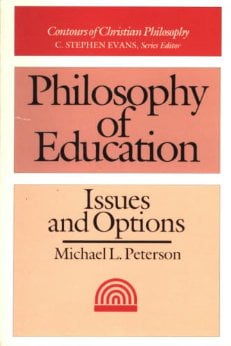
    Modern education in the U.S. has largely forsaken the scientific method of inquiry. The result has been unreflective rigidity. This inattention to discovery and heuristics is often a product of an anti-intellectual stream in our past. This is very unfortunate. I want my students to leave seminary with solid biblical convictions, of course, but I also want them to understand how one comes to know (epistemology) and to think (logic). Pedagogy matters. It matters because the systems that are opposed to biblical Christianity use logical arguments and philosophical methods. Michael Peterson, in his magisterial work Philosophy of Education (p. 83), writes:

    A complete Christian view of knowledge recognizes that reality is complex and that each of its domains must be known on its own terms. There is no single way to discover all the different truths there are. We must discover empirical truths through observation and experiment, historical truths through records and artifacts, logical and mathematical truths by abstract reasoning, and so forth. Christians have no shortcuts in these areas, butphileducation share basic noetic capabilities as other humans.

    In other words, if our business as Christians is to glorify God, then that includes glorifying Him with our minds. Whatever it takes, whatever it means, whatever happens to me, am I willing to obey His lordship over my thinking? Students, beware of the pedagogy that says, “You sit still while I instill.” And to my fellow educators I say: let us teach our students how to think and not only what to think.

    (From Dave Black Online. Used by permission. And yes, we’re featuring a book that we didn’t publish!)

  • Faith vs. Mental Assent

    Note: Today we bring you a sermon from a brother in Kenya, Bishop Simon O. MacOnyango of the Kenya Center for World Evangelism. This sermon is reprinted here with his kind permission.
    bishopmaconyangoPreached By Brother S. O. MacOnyango on 11th August 2013 at Kahoya Believers Fellowship, Eldoret.
    Main Text: 1 Corinthians 1:21-29 … New Living Translation (NLT)
    ……20 So where does this leave the philosophers, the scholars, and the world’s brilliant debaters? God has made the wisdom of this world look foolish.
    21 Since God in his wisdom (revelation or divine truth) saw to it that the world would never know (receive his truths or receive Him by revelation) him through human wisdom (head knowledge – mental assent), he has used our foolish preaching (revelation) to save those who believe (receive the truth or revelation). 22 It is foolish to the Jews, who ask for signs from heaven. And it is foolish to the Greeks, who seek human wisdom (mental assent). 23 So when we preach that Christ was crucified (the revelation), the Jews are offended and the Gentiles say it’s all nonsense (doesn’t make sense against all proven human facts)….24 But to those called by God (embrace the truth) to salvation, both Jews and Gentiles, Christ is the power of God and the wisdom (revelation) of God.25 This foolish plan of God (revelation) is wiser than the wisest of human plans (mental assent), and God’s weakness is stronger than the greatest of human strength.26 Remember, dear brothers and sisters, that few of you were wise (had revelation or had the capacity to receive the divine truths) in the world’s eyes or powerful or wealthy when God called you. 27 Instead, God chose things the world considers foolish (not appealing to our mental faculties) in order to shame those who think they are wise (have head knowledge or mental assent). And he chose things that are powerless to shame those who are powerful.28 God chose things despised by the world, things counted as nothing at all, and used them to bring to nothing what the world considers important.29 As a result, no one can ever boast in the presence of God (when and if we receive these divine truths)
    Note: words in brackets are mine and only meant for teaching purposes
    John 7:38….New American Standard Bible (NASB)….38 He who believes in Me, as the Scripture said, ‘From his innermost being (from the revelatory not mental assent) will flow rivers of living water.’”
    Many of us Christians have mental assent of things of God and take it for FAITH….We may know that God exists but actually DO NOT have faith that HE exists. Mental assent looks so much like faith that there is a very fine thin line between the two.
    Mental assent means intellectually accepting or knowing the Word of God to be facts but not receiving it as a Truth – admiring it and agreeing with it BUT not receiving the revelatory element of it …. That doesn’t do us any good. In essence, mental assent agrees with and knows more about God but does not believe in God.
    The mental assent agrees and knows that the Bible came from God and that it is God’s word BUT does NOT take it as revelation, and that every Word of it is a fact BUT NOT the Truth see! When a crisis comes however, s/he says, “Yes, I know (NOT BELIEVE) the Bible is true, but it does not work for me in this situation.” We often quote Scriptures we don’t really believe to be TRUTHS.
    We so many times mentally affirm the promise! In many years in my ministry and family life I  lived like that BUT wondering why I am not making any haed way despite my superb memory of the scriptures….. that …….  “God will supply all my needs according to His riches in glory by Christ Jesus. Phil 4:19”,….. that in itself was beautiful ….  but for so many years I never took these bible verses as God’s TRUTHS by making them personal. Such a Christian may be successful in knowing much about the Word, but as far as spiritual life is concerned has failed. The true believer is a doer of the Word who receives it as a TRUTH. The believer builds on rock, while the mental assent builds on sand. (See Matthew 7:24-27.)…… In Africa witchdoctors, sorcerers, and fortune tellers keep Bibles as one of their paraphernalia….if you happen to consult one…the first consultation is for you the client to open a bible at random…. keeping the bible in itself DOES NOT help a thing….we can have so many of them in public places, in public schools etc, but who teaches people to receive it as GOD’S TRUTH not like any other novel!!
    A variation of mental assent is “sense/head knowledge.” This is the attitude that says, “If I cannot see it and weigh it against all available facts known, then it is not real. I’ll believe it when I see it.” The Bible tells us, “We walk by faith, not by sight” (2 Cor 5:17). This means that faith and sense knowledge are not compatible….I am not against teaching of critical thinking because I am a student of the same.
    Faith is the substance and evidence of things that our sense of conventional knowledge cannot see. (See Hebrews 11:1, for definition of Faith). Sense knowledge is the biggest obstacle to faith because; in many cultures we are trained and conditioned to live by our five senses. If we cannot analyze something and empirically conclude that it actually works, then we do not believe it is real. However, God says He has promised is already reality. Yet it won’t become manifested reality in our lives  until we believe it is real before we see it-through fully trusting in Him and His Word. That is how faith operates.
    Again, the Bible says “Faith is the substance of things hoped for, the evidence of things not seen.” Hebrews 11:1. Note carefully that this verse does not say that faith is the EVIDENCE of things that do not exist. It says that faith is the evidence of the things you CANNOT SEE.
    For example, you cannot always see how God will meet your need. However, God says, “It’s already met; believe me.” That is living by faith. If you live by any other means, you will have high blood pressure, depression, and fear and end up in a mental institution. You will live in frustration because you will try to figure out how to meet your own needs (even spiritual) when you do not have that capability. God says, “I will supply all your needs. I have everything worked out. Trust Me to do it.”
    If we are mentally assenting to the God’s word and NOT receiving it as a divine truth, we will continue to live below your privilege for too long as SONS. We will need to start living by faith (the truth of God’s word) so that God’s Word can come to pass in our lives and ministries and in every spheres of our involvement.
    I may say “Well, I need more faith.”……Brethren Faith is SIMPLE BUT NOT EASY to obtain. Faith comes by hearing the Word of God (Rom 10:17). Here is the thing……..When we receive the Word then exercise that knowledge (the heard WORD) by the enablement of the Spirit we let it filter through our knower man to our spirit man then we receive it as a revelation (GOD’s TRUTH), it is then that our faith begins to grow…..
    I HAVE known many Christian that I have personally led to the saving faith and BAPTIZED IN THE NAME OF THE LORD JESUS CHRIST who never went beyond the baptism leave alone to command anything in that NAME!…in fact one Brother remarked to me during one of my teaching sessions……Brother Simon, you are a remarkable teacher of the word…I realized that He truly agreed with every scripture I put forth…. But down the line what I did to the Brother at the river here in Eldoret was ‘DRY CLEANING IN JESUS NAME’ not ‘BAPTISM IN JESUS NAME’. Why? Because he did not receive my teachings on Baptism as the TRUTH but FACTS of the Bible!
    Mental assent is what defeats the child of God who regularly attends church more than anything else. Most Christians are not missing it in what they know about the scripture, but in what they believe (receive as truths). Faith is an act that emanates from our spirit NOT mental faculty! Mental assent just says; “I am blessed and highly favored” while refusing to receive it as a truth provided in the Word. Here is what mental assent is:
    • Mental assent knows 100% that the Bible is the word of God .
    • Mental assent agrees and knows that Jesus is the Son of God.
    • Mental assent agrees and knows that Jesus was raised from the dead.
    • Mental assent will say I believe the Bible from Genesis to Revelations. Mental assent knows that BAPTISM IS IN THE NAME OF THE LORD JESUS CHRIST …. Mental assent is beautiful, BUT IT WILL NOT embrace the truth …. Every time we read the Word or hear good teaching then we let filter through our mental faculty….that is the process…. by the enablement of the Spirit of God and put it to practice, our Spiritual life is strengthened a little more. The Word is the seed. Once we put the seed in the nursery (knower man) then it turns into a seedling then eventually transfer it to the actual garden (the spirit man) the seed is going to grow because the power is in the seed.
    James 1:22 says, “Do not merely listen to the Word and so deceive yourselves. DO WHAT IT SAYS.” This verse separates mental assent from faith. James says if we think listening to the Word by itself will make the difference, then we are deceiving ourselves. We must learn what we have heard and received by believing and then acting upon it in faith NOT AS A MATTER OF RITUAL.
    Jesus said to the chief priests and elders of the people…. There was a man who had two sons. He went to the first son and said, ‘Son, go and work today in the vineyard.’ I will not, he answered, but later he changed his mind and went. Then the father went to the other son and said the same thing. He answered, ‘I will, sir,’ but he did not go. Which of the two did what his father wanted?” “The first,” they answered. (Matt 21:28-31)
    The second son mentally assented to the words of the father but never did anything beyond receiving the word.
    Although the first son was initially rebellious (hardened in the heart) he ended up agreeing to his father’s request and doing it. Jesus was showing us that we cannot just say we know BUT we must believe. WE HAVE TO LIVE OUT OUR FAITH BY DOING WHAT GOD ASKS. WE SHOULD NOT ONLY AGREE WITH HIS WORD AND WILL, BUT ALSO embrace it as a TRUTH not simply what the Bible says (facts)….
    Brethren, faith is not a feeling though it produces a feeling. Faith will make us feel good when our bodies are healed, our needs are met and our lives are victorious! But it is not a feeling! The feeling and the healing (manifestation) follows the saying and the doing (faith)! You say it by faith (knowing it to be the TRUTH not what the Bible simply says) when you feel nothing or even feel terrible and you act like what God has said is true. This is so simple that a child can understand it yet most children of God struggle with grasping it.
    May the Lord bless us and every one of us in the coming weeks!
    Brother Simon MacOnyango
     

  • An Early Look at the Leadership of Pope Francis

    An Early Look at the Leadership of Pope Francis

    BobBy: Rev. Dr. Robert R. LaRochelle
    In my book Crossing the Street, released by Energion Publications in 2012, I attempt to show the relationship of Catholicism and Protestantism to one another. I also advocate for the importance of recognizing the strong ‘ecumenical center’ that most Christians share in common. I encourage both Catholics and Protestants and their leaders to take active steps in getting to understand each other’s tradition far better than is all too often the case.
    Since I wrote that book, a significant event has happened in the Roman Catholic Church. On March 13 of this year, the Papal conclave selected a new church leader, i.e. a new Pope. In my view, each pontificate plays an incredibly significant role in presenting the face of Catholicism to the world. In Crossing the Street, I demonstrate the important differences in the papacies of  Popes John XXIII and John Paul II. I also make the claim that contemporary Catholics can often be readily identified as either ‘John Paul II’ or‘John XXIII’ Catholics. Those more inclined to align themselves with John Paul II are sympathetic to the post Vatican II church’s movement away from innovation and toward doctrinal and liturgical uniformity. Those in the John XXIII camp tend to bemoan what they see as a halt to necessary changes in the church, changes which reflect, in their view, a healthy openness, inclusiveness, and ecumenicity.
    What is absolutely fascinating is what the new Pope proceeded to do quite recently. In what many saw as a stunning move, he announced that the church was going to canonize (i.e. declare as saints) both John XXIII and John Paul II. Interestingly enough, the announcement that John Paul would be declared a saint in the near future was anything but a surprise. Catholic traditionalists have been promoting this in recent years and had a strong advocate in Pope Emeritus Benedict XVI. It was generally acknowledged in church circles as inevitable.
    X:/Energion Publications/Bob LaRochelle/9781938434013-cov.slaOn the other hand, many Catholic progressives were concerned that the cause of John XXIII had fallen by the wayside. In the same way, Catholics of this persuasion have expressed similar concerns regarding the interest (or lack thereof) in canonizing Dorothy Day, Oscar Romero or the women martyrs of El Salvador, including the American laywoman Jean Donovan. Thus the decision to include John XXIII in this announcement, despite the glaring absence of the second miracle required by ordinary church law for canonization, was seen as a pleasant surprise.
    Now, while I understand full well that a Protestant might be troubled by the theology that undergirds the canonization process, the fact remains that in this joint selection Pope Francis sent a signal to those within the Catholic Church and those outside of it. In effect, Pope Francis was affirming that there is variety and pluralism within Catholicism. In essence, he demonstrated that the Catholic Church is not as either/or as some inside of it would like it to be or some outside of it it believe that it is!  This decision strikes me as a powerful affirmation of what some might call a ‘big tent’ view of the Catholic Church, a term whose origins are found in describing American political parties. Others in the church might say that this is in keeping with the ‘ Here Comes Everybody’ approach to Catholicism, a phrase coined by the Irish literary giant James Joyce.
    This recognition of pluralism is exhibited in the recent release of Francis’ first encyclical, Lumen Fidei.  In an unprecedented move, this Papal letter to the world represented the joint efforts of both Francis and his predecessor, Benedict XVI. A close reading of the letter demonstrates a diversity of influences. Some have actually gone so far as to speculate as to who wrote which parts. Though they did not sit down to co-author this work, the finished product, in Francis’ name, represents perspectives which, if not different from his own, at least show evidence of differing starting  points and emphasis.
    Pope Francis I has already drawn the attention of the world in his outspoken advocacy of the importance of church leadership in setting good example and siding with those who are poor. On the day I am writing this, Francis has scolded priests and nuns who drive around with the latest model of automobile. He has affirmed the goodness of all people of good will, including those who might not believe in God. On the other hand, he has not, as yet, made any significant moves to change any of the controversial policies of the church. Thus to brand him a progressive or someone not attuned to a traditional Catholicism would not be fair.
    It will be interesting, however, to see how and where this Pope evolves over the course of his pontificate. Will his tendency toward openness and his true sense of the inclusiveness of the entire Catholic tradition, evidenced in the canonization announcement and the encyclical, eventually lead to a rethinking of some long standing church policies? Only time will tell, but, for now, it is fair to say that in Francis, both Catholics and Protestants can find a significant religious leader, one deeply committed to bearing witness to Jesus in this needy and broken world!
    Stay tuned!!! ….
    Rev. Dr. Robert R. LaRochelle is pastor of Second Congregational Church, UCC, Manchester, CT. He is the author of Energion titles So Much Older Then …, Crossing the Street, and the forthcoming Til We Lay Our Trophies Down (2015).

Energion Direct
Privacy Overview

This website uses cookies so that we can provide you with the best user experience possible. Cookie information is stored in your browser and performs functions such as recognising you when you return to our website and helping our team to understand which sections of the website you find most interesting and useful.