Category: Christianity

  • Featured Post: Dancing with God on Trinity Sunday

    Featured Post: Dancing with God on Trinity Sunday

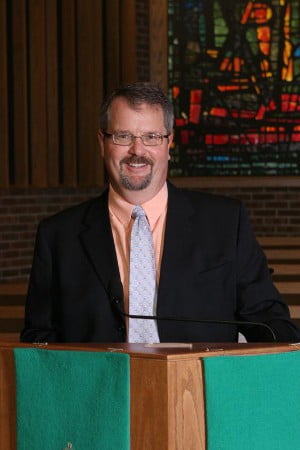
    bob_cornwall_300x450Here’s some highlights from this delightful reflection on the Trinity:

    For the Trinity to truly have value for my faith experience, it will have to be more than a philosophical construct.  There has to be a living engagement with the triune God.  Although there is the problem of gender particularity in the traditional formula of Father, Son, and Holy Spirit, I haven’t found an alternative that brings personal engagement.  Other formulas focus on roles, not personality.  Whatever formula we choose to embrace, the point is – God is not simple.  God is complex and ultimately ineffable.  Perhaps it’s appropriate that we find it difficult to adequately define God as Trinity, but if Christ is the center of our faith, then we must delve into this belief to make sense of our relationship with God through Christ.

    and


    The reading closes with the verses that inspire the idea that God is a Dancing Trinity.  The Common English Bible brings out this sense more clearly than the NRSV.

    I was having fun, smiling before him all the time,Frolicking with his inhabited earth and delighting in the human race.    (vs. 30b-31).

    I take this reference to be a key to the intimate and dynamic nature of God.  God the Trinity is not Aristotle’s “Unmoved Mover.”  God isn’t the disinterested Creator of Deism.  God is the Dancing Trinity, who in the form of Wisdom, likes to have fun, who smiles, and frolics with the inhabitants of earth.   Can you get your head around this image of the God who loves to play?

    Read the whole thing!

  • One New Man

    One New Man

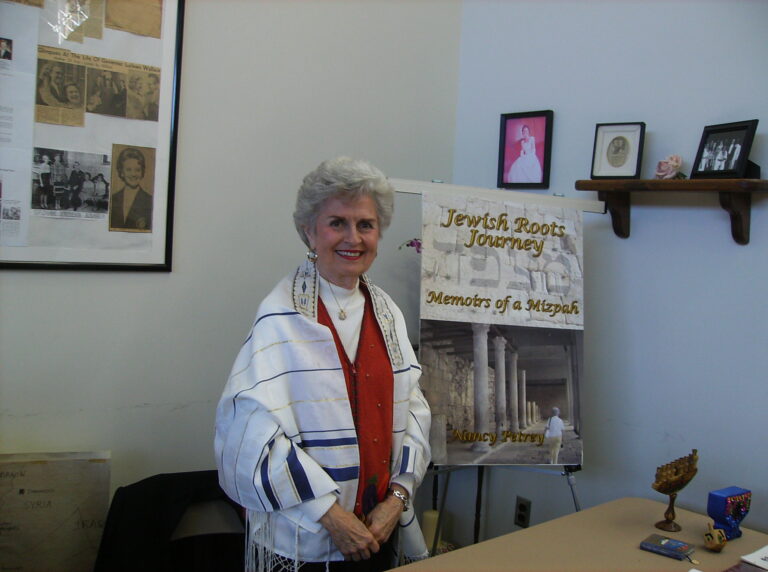
    Nancy Petrey, author of Jewish Roots Journey
    Nancy Petrey
    Nancy Petrey is the author of Energion title Jewish Roots Journey. You can learn more about her via her author page. Her book is on sale via Energion Direct for just $15.00 (free shipping in the U. S.), or $2.99 off the regular price.
    God loves unity!  “And the two shall become one flesh” (Gen. 2:24).  God modeled  unity in the Garden of Eden with the marriage of the first man and woman.  The Apostle Paul quoted this verse to teach that Jesus and the Church were like husband and wife, united in one flesh (Eph. 5:22-32).  The greatest demonstration of love the world has ever known was when the Bridegroom laid down His life for the Bride.  And the greatest love the Bride can show for the Bridegroom is to submit her life totally to Him.  Unity is all about love.
    Unity is the essence of the God we believe in.  “Hear O Israel: The Lord our God, the Lord is one” (Deut. 6:4)!  God proclaims the unity of the Godhead, so, of course, He expects unity in His covenant people.  That word, “one,” is echad in Hebrew.  It is a compound word.  Christians can see the Trinity in that word.  Jesus made the bold claim, “I and My Father are one” (John 10:30).  Paul ends his second letter to the Corinthians with this benediction, affirming the Trinity, “The grace of the Lord Jesus Christ, and the love of God, and the communion of the Holy Spirit be with you all. Amen” (II Cor. 13:14).  Yes, amen!
    Jesus wants His followers to be in unity.  He prayed to the Father right before His arrest and crucifixion that those who believe in Him would be one just as He and His Father are one.  He prayed that His followers would be included in the divine oneness.  That marvelous witness of unity would be what the world longs to see! (John 17: 20-23).  Who could resist the allure of a Church who truly loves its own enough to die for them?  That is the divine strategy for winning the lost – unity!
    The Church today needs to understand just who Jesus was referring to in His high priestly prayer for unity.  The average Christian who reads John 17 most likely thinks of divisions he is familiar with, such as racial, ethnic, parent-child, husband-wife, employer-employee, political, religious, educational, or economic divisions.  Those types of division are real and touch everyone on the planet.  No doubt Jesus grieves over these divisions, but the division he most longs to see healed is that of Jew and Gentile.  The original Church was totally Jewish for ten years, with Jewish bishops in Jerusalem.  The first church split happened in the second century between Jewish and Gentile believers, and it resulted in a paganized kind of Christianity that forgot its Jewish origins.  This led to anti-Semitism and persecution of Jews during the Inquisition, the pogroms, the Crusades, and right up to the Holocaust, all at the hands of the Church!  This is documented history and very tragic.  Most Christians don’t know a thing about it!  And many in the Church do not even realize the Jewishness of the Head of the Church, Yeshua HaMashiach (Jesus Christ).
    Jesus made it clear at His first coming that His mission was primarily to His own people, the Jews, not the Gentiles.  Jesus sent out His twelve disciples, saying: “Do not go into the way of the Gentiles, and do not enter a city of the Samaritans.  But go rather to the lost sheep of the house of Israel.”  After His death and resurrection that line of division was eliminated when He gave the “Great Commission” to His Jewish disciples – “Go, therefore, and make disciples of all the nations, baptizing them in the name of the Father and of the Son and of the Holy Spirit” (Matt. 28:19).  It is significant that He named the Trinity in His command to bring all nations into His kingdom.  The big heart of God is longing to bring everyone into His kingdom.  He is not willing that anyone should perish!  He invites all to be one with the Godhead!  Incredible!
    God does not show partiality, but He does have order in the way He operates, and the Jews come first.  On the Day of Pentecost the Holy Spirit first came to 120 Jews and baptized them with “tongues of fire” on their heads and in their mouths!  In Jerusalem the visiting Jews “from every nation under heaven” heard the gospel in their own language, and 3,000 believed! (Acts 2).  No doubt they went back home and began discipling others, just as Jesus had commanded.
    Paul kept the order Jesus initiated, saying that the gospel was for the Jew first, then the Greek or Gentile (Rom. 1:16).  He always first visited the synagogue in every place he went, even after he said on two occasions that he was finished with the Jews and would go to the Gentiles (Acts 13:46; 18:6).
    The Church gained more and more Gentiles as Paul went on his missionary journeys.  He taught them their Jewish roots, saying to the Ephesians that as Gentiles they “were without Christ, being aliens from the commonwealth of Israel and strangers from the covenants of promise, having no hope and without God in the world.  But now in Christ Jesus you who once were far off have been brought near by the blood of Christ.  For He Himself is our peace, who has made both one and has broken down the middle wall of separation, … so as to create in Himself one new man from the two, thus making peace, and that He might reconcile them both to God in one body through the cross, thereby putting to death the enmity” (Eph. 2: 11-16).
    In those days it was a curious thing that Gentiles could join the Jews as part of God’s covenant people.  The Jews were in.  The Gentiles were out.  Paul called it a “mystery” that God had revealed to him, previously hidden in other ages, “that the Gentiles should be fellow heirs, of the same body, and partakers of His promise in Christ through the gospel” (Eph. 3:3-6).
    May Gentile Christians rejoice that we, as “wild branches,” have been “grafted into” the Jewish “olive tree.”  We should not be conceited and “boast against the natural branches.”  We, like the Ephesians, must respect the Jewish roots of the Church and remember “we do not support the root, but the root supports us” (Rom. 11:17-18).
    Having this understanding of our Jewish roots, Christians should prayerfully and practically support the nation of Israel, love the Jewish people, and seek to bring them to a knowledge of their own Jewish Messiah.  Jesus is longing to see One New Man in His Church!!

    By Nancy Petrey, March 1, 2013


  • Why All Christians Should Care about the New Pope

    Why All Christians Should Care about the New Pope

    REFLECTIONS ON THE ELECTION OF A NEW POPE

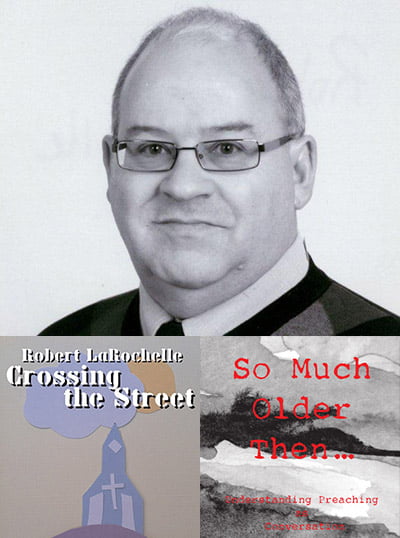
    Rev. Dr. Robert R. LaRochelle


    Rev. Dr. Robert R. LaRochelle and his booksBob LaRochelle is the pastor of 2nd Congregational Church (UCC) in Manchester, CT and is author of Part-Time Pastor, Full-Time Church (Pilgrim Press, 2010), Crossing the Street (Energion Publications, 2012) and So Much Older Then … (Energion Publications, 2013). He was an ordained deacon in the Catholic Church before becoming a United Church of Christ pastor. He is passionate about ecumenical dialogue.


    The recent election of Francis I as the Roman Catholic Church’s new Pope has attracted great worldwide interest and justifiably so. First and most obvious is the fact that the election of a new Pope is a significant time of transition for Catholics. In light of many unfortunate occurrences, including well known scandals, within the Catholic community, this particular election carries with it a hope for a new beginning and some substantial changes.
    Of course, depending upon where individual Catholics might rest on the theological spectrum, there are significant differences over precisely which specific changes should occur. There is diversity of thought within Catholicism regarding such policy changes as allowing priests to marry and ordaining women priests, just to name but two examples among many. One’s position on policy changes is connected to something far deeper. Policy flows from theology and theological differences have and continue to exist within the Catholic Church. They flare up in discussions on the topics mentioned above, as well as homosexuality, contraception, the relationship of church doctrine and public law, and many others.

    Any Papal election is significant because the Pope is a world leader and has the potential to serve as a bridge builder between and among cultures, religious perspectives and nations.

    Any Papal election is significant because the Pope is a world leader and has the potential to serve as a bridge builder between and among cultures, religious perspectives and nations. What is quite interesting is that etymologically the term Pontifex associated with the ministry of the Pope literally means ‘bridge builder’. In addition to the capacity a Pope has to influence world events, he can be a great source for the unification of all Christians, be they Catholic, Protestant or Orthodox. In my view John XXIII and his successor Paul VI were significant catalysts in the way Vatican II expressed the Church’s understanding of ecumenical relationships.
    In my book Crossing the Street (Energion Publications, 2012), I contend that Catholics and Protestants, two Christian groupings that have had a checkered relational history, have much to gain in learning from and engaging in dialogue with one another. Despite some different interpretations, oftentimes flowing from different understandings of church authority, there is a true ecumenical center binding Roman Catholics and Protestants together. In his role as the most recognized Christian religious leader in the world, the Pope can do what others have done before him. He can be an influential leader in the necessary cause of Christian unity.
    All of which brings us to the election of this man who will go by the title Pope Francis I. As I note in my book, Roman Catholicism is not monolithic. It is comprised of a pluralism and diversity of spiritualities, theological perspectives, starting points and devotional practices. With this in mind, it is thus important to look at the shape of this new Pope’s particular practice of Catholicism with an eye as to how that might influence his leadership.  In this vein, I find the following facts about his life to be quite telling and illuminative:

    1. Pope Francis I is a Jesuit. As a member of the Society of Jesus, founded by Ignatius of Loyola, he is part of a religious community that takes the notion of religious community itself most seriously. The Jesuit tradition has made major contributions to the Catholic Church and the Christian world in these significant ways:
      1. The church’s intellectual tradition. No community of priests as a whole receives a broader and deeper education than those who belong to the Jesuit community. This integration of faith and reason has had a profound impact on the world. We Americans can readily identify many truly outstanding universities (Georgetown,  Holy Cross, Boston College, to name but a few) that are run to this day by the Society of Jesus. On a personal note, I am so grateful that I have received degrees from two of these simply wonderful educational institutions.
      2. The church’s spiritual tradition. Pope Francis is grounded in the Spiritual Exercises of Ignatius of Loyola, one of the most profound prayer experiences constructed by a mere mortal! Those who enter the Jesuit priesthood have undergone a period of training in which a 230 day retreat centered on these exercises is a necessary component.
      3. Jesuit spirituality is intrinsically linked to its relationship to social justice. The Jesuit community has a global vision, rooted in the church’s stated preferential option for the poor. It is clear that Pope Francis’ compassion for the poor is a hallmark of his approach to pastoral leadership. Some would sound a cautionary note here, one that is worth watching as his Papacy unfolds: There is a chasm between those who embrace ‘liberation theology’[1] and others who express concerns about it. It appears that the new Pope has been among those in the latter category, especially in events that took place in Argentina over thirty years ago. It remains to be seen what this bodes for the future.
    2. He chose the name Francis, in deference and respect to Francis of Assisi. It seems clear from all indications that this Pope eschews a pompous lifestyle and favors simplicity and access to the people whom he pastors. There are those, including myself, who would contend that, regardless of specific policy changes or lack thereof, a Pope could make an incredible impact by changing the image of the Vatican. My early sense is that there is something of Pope John XXIII’s warmth and informality in Pope Francis, somewhat akin to that fictional Pope depicted in Morris West’s classic The Shoes of the Fisherman. The power of that witness could truly make for an incredible effect.
    3. Finally, there was a less than subtle theological/ecclesiological emphasis in the Pope’s opening remarks from the balcony of St. Peter’s. In referring to himself as Bishop of Rome, he issued a reminder that is often lost on many in the Christian world, including a good number of Catholics. Historically, the Petrine ministry, that which Catholics situate in the Pope, rested in the unique role Rome’s bishop played among those other bishops with whom he governed the church. It could be stated that Rome’s bishop is a ‘first among equals.’
    There are those, including myself, who would contend that, regardless of specific policy changes or lack thereof, a Pope could make an incredible impact by changing the image of the Vatican.

    I would contend that in referring himself in this way, we learn something about an approach to church governance that is most conversant with the historical growth of the Catholic Church and takes its first few centuries as highly informative, not limited its perspective to the medieval model that has wielded great influence in the church for so long. Where this Pope stands in relation to the kinds of questions that dominated Vatican I and other periods of debate over church authority cannot be easily gleaned from these remarks, but the remarks themselves might just scratch the surface of something the implications of which are most profound.
    With all of this being said, I believe that this Papacy will be a significant period in the life of the universal church, a church that thrives as the gifts of varied traditions within it are cherished and become resources for our deepened relationship with God.
    May all of God’s children thus turn to our God as we pray for Pope Francis’ health, well being and a deeply prophetic ministry to us and with us, in this, God’s most needy world!
    AD MAJOREM DEI GLORIAM![2]


    [1]  This emerged in many nations in Central and South America and was a powerful force in the tensions between governments and religious leaders within the Roman Catholic Church. If ever possible, see the film Romero as a powerful expression of this.
    [2]  ‘To the greater glory of God’. This is the motto of the Society of Jesus (The Jesuits). It is typical to find the letters A.M.D.G in the cornerstone of buildings at Jesuit colleges, retreat centers and other settings.
  • Transforming (Mainline) Congregations II

    Today we continue the series of interviews with Energion authors on transforming mainline congregations. Last week Dr. Bruce Epperly responded to the interview questions. Today, Dr. Bob LaRochelle, pastor of Second Congregational Church, Manchester, Connecticut, (United Church of Christ), and author of Part Time Pastor, Full Time Church (Pilgrim Press, 2012), Crossing the Street (Energion Publications, 2012), and the forthcoming book So Much Older Then (Energion Publications, 2013).
    1. How do you take a church with an old, historical landmark building and a congregation of maybe 50 on a really good Sunday, average age about 60, and transform it into a living, growing faith community?
    This resonates with my current situation. I believe it involves the following:
    1. Attentiveness to good preaching and worship
    2. Active, intentional engagement of participants in the process of INVITING others into participation
    3. Stepped up visible presence in the local community and wider communities, including exploration of technological options, possibly including the use of cable TV
    4. A church retreat offered once a year. I describe that in my book Part Time Pastor, Full Time Church (Pilgrim Press, 2012)
    5. Looking to create youth opportunities that bring young people and their friends onto your property!

    Establish a personal pastoral relationship.

    2. How can you engage someone brought up as a scientific rationalist in (say) the last 30 years in your church sufficiently long to enable them to have some kind of transformative experience, and how do you get them to stay?
    Establish a personal pastoral relationship, invite to be an active participant in educational programming-
    3. Can a charismatic, evangelical. mission-based church find a home for a post-modernist theologian/mystic?
    I believe so, though I would caution that it must also be a church that takes intellectual inquiry seriously and is open to different expressions and to serious inquiry. The church must be seen as less than monolithic in approach. Overall, I think most churches benefit from pluralism in worship styles.
    4. What are the possible roles for young people in a church in renewal? Would you give them opportunities to read, speak, lead a service, provide music, etc.? In other words, how fully can those in their teens (and even younger) participate in leading renewal?
    Young people are CRUCIAL in church renewal…. They should be engaged in all church committees, including board of deacons…. Yes on reading, music and PREACHING! Churches should be seen as comfortable places for youth.

    Churches should be seen as comfortable places for youth.

    5. What role would theological or doctrinal distinctives play in such a church? Is the particular theological flavor of the church important?
    It is. Personally, I like a ‘big tent’ approach as exemplified in Augustine and John XXIII- ‘In things, essential, unity; In things, doubtful, liberty; In all things, charity.’ I say this understanding fully well that people will quarrel over essentials….

    I also understand that those from a particular doctrinal perspective simply have to seek communities more conducive to their flavor.

    6. What role does liturgy play in church renewal? Is it important whether the church is formal or informal, “high church” or “low church,” or what style of music is used?
    Liturgy is crucial. It both expresses who the church is and is the key contact point each week. I think BLENDED is best and the ecumenical potential of it enormous. High, low or whatever, there are some keys: It can’t be rote or routine, preaching and music should be done well, the service should hang together in terms of readings, music and liturgical style. People need to prepare worship with the sense that the entire service preaches the Word.
    7. Can a pastor in a church that is part of a denomination lead that church in renewal? Do denominational politics prevent the kinds of creative actions that are necessary for church renewal?
    Yes to the first question. With respect to the second, I think it is easier wherever local autonomy is operative. However, I have found much impetus for renewal in the work of denominational leadership also.
    8. How can a pastor assigned to a new church discern the needs of that church and find the path to renewal for that specific congregation?
    In my denomination, we are not assigned. The needs and paths to renewal can be discovered through the search process. I talk about this in Part Time Pastor Full Time Church.
    9. What is the role of the pastor’s personal prayer and devotional life (or that of the lay leadership)?
    Simply put, it is CRUCIAL!
    10. What is the role of the pastor’s academic and professional development in church renewal?

    Renewal should be rooted in good theology.

    CRUCIAL as well. Renewal should be rooted in good theology. Strong theological knowledge and a working knowledge of the history of the church and renewal movements within it are crucial as well. I also believe openness to the WHOLE Christian tradition is necessary. I believe, as example, that Catholics and Protestants have for too long lived inside their own houses. This led me to want to write Crossing the Street (Energion, 2012) I strongly recommend a serious reading of Hans Kung’s On Being a Christian as well. The Scandal of the Evangelical Mind by Mark Noll is a good cautionary work with respect to the need for pastoral leaders who take study seriously!
    11. What spiritual practices can transform congregational life?
    expanding the use of different styles of services and rites e.g. Healing, Taize, Blessing of Animals, sprinkling rites ways of doing Communion…. The list could go on and on…. Basically, utilizing resources from the broad, ecumenical tradition … not being bound to perceived denominational worship styles
    – Spiritual Retreat opportunities
    – Opportunities for sharing with respect to the sermon…. I even explore doing this within the service of worship in my new book So Much Older Then (Energion 2013). Minimally, providing opportunities for after worship sermon discussion
    – Opportunities for service to others with opportunities to REFLECT upon that service the shared praxis approach.
     

  • Transforming (Mainline) Congregations

    Today I present the first of three interviews with Energion authors about how mainline congregations can be transformed and can renew their ministries. As I read the responses, however, I sensed that these answers don’t just apply to mainline congregations—any congregation can benefit from some of these practices.
    While I presented the questions for this interview, I collected them from others. Each question represents either a question exactly as I heard or read it from someone who was concerned about ministry in aging and dying, or otherwise dysfunctional congregations, or my summary of a number of questions I have encountered on that topic.
    Our first respondent is Dr. Bruce Epperly, author of a large number of books, many of which you will find listed under suggested reading, including Energion titles Philippians: A Participatory Study Guide, Healing Marks, and Transforming Acts (forthcoming, June, 2013).
    Next week, we will publish responses by Bob LaRochelle, and the week following by Bob Cornwall. I hope that readers will engage with the content. If you are a pastor or church leader, consider answering these questions for yourself. Comment on what is said and engage in dialog. This is an important topic and there are some very helpful—even critical—ideas expressed. If you post on this topic on your blog, please let me know (pubs@energion.com) and I’ll be happy to provide a link. Alternatively, you can provide your own link in a comment.
    — Henry Neufeld
    EPPERLY RESPONSES
    1. How do you take a church with an old, historical landmark building and a congregation of maybe 50 on a really good Sunday, average age about 60, and transform it into a living, growing faith community?
    As one who has integrated pulpit and classroom for over thirty years, primarily in university and small congregation settings, I see congregational transformation and vitality as involving the interplay of intentionality and grace. There are a multitude of patterns or models for lively congregations.  Our emerging Saturday night church in Lancaster, Pennsylvania, seldom had more than thirty in attendance in the Quaker social hall where we met.  Yet, our services were always lively and spirit-filled: the nondescript social hall was adorned with banners, scarves, and candles; often the aroma of bread baking for communion coming from the adjoining kitchen wafted through the air; and young children camped out on blankets at the edge of our circle of chairs.  We were participatory: sermons almost always joined a pastoral word with community reflection and sometimes were inspired by moments of holy reading, or lectio divina, in which the congregation pored over a passage, listening for the divine word in the words of scripture.

    … from a mustard seed, a great plant grows; from five loaves and two fish, a multitude is fed.

    We had small numbers but a big theology and our welcoming theology was matched by our radical hospitality, everyone welcome at the communion table, children bringing the elements for weekly communion to the table with the offering, and willingness to follow the Spirit’s movements and change course at the drop of the hat.  We never felt small or irrelevant or compared ourselves to other churches; we had a vocation and mission and that was good enough for this moment in time.  In that regard, I encourage congregations to begin where they are, not judging themselves by other congregations’ size and apparent vitality – after all, some megachurches have mini-theologies – and remember that from a mustard seed, a great plant grows; from five loaves and two fish, a multitude is fed.
    Our music was global as well as traditional, sometimes simply the sung voice, other times accompanied by guitars, tambourines and maracas (the kids loved that!), keyboard, and clapped hands.
    We had a sense of mission and that guided our approach to worship and decision-making: to be a radically hospitable, “come as you are,” inclusive, open and affirming, and progressive congregation.  I think mission is everything in vital communities:  cast a vision, meditate upon it, placard it, and see it as the flexible polestar guiding everything you do.  Our mission at Disciples United Community Church (www.ducc.us) involved both the inner and outer journeys – spiritual formation and care for each other and openness to being a light to the larger community through refugee resettlement, advocacy for the GLBT community, and affirmation of diversity.
    Out of our experiences as pastor and church musician, Daryl Hollinger (the church musician) and I penned the book, From a Mustard Seed: Enlivening Worship and Music in the Small Church.   We reminded our readers that the average Protestant church in North America has 75 or less congregants gathered for worship each Sunday and out of what seems like scarcity, great worship can emerge.  Everyone is gifted, and simple and low cost instruments (rain sticks, maracas, finger cymbals, simply-constructed hand bells) can bring life to worship.

    When worship ended, we left the communion bread on the table and placed other snacks around it, creating a love feast with every worship service.

    One last note about our experience at Disciples United Community Church: whereas Christian formation of adults has been abandoned in most mainstream and progressive congregations, we placed a premium on adult theological education.  Perhaps, we had an advantage: a theologian as one of the pastors.  Whereas some large congregations barely get a dozen for adult education, our education-worship-fellowship were seamlessly tied together.  If we had thirty five in worship, we would likely have twenty to twenty five in adult education.  Folks would move from the education tables to worship by simply turning their chairs around and placing them in a circle.  When worship ended, we left the communion bread on the table and placed other snacks around it, creating a love feast with every worship service.  While geography can shape logistics, vital and lively worship requires flexibility in space and movement: the sanctuary of traditional churches should be respected, but in most sanctuaries there is room for gathering either in the chancel or narthex, thus making hospitality, community, education, and worship an integrated whole.
    Here are some ready to hand and easily taught resources for congregational adult theological education and worship:
    Diana Butler Bass, Christianity After Religion (HarperOne)
    John Cobb, Praying for Jennifer
    Monica Coleman, Not Alone: Reflections on Faith and Depression (Inner Prizes)
    Bob Cornwall, Ephesians: A Participatory Study Guide (Energion)
    Bob Cornwall, Ultimate Allegiance (Energion)
    Maxie Dunnam, Workbook of Living Prayer (Upper Room)
    Eric Elnes, The Phoenix Affirmations: A New Vision for the Future of Christianity (Jossey-Bass)
    Bruce Epperly, Healing Marks: Spirituality and Healing in Mark’s Gospel (Energion)
    Bruce Epperly, Philippians: A Participatory Study Guide (Energion)
    Bruce Epperly, Emerging Process: Adventurous Theology for a Missional Church (Parson’s Porch)
    Bruce Epperly, The Center is Everywhere: Celtic Spirituality for a Postmodern Age (Parson’s Porch)
    Bruce Epperly, Immersion Bible Studies: Hosea, Joel, Amos, Obadiah, Jonah (Abingdon)
    Bruce Epperly and Daryl Hollinger, From a Mustard Seed: Enlivening Worship and Music in the Small Church (Alban)
    Joyce Rupp, The Cup of Our Life (Ave Maria)
    Barbara Brown Taylor, An Altar in the World: A Geography of Faith
    Phyllis Tickle, The Great Emergence: How Christianity is Changing and Why (Baker)
    2. How can you engage someone brought up as a scientific rationalist in (say) the last 30 years in your church sufficiently long to enable them to have some kind of transformative experience, and how do you get them to stay?
    The greatest challenge for the church is to be “relevant” to the needs of seekers, spiritual but not religious, self-described “nones,” and the scientific community.  When you ask young adults, even within the church, about their perspective on the church, they use terms like: intolerant, anti-scientific, homophobic, small-minded, racist, and sexist.  And, quite often they are right.  But, worse yet, is when they describe the church as “irrelevant” to their lives.  A lot of Christians believe that the desire to be “relevant” waters down the faith, but I believe that the church is always called to minister concretely and not in terms of some Platonic ideal, beautiful in its abstraction, but unrelated to real life.  If the message isn’t relevant, it isn’t the gospel!

    If the message isn’t relevant, it isn’t the gospel!

    I think one of the most important things churches need to do is to cultivate spiritual practices and develop a vision of reality that is non-dogmatic, yet transformative.  Diana Butler Bass says that the words “doctrine” and “doctor” have the same roots and this should remind us that doctrines are intended to be “healthy teachings,” not exclusionary devices or walls intended to separate “us” from “them.”
    Ironically, except for the hard-core atheists who themselves resemble religious fundamentalists in the “how” of their faith, most rationalistic people are open to the transcendent.  A Pew Report notes that 50% of the population claim to have experienced something they describe as self-transcendent or mystical.  While people are not necessarily more spiritual or mystical today, this figure is nearly twice as high as forty years ago, indicating an openness to experiencing and sharing experiences of the holy and spiritual.  Some Christians malign “Oprah-spirituality,” but the popularity of her program points to a need the churches should be addressing in light of the gifts of our traditions.
    In my writing, I have focused on spirituality, healing, and global theology.  I believe that churches will be vital both among their members and to seekers and rationalists if they:

    • Sponsor meditation groups
    • Have healing services and dialogue with holistic and complementary medicine
    • Present a big vision of the universe.  Imaginative and poetic readings of the Genesis creation accounts, Psalm 8, Psalms 148-150, Paul’s speech at the Areopagus describe a grand, unfolding, creative universe in which God is still at work, bringing forth new possibilities in the human and non-human worlds.  Bring photos from the Hubble Telescope to church, show Carl Sagan’s “Cosmos Series,” gather people to watch “Nova.”
    • Provide possibilities for wonder.  Rabbi Abraham Joshua Heschel asserts that one of the primary religious virtues is “radical amazement.” Do amazing things at church.
    • Get involved in mission.  What are you doing to lower the carbon footprint?  Does your church address global climate change?
    • Seek justice.  Sadly, many people see Christianity as about God, guns, anti-immigration, and slashing government programs that help the poor.  To risk a bit of controversy, there is no inalienable Christian right to own a gun or lower taxes. These issues aren’t even on the biblical radar, either concretely or abstractly, and while I do not oppose gun ownership, given the words of the Sermon on the Mount, a fixation of gun rights may be quite incompatible with gospel Christianity!  But, the scriptures are clear – care for the immigrant, welcome the stranger, insure economic justice, provide for the vulnerable.  This needs to be done both politically (see Amos, Hosea, Micah) and congregationally (see Acts 2 and its vision of having all things in common ownership.”
    • Concretely get your hands dirty in mission projects: give money, but also time.  Seekers want something to give their heart and hands, as well as their heads, too.
    • Take science seriously as a companion, not a threat.  As early Christian theologians, proclaimed, “Wherever truth is present, God is its source.”

    For further reading, let me suggest:
    Philip Clayton, The Predicament of Belief: Science, Philosophy, and Faith
    Bruce Epperly, Emerging Process: Adventurous Theology for a Missional Church (Parson’s Post)
    John Haught, Cosmic Adventure: Science, Religion, and the Quest for Purpose
    John Haught, God and the New Atheism: A Response to Dawkins, Harris, and Hitchens (Westminster John Knox)
    Alistair McGrath, Surprised by Meaning: Science, Faith, and How We Make Sense of Things
    John Polkinghorne, Science and Religion in Quest of Truth (Yale University)
    John Polkinghorne, Testing Scripture: A Scientist Explores the Bible (Brazos)
    Paul Tillich, Dynamics of Faith (Harper)
    3. Can a charismatic, evangelical. mission-based church find a home for a post-modernist theologian/mystic?
    Yes, provided that its theology is open-spirited and adventurous.  Doctrines are often treated as idols rather than guideposts.  Moreover it needs to be spiritually and globally open, seeing diversity as a divine gift and source of growth and threat.  Jesus grew in wisdom and stature and so did we.
    Acts of the Apostles provides a good model for such an open-source spirituality.  Neither structures nor doctrines had been developed. The first followers of Jesus were making it up as they went along, inspired by the Holy Spirit to constantly revise their faith and sense of boundaries.  The mission and welcome of the Gentiles, as difficult as it was, opened the doors to new inspirations and challenged old and sacrosanct orthodoxies.

    To reach out, we need to risk changing our own understandings of God and our faith.

    Post-modernists don’t want to hear about God, they want to experience life in its wonder and beauty.
    They want to “taste and see” God’s goodness.  They have questions and visions and need to be heard.
    To reach out, we need to risk changing our own understandings of God and our faith: that’s what happened to Philip when he encountered the Ethiopian eunuch and Peter when he dreamed of unclean food and discovered nothing was unclean.  Remember that the old-time religion was once new-fangled.   The Protestant Reformers have a good word for us: the Reformation is always reforming and so should we.
    For further reflection:
    Rob Bell, Love Wins (Harper One)
    Bruce Epperly, Transforming Acts (Energion, [forthcoming June 2013])
    Patricia Adams Farmer, The Metaphor Maker (Create Space)
    Brian McLaren, A Generous Orthodoxy (Zondervan)
    Brian McLaren, A New Kind of Christianity: Ten Questions that are Transforming Faith (Harper One)
    Brian McLaren, A New Kind of Christian (Jossey-Bass)
    Thomas Oord, The Nature of Love: A Theology (Chalice)
    Doug Pagitt, A Christianity Worth Believing (Jossey-Bass)
    Doug Pagitt, The Church in the Inventive Age (Sparkhouse)
    4. What are the possible roles for young people in a church in renewal? Would you give them opportunities to read, speak, lead a service, provide music, etc.? In other words, how fully can those in their teens (and even younger) participate in leading renewal?
    The future is now. Young adults, like the young boy with the five loaves and two fish, can be agents of transformation.  Young adults are not just future leaders, they can be leaders now.  Given good mentoring, they can grow in the faith, challenge old assumptions, suggest new ways, and pioneer in new technologies.  They can combine high tech (social media, web site construction, and fearlessness around technology) with high touch (hearts open to God) to advance God’s mission of love, healing, and Shalom.

    Young adults are not just future leaders, they can be leaders now.

    We need to listen, be willing to let go of control and power, and open to new ways of doing ministry to make room for a creative synthesis of tradition and innovation in church life.
    For suggested reading:
    Kenda Creasy Dean, Almost Christian: What Our Teenagers are Telling the Church (Oxford University Press)
    Kenda Creasy Dean and Andrew Root, The Theological Turn in Youth Ministry  (IVP)
    Kenda Creasy Dean, The God-Bearing Life: The Art of Soul Tending for Youth Ministry (Upper Room)
    Sharon Daloz Parks, Big Questions, Worthy Dreams: Mentoring Emerging Adults in Their Quest for Meaning, Purpose, and Faith (Jossey-Bass)
    5. What role would theological or doctrinal distinctives play in such a church? Is the particular theological flavor of the church important?

    As Paul Tillich and Reinhold Niebuhr recognized, all human activity is ambiguous, and so are denominational distinctives – and I will make the bold statement that even non-denominational churches have plenty, if not more, particular theological and liturgical baggage than many denominational churches; they just don’t think so!  Denominational distinctives can be spiritually suffocating and they can also be spiritually liberating.  They respond to different emotional, experiential, and spiritual styles.  They remind us that “we didn’t invent this,” and they serve as a challenge to those who want to jump over twenty-one hundred years of history to rediscover the illusory “New Testament church.”
    The church is always contextual and filtered through the lenses of our experience and as long as denominational distinctives can be allowed a degree of fluidity and transformation in relationship to global spirituality, the diversity of Christianity, and congregational spiritual and mission needs, they can be positive factors in Christian formation of persons and communities.
    For further reading:
    Edwin Aponte, Santo! Varieties of Latino/Latina Spirituality (Orbis)
    Bruce Epperly, Emerging Process: Adventurous Theology for a Missional Church (Parson’s Porch)
    Brian McLaren, A Generous Orthodoxy (Zondervan)
    Rowan Williams, Tokens of Trust: An Introduction to Christian Belief
    Rowan Williams,  Faith in the Public Square (A&C Black)
    6. What role does liturgy play in church renewal? Is it important whether the church is formal or informal, “high church” or “low church,” or what style of music is used?
    Liturgy and worship are central to congregational transformation.  The whole fabric of worship – hospitality, preaching, music, prelude, postlude, technology employed – can transform the life of faith. Today, worship needs to be global as well as local.  We need to embrace the experiences of Christians across the globe as well as across history.  This can as easily occur in a congregation of fifty as a congregation of five hundred.

    Liturgy and worship are central to congregational transformation.

    Everyone can be part of worship as readers, singers, greeters, musicians (with simple instruments such as maracas, finger cymbals, rain sticks).  Worship flourishes when it truly is the people’s work and when sermons inspire conversation and reflection.
    For further reading:
    Bruce Epperly and Daryl Hollinger, From a Mustard Seed: Enlivening Worship and Music in the Small Church (Alban)
    Michael Hawn, Gathering into One: Praying and Singing Globally  (Eerdman’s)
    Michael Hawn, One Bread, One Body: Exploring Cultural Diversity in Worship (Alban)
    Thomas Long, Beyond the Worship Wars (Abingdon)
    Marcia McFee, The Worship Workshop: Creative Ways to Design Worship Together (Abingdon)
    Robert Webber, Ancient-Future Worship (Baker)
    7. Can a pastor in a church that is part of a denomination lead that church in renewal? Do denominational politics prevent the kinds of creative actions that are necessary for church renewal?
    All congregations face limitations, but within the limitations emerge the possibilities.  While it is easier to transform a “new” church than a congregation with traditions, physical plant, and denominational distinctives, transformation can occur and transformation is always contextual.  The challenge of “non-denominational” churches is that they, in fact, have more baggage than they admit – the ego of the founding pastor, the lack of theological and liturgical structure, the temptation to assume the superiority of a certain style of worship (usually the illusion of the founders that they are doing something for the first time), the lack of connection with the communion of saints through history.

    … within the limitations emerge the possibilities.

    The times call for an appropriate boldness: the right blending of tradition and novelty in doing new things, experimenting with new paths of worship and evangelism, and exploring new types of worship spaces.  We need to launch out into the deep in ways that reflect the most imaginative possibilities for our communities.
    I suggest that all congregations that have a “history” explore using the “appreciative inquiry” process as a way of discerning their passions, gifts, and visions for the future.
    I suggest the following books:
    Mark Branson, Memories, Hopes, and Conversations: Appreciative Inquiry and Congregational Change (Alban)
    David Cooperrider and Diana Whitney, Appreciative Inqiury: A Positive Revolution in Change (Barrett-Koehler)
    Bruce Epperly, Emerging Process: Adventurous Theology for a Missional Church (Parson’s Porch)
    Darrell Gruder, Missional Church: A Vision for the Sending of the Church in North America (Eerdman’s)
    Loren Mead, The Once and Future Church (Alban)
    Loren Mead, Transforming Churches for the Future (Alban)
    Margaret Wheatley, Leadership and the New Science (Barrett-Koehler)
    Alan Roxburgh,  Introducing the Missional Church (Baker)
    8. How can a pastor assigned to a new church discern the needs of that church and find the path to renewal for that specific congregation?
    Put briefly, he or she needs to pray with her or his eyes open!  He or she needs to recognize the gifts of the congregation, its specific challenges, and the context of its ministry.  Ministry and congregational life is always concrete and contextual and transformation occurs right where we are.
    The pastor needs to claim a flexible vision, grounded in prayer, but not a specific agenda that overlooks the spiritual gifts of this particular congregation.  We see in a mirror dimly and need to open to the unexpected movements of the spirit moving through this time and place.
    A life steeped in prayer and meditation, an openness to God speaking through the everyday moments of congregants, and a deeper realism, cognizant of the bottom line, but also aware that God can do great things within our limitations, are essential for renewal.   We need to apply the wisdom of Acts of the Apostles for our time and place – lively, making it up as we go along, open to the Spirit, building bridges not walls, welcoming otherness, and faithful to the best of tradition.
    I suggest the following texts:
    Robert Cornwall, Ultimate Allegiance: The Subversive Nature of the Lord’s Prayer (Energion)
    Robert Cornwall, Ephesians: A Participatory Study Guide (Energion)
    Bruce Epperly, Philippians: A Participatory Study Guide (Energion)
    Bruce Epperly, Tending to the Holy: The Practice of the Presence of God in Ministry (Alban)
    Bruce Epperly, Transforming Acts (Energion, [forthcoming June 2013])
    Kent Groff, Clergy Table Talk: Eavesdropping on Clergy Issues in the Twenty-first Century (Energion)
    Renita Weems, Listening for God: A Minister’s Journey Through Silence and Doubt (Touchstone)
    9. What is the role of the pastor’s personal prayer and devotional life (or that of the lay leadership)?
    The pastor’s prayer life is absolutely essential.  While the adage “pray as you can, not as you can’t” applies globally to spiritual formation, we have to begin by making the effort to place ourselves consciously in the flow God’s gentle providence.  I believe that all of life is a “call and response” in which God calls to us in every life situation.   God’s call is for us and for those around us.  Accordingly, pastors’ prayer life awakens them to God’s vision for their congregation and for pastoral encounters.
    In the spirit of Acts of the Apostles, pastors are challenged to be practical mystics and Pentecostals, constantly imbibing of the Spirit and then letting the Spirit flow from them to others.

    … pastors are challenged to be practical mystics and Pentecostals …

    I would begin simply, if I have found that the tasks of ministry have crowded out my prayer life, with a simple prayer to be open to God throughout the day.  This prayer is always answered, although the answers may transform your life.  I would invite pastors to simple breath prayers: taking a few minutes each day for stillness, breathing in God’s Spirit in “sighs too deep for words.”  One of my mentors used a breath prayer that followed this pattern:
    Inhale: I breathe the Spirit deeply in and
    Exhale:  blow it ___________ out again.
    (expressing how I feel, knowing that God is the ultimate recipient of
    our feelings – so blow it “happily,” “angrily,” “joyfully,” “peacefully,” etc)
    Our prayer life can and ought to be integrated with our preaching and pastoral care.  Praying without ceasing is a way of life, not one more thing to do in ministry.
    I suggest the following books on spirituality of ministry:
    Bruce Epperly, Starting with Spirit: Nurturing Pastoral Leadership (Alban)
    Bruce and Katherine Epperly, Tending to the Holy: The Practice of the Presence of God in Ministry (Alban)
    Bruce and Katherine Epperly, The Four Seasons of Ministry: Gathering a Harvest of Righteousness (Alban)
    Bruce and Katherine Epperly, Feed the Fire: Avoiding Clergy Burnout (Pilgrim)
    Kent Ira Groff, Clergy Table Talk: Eavesdropping on Ministry in the Twenty-first Century (Energion)
    Thich Nhat Hanh, Peace is Every Step (Bantam)
    Gerald May, The Awakened Heart (HarperOne)
    Flora Wuellner, Feed my Shepherds: Spiritual Healing and Renewal for Those in Christian Leadership
    (Upper Room)
    10. What is the role of the pastor’s academic and professional development in church renewal?
    Pastors are the rabbis and theologians of their congregations.  Study and continuing education are always contextual and related to your congregational dynamics.  Accordingly, there is no one ideal for the pastor-theologian.  Still, it is essential to the preaching of the gospel and pastoral care that we take continuing education seriously.  After all, would you want to go to a doctor who failed to keep up with medical research, a tax preparer who did not keep up with IRS regulations, or an attorney who hadn’t kept up with changes in the law?  We should expect the same from ourselves as pastors – and our congregants should expect gravitas and reflection from us!
    Study is often, like the good seed of Jesus’ parable, choked by the many demands of ministry.  But, despite busy schedules, preachers need to commit themselves to intellectual-theological and professional growth. This can be done in a variety of ways: workshops and retreats, on-line courses, D.Min. programs, weekly study time, and research of on-line blogs.  It may also include the arts, immersing yourself in great music (jazz, classical, etc.), going to museums, and attending plays.
    Our Jewish parents saw study as a form of worship, and we should do likewise as a way to “love God with our minds” and provide good theological and spiritual nourishment for our congregants and seekers.
    For further reflection, let me suggest:
    Marcus Borg, Meeting Jesus Again for the First Time  (Harper One)
    Marcus Borg and N.T. Wright, The Meaning of Jesus: Two Visions (Harper One)
    Philip Clayton, Transforming Theology (Fortress)
    Monica Coleman, Making a Way out of No Way: A Womanist Theology (Fortress)
    Bruce and Katherine Epperly, Tending to the Holy: The Practice of the Presence of God in Ministry (Alban)
    Bruce Epperly, The Four Seasons of Ministry: Gathering a Harvest of Righteousness (Alban)
    Bruce Epperly, Process Theology: A Guide for the Perplexed (Continuum)
    Bruce Epperly, Starting with Spirit: Nurturing Your Call to Pastoral Leadership (Alban)
    Bruce and Katherine Epperly, Feed the Fire: Avoiding Clergy Burnout (Pilgrim)
    Douglas John Hall, The End of Christendom and the Future of Christianity (Wipf and Stock)
    Catherine Keller, Toward the Mystery (Fortress)
    Patricia Adams Farmer, The Metaphor Maker (Create Space)
    Jay McDaniel, Living from the Center: Spirituality in an Age of Consumerism
    Brian McLaren, Why Did Jesus, Mohammed, and the Buddha Cross the Road (Jericho Books)
    Rebecca Parker and Rita Nakashima Brock, Proverbs of Ashes (Beacon)
    Marilynne Robinson, Gilead: A Novel
    Walter Wink, The Powers That Be (Theology for a New Millenium)
    Renita Weems, Listening for God: A Minister’s Journey through Silence and Doubt (Touchstone)
    N.T. Wright and Marcus Borg, The Meaning of Jesus: Two Visions (HarperOne)
    11.  What spiritual practices can transform congregational life?
    Congregations are called to be laboratories of spiritual formation, lively worship, and healing and wholeness.  The good news is always contextual, and grace abounds, but we need “practices,” ongoing disciplines that awaken us to God’s transformative love and power in our time.  Becoming a “practicing” church also invites seekers, many of whom, are in search of spiritual experiences and healing of body, mind, and spirit to try the church again “for the first time” or simply walk in the doors, letting go of previous preconceptions.

    Congregations are called to be laboratories of spiritual formation …

    I believe that pastor and congregants alike need to take seriously the long tradition of Christian spirituality, reflected in practices such as lectio divina (holy reading), imaginative prayer (Ignatian spirituality), centering prayer, sung prayers or chants, and healing worship and practices.  These invite the church to experience the liveliness and creativity characteristic of the community described in Acts of the Apostles.
    I suggest the following books on spiritual transformation:
    Diana Butler Bass, Christianity for the Rest of Us: How the Neighborhood Church is Transforming the Faith (Harper One)
    Diana Butler Bass, The Practicing Congregation (Alban)
    Dorothy Bass, Practicing the Faith (Jossey-Bass)
    Maxie Dunnam, The Workbook of Living Prayer
    Maxie Dunnam, The Workbook of Intercessor Prayer
    Bruce Epperly, The Center is Everywhere: Celtic Spirituality for a Postmodern Age (Parson’s Post)
    Bruce Epperly, God’s Touch: Faith, Wholeness, and the Healing Miracles of Jesus (Westminster John Knox)
    Bruce Epperly, Healing Marks: Healing and Spirituality in Mark’s Gospel (Energion)
    Bruce Epperly, Holy Adventure: 41 Days of Audacious Living
    Bruce Epperly, Philippians: A Participatory Study (Energion)
    Bruce Epperly, Healing Worship: Purpose and Practice (Pilgrim)
    Bruce Epperly, Tending to the Holy: The Practice of the Presence of God in Ministry (Alban)
    Bruce Epperly, Transforming Acts (Energion, [forthcoming June 2013])
    Kent Ira Groff, Active Spirituality (Alban)
    Kent Ira Groff, The Soul of Tomorrow’s Church (Upper Room)
    Abraham Joshua Heschel, The Sabbath (Farrar, Straus, and Giroux)
    Sara Miles, Take this Bread (Ballantine)
    Kathleen Norris, Cloister Walk (Riverhead)
    Joyce Rupp, The Cup of Our Life (Ave Maria)

  • Elgin Hushbeck: Prager, Irrationality and Religion

    by Elgin Hushbeck, Jr.
    In his latest column, “Mormons Have Irrational Beliefs? Who Doesn’t?” Dennis Prager falls into some common errors concerning the concepts of faith, belief, reason and irrationality.  First, let me point out that I do not disagree with all of the claims in his column and those made during the discussion of his column on his radio show, in particular the importance of behavior.
    Where I do disagree can be seen when Prager says,  “I read and hear these dismissals of Mormonism with some amusement — because everyone who makes these charges holds beliefs and/or practices that outsiders consider just as irrational.”   While true, this is completely irrelevant, and in fact only makes sense if one accepts a sort of intellectual relativism.
    Continue reading at Hushbeck.com …
    (Elgin Hushbeck, Jr. is the author of Energion titles Preserving Democracy, Christianity and Secularism, and Evidence for the Bible.)

  • LOOKING AT CATHOLICISM’S RECENT CONTROVERSIES

    by Rev. Dr. Robert R. LaRochelle
    Crossing the StreetOver the last several weeks, media headlines have highlighted significant controversies which have emerged in the Roman Catholic Church. These controversies, though different, are intricately related to one another. In one situation, the Vatican has expressed grave concern that the leadership among religious sisters (nuns) in the United States has espoused an agenda of what church leadership has termed ‘radical feminism’, a situation in which these sisters have, in  fact, endorsed positions which run contrary to official church teaching. In another matter, church leadership has declared that Sister Margaret Farley’s 2006 work Just Love: A Framework for Christian Sexual Ethics includes conclusions that run contrary to Catholic teaching on a number of issues related to human sexuality. Sister Farley’s text, according to the Vatican, is in effect unfit for use in Catholic courses in moral theology.
    These two situations have stirred up significant reaction within the Catholic community. Many Catholics, individuals who consider themselves as active within the church, have spoken in support of both women religious as a group and Sister Margaret Farley as an individual. Others within the Catholic Church have supported what they see as the hierarchy’s attempt to insure that orthodox Catholic teaching is proclaimed both within its institutions and to the wider world.
    In my recent book Crossing the Street (Energion, 2012), I explore the ongoing tension within the Catholic Church between those who seek to hold on to ‘traditional’ teaching (often on matters of sexuality) and those who, while remaining Catholic, are more willing to explore dimensions within moral teaching that may lead to what they perceive as legitimate conclusions of conscience that fall beyond the parameters of Catholic orthodoxy. I also explore data which indicates that the so called ‘dissenting’ positions often represent the current state of thinking among American Catholics who consider themselves committed to the church. In fact, the data to which I refer in my book indicates that the active Catholic community is closer to Sr. Margaret Farley’s conclusions on matters of sexual ethics than they are to the official teaching of the church as promulgated both in the church’s encyclicals and in its universal catechism.
    It is important to frame this current reality within a historical context. Both recent struggles have precedent within the Catholic Church. As a matter of fact, one could argue that the tension between ‘official teaching’ and theological exploration has simply been historic reality within Catholicism. In other words, there is a long history of Catholic theologians raising questions and floating proposals for different teachings to emerge within the church. Doing what Sr. Farley has done and utilizing knowledge gained from the social sciences, from Biblical study and from world culture and science, theologians have approached theological tasks from different starting points from that traditionally used by those theologians who have already accepted ipso facto that the official teaching of the church remains unchangeable. Those holding this position understand these teachings to be fixed either in natural law or as part of the historic authoritative teaching of the church which human beings have no right to alter.
    Others, and in this category I would name such theological giants as Karl Rahner, Yves Congar, Hans Kung, Charles Curran, and Teilhard de Chardin, among many others, operate from a different starting point and see the theological task as illumined by the best available material from a wide variety of disciplines. In her work Just Love, Sr. Margaret Farley draws from a studied exploration of relevant disciplines in shedding light upon the pressing moral issues of which she writes, issues that are legitimately within the interest of the church.
    Likewise there is a long standing tension in the church between those who are serving in pastoral situations and who see unnecessary inflexibility in how the official church teaching deals with moral questions. A brief exploration of the history of religious sisters in the United States indicates that they have been in the forefront of working with women who have suffered from inadequate health care and who have borne the burden of unhealthy relationships which have often led to unplanned pregnancies. The pastoral experiences of these women, multiplied exponentially by those of their colleagues in some of life’s most problematic situations, coupled with their profound commitment to Christ’s call to truly love one’s neighbor, has led many to question both the universality and the sensibility of particular teachings of the church.
    As I note in Crossing the Street, American Catholics faced this disconnect in the late 1960’s as the church hierarchy reaffirmed church teaching on birth control. What we see happening now is what we saw happening then: We are looking at the ongoing tension in the Catholic community when the authoritative decisions of the church run contrary to the decisions individual Catholics must make in the privacy of their consciences. How one handles this as a Catholic has been an important issue in my life, an issue in which one will find a variety of possible responses. It is an issue most certainly present in these controversies that have found their way to center stage in these recent days.
    (Robert R. LaRochelle has a Doctor of Ministry in Preaching from Chicago Theological Seminary. He is both pastor of the Congregational Church of Union, UCC, and a high school counselor. He has published many articles and conducted workshops throughout the country. In addition to his recent work, Crossing the Street (Energion 2012), he has written Part-Time Pastor, Full-Time Church [Pilgrim Press, 2010].)

  • The Gospel Secret

    by Henry E. Neufeld
    Energion Publications
    One of the areas on which various Energion authors have differing perspectives is the relationship of the gospels to history.
    Energion author Herold Weiss, author of Finding My Way in Christianity and Creation in Scripture (forthcoming), writes about the gospels and the ‘messianic secret’ in his column in Spectrum:

    All future generations of believers are contemporaries of Jesus who can remember his mighty deeds because the Comforter, the Spirit of Truth, teaches them and “re-minds” them of what they have neither seen nor heard. Once the disciples received the Holy Spirit who taught them all things and reminded them of all things in the light of the Scriptures, then and only then did they understand what Jesus had been about. This is the Johannine definition of the memory that is guided by the Holy Spirit. It understands what it did not know and remembers what it had neither seen nor heard in order to actualize in labors of love the life of Jesus on earth. To all his disciples Jesus says: “Remember the word that I said to you” (15: 20).

    Read the entire column.
    As is often the case, differences in the way we read the gospels lead back to differences in the way we understand inspiration. On this topic Energion Publications currently lists History and Christian Faith and From Inspiration to Understanding, (Edward W. H. Vick) as well as my own When People Speak for God.
    Taking a completely different view of the origins and historicity of the gospels, we have Why Four Gospels? by David Alan Black. Of course I have read all these books as an editor, but I have also found it very helpful to read these very different approaches in other people’s works as well, or books with even more extreme differences, such as Stein’s Jesus the Messiah or Bock’s Jesus according to Scripture on the one hand and Borg’s Meeting Jesus Again for the First Time.

  • The Nature of Hope

    by Edward W. H. Vick

    If the man of Old Testament days were asked how he had come by his understanding of the world, how it was that he had come to have a standpoint on the meaning of reality, there would be little question as to how he would answer the query, after it had been put in concrete enough terms so that he could understand it. He would refer to what God had done, to the ‘mighty acts,’ and to the traditions by means of which such past acts had been preserved in remembrance. He would speak of the expectation which the recalling of these remembered acts had awakened in him. For his God was not simply the God of his fathers. The teaching which had been handed down was not simply a memory of what was past and done. Yahweh was not the God of the past only. He could stride across the length of the future leaving newly fulfilled promises and newly awakened anticipation in His train. Yahweh was a living God, He had made his will known in His doings. These doings had passed into history and yet were not past. They had passed into history, but they were present in being remembered. But not only that, the God who had performed them then was the God who acted now. The Hebrew lived between memory which was no mere memorial, and anticipation which was no mere wistfulness. He was the man he was because of the God in whom he believed. He had been shaped to be the man he was by his trust in the God in whom he believed. He hoped because he knew God’s promise, and because he knew that it was not exhausted even when it was being fulfilled. He knew that the fulfilment itself pointed beyond itself to what was yet to come in the activity of God’s future.

    It was this forward looking that came to distinguish the Hebrew people, and the Hebrew book, the Old Testament, from other peoples and from other books. It appears in different ways, but it is always there, ‘All presentation of history in the Old Testament is in one form or another inherently open to a future . . . in this connection ‘future’ is always a future to be released by God . . . . This forward looking is certainly not always the same. Sometimes it is more obvious, sometimes less: but it is present everywhere . . . . the prophets looked for the decisive factor in Israel’s whole existence — her life or her death — in some future event . . . . Thus Hosea foretells a new entry into the land, Isaiah a new David and a new Zion, Jeremiah a new covenant, and Deutero-Isaiah a new Exodus.’1

    We are constantly borne forward to what is to come. Faith in the God of the covenant, who is the God of promise and of fulfilment, has its natural accompaniment in the hope that can face the future, not only without fear, but with confident expectation. The greatest acts of God are not those from the past. They are yet to be. God has begun what He has not yet finished. The believer lives between the times, and thus in expectation. His faith is a hopeful faith. ‘Not only words of promise, but also the events themselves, in so far as they are experienced as ‘historic’ events within the horizon of promise and hope, bear the mark of something that is still outstanding, not yet finalized, not yet realized.’2 Here everything is in motion, the accounts never balance, and fulfilment unexpectedly gives rise in turn to another promise of something greater still. Here nothing has its ultimate meaning in itself, but is always an earnest of something still greater.

    The very fact that the Old Testament is a Christian book means that this distinguishing characteristic must be retained in any adequate Christian thought about God. The concreteness of the Old Testament attitude to ‘religion’ (they, of course had no such word), and the concreteness of the Old Testament understanding of God stands guard against different kinds of attempt to forget or to minimise this intrinsic tie to what is past, and the anticipation of what is yet to be which was the distinguishing feature of biblical faith. To put it in other words, faith rests upon that which has been done. It thus has a stake in speaking about history. It anticipates what will be. Genuine faith is never unaccompanied by hope. It knows what hope is because in its history it has seen hope fulfilled.

    We are thus led to the need for clarifying an important term. It is the word eschatology. The Greek word eschatos is an adjective and means ‘last.’ The English term ‘end’ might serve also as a translation. But the English term ‘end’ has an interesting ambiguity which this Greek term does not have. For as well as ‘last’, the English term ‘end’ also means ‘purpose’ or ‘fulfilment.’ To ‘achieve one’s end’ is to ‘get one’s purpose fulfilled.’ Now if we take the Greek term, transliterate it into English (adding a transliterated Greek suffix) the term ‘eschatology’ emerges. It means the doctrine of the end. The term comes to have an interesting ambiguity however. The end can be temporal or it can be purposive (When we learned Greek and Latin, final clauses were purpose clauses). Traditional eschatology has held the two meanings of the term together, when it asserted that the purpose of God was fulfilled at the end of the world. The problem of eschatology was then to relate the final (that is, the last) fulfilment of God’s purpose to that which is here and now being fulfilled in the life of faith. For, it was rightly realised that in an essential sense of the term God’s purpose is fulfilled in the life of faith here and now. The believer has eternal life. This was balanced in the traditional view by the assertion that that was not all that needed to be said, but that it must be insisted that there was life, fulfilled life after this one.

    It is clear that a divorce can take place in two quite different directions. Eschatology can become exclusively futuristic or exclusively ‘presentative’! The former takes place when schemes of eschatological geography, of end-time mapping, replace the proper concern, which should (if the emphasis is going to be put on the future) be the fulfilment of life in the future which follows the events of such neatly mapped-out schemes. The latter takes place when emphasis is placed on the reality of present faith to such an extent that the content of hope is pushed out of range. All that matters is that one believe, that one decide. These are the dangers of fundamentalism and of existentialism respectively.

    There is yet another danger. It is that of holding the importance of hope (however the events of the end-time are mapped, or whether they are at all) in one compartment and the importance of faith in another. One knows that faith in Jesus Christ is essential but this faith is not brought into intrinsic theological relationship to an understanding of the last things. The doctrine of the eschaton, and those of the life of faith and of the Spirit and of the church remain as disjecta membra, never brought into essential connection (that is, integration) with that of the eschaton. As with the doctrine, so with the preaching of the church. It is then that the preaching of the Christian hope, or as it is sometimes called of the ‘Second Advent,’ becomes something less than Christian. Christian hope is secularised even with the retention of the symbolism that points beyond such secularisation. Sometimes it may take on crass form not entirely different from the eschaton promised to the Islamic warrior, as in the case of the Tennessee preacher heard by the writer for whom fulfilment consisted in having a large boat, a magnificent house, every imaginable comfort. He simply transferred these (in the name of Christian fulfilment) to the eschaton. It requires little insight to see that this has nothing to do with Christian hope. The moral of the piece is that in preaching fulfilment, the Christian preaches Jesus Christ, no less. He is to preach Jesus Christ even when he preaches eschatology, rather one should say, especially then. Jesus Christ points to the fulfilment of our needs and provides for what is involved in being a real person. The future is thus first and foremost God’s future, and this means the future of faith and of holiness.

    Thus the subject of eschatology is God. The decisive question which talk of fulfilment raises is simply, What sort of God is it that the Christian believes in, trusts and hopes for? The kind of future and of fulfilment on expects will be determined by the kind of God who (or which) is the object of one’s ultimate concern. All questions in theology finally come back to this one — namely, the question of God. If we cannot speak of God, we cannot speak of God’s future. If God is known by reference to Jesus Christ, the future of the Christian will be the future of Jesus Christ. But if Jesus Christ has not revealed the future of God, must we not say that that future is completely unknown? ‘Only when the present of Christ is an anticipation of the future of God, can it be understood as germ and beginning of that which is to come.’3

    At this point we return to the Biblical understanding of God with which we began. We saw that for the Hebrew, the future was God’s future. The future did not simply come, it was not simply inevitable. It was shaped by the initiating activity of God, and thus quite the opposite of that which would simply happen. In the future, God was expected to come, with power, deliverance, revelation, fulfilment. What God would do, — that was one side of it. What man might expect, — that was the other. The future of the believer was a different future from that of the non-believer. For the believer it did not simply come, it was initiated by God. One spoke of God rather than of fate. This is signified by the Latin adventus, from which we get our English word ‘advent’. The Greek equivalent is parousia, which quite appropriately has come to stand for the ‘end.’ The parousia in the New Testament is the future that Jesus Christ will initiate. The advent, the parousia, is that which will come. It is the actualisation of purpose not simply the passage of time. Without the actualisation of purpose, there is no future. The Christian affirms that Jesus Christ anticipates the future of God in the present in that in Him the purpose of God has come to fulfilment. So as faith is directed toward Him, the possibility of His future is shared by the believer.

    1Gerhard von Rad, Old Testament Theology, Volume II, pp. 361, 117.

    2Jurgen Moltmann, Theology of Hope, p.107.

    3Jurgen Moltmann, Diskussion uber die Theologie der Hoffnung, pp. 212-213.
     

  • On Being Certain

    Edward W. H. Vick
    We had gone away for a vacation, were far from home, had left it all behind and in spite of the weather were enjoying ourselves. Now it was Thursday evening. Before turning in for the night, we decided to listen to the news on the radio. So we turned it on. To my very great surprise the announcer said it was the Friday news. Friday? But it was Thursday. Since announcers make mistakes, and since events are not reported before they happen, we waited. But he went on acting as though he knew what he was talking about. I was certain that it was Thursday. But it turned out that I was wrong. It was Friday.
    Someone whom I knew very well celebrated his birthday on the fourteenth of September, and had done it for years. on one occasion he had reason to examine his birth certificate, which informed him that he was born not on the fourteenth but on the fifteenth of September. He was for a very long time certain that it was the fourteenth. But he was wrong.
    A family of expert naturalists went into the woods as they had done many, many times before. They were especially good at mushrooms. They went home with a bagful and ended up in hospital, fighting for their lives. They were certain the fungi were edible. They were wrong.
    One thousand five hundred and thirteen people boarded the great boat that was making its maiden voyage across the Atlantic. It was the year 1912, and she was the most advanced liner ever built. She was called the Titanic. They were certain of comfort, luxury and of safety. One thousand five hundred and thirteen people never reached their destination. They were certain but they were wrong.
    A young couple were quite certain that their proposed marriage would be a happy one. Other people were not so sure. The psychologist who counseled them advised them that the marriage would be disastrous. But they were certain it would be all right. They were married. The marriage ended in disaster. They were certain, but they were wrong.
    So we could go on.
    It is a fairly common human experience to be quite sure about something and yet to be wrong. Now that raises a very real and very interesting problem. What’s the point of being certain if you may be wrong? What is the status of your certainty? When I say, I’m certain or ‘I’m quite sure’ that says something about me, as much about me as about the way things are. In fact, as our examples show, it often says more about me than about the way things are. To be certain about something does not mean that what I’m certain about is true.
    You can put it in a sentence. Certainty is not the same as truth. Now that is something well worth thinking about.
    I learned, when they taught me about public speaking, that I must speak with confidence, even if I may not feel confident. After all, you can’t convince people about what you have to say if you don’t act as if you were certain. The fact is, I’m sure you’ve noticed it, that when people speak as if they were certain, other people will take what they have to say as true. But that is a confusion. When the speaker says, ‘Let me tell you something I’m quite certain about’ we can’t then simply assume that he is right. To be certain is not the same as being right.
    If one hears something long enough one is apt to believe it. If you go on telling people something long enough, there is a good chance that they will end up believing what you tell them. The fact is that most of what we believe we have taken on authority. We do not, we did not question everything in all of the books that we were given to read. In fact we were in no position to be able to do so. So we had to rely upon being taught what was reliable.
    But, instead of saying, ‘I’m certain’ people sometimes say ‘I know’. Then there is real trouble. You can, as we have seen, be certain of what is not true. But you cannot know what is not true. So when someone says, ‘I know’ when they only mean, ‘I’m certain,’ it is easy to be taken in if one is not careful.
    Some things you should only be certain about if you have sufficient evidence. There is evidence which settles whether it is Thursday or Friday, whether one’s birthday is one day rather than another. If we are not aware of or have not given due weight to such evidence, our certainties are neither here nor there.
    You have heard people arguing. Sometimes they argue about their certainties. ‘I’m sure it is’, says one. ‘I’m sure it is not’, says the other. But what are they arguing about? Nothing is more fruitless than a futile and unnecessary argument. Being certain is a state of mind, and you can get yourself into a state of mind. You can get with people who are more sure than you areor read only the arguments which support your own point of view, or refuse to listen when evidence is discussed. But the state of mind we call being certain may be neither here not there. It may not be worth a fig.
    This means that some people who appear very serious are not half serious enough. I mean, you can make confident noises and gestures about your certainties and never really get down to brass tacks and ask not only, ‘What am I certain about?’ but also, Why am I certain about it?’ and the more important question, ‘Do I have grounds for being certain?’ For the fact of the matter is that we ought to reserve our states of certainty for what is in fact true We should be able to give reasons, cite evidence for our certainties. I believe that it is a moral obligation to examine our certainties with these and other questions in mind. Only so can we call ourselves honest. But we cannot, if we are honest, be superficial about it. It may go deeper than we thought. So ask yourself three questions and stay with them for awhile, for a life time. That should be long enough. What are you certain about? What do you claim for your certainties? Why are you certain? That means, What grounds do you have for being certain.
    What all this implies is that some certainties are unreasonable however much they may please us and however much the prospect of giving them up may distress us. Perhaps in the most important areas of our human life, our illusions are just too expensive. A bigot or a fanatic is certain beyond what is reasonable, beyond what the evidence warrants. And a facade of certainty may be a cover for a real insecurity. But that is another matter – an important one, mind you. Very important! Since some certainties are unreasonable, and we ought to be as reasonable as we can, there is a moral aspect to our question. We ought to examine our certainties.
    Have a look at the following argument and see what you make of it. It sums up what we have so far been saying.
    We are sometimes mistaken when we are certain. To be certain cannot mean that we know the truth. To know the truth some other conditions besides being certain must be fulfilled. If such conditions are fulfilled then a feeling of certainty is irrelevant. Such a condition is the presence of evidence, or of sound reasons. So we ought to seek for evidence and for sound reasons when we wish to attain to the truth.
    The pilot will trust his instruments in spite of his own feelings. His instruments are the windows to reality, his indicators of truth. However, intuitively, he may be certain, he must not trust his intuition in defiance of the readings of his instruments. They provide him with appropriate evidence. So when it is a matter of checking my certainties there is often appropriate evidence to which I can appeal.
    However certain I may be that it is Thursday, if I have not examined the evidence for that certainty then my feeling of certainty is irrelevant. I could get the morning paper, or look at the calendar, I could recount the days from the one I was last certain (!) about, no not that – you see how easily we say the wrong thing – from the one I knew. I could have kept a diary.
    Some people who have considered the matters we have been talking about have ended up by abandoning all claim to be certain. But we must not do that. In fact you can’t
    do it. Just think for a moment about the claim, ‘You cannot be certain of anything’ and you will find it very unusual. It’s queer, this skeptical claim, since it seems to say no and yes at the same time, to deny and to affirm simultaneously. To say, ‘You can’t be certain of anything!’ means that you must be certain of that. So it is self-contradictory, or rather self-refuting, as the following conversation shows.
    Anyone who says he’s certain is a fool.’
    Are you certain of that?’
    Of course I am certain.’
    Even if you try to question every certainty you’ll find that you can’t doubt them all. So watch out.
    Now, there are predispositions to believe certain kinds of people, provided they speak confidently. If a scientist says you can be certain of it, especially it he has a white coat on, people are apt to believe that what he says is true and in turn to speak with certainty about the matter. But the history of science shows that one man’s certainties were another man’s questions. One person’s answer is another person’s quest. One person’s orthodoxy is another person’s scandal. But it is only when the appropriate methods and evidence are forthcoming that one can speak about truth, or even a quest for truth.
    The history of science also provides us with instances of certainties which were abandoned with the understanding of the evidence. It also provides us with examples of bigotry and of foolishness in clinging to long-held positions. At the outset of the modern era, most people who asked the question held that the universe was earth-centered They were certain. They were unanimous, but they were wrong. There are some things the truth of which is not settled by the counting of hands, by disputations, but by the appropriate interpretation of the evidence. The Aristotelians appealed to Aristotle and produced their arguments, but Galileo offered them his telescope. When they refused to look through it, and instead demanded a discussion on Aristotelian lines, they could no longer be said to be reasonable. Since they were no longer reasonable, their certainties were not longer reasonable certainties. Moreover they were in error.
    In religious matters we hear a lot about certainty. So we have to be especially careful, and it must be said – deliberately honest in such things. To say, ‘We are certain’ is not the same as saying ‘We know the truth.’Of course religion is a disputed matter, inside and outside Christianity. You can usually be sure either of long silence or of a good discussion when the question comes round to religion. Since one person’s certainty is another person’s query, the question arises very seriously here. What is the status of my certainty? May I not be projecting my certainties on to reality and calling it by religious names, such as God, revelation, heaven, immortality? Of course I may. It does happen. Not all believers worship the same God, even in the same community. So we must beware.
    The believer confesses the certainty of his faith. The preacher declares it. The theologian examines it. The theologian, if he is worth his salt, refuses to let you take your certainties for granted. He asks the why, the wherefore. He faces outward to the non-believer and asks the questions from without. What are the grounds for your faith, for your beliefs? What are your grounds for your claims about Jesus Christ, for the authority you accept, the Bible, the church? What are the grounds for your understanding of God, as for example, Trinity? What are the grounds for claiming that there is some relation between what you believe and how you live?
    The honest Christian theist is not afraid to face the hard question, to try for an answer. Honesty is one of the Christian virtues most to be valued. If you seek it, you will need patience as well – the ability to face the crisis, to suffer the unknown and to keep trusting when perhaps much seems lost. The prize is theological, intellectual and personal integrity.
    But let is now put the glove on the other hand. For our observations work both ways, for the theist, the believer in God, and for the non-theist, the one who does not believe in God. For it is true of the atheist that his certainty is not necessarily relevant, when he claims, ‘I’m quite certain that God is not as Christians claim him to be, a God of love’, or ‘I’m quite certain that there is no God’, or ‘I’m quite certain that God is not a God of strict justice.’ There is such a thing as a superficial and unreasonable atheism, as there is such a thing as a superficial and unreasonable theism. In neither case can one simply appeal to one’s certainty.
    We feel, I think, that being certain, the mental state of certainty, is only really warranted when it has due support. In our off moments, we may well be fooled by someone’s certainty, especially when we want to believe what he commends. But when we reflect we are not so easily taken in. We’re not taken in when the lunatic says he’s Julius Caesar, or when the actor declaims that he is Richard III, King of England. We then have our critical wits about us. But in cases where the matter is not so clear-cut, we have ways of getting at the truth or falsity of the matter, if we are serious enough.
    Yes, it’s when we value truth that we must examine our certainties. So what are you certain about? Take a long hard look at it. Remember, it ain’t necessarily so.

    ************

    PS. And now I want to write a postscript. I’m quite aware that there are some certainties which my being certain about is enough to show that they are true. It is true that I am awake, that I am thinking (when I am thinking), that I am in pain when I am awake , thinking and in pain, and that is enough for me to know the truth in these instances. It’s quite different for me to say, ‘He’s awake, he’s thinking, he’s in pain,’ because I am not directly aware of some one else’s states of mind. But the religious certainties are about beliefs and relationships and these are mediated. Someone witnesses to me about God. I read things in books which someone has written about Jesus Christ. So they are unlike my immediate self-awareness, and I must therefore seek to show that the religious certainties I have are well grounded. I must talk about them being true and in doing so produce reasons and evidence which point to their truth. Then I can be reasonably certain.
    (Edward W. H. Vick is author of History and Christian Faith, The Adventists’ Dilemma, and the forthcoming Energion title From Inspiration to Understanding: Reading the Bible Seriously and Faithfully, which will begin shipping next week.)

Energion Direct
Privacy Overview

This website uses cookies so that we can provide you with the best user experience possible. Cookie information is stored in your browser and performs functions such as recognising you when you return to our website and helping our team to understand which sections of the website you find most interesting and useful.