by Dr. Allan R. Bevere, pastor, professor and author of Colossians and Philemon: A Participatory Study Guide, The Politics of Witness: The Character of the Church in the World, and The Character of our Discontent.
John Wesley (1703-1791) believed the Sermon on the Mount was very relevant for the current age. Of his fifty-two standard sermons, thirteen are from texts on the Sermon on the Mount. Wesley says several things in his first sermon from Matthew 5:1-4. (All the following quotes are from this sermon of Wesley.)
First, Wesley suggests that Jesus’ teaching in Matthew 5-7 focus on showing the way to heaven. He says this not only from the context of the Sermon, but because of the one preaching it– “From the character of the Speaker, we are well assured that he hath declared the full and perfect will of God.” The character of the one proclaiming means that the words spoken are “true and right concerning all things.” Wesley is placing the Sermon in the larger Nicene-Chalcedonian theological context. Jesus’ words are true and right because the one speaking the words is divine.
(Read more)
[slideshow_deploy id=’2564′]
Blog
-
Elgin Hushbeck: A Cautionary Note On the Current Political Environment
by Elgin Hushbeck, Jr., Engineer, Christian apologist, and author of Preserving Democracy, What is Wrong with Social Justice?, Christianity and Secularism, and Evidence for the Bible,.
There is no question that Liberalism in general, and the Democrat party in specific are in trouble. Not only did they lose the last election, but with their defeats starting in 2010, they have lost over 1000 seats nationwide, completely reversing the solid majorities they once enjoyed. They are now clearly a minority party in turmoil, divided as to whether their problem is that they were too liberal, or not liberal enough.
To be clear, I am nowhere near ready to declare the party dead. The reason is that the Republican party, even though it has a strong majority of the state and national elected offices across the country, is not without its problems. In terms of the number of elected offices, the Republicans are where the Democrats where just 8 years ago. So things can change very quickly and now it is their turn to deliver and should they fail, things might reverse yet again.The simple fact is that there is a reason Trump won and it has nothing to do with fake news stories desperately seeking to find some connection between the Trump campaign and the Russians. Did the Russians meddle? Of course, they did. They have been trying to influence things here for a very long time. That is what other governments do. Just as Obama tried to meddle in the Israel elections to defeat Netanyahu or the British election and Brexit. And let us not forget that one of FDR’s chief advisers at Yalta later turned out to be a Soviet Spy.
The real question is: Did they actually affect the outcome in any meaningful way? Here, barring some yet unknown evidence, the answer is a clear “No.” Trump won and Clinton lost because of factors far beyond the Russians. The Russians may have leaked some of the DNCs emails, but they did not cause Hillary to set up her own email server and then lie repeatedly about how and why she used it. And it was not the Russians that caused the new revelations in the week before the election but an FBI investigation of Anthony Wiener on possible emails to minor girls that discovered a whole new batch of emails resulting in the late minute uproar. It was not Russians that caused Hillary to take the election for granted such that she, for example, never came back to my state of Wisconsin while Trump was campaigning here vigorously. In short, Hillary was a bad candidate who ran a bad campaign.While that explains why Hillary lost, it does not, except by default, explain why Trump won. While my view during the election was that both candidates were un-electable, but one was going to win, and frankly I thought it would be Hillary, I have come to believe that Trump actually won, and not just by default.
One thing that was abundantly clear during the election was that voters are unhappy and angry with politicians. Democrats were hardly happy with Clinton, as was seen in the strong challenge from Sanders. Republicans of course rejected some of the best rising stars in their party to nominate Trump. While I will let Democrats speak to the democratic issues, for Republicans the reason was pretty clear. Since the 1960’s there has been an ongoing struggle within the Republican party between what might be called the Establishment Republicans and the Conservatives. Within the rank and file, Conservatives won long ago, but because of the power of incumbency, and other factors, Establishment Republicans remained dominate among elected officials.
Thus, for decades Republican elected officials have campaigned on solid conservative principles, but have not governed that way. Whether it was government reform, repealing Obamacare, building the boarder wall, or a whole range of issues, election after election of strong promises, were followed by term after term of excuses. It would have been one thing had they fought and lost, after all no one ever thought that President Obama would sign a bill repealing Obamacare. Rather it was the perception that Republicans had talked themselves out of even fighting. For example, after years of pushing Republican elected officials, they finally passed a law to fund and build a wall along the Southern Border, but then the law was ignored, and the wall was never built even under a Republican President.
In addition to this was the fact that for decades those in Washington on both sides seem so focused on their issues and agendas, that in a very real sense they had forgotten the people they represented, and more importantly the problems and struggles they face. It was not by accident that the states that switched from Blue to Red to give Trump the election were Wisconsin, Michigan, and Pennsylvania.
This is what Trump both saw and tapped into. He clearly does not speak the language of politics, but he spoke a language the people heard; and no, contrary to Liberal hyperbole, it was not a language of racism and bigotry. All of the Republican candidates this year, as in past years, said they would build the wall. The difference is that people believed, whatever his faults, Trump would actually do it. As Salena Zito summed it up “the press takes him literally, but not seriously; his supporters take him seriously, but not literally.”
So Trump is now the President and is moving ahead with his agenda as he promised he would do. Both Republicans and Democrats should be wary. For Republicans, it is important that they do not go back to business as usual. At the end of the day they must fulfill their promise to repeal and replace ObamaCare, build the wall, reform immigration, rebuild our infrastructure and our military and improve the economy and wages. In short, do the things that they campaigned on.
There will surely be a place for negotiation and compromise. After they build the wall and get immigration under control, I believe most Republicans would support allowing those already here illegally who have not otherwise broken our laws a way to gain permanent legal status, though not citizenship. Given the narrow margins in the House and Senate, this however, might require some Democratic support.
This brings me to the Democrats and Liberals in general. Many are clearly in denial that Trump won and is now the President, so much so they are becoming completely irrational, as with the constant desperate attempts to find any hint of a possible connections between anyone connected to Trump and the Russians, as if that would suddenly reverse the election and Hillary could magically become President.
Yes, we have desperate and irrational people within the Republicans ranks as the whole birther silliness demonstrated. But for the most part they are at the fringe. The current irrationally among the Liberals is found at the highest levels of the party and throughout the Mainsteam Media. There are repeated stories of how no President has ever done X or Y before, such as the comment I heard the other day of a reporter claiming no President has ever criticized his predecessor before Trump. Really? Such claims are normally played to great amusement on talk radio followed up by clips many Democrats in the past doing what supposedly had never been done before.
As many know I was not a supporter of Trump. I did not think he would be elected. I think he still has a lot to learn about being President. But he is President and he is learning, and so far has done an ok job and I think over all his cabinet choices are pretty good.
Elections have consequences. While I would not expect Democrats to just fall in line and support Trump, I would hope that the knee-jerk opposition to everything Trump, would be replaced by a more reasonable opposition that recognizes that he won. Dragging out every single confirmation battle as long as possible, only serves to make the government even more dysfunctional than it already is.
I would remind them that an all or nothing approach can lead to victory, but it can also lead to ruin. Will some people be hurt by the repeal of Obamacare? Of course! In a country of 319 million people there will be some who it has helped, but there are vastly greater numbers have been harmed by it. The law was never popular and Republicans have won election after election across the country running on trying a different approach. Perhaps Republicans are wrong, but Democrats, and the people they represent would be better served if they productively join in and actively sought ways of mitigating any deficiencies they see, than their current block anything and everything approach. All or nothing often leaves you with nothing, and there are many in both parties that would benefit from learning that lesson.
-
Product on sale
You’re Probably Wrong (And So Am I)Price range: $3.24 through $4.99 -
Product on sale
Christianity and SecularismPrice range: $9.74 through $14.99 -
Product on sale
Preserving DemocracyPrice range: $16.24 through $24.99 -
Evidence for the Bible (3rd Edition)Price range: $12.99 through $19.99 -
The United States ConstitutionPrice range: $9.74 through $14.99 -
Product on sale
Seeking TruthPrice range: $16.24 through $39.99 -
Consider Christianity, Volume 2 Study GuidePrice range: $6.49 through $9.99 -
Faith and ReasonPrice range: $12.99 through $19.99 -
Product on sale
Doing ApologeticsOriginal price was: $6.99.$3.99Current price is: $3.99.
-
-
Join the Discussion: Syntactical Fallacies in New Testament Interpretation
Energion author Thomas Hudgins, translator of Aprenda a leer el Griego del Nuevo Testamento, is asking for discussion of syntactical fallacies. Many of us are more aware of lexical fallacies. If you know a bit about this, go help out the discussion.
-
C. Drew Smith: Ash Wednesday: Reflecting on the Vulnerability of Life
by Dr. C. Drew Smith, professor and Director of the Center for International Programs at Henderson State University, and author of Reframing a Relevant Faith.
from Dr. Smith’s blog, Wilderness Preacher –
Today, Ash Wednesday, marks the beginning of the Season of Lent. There are many practices Christians carry out during this holy season; practices such as fasting and praying that are meant to draw us closer to God as we reflect on the last days of Jesus on this earth. But often we neglect these practices, and I think we may be particularly inclined to neglect these practices during times of stress and uncertainly like we are facing in our current situation.
Yet, now is the time that we should be considering the Season of Lent as a period in which we reflect on the vulnerability of life, as represented in Jesus’ last days on earth. The time of Lent should be a period in which we remind ourselves that life is full of uncertainty, as well as the hope of new life God offers to us.
We sometimes shy away from talking about the uncertainty and vulnerability of life, however, for when we do we think we are being distrustful and even faithless. Yet, the reality of life is that it is full of uncertainties. Indeed, to put it simply, there is a certainty to life’s uncertainties. Problems will come upon us, whether these are caused by our own choices or the actions of others and some of these problems can challenge our faith significantly.
(Read more …)
[slideshow_deploy id=’2613′] -
Iris Subel Davis: Now What?
by Iris Subel Davis, teacher, business consultant, and author of God’s Promise of Victory.
Well, I’m still waiting; but, now, I honestly do not know for what.
As I wrote in my last blog entry, I was literally waiting on notification regarding a position. It was for a faith-based company offering a chance to work from home. I’m leaving out a lot of information to avoid any conflict, but it was a real company not a scam. After reading their mission statement and going through the first part of the application, it seemed like a true match made in heaven. I then had a “face-to-face” interview via a video call.
Somewhere in the interview, I felt a shift in the recruiter’s demeanor. It was nothing that I could put my finger on specifically. I dismissed it as my own insecurities. The call ended with what felt like a lukewarm promise to let me know within a week if they were going to move forward with the next phase of interviewing. At the end of the day, I emailed her back a thank you note with an update on circumstances regarding one of my references. After being asked multiple times during the interview about how I would handle responses to clients’ needs, my email went completely ignored. That was the second clue.
(Read more …)
[slideshow_deploy id=’2787′]
-
Edward W. H. Vick: Reading Scripture
by Dr. Edward W.H. Vick, retired professor and author of From Inspiration to Understanding: Reading the Bible Seriously and Faithfully, Creation: The Christian Doctrine, Philosophy for Believers, and more!
We have different purposes when we come to read Scripture. We may distinguish two approaches, by the individual and by the established community.The Community
For many centuries the Bible was in languages the individual Christian could not understand. So what the Bible said was locked away from the majority. Greek, the language of the New Testament, Latin the language of the dominant church, and Hebrew the language of the Old Testament was available only for the few. So the church’s representatives who were able to communicate to the masses provided them with their favoured interpretations for acceptance by those who had no reference to the text of Scripture.
The Individual
There were champions for the individual however. But not till very late in the Christian story. Tyndale and Luther were passionate in believing that given opportunity the individual, humble however he might be, could readily read and understand the Christian teachings if they had access to the text of Scripture. They struggled to provide translations that the ploughboy could read and understand. Two names, among others stand out: William Tyndale and Martin Luther.
It is no longer the case that the text of Scripture is inaccessible to the majority of Christians. We may and must distinguish between two approaches to Scripture.
The individual reads Scripture for the spiritual and moral uplift and understanding it provides. The church community seeks confirmation of its doctrine by reference to Scripture. Indeed some churches claim that their whole teaching is based on Scripture. The serious question then is this: How does one approach Scripture so as to arrive at doctrines that the church teaches as essential? That is the problem that is addressed by the question: Which is a correct and valid way of so interpreting Scripture that what results is faithful to Scripture. This is the activity we call hermeneutic.
We can therefore examine not only the actual teachings, the doctrines of a community, but make clear the method of interpreting Scripture that has led to the production of such doctrines. Such methods of interpreting Scripture are often reflections of particular situations, as indeed the coming into being of the diverse ‘writings’ of Scripture was. To understand in asking the question about hermeneutic, we must examine the historical context in which the hermeneutic emerged. This we must of course do also with reference to the emergence of the many various ‘writings’ included in the biblical canon that we are interpreting.Divergence
An interesting question arises. How might the devotional, individual reading of Scripture influence the development or acceptance of doctrinal positions? Individual believers as they give careful attention to what they are reading will relate what they understand Scripture to teach to the teachings of the church community of which they are members. Then they may make a decision. Do they correspond? If the reader discerns that they do not, he may resolve the conflict by rejecting the teachings of the church or by asking for consideration of alternatives. In this way the opportunity for the personal reading of Scripture poses a threat to a traditional church. Sometimes that produced determined opposition by the establishment to the translation of Scripture. The cruelty with which such opposition was exposed is well attested. Tyndale and his supporters provide an all too typical example. That is now in the past.
However, some churches have an orthodoxy they seek to maintain rigidly. The sad fact of the rejection of those who doubt and suggest alternatives is well attested. Sanctions of various kinds are applied to such people. A closed community then remains closed, enclosed by the insistence of holding rigidly to its traditions, sometimes defending its insistence by claiming that its doctrine is a direct and valid interpretation, i.e., rendering, of Scripture. Here there is conflict with the conviction of the individual reader. Sometimes it leads to reformation. Sometimes to emphatic insistence on maintaining the established teaching, to revival rather than to reformation.
[slideshow_deploy id=’2645′] -

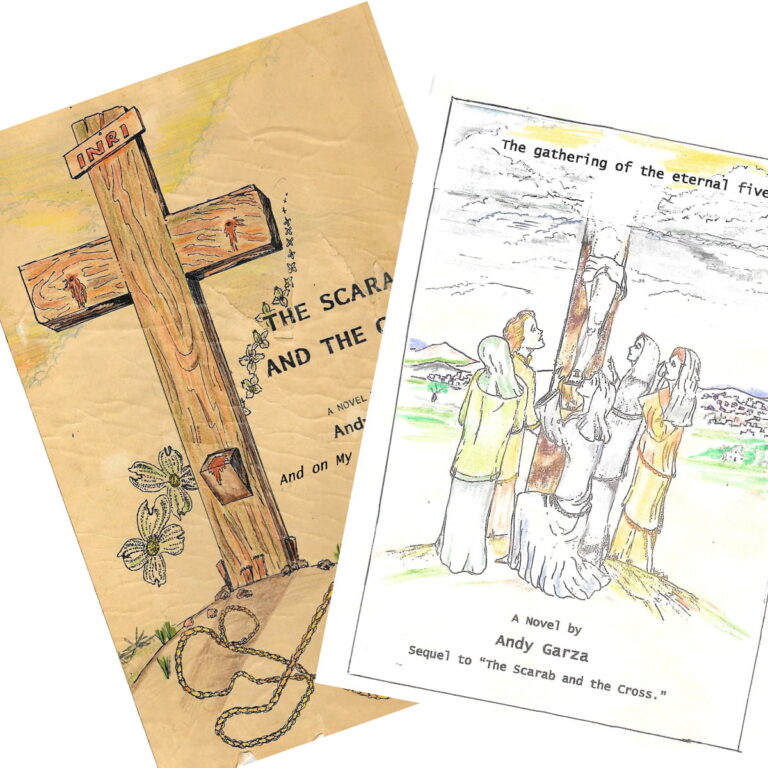
Gathering of the Eternal Five: Pursuit and Persecution
Chapter 5
Rome envisioned Jesus of Nazareth as a demented, penniless carpenter with delusions of grandeur. His family lines were too faded to be of any concern. His ability to heal was granted some low level credence. His resurrection of Lazarus was a theatrical trick well executed. People involved in that scheme would be flushed out and punished for their part. He was a pebble in the shoe of Rome to be dislodged with little or no effort. His ability to command attention and make people follow his lead was a marketable talent. At the height of his preaching thoughtful consideration was given to offering Jesus of Nazareth a scholarship to Rome and there train him to be a Roman commander. Former enemies of Rome had been successfully coerced into becoming implements of Rome’s ambitions. Jesus was just a man, like any other man he graved attention, comfort, gold and respectability. Rome would cure his dedication to abstinence. Once fully exposed to the pleasures of music, wine and sensuous flesh, Jesus would belong to the empire. Rome could provide all that in return for allegiance. The simplicity of the possibility was staggering. All Jesus had to do was say that his heavenly father was Jupiter and not “Iamthatiam”. Once he stated he was the earthly son of Jupiter, the world would fall to their knees in his presence. Rome had dealt with living gods before; Jesus would be easy meat on the spit. That possibility floated in the minds of Roman heads as a cure to an uneasy peace in Jerusalem. With the son of Jupiter as Rome’s strong arm in Judea, the stoutest Jewish heart would yield and peace and prosperity would result. Rome would win a battle without wielding a sword. The Jewish nation would be Roman Jews. They had escaped Egyptian power to reach their present pinnacle of success. Rome was a different matter without Moses to intervene since Roman swords outnumbered Jewish heads. Rome had learned that peaceful transformation was less costly and quicker to achieve. Whereas forcing masses to accept Roman gods and rules often left much resentment and opposition in its wake.
To his disciples Jesus was a power to motivate the soul. He gave ambition to their spirit. To the receding remnants of paganism, Jesus was a new god on their horizon. It was time to relocate priorities and Jesus offered an easy address. Power struggles were whiplashing in all directions, as interested parties vied for favorable position. The high level Hebrew council spent countless hours in debate searching for a way to recoup their losses in attendance at the temple. Faithful followers of Jesus adhered to the teachings of the Nazarene and would not return to the misguided ways of the Jewish council. In an effort to regroup their receding congregations the Hebrew leaders hired vocal broadcasters to discredit the words of the deceased Nazarene. They continued to berate the story of Jesus rising to heaven in company of angels as being somebody’s laundry caught in the high winds of the desert. Flocks of migrating birds and even deceitful cloud formations were all given blame for the awesome truth.
Onofrio had at last made peace with the cross. He lived in awe of the forces that brought him to be a right hand man to the master of Public works in Yerushalayim. Serou, the Egyptian. No happier man existed in the world as the young adopted son of Serou. His home life with Senobia and their children was a paradise on earth. He labored in earnest to complete his assignments and be home with his family. It thrilled his heart to drive his assigned chariot home and see Senobia waiting by the door. Recently adding zest to the welcome was Horacio holding his mother’s hand and waving at his arriving father. Onofrio would not pass a single day without taking his young son and placing him over his shoulders. He walked home happily with his loving hand on Senobia’s waist. It returned him to a place in his heart long ago when his father did the same thing with him. Onofrio and Horacio would often be heard splashing and laughing as they bathed together. So happy were those times that young Horacio refused to bathe unless he bathed with his father. The wonderful happy times were jewels to brighten his days as he conducted his foster father’s business. Often it would take him to the manufacturing plant where he found joy in visiting memories he would never forget. Paolo, the Greek was comfortably seated as Serou’s master bookkeeper at the plant. Not a single coin escaped his avid attention. Paolo was in his older years and found great comfort in having a near luxurious place in which to live, and associate with architectural heads in his office. He hungered for reports on the work being done to improve living conditions in Yerushalayim. Hieros, the holy city of David had suffered through many name changes throughout its painful history. Had raised and rejected numerous godly entities to arrive at the son of God from earthly Nazareth. Zeus was Paolo’s god. He found great joy in explaining that the Romans were making a serious effort to promote Zeus into being related to Iesus the proper name for the Nazarene. When worshippers said Hail Zeus, it came close enough to accept that they were saying hey sus. Paolo was happy to accept his heroic Zeus in company with the local son of God. Yahushua was an ancient name given to the god of Moses. Languages, geography and cultures made alterations to that name. To Paolo, the Greek Zeus and Iesus were good enough Gods for him. He revered them both as being good politics. One never knew when he would need the services of one or the other. Paola was an added source of historical wisdom regarding this land of living miracles for the young man with the hungry mind. Onofrio often felt embarrassed when he listened to Serou speak and had nothing intelligent to contribute. He felt honored that his foster father sought of explore his mind and wanted to always have something of value for him to find. He wanted Serou’s praise and admiration. His quest to achieve that goal was fuel for his inquisitiveness and the world was his classroom.
And although the young man accepted his day at Golgotha as a penalty, he also accepted it as the deepest lesson in his life. He had been in the company of the son of God on that fateful day. Men would come and go and nobody could ever take that experience from him. Yes, he pained to remember the agony of Iesus but his heart regaled in the company of the son of God. No man walking had that close a relationship with the Nazarene. They had suffered together, they had cried together and together they had seen the agony of His mother and suffered with her as well. The cross was a burden shared equally by Onofrio de Iberia and Iesus of Nazareth. Such closeness to the son of God was Onofrio’s personal treasure. Within that acceptance was a tranquil power that gave the young man peace and personal strength. He felt stronger than ever before and yet a serene calm seemed to be in control of his actions. He felt no desire to anger even in troublesome situations. There was always a calm solution to even the most difficult problem.
Peaceful acceptance of his previous penalties did not simply fade away. On his daily assignments crosses on the roadside were nudging reminders of his day at Golgotha. Men paid for their crimes along the road to Yerushalayim (Jerusalem in Hebrew), the city of David. The upper heads of the Hebrew council declared war on the disciples of Iesus. To the thinking man, it was evident that council leaders feared a dead Iesus far more than they feared their God. They chose to forget “Thou shalt not kill.” It was imperative to their power to destroy the opposition. Hebrew congregations continued to recede and the disciples were everywhere. There was dozens of them, all in homespun and worn out sandals. Arrests were made in the guise of sedition against the Hebrew laws. They were labeled rebels and punished as such. Heinous crimes against less careful disciples became common. In spite of the council’s hard driven quest to dissolve his disciples, they overcame their tribulation and multiplied. To the man on the street, the disciples became an item of admiration for their devotion to the lessons of a dead carpenter. A number of disciples were rounded up and presented to the Hebrew court. It’s safe to say that a one-sided trial was conducted and the disciples were labeled guilty as charged. However, the conviction served to inspire outsiders to pay closer attention to the devotion of these men. Nobody is that devoted without a good cause. Maybe money, position, free wine with meals. There had to be something substantial to strengthen their allegiance to Iesus. More so, when the disciples left the Sanhedrin rejoicing because they had been counted worthy of suffering disgrace and penalties for the name of Iesus. Day after day in the temple courts and from house to house they went on teaching and proclaiming the good news that Iesus was the Christ (the Messiah). Some men did not hear the words of Iesus from strangers they witnessed his faith at Golgotha. Some disciples were in disguise, but they were there. They had concrete proof when Iesus was seen rising to heaven escorted by angels and that added concrete and steel to their faith.
New and old followers finally grasped the promise of Iesus. He offered the greatest treasure of all. Not gold, not fame, not earthly riches but a clean soul accepted by God and a place to reside in paradise.
Their devotion won many converts but the price was heavy. History would record the holocaust created by the holy (?) men in power. People had a right to question if perhaps the evil of Satan was in full command at the temple. The list of casualties would be long and hard to forget.
- Andrew crucified.
- Bartholemew, beaten and crucified.
- James, son of Alphaeus, stoned
- James, son of Zebedee, beheaded
- John, exiled for life
- Judas (not Iscariot) stoned
- Matthew, speared.
- Peter, crucified upside down in Rome.
- Phillip, crucified
- Simon, crucified
- Thomas, speared.
- Matthias, stoned
(From Fox’s book of Myrtars)
That reality had not made its presence known yet. History would record many more such atrocities and sacrifices in the future.
Today, Onofrio rode in comfort into the city of David with scrolls and instructions to various people in Serou’s assembly of workers. He liked dressing plain to blend into the natural crowd. He learned that when he dressed elegant, he was hounded by beggars and street vendors. This guise was a safe refuge and he did his work without too many approaches for money, wine, comfort or a kind ear. He had been a fond recipient of adoration in the beginning but the thrill had worn off with time. He was a dedicated young man doing his work as the right arm of Serou. He went in quest of fresh fish as his wife had requested. The daily catches were cleansed of intestines and kept fresh with salt. Wrapped in wide leaves, they could be transported for stated his destination. Lemons and oranges from Nazareth were on his mental list also pomegranates for Tremiyo. He liked binging home items that pleased his wife. She had been raised without want for anything. Her husband bringing home surprises thrilled her and she loved it. Equally so, it thrilled Onofrio when Senobia would come running to his arriving chariot and jump into it to wrap her arms around him and lay her head on his back. A quick kiss and she had to ask with the joyous curiosity of a child, “What did you bring me, today? Huh? What did you bring?” As if that were not enough, she would push him aside to visually search the chariot floor for bundles. Today, she found a new shopper’s woven basket with separate compartments and beacons of joy became her eyes. Eager hands filled with childish curiosity investigated the treasures within. Freshly milled wheat, fruits and a clay vessel of an olive oil she preferred. Most importantly he brought her some fresh fish from the Sea of Galilee. He would be an improper dad had he not brought his children some dried figs, dates and a honey comb. A goat cheese blended with raisins and topped with bits of almonds. God favors the man that provides for his family.
Onofrio soon learned that his wife would not allow a single bite of food be passed before she acknowledged God’s generosity. He was often embarrassed when she thanked God for providing her with Onofrio as her husband. He learned to accept a ritual kiss from her and heard the same words a hundred times, “Thank you for loving me and sharing your life with us.” She always found reason to lovingly caress his face.
[Previous episode] [Next episode]
-
Elgin L. Hushbeck, Jr: The Dark Side of Apologetics
by Elgin Hushbeck, Jr., Engineer, Christian apologist, and author of Christianity and Secularism, Evidence for the Bible, Preserving Democracy, and What is Wrong with Social Justice?.
One of the earliest verses I learned as a basis for Christian Apologetics was 1 Peter 3:15, “Always be prepared to give a defense to everyone who asks you to explain the hope you have.”(ISV) As with most verses presented in a standalone fashion, the interpretation is open to a much wider range of understanding than was intended by the author.
In the case of apologetics, this is seen as a justification for a wide range of actions and beliefs. For some this means metaphorically becoming a shining Knight for the Gospel, armed with a wide arrange of arguments and debating tactics, ready at a moment’s notice to counter and defend against any challenge to the faith.
I would submit that this is not only a misunderstanding of the verse, it is one that has several dangers lurking within it. Perhaps the most dangerous is that it can lead one to see those who are raising objections more as opponents that need to be defeated, than souls that need to be saved.
This view is akin to the Dark Side of apologetics, a road that tempts us with the promises of an easier victory, but one whose end is not good. This is not to say that those we are reaching out to are not at times making the choice easier for us. While I have had many good and earnest discussions with those having different beliefs, I have also had many where those I was discussing with made it very easy to see them as “opponents to be defeated.” After all, when someone threatens to kill you, I know from personal experience that it takes some effort to keep them in the “souls that need to be saved” category.
In the end, the dark side leads to a focus on winning debates more than winning souls. In addition, the more we demonize our counterparts, the easier it becomes to justify bad behavior on our part. Even lying or worse can be justified “for the greater good.” After all, as long as we are not as bad as they are, it’s still OK, isn’t it?
The another problem with this can be seen throughout history, and sadly at times on the nightly news. From the early killing of those considered heretical, to the Inquisition, up to the Westboro Baptist church, to name just a few of the far too many examples, as an apologist at times is seems that most of what I do is try and account for the actions of Christians who thought they are defending the faith.
The struggle we are in is very real, and darkness will seize on any advantage it can. As a result, it is just a fact that the more Christians act badly, the more they will be presented as the “true face” of Christianity. Thus, not only is it wrong, it is, at the end of the road, counter-productive and harmful.
But if this is true, then why did Peter say this? The simple answer is that he didn’t, for when put into context, a different picture emerges. Even a little more context helps, for the next verse begins, “But do this gently and respectfully.” It is very difficult, if not impossible to go to the dark side of apologetics “gently and respectfully.” Thus, when I hear 1 Peter 3:15 quoted, I always listen to see if these words are included and thankfully I am hearing them a bit more often, though I would like to hear them even more. When we look at even more context, this removes completely the possibility of the dark side.
Who will harm you if you are devoted to doing what is good? But even if you should suffer for doing what is right, you are blessed. “Never be afraid of their threats, and never get upset. Instead, exalt the Messiah” as Lord in your lives. Always be prepared to give a defense to everyone who asks you to explain the hope you have. But do this gently and respectfully, keeping a clear conscience, so that those who speak evil of your good conduct in the Messiah will be ashamed of slandering you. After all, if it is the will of God, it is better to suffer for doing right than for doing wrong. (1 Peter 3:13-17 ISV)
In context (and I highly recommend that you read 1 Peter from the beginning to get the full context) this passage is saying that whatever our circumstances, we should live our lives in such a way as Christ shines through us. In that way people will be drawn to us, not because of us, but because Christ is shining through us. When they ask how we are able to live and act as we do, then we should “always be prepared to give a defense to everyone who asks you to explain the hope you have. But do this gently and respectfully.” This is the apologetics that Peter calls us to. Not a life of debates and arguments, but a life of service and example, where people can see Christ working through us.
[slideshow_deploy id=’2411′] -
(From Link Your Spirituality. Kent Ira Groff is author of Energion title Clergy Table Talk.)“Life is difficult.” So begins M. Scott Peck’s classic The Road Less Traveled.“You know more than you think you do,” Dr. Benjamin Spock begins Baby and Child Care. These first lines from two 20thcentury bestsellers capture an essential human paradox. Peck paraphrases the Buddha’s first noble truth: “Life is suffering.” Spock expresses the bold ideal of human possibility. Without religious language yet with unvarnished simplicity, these two lines embody the truth that life is out of sync, yet also full of hope: Life is difficult: You know more than you think.Because your left-brain sees life realistically, you need your right-braincreativity!That’s the road less traveled.Silence for Reflection…-Kent Ira Groff © Adapted from What Would I Believe If I Didn’t Believe Anything? Permission is to use; just cite the source.
Through the resurrection God brings into being His new people, the community of resurrection faith. The spokesmen of this earliest faith, the writers of our New Testament, related what God had done in Jesus Christ to what He had done in Old Testament days. They read what God had done in Jesus Christ in the light of what He had promised and what He had done in the history of the Hebrew people. They saw that, in different ways, the revelation of God to Israel had now been fulfilled in Jesus Christ and in His new community, the church of the resurrection. Jesus, as the act of God, had come to them from a past in which talk of God’s activity was assumed at the very basis of faith. It was this knowledge of God, as a God of mighty acts, a saving God who moved to effect the health and the salvation and righteousness of His people, that enabled the Christian believers to proclaim that in the resurrection of Jesus there was manifest the decisive act of God.