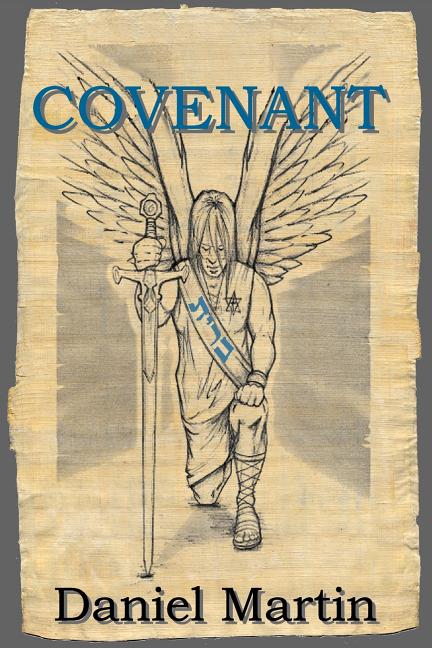
Do you believe in angels? Do you believe there is good & evil in this world? The primary character of Covenant, Sam McBride, hadn’t given it much thought until he woke up one morning on a beach & had an encounter with a Savior. A recovering alcoholic & new follower of Jesus Christ, Sam begins a new life that is not without hardships and conflicts, angels and demons. Daniel Martin brings God’s powerful, extravagant love into the life of a 21st century town that could be your town. Real, imperfect people make choices and put their faith in themselves or God – and live with the consequences. Choose you this day who you will serve.
Imprint: Energion Publications
Our main Energion Imprint
-
Creation in Contemporary Experience
Do the things we believe about God as creator make any difference in the way we act in the world?
Yes, what we believe about God as creator impacts our theology and action in many ways. In this book, Dr. David Moffett-Moore will examine some of these implications by looking at topics as diverse as quantum physics and chaos theory, hermeneutics, ethics, and how we tell stories of faith.
Can one accept the major theories of science, including evolution and still be a faithful believer? What do these findings of science mean for the way we do theology in the 21st century? Dr. Moffett-Moore not only believes that we can accept the findings of science and still be faithful Christians, he believes that discoveries in fields such as physics and biology can help us talk about God in a more relevant and compelling way than we ever have before. When we talk about God in this new way, we will also find a new call to live in a way that is faithful both to the wonders of the physical Creation, and also to scripture.
This study is designed for individual reading and study. Though it does not include questions and other traditional elements of a study guide, it would still be an excellent guide for small group study on these topics.
-
Creation in Scripture
The creation-evolution controversy is one of the most contentious in Christianity.
It may appear to many to be much less important than issues with more direct moral implications. Yet how we view the relationship between science and religion will have a significant impact on how we live and on how we understand our faith and our world.
Herold Weiss comes to this issue not as a scientist, historian, or a philosopher, but rather as a student of Scripture. He believes that the various authors of Scripture view creation in varied and sometimes contrasting ways. Many discussions of creation focus on the first three chapters of Genesis, but Weiss takes in the entire scope of scripture, looking at creation in the prophets, the wisdom literature, Genesis 2, Genesis 1, Romans, the Corinthian letters, Colossians, Hebrews, and finally Revelation.
In a book of this size it is impossible to study all of these areas in depth, but Weiss provides an excellent overview that will help any student of the Bible gain a better perspective on how creation impacts biblical teaching on a variety of issues. His presentation is representative, rather than exhaustive, but it provides a breadth that is much needed, and often lacking, in discussions of this issue. No matter in which way the biblical authors viewed creation, they were free to affirm their faith in the Creator. Weiss helps us understand that we, like them, can also affirm our faith in the Creator God no matter how we view the natural world and the universe in which we live. The Bible itself demonstrates the independence of faith from any and all cultural descriptions of the material reality of which we are a part.
This book would provide a suitable guide for a Sunday School class or small group wanting to look at creation from a variety of perspectives.
-
Creation
Christian discussions of creation or origins typically start with one of the standard positions on this contentious doctrine and then presents the arguments in favor of that position.
In this book, Edward W. H. Vick looks at creation as a matter of systematic theology. What does it mean for a doctrine to be called “Christian”? How does one derive and express a doctrine of creation that is truly Christian in content? He starts by distinguishing biblical theology, the topic of companion volume Creation in Scripture by Herold Weiss, from the systematic theology approach used in this book. This book is divided into three parts. Each has its own style and function. The first presents an introductory statement about how we approach a doctrinal explanation of the theme of Creation. Then we give a theological account of the meaning of the assertion that God is Creator. The second presents statements by representative respected theologians, as they expound the theme and argue for a separation of theology from science. It presents some quite basic positions. The third is in the form of a conversation-an effective way of introducing differing points of view pro and con. Finally, the book includes a series of questions for each chapter, making it useful as a basis for group study and discussion.
This book will provide a solid theological foundation for further study of origins in the context of Christian faith.
-
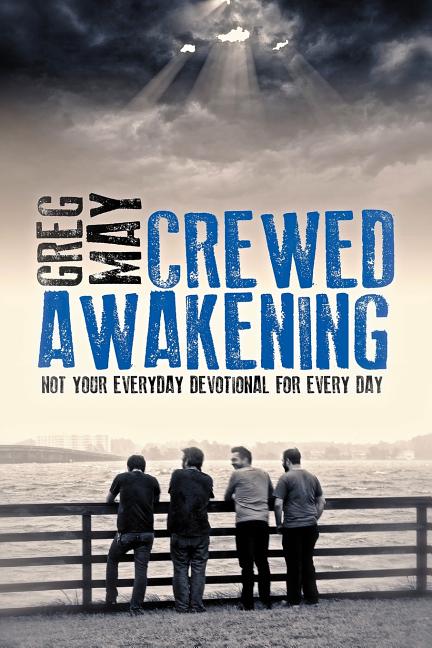
Crewed Awakening
“Not Your Everyday Devotional for Every Day” says author, Greg May. A self-proclaimed fisherman and forgiven sinner, Greg has spent many years leading and discipling through his real and unpretentious example. Greg May’s love for fishing, family, and gatherings of people has led him to create The Fishin’ Hole in his garage where Bible study, big-screen sports events, and celebrations welcome Christian believers and non-believers alike. And now in Crewed Awakening, Greg shares what he is learning in his own personal time with the Jesus. “I love family. I like fishing. I try to follow Jesus. I mess up some. But He has enough grace, mercy and love to cover my mess. Now that’s my kind of God “
-
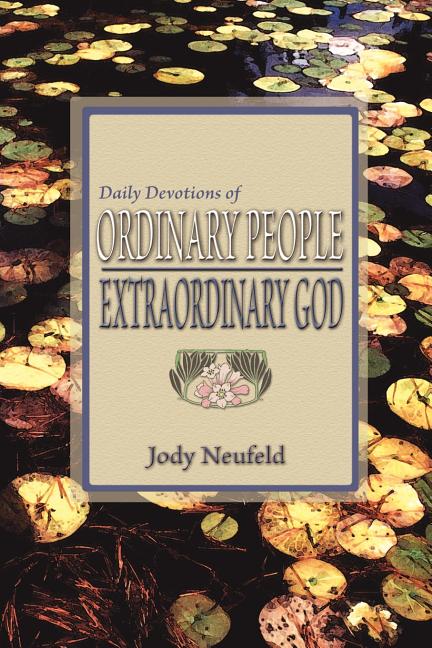
Daily Devotions of Ordinary People – Extraordinary God
What began as 5 minute devotions that she shared with her friends 5-7 days/week, grew into sharing with hundreds of people who, in turn, passed it on to their friends. Jody shared her heart and her conversations with God. And not always with a sweet, “Yes, LORD!” Through her busy life as a mother of three with a full time management job in the local hospice, God took her through Old and New Testament passages and showed her their application in her life. He walked with her through the dark valley of her son’s cancer diagnosis, treatment, life-well-lived and death.
Join Jody on this journey and glean God’s wisdom and powerful love for yourself.
-
Daily Devotions of Ordinary People – Extraordinary God (ePub)
What began as 5 minute devotions that she shared with her friends 5-7 days/week, grew into sharing with hundreds of people who, in turn, passed it on to their friends. Jody shared her heart and her conversations with God. And not always with a sweet, “Yes, LORD!” Through her busy life as a mother of three with a full time management job in the local hospice, God took her through Old and New Testament passages and showed her their application in her life. He walked with her through the dark valley of her son’s cancer diagnosis, treatment, life-well-lived and death.
Join Jody on this journey and glean God’s wisdom and powerful love for yourself.
[kadence_element id=”17548″] -
Death, Immortality, and Resurrection
The question of what happens after death has fascinated human beings for as long as we’ve had any sense of spirituality.
There have been popular books, stories of speculative fiction, reports of visions, and serious Bible studies attempted to explain to us what happens at death and beyond. In Death, Immortality, and Resurrection, Dr. Edward Vick explores this question from the viewpoint of a philosopher and theologian.
In this book, he examines scriptural sources along with a variety of philosophers over the millennia, and looks at such questions as what happens to the body, what we mean be identity and survival, whether we are innately immortal, and what is the meaning of resurrection.
This is a serious work, but comprehensible to the student willing to take the time to study these issues. The reader is invited to give consideration to those issues that have challenged philosophers and scholars through the ages. The book is suitable for study groups.
-
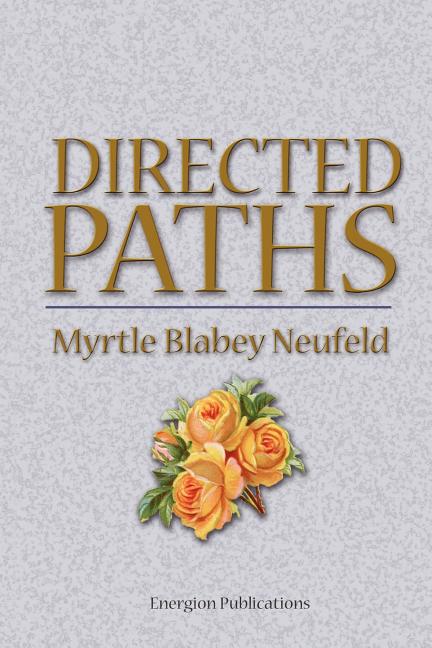
Directed Paths
You have heard people claim to live a life of prayer, but does prayer actually make a difference? Do real people carry out their lives guided by prayer and God’s providence?
Author Myrtle Blabey Neufeld lived just such a life and has written the stories of many of her experiences as a missionary nurse married to a medical doctor. These stories are her personal experiences and her testimony of the way God has directed her paths.
Directed Paths will challenge your faith and your determination to serve God while giving you new strength and encouragement. Each story reflects a Biblical principle or promise as the author openly shares her prayers and God’s answers.
This book is easy to read for young and old and is entertaining as well as inspirational.
-
Disciples
Discipleship: Jesus With Us is a basic book on discipleship, with the emphasis on “basic.” It is for every pastor who has wondered just what he can give a new Christian, a new member, or someone who is struggling with the Christian walk that will help guide them through those first steps of discipleship. It is for every new believer who has wondered just what happened and what to do now. Rev. Riley Richardson speaks from the heart of a pastor and evangelist, providing basic guidance and explanations of what it means to be a Christian. Chapters discuss what it means to be saved, prayer, Bible study, finding a church home, stewardship, service, and some additional steps to take. There are questions and exercises provided for an individual or a small group. It includes a glossary, index, and scripture index, along with numerous recommendations for further study.
-
Ditch the Building
Subtitle: Seven Ways the Church Could Go Rogue and Change Everything
Sometimes going radical means getting to the root. Sometimes it means pulling something up by the roots. What is it that is keeping you from doing what God wants you to do?
There are many books about how to do church “right.” There are programs for every imaginable thing you might want to improve in your church. There are at least as many measures by which you can determine whether your church is successful.
Ditch the Building ditches that approach and asks you to look at what God is calling you to do, and how ingrained church structures are keeping you from actually following that call. Nick May doesn’t claim to know what you’re supposed to be doing, or even what’s stopping you. What he does know from the experience of growing up in church, working in a megachurch and then pastoring a church plant, is that many of you are precisely at that point. You likely have at least the glimmering of a vision of what you believe God is calling you to do. When it comes time to start doing it, however, you find things in your way. It may be things in your own life or things in your church.
Ingrained structures may be your physical building. They may be your order of worship. They may be found in your Christian education department where you are implementing innovative ideas to prepare your children and youth to live in the 90s—1890s.
We often hear that God hasn’t changed. This is supposed to tell us that we don’t have to change either. But people and culture do change, the challenges change. We have to find God’s way of responding and building God’s people.
If you want to live out your life comfortably, don’t buy this book.
If you think the church today is just fine, don’t buy this book.
But if you hear the call to follow wherever God leads, no matter how radical that makes you seem, then buy and read this book.
We’re not telling you that this book will change your life. We’re hoping that after reading it, you will be empowered to let God change your life, your ministry, your church, and our world.
-
Ecclesiastes
What is wrong with the author of Ecclesiastes? Why is there a book in the Bible that tells us that all is vanity? Who is the author?
Ecclesiastes: A Participatory Study Guide is the ninth volume in the Participatory Study Series and the first that is a guide to an Old Testament book.
There has been much controversy about the correct approach to interpreting Ecclesiastes. Is the author clinically depressed? Should you read the book when you’re down in order to find someone who can join you in your misery? Is there anything uplifting in it?
There are some who have thought the book doesn’t belong in the Bible at all. Russell L. Meek takes a different approach. Through a serious study of the language and of the relationship between the text and that of other Bible writers, he discovers a much more positive message. It is still a book that can help you if you’re looking at the troubles and problems of the world. But it is more than a place to find a companion in misery.
In its text you can find help from someone who knows the way out, who knows how a person of faith, even if that faith is tried to the breaking point, can find enjoyment and rest in God. Its six lessons are thematic, covering issues such as the date, authorship and literary context of the book, the meaning of the key Hebrew word hebel, traditionally translated “vanity,” the theme of death in Ecclesiastes, the way the author makes use of other scriptural text and why this is important to our understanding of the book, injustice, and how we should respond to the troubles of life.
It is not just a theoretical study, but always examines how this Bible book can guide us in our lives. This study guide continues the tradition of the Participatory Study Series by helping to model different techniques and approaches for Bible study. The author doesn’t just tell you what the text means; he shows you how to discover this and gives you the opportunity to interact with the Bible text for yourself.
It’s designed for use by small groups, but it is also suitable for individual study. As is the case with each volume in this series, it includes pointers to help with your own Bible study and lists of resources to help guide you.