Mission Key: Study

They diligently studied the scriptures to see whether these things were true.
(Acts 17:11b)

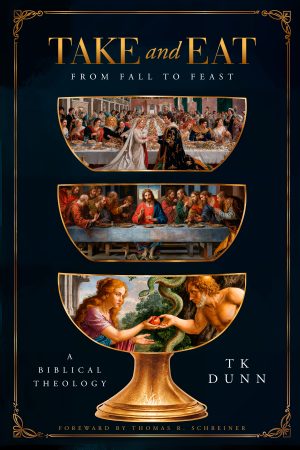
  • “Take and Eat”

    “Take and Eat”

    There are many doorways that can be used to enter and engage with the storyline of the Bible. In this book, TK Dunn traces the theme of “take and eat” across the pages of Scripture to demonstrate that many of the critical events in redemptive history are marked by uses of food.

    From God’s bountiful provision in Eden through the celebratory feast of the New Jerusalem, Dunn explores how God uses meals as a symbolic method of teaching his people about grace, mercy, justice, holiness, and redemption. This Biblical Theological feast is designed to provide a unique and captivating analysis of God’s activity in his created realm by interacting with his people in a manner that they could both experience and understand.

    The contract of the Fallen Adam with the Final Adam sits at the heart of the gospel and it is therefore not surprising that the “take and eat” motif is present in the lives of both Adam and Jesus. Seeing Jesus’ obedience as an inversion of Adam’s failure, Dunn demonstrates how Christ is not only the fulfillment of the Old Testament’s hopes and promises, but also the one who restores and renews all things by the unwinding of the Fall.

    By considering how God uses these moments to progressively reveal more about his work of salvation through Christ, Dunn provides a theological buffet that will entice the unbeliever to “taste and see that the Lord is good” and also satisfy the believer who is eagerly anticipating the day when Christ will sit and feast with his beloved church at the end of time.

  • Ephesians

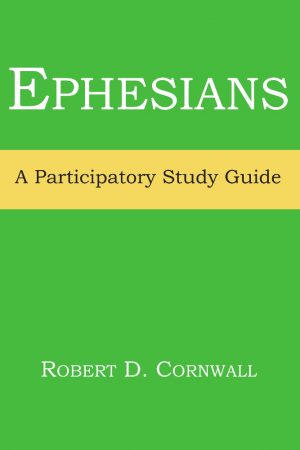
    Ephesians

    Following the outlines of the Participatory Study Method, Dr. Robert Cornwall presents a study guide to the book of Ephesians that is both usable and challenging while not skirting the difficult issues.

    These eight lessons take you through the letter leading from the history and background to modern application and sharing in corporate study and worship. Whether you are approaching this book as an individual, as a small group, or in a larger classroom setting, this study guide will provide you with direction, exercises, and questions for discussion and further investigation.

    This study guide will be useful for individual study, as a guide to key topics in Ephesians, or for small groups.

  • Healing the World

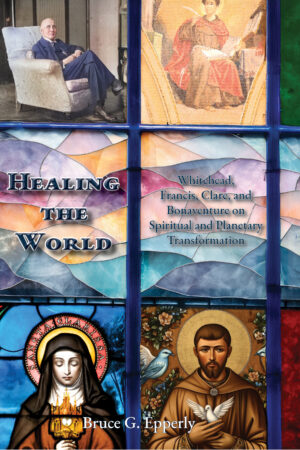
    Healing the World

    SIn a world grappling with division, climate chaos, and spiritual unrest, a revolutionary vision emerges: to heal our planet, we must first heal ourselves.

    Healing the World: Whitehead, Francis, Clare, and Bonaventure on Spiritual and Planetary Transformation by Bruce G. Epperly offers a timely and profound vision for addressing the urgent crises of our time, from climate change and international upheaval to political incivility and social division. This book masterfully weaves together the philosophical depth of Alfred North Whitehead’s process theology with the rich, practical spirituality of Franciscan thought, embodied by Francis of Assisi, Clare of Assisi, and St. Bonaventure.

    Epperly, an acclaimed theologian and author known for his extensive works, argues that a genuine transformation of our world requires a holistic approach, linking inner spiritual growth with outer social and ecclesiastical change. The book challenges prevailing views of a lifeless, godless universe, asserting instead a “God-filled world” where all creation sings praises to God and is interconnected. This perspective counters authoritarian images of God that fuel division and destruction, presenting instead a relational, empathetic, and persuasive Deity.

    Readers will discover how Francis of Assisi, affirmed as the “Second Christ”, modeled a life of simplicity, universal hospitality, and deep harmony with all creation, from “Brother Sun” to “Sister Mother Earth”. He saw no “other,” extending love and respect even to enemies and outcasts, advocating for a world of peace and justice. Clare of Assisi, his “luminous” spiritual companion, focused on “gazing at Jesus” to internalize and imitate Christ’s empathetic, suffering love, providing a model for women’s spiritual empowerment and identifying God with the pain of the vulnerable. St. Bonaventure, the “mind” of the Franciscan movement, envisioned God as an “infinite sphere whose center is everywhere and whose circumference is nowhere,” a “Fountain of Love” constantly flowing through all things, giving life, energy, and purpose to the universe.

    Complementing these Franciscan insights, Alfred North Whitehead’s process philosophy offers a dynamic vision of a value-laden, interdependent universe where “God is in all things. All things in God”. Whitehead describes God as the “fellow sufferer who understands” and the “joyful companion who celebrates,” whose power is persuasive, not coercive, inspiring creation towards the “production of beauty”. His “Galilean vision” of Christianity champions humility and love over dominating power, advocating for a “democracy of revelation” where all creatures are touched by God and deserve respect.

    Healing the World is an invitation to readers to become “saints in the making,” embracing “holy simplicity” and “world loyalty” to address contemporary challenges. Each chapter is enriched with spiritual practices> that translate these profound theological and philosophical concepts into actionable steps for personal and political life, fostering peace, ecojustice, and a deeper connection with the divine presence in ourselves and the world. Epperly’s work ultimately aims to inspire us to be “earth healers,” partnering with God to advance the moral and spiritual arcs of history toward a “Beloved Community”.

    The book is a testament to the enduring relevance of these visionaries in our time.

  • I Want to Study the Bible

    I Want to Study the Bible

    How can I get started with Bible study?

    This booklet is a very short introductory guide for someone with little or no background in Bible study. It provides a basic approach taken from the participatory Bible study method that is the basis of the Participatory Study Series from Energion Publications.

    This booklet includes a list of some of the basic resources that can provide the new Bible student with basic information. It is targeted broadly at a Christian audience, but not at a particular tradition. Tools are included from scholars ranging from a conservative evangelical to a progressive orientation.

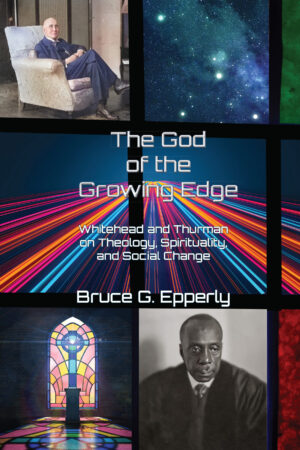
  • The God of the Growing Edge

    The God of the Growing Edge

    What can we learn by combining the wisdom of two major theological pioneers of the 20th century?

    The God of the Growing Edge: Whitehead and Thurman on Theology, Spirituality, and Social Change explores the intersecting spiritual visions of two such towering figures: Alfred North Whitehead, the eminent philosopher and process theologian, and Howard Thurman, the influential African American mystic, theologian, and civil rights leader. This book offers a timely resource for contemplative activists seeking a deeper integration of spirituality and social transformation in our turbulent times.

    While Whitehead, a privileged white academic, developed an intricate metaphysical system describing a dynamic and relational universe, Thurman, experiencing firsthand the brutal realities of racism and injustice, articulated a profound mystical theology centered on empathy, social action, and the inherent worth of every individual. Despite their vastly different backgrounds, both converged on a vision of God as a dynamic presence intimately involved in the world’s unfolding.

    Whitehead’s process theology portrays God not as a static, distant sovereign but as a fellow sufferer who understands, a “poet of the universe” luring creation toward greater beauty, truth, and goodness. God is the ultimate empath, valuing every moment of experience and nurturing the freedom and creativity of all beings. This dynamic vision challenges static, authoritarian images of God that have fueled division and injustice throughout history.

    Thurman, deeply influenced by his experience of growing up in the Jim Crow South, emphasized the inherent dignity of every person as bearing the image of God. His mystical spirituality, shaped by the wisdom of the spirituals and the courageous witness of the civil rights movement, grounded social activism in the experience of God’s love and liberating presence. Thurman’s vision of an interconnected universe, where every creature reflects God’s glory, calls for a radical commitment to justice, compassion, and the pursuit of Beloved Community.

    The God of the Growing Edge examines these intersecting visions, highlighting their complementary strengths. Whitehead’s metaphysics provides a robust intellectual framework for understanding a universe of interconnectedness, change, and possibility, while Thurman’s lived experience of oppression and spiritual resistance infuses this framework with prophetic urgency and practical wisdom. Together, they offer a powerful and timely message for today’s world, inspiring:

    • A renewed understanding of God: moving beyond static, impersonal images to embrace a God of relationality, empathy, and creative love.
    • A deeper connection between spirituality and action: uniting personal transformation with a commitment to social justice and planetary well-being.
    • A more inclusive vision of humanity: recognizing the inherent worth and dignity of every individual, regardless of background or circumstance.
    • A vibrant sense of hope and resilience: finding strength and inspiration in the face of personal and global challenges.

    This book is not merely an academic study but a personal and spiritual exploration. Drawing on the author’s own experiences as a theologian, minister, and activist, The God of the Growing Edge invites readers to embark on a “holy adventure” guided by the wisdom of Whitehead and Thurman. It offers practical spiritual practices at the end of each chapter, along with powerful prayers by Thurman, to help readers integrate these insights into their daily lives. By exploring the “growing edge” of faith, this book offers a compelling path toward a more just, compassionate, and sustainable future.

  • Colossians & Philemon

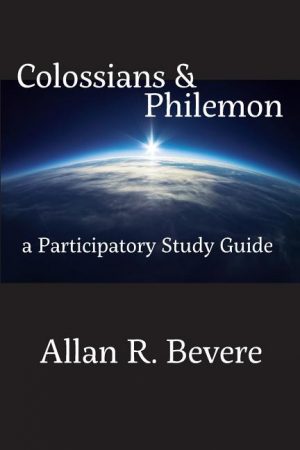
    Colossians & Philemon

    Christology and ethics. Is it possible for letters written in the first century to still impact people living in the 21st century?

    Dr. Allan Bevere, pastor and professor, husband and grandfather, believes Paul’s words are not only relevant to our century but timely to the world we are currently struggling to live and influence while still being known as aliens.

    “The Christians in Colossae are encouraged to look heavenward, not to escape this world, but rather to put this world in heavenly context, to seek the things above is not an escape from earthly realities, but rather the things above puts earthly things in their divine context.” – Dr. Allan Bevere

  • Ecclesiastes

    Ecclesiastes

    What is wrong with the author of Ecclesiastes? Why is there a book in the Bible that tells us that all is vanity? Who is the author?

    Ecclesiastes: A Participatory Study Guide is the ninth volume in the Participatory Study Series and the first that is a guide to an Old Testament book.

    There has been much controversy about the correct approach to interpreting Ecclesiastes. Is the author clinically depressed? Should you read the book when you’re down in order to find someone who can join you in your misery? Is there anything uplifting in it?

    There are some who have thought the book doesn’t belong in the Bible at all. Russell L. Meek takes a different approach. Through a serious study of the language and of the relationship between the text and that of other Bible writers, he discovers a much more positive message. It is still a book that can help you if you’re looking at the troubles and problems of the world. But it is more than a place to find a companion in misery.

    In its text you can find help from someone who knows the way out, who knows how a person of faith, even if that faith is tried to the breaking point, can find enjoyment and rest in God. Its six lessons are thematic, covering issues such as the date, authorship and literary context of the book, the meaning of the key Hebrew word hebel, traditionally translated “vanity,” the theme of death in Ecclesiastes, the way the author makes use of other scriptural text and why this is important to our understanding of the book, injustice, and how we should respond to the troubles of life.

    It is not just a theoretical study, but always examines how this Bible book can guide us in our lives. This study guide continues the tradition of the Participatory Study Series by helping to model different techniques and approaches for Bible study. The author doesn’t just tell you what the text means; he shows you how to discover this and gives you the opportunity to interact with the Bible text for yourself.

    It’s designed for use by small groups, but it is also suitable for individual study. As is the case with each volume in this series, it includes pointers to help with your own Bible study and lists of resources to help guide you.

  • Learning and Living Scripture

    Learning and Living Scripture

    Tired of passive Bible study? Unlock a vibrant, personal encounter with Scripture!

    Learning and Living Scripture: an Introduction to the Participatory Study Method by Geoffrey D. Lentz and Henry E. Neufeld offers a fresh approach to Bible study. This guide helps you move beyond merely learning about God to experiencing God firsthand. The Participatory Study Method invites you to become part of the Bible story, finding your place and living positively according to God’s will. It’s designed to help you learn and grow spiritually by studying empathetically.

    A critical element of this method is sharing your experiences with others. This isn’t simply a time to inform others of what you’ve learned, but a crucial learning experience for you as well. Sharing helps you to think more clearly about your study, allows you to hear other perspectives to expand your own understanding, and provides accountability, preventing overly personal interpretations. The book provides a comprehensive method for reading scripture, getting the most out of it, and applying its principles directly to your life and community. It is suitable for private study or for leading a small group.

    Ready to not just learn scripture, but to truly live it? Get your copy of Learning and Living Scripture today!

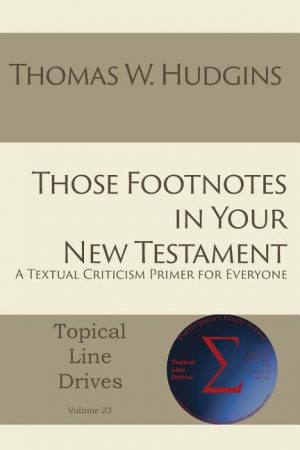
  • Those Footnotes in Your New Testament

    Those Footnotes in Your New Testament

    Have you ever seen a passage in the New Testament that was placed in brackets, or a footnote at the bottom of a page referring to “ancient authorities” or “manuscripts”?

    Most people scratch their heads and just keep reading, but these notes are very important. So is understanding why they’re even there.

    In this short introduction, Thomas W. Hudgins explains for the average reader the need for, criteria of, and some misconceptions associated with New Testament textual criticism.

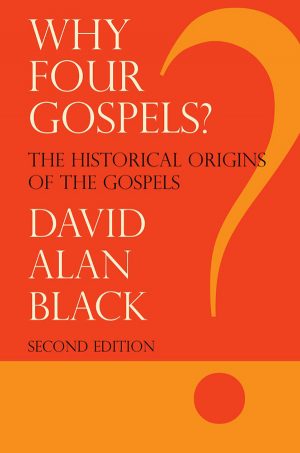
  • Why Four Gospels?

    Why Four Gospels?

    Why do we have four gospels in the New Testament? How were they written, preserved, and chosen?

    In Why Four Gospels? noted Greek and New Testament scholar David Alan Black concisely and clearly presents the case for the early development of the gospels, beginning with Matthew, rather than Mark. This is much more than a discussion of the order in which the gospels were written. Using both internal data from the gospels themselves and an exhaustive and careful examination of the statements of the early church fathers, Dr. Black places each gospel in the context of the early development of Christianity.

    Though Markan priority is the dominant position still in Biblical scholarship, Dr. Black argues that this position is not based on the best evidence available, that the internal evidence is often given more weight than it deserves and alternative explanations are dismissed or ignored.

    If you would like an outline of the basis for accepting both early authorship of the gospels and the priority of Matthew, this book is for you.

    Now available as an Audiobook.

Energion Direct
Privacy Overview

This website uses cookies so that we can provide you with the best user experience possible. Cookie information is stored in your browser and performs functions such as recognising you when you return to our website and helping our team to understand which sections of the website you find most interesting and useful.