Imprint: Energion Publications

Our main Energion Imprint

  • The Hebrew Bible and Its Music

    The Hebrew Bible and Its Music

    How can a person who reads no Hebrew get closer to the text and feel of the Hebrew scriptures?

    This is a question that readers frequently ask, wondering whether they are getting an adequate immersion in the culture, rhythms, and vocabulary of those who wrote long ago.

    Bob MacDonald, author of the monumental work Seeing the Psalter (Energion Publications, 2013), has continued his work studying the rhythm, music, and structure of the Hebrew scriptures He developed this close translation initially to show in English the intricate patterns of repeated words in Hebrew poetry.

    Having discovered the inferences concerning the music at a conference on the Psalms in 2010, the author decided that the whole corpus of the Hebrew canonical text should be approached to allow English speaking readers some understanding of the music. The translation retains the order of Hebrew words wherever reasonable, so that changes in reciting note and ornaments can be in English on the same syllable that corresponds to the Hebrew.

    Readers at all levels of biblical knowledge can benefit from the material here. While the translation is accessible to anyone who reads English, references to the Hebrew text are available for the serious student of the language.

    The Five Scrolls is volume 6 in the series and the first to be released.

    Books in the series:

    1. The Torah, Genesis, Exodus, Leviticus, Numbers, Deuteronomy (released)
    2. The Former Prophets, Joshua, Judges, Samuel, Kings (released)
    3. The Major Prophets, Isaiah, Jeremiah, Ezekiel (released)
    4. The Twelve, Hosea, Joel, Amos, Obadiah, Jonah, Micah, Nahum, Habakkuk, Zephaniah, Haggai, Zechariah, Malachi (This volume)
    5. The Books of Truth, Psalms, Proverbs, Job, (May 10, 2019)
    6. The Five Scrolls, Song of Songs, Ruth, Lamentations, Qohelet, Esther (released)
    7. The Remaining Writings, Daniel, Ezra-Nehemiah, Chronicles (May 24, 2019)
    8. A Biblical Hebrew to English Concordance (June 7, 2019)
    9. A is for Abandon, An English to Biblical Hebrew Alphabet Book (June 21, 2019)

    You can find further resources on the music of the Bible at Remembering and Reflecting.
  • The Honeycomb Is Waiting

    The Honeycomb Is Waiting

    Writing good devotional material is an art. Devotionals need to be engaging, challenging, and informative, all the while meeting the needs of a variety of people.

    Nancy Petrey approaches devotional writing as a poet, a musician, and an avid student of God’s Word. In The Honeycomb is Waiting, she brings her gifts of music and poetry to bear as well on a series of topics from serious to humorous, all in the service of helping the reader grow in faith and the knowledge of Jesus Christ. This unique combination of gifts and interests is sure to help build your devotional life no matter where you are starting. We especially commend this book to you if you find it hard to make time for your devotions or if you find your devotional time unsatisfying. Nancy’s enthusiasm, joy, and insights may just be the thing to your time with God new life.

    The Honeycomb is Waiting contains 40 devotionals, each with an accompanying poem and/or song.

  • The Incredible Shrinking Gospel

    The Incredible Shrinking Gospel

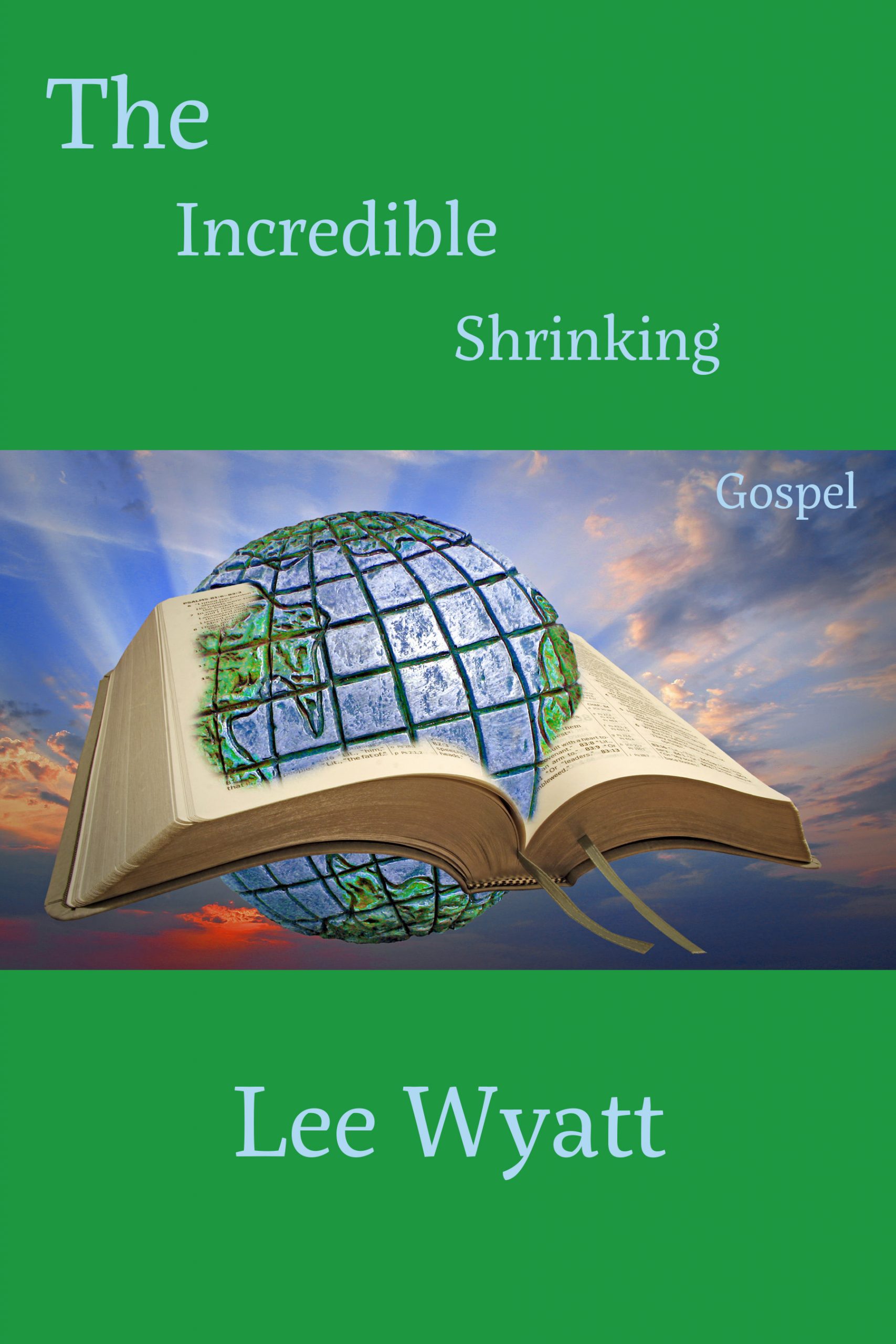
    The church is working with a shrunken Gospel, robbed of its power, limited in its scope, and unable to catch the interest of those it needs to reach. Who is responsible? More importantly, how can we reclaim the full content and the powerful nature of the Gospel itself? In this book, retired pastor Lee Wyatt looks at the crisis in the church, one he believes is caused by our loss of this full Gospel message. To rebuild our understanding he then revisits Jesus, helping us to become acquainted with Him and the meaning of his mission. Then, and only then, with this rebuilt picture of Jesus, does he revisit evangelism, and tell us how we can turn our efforts to reach around the world. Only when we have “unshrunk” our gospel can we successfully evangelize.

  • The Jesus Manifesto

    The Jesus Manifesto

    What does it mean to be a Christian? More importantly, what does it mean to be a follower of Jesus?

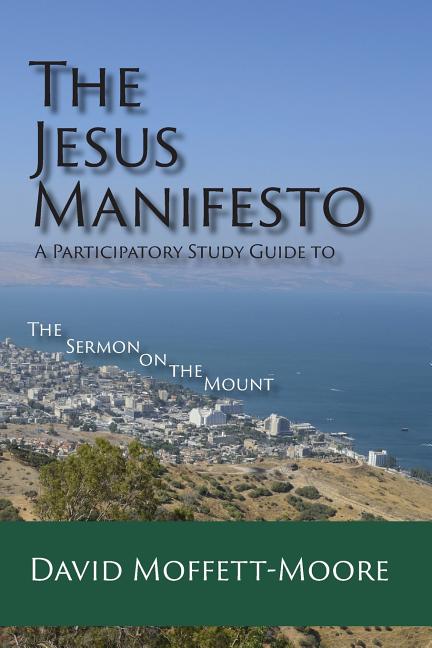
    Dr. David Moffett-Moore believes that the sermon on the mount is a manifesto for what Christian living is to be, what it means to follow Jesus. Through this sermon we will find a new way of being and of living in the world.

    “We are in the midst of a change that is larger than any of us can understand. The church of the 21st century is more like the church of the 1st century than that of the 20th century. Like then, we live in a world that is deeply divided, strongly segregated, with different parts of society not communicating with each other. Some are very passionate about their religion, willing to die or kill for it, for others religion is irrelevant.” – Dr. David Moffett-Moore

    Jesus’ Sermon on the Mount can accurately be described as His manifesto. A teaching with life-changing wisdom in each sentence; a teaching that will not release you from your seat until you have submitted to God’s way.

    Whether in a small group or a personal study time, The Jesus Manifesto will bring Living Water to your spirit.

  • The Jesus Paradigm

    The Jesus Paradigm

    The church is in disarray. Theologians and commentators speak of the demise of evangelicalism. Are they alarmists? Is Christianity as we know it in the process of dying?

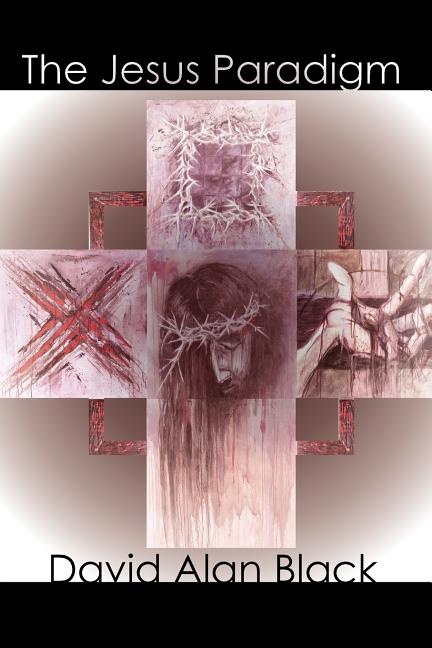
    Writer, scholar, teacher, and missionary Dr. David Alan Black thinks that the answer does not lie in the politics of the left or the right. In fact, he doesn’t think that Jesus tells us what our politics should be. He doesn’t see answers in Christian nationalism. But even further, he sees serious flaws in the very structure of our churches and denominations that prevent us from truly being obedient to the gospel. The solution lies, not in renewal, revival, or even in reformation, but rather in restoration-a restoration of the church organized as Jesus intended it and according to the example provided by the earliest church sources in the New Testament.

    To make the church and its members true servants of Jesus Christ again, we need to change our entire paradigm-to The Jesus Paradigm.

  • The Journey to the Undiscovered Country

    The Journey to the Undiscovered Country

    What happens at the end? What do we mean by the end? When will we see the last things?

    The theological term for “the last things” is eschatology. It is the Christian doctrine which is concerned with the final “things,” death, the second coming of Christ, the resurrection of the dead, the immortality of the soul, the final judgment, heaven and hell. Even though these themes are at the heart of the Christian faith, it is often difficult to voice with clarity what we mean by them.

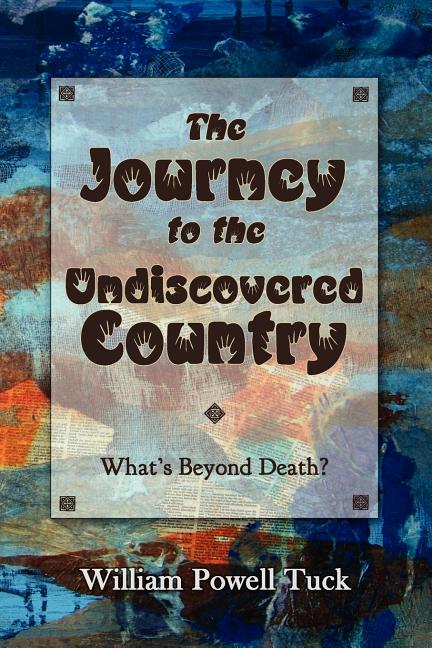
    In The Journey to the Undiscovered Country, William Powell Tuck says, “Although there is no clear, simple, New Testament answer on all of these issues, the New Testament is unequivocal in its hope for men and women in Jesus Christ. No one can speak with certainty about such matters as the mystery of death, the resurrection, heaven and hell, the second coming, or the final judgment of God. However, the New Testament does offer some concrete pointers which I believe can be helpful to us. I invite you to join me as we look to see if we can gain some insight to determine the future hope for those who die in Christ.”

    This book is suitable for personal reading and study or for use as Sunday School curriculum.

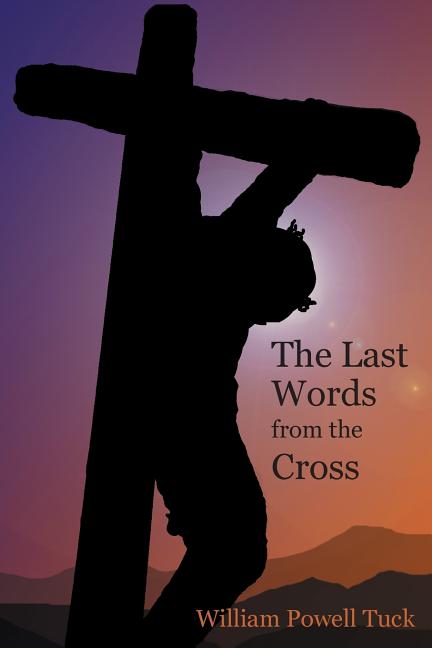
  • The Last Words from the Cross

    The Last Words from the Cross

    The Cross. The central symbol of the Christian faith. “Can a church be an authentic Church and not focus on the cross?”

    William Powell Tuck began answering that question in his book, The Church Under the Cross, and now he leads us into the second part of his answer in his new book, The Last Words from the Cross. “The words of our Lord on the cross have become very memorable. These words of Jesus have been designated as the seven last words. They are, of course, more than individual words. They are really sentences or fragments of sentences. One of these seven words is found in the Gospels of Matthew and Mark. Three of them are found in the Gospel of Luke, and three are recorded in John. No one gospel contains all of them. But, to me, that is a way of authenticating the gospels. Each writer drew on what he remembered or considered most important in those moments or what he had heard from others who shared their experiences.” says Tuck. A study of these words gives us, His disciples, a deeper insight into Jesus’ thoughts through suffering, facing death, and what His death meant to Him as He met our need for salvation. Rev Tuck further says, “These words reveal his personal agony, his concern for others, his forgiving spirit, his physical suffering, his ultimate trust and faithfulness in the One he had proclaimed. Even in his moments of forsakenness he still resisted the temptation to turn away ultimately from God’s will or deny the One who led him to this shameful death as he identifies with sinners.”

    This book is an ideal study for Lent, or at any time for a church that would like to better understand taking up their cross. And what church can’t benefit from that?

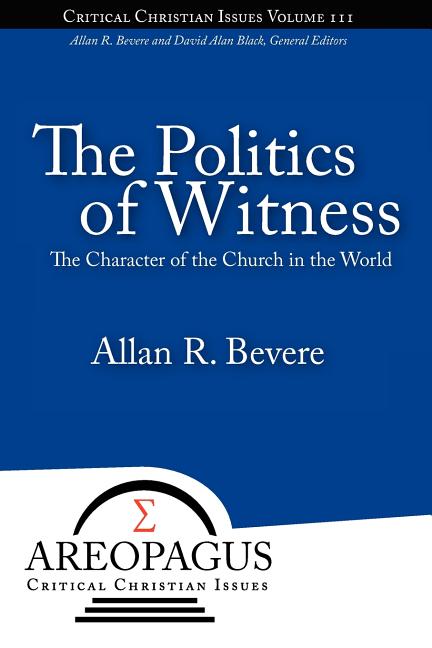
  • The Politics of Witness

    The Politics of Witness

    Can a church that is compromised through dependence on temporal, political power speak with a powerful prophetic voice in the world?

    As the body of Christ, the church has a prophetic role in the world. Prophets have always spoken clearly to people in power. They have been willing to challenge the decisions made by people who thought they were not accountable to anyone. Sometimes the prophets were respected, sometimes persecuted, but they were never ignored or regarded as irrelevant. So why is it that the church today cannot speak truth effectively to power?

    In The Politics of Witness, Dr. Allan R. Bevere asks these questions and proposes an answer. The church has come to depend too much on temporal power and has thus forgotten its divine authority. In finding this answer he goes back to the founding of the church and how it first became dependent on the state. He examines those who have followed, mostly building a political theory that takes the responsibility of ministry from the church and gives it to the state. You’ll find some names in this that might surprise you.

    Any discussion of Christianity and the state will involve Emperor Constantine, but what about his modern lieutenants, such as Locke, Jefferson, Franklin, and others? While the theology applies to the church in any country, Dr. Bevere takes a particular look at the peculiarly American view that the United States of America is somehow God’s chosen people, a nation of destiny in accomplishing the gospel mission.

    This book balances brevity with a broad intellectual and historical reach. You will be taken from the founding and foundation structure of Christian theology today to a proposal for how we, as the Church can reclaim our prophetic witness. In the current political atmosphere, every Christian needs to read this book.

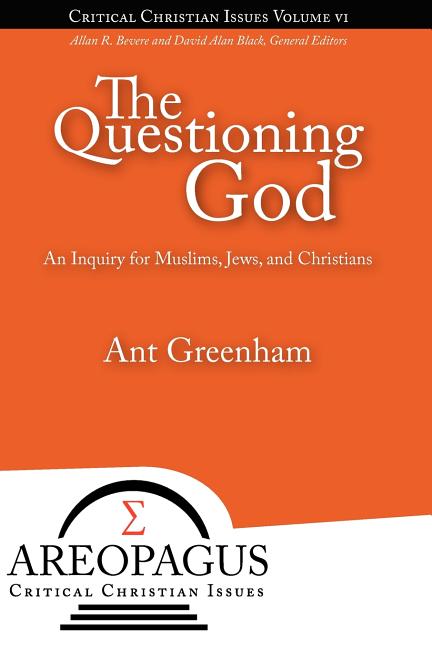
  • The Questioning God

    The Questioning God

    A questioning approach lies at the heart of our relationship with God. That’s how God engages us. In fact, questioning (or free inquiry), is central to our being human. Yet the major monotheistic religions vary markedly on this matter. In The Questioning God, Dr. Greenham examines the three major monotheistic religions, Islam, Judaism, and Christianity, to see how they relate to questioning, including questions that God asks us and the questions that we ask about God. His goal is to develop a biblical theology of questioning, avoiding a loss of direction and focus that results from selective questioning, and also a loss of humanity that results from bypassing our questions through an inappropriate submission. The examination is wide ranging, including chapters on questioning in Islam, Judaism, mainline and evangelical Christianity, along with an examination of the consequences of a non-questioning culture. He ends the book with a proposal for a biblical theology and a look at the practical implications-just what it means to pursue a questioning culture. The author finds that questions are not just valuable, they are essential for serious human interaction. “As questioning beings,” he concludes, “there is no limit to what we might ask, but our questions must always be anchored in the questioning God’s enduring concern to engage us.”

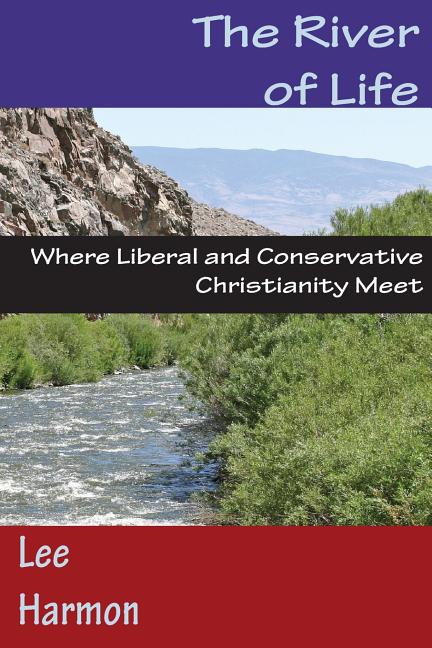
  • The River of Life

    The River of Life

    Are liberals who call themselves Christian truly Christian? Do liberal Christians care about the Bible? Why?

    Twice before Lee Harmon has written about Christian topics, once on the gospel of John and once on the book of Revelation. Lee finds that both conservative and liberal Christians often have a dismissive attitude toward one another, and so he sets out not to propose a compromise, but to seek understanding. He writes as a liberal Christian, explaining what Jesus means to him and why he finds the Bible fascinating and even essential.

    This is a book that expresses a vigorous spiritual view, but which does so for the purpose of inviting conversation and understanding. Perhaps those of us who are in different streams of Christian thought need to consider that others also have something to contribute, that their disagreements with us do not represent apostasy or heresy but rather their unique and valuable experience of God.

    The River of Life is suitable for both individual reading and group study and discussion.

  • The Sacred Journey

    The Sacred Journey

    The Sacred Journey is a collection of insights, thoughts, and personal experiences centered on and emanating from the Beatitudes of Jesus from the Sermon on the Mount. Within its pages we are invited to consider the radical love with which God pursues His creation. God in Jesus Christ was determined to make a way for sinners to be forgiven at the Cross. While man had sinned and caused a divide between himself and His creator, God has insisted that those who receive the grace and mercy offered in His Son shall be forgiven of sin and reconciled unto God in eternally secure love. God in salvation is singly focused on reconciling all who will place their trust, their faith, and their hope in that sacrifice. It is not we who make our way to God through good works, right belief, perfectly ordered creedal statements, or any other edifice of human composition. It is God who pursues us heatedly to receive the radical beauty of the violence of the Cross. God has pursued, forgiven, and reconciled us unto Himself. Through the wrath which was poured out upon Jesus, mercy was poured out on us. Salvation is purely the work of God’s mercy and grace. We who have received Him have done so by faith when we have responded to the pull of God on our hearts. Grace rests upon us because God has loved us. What, in response to such a violent grace, should our reply to God be?

  • The Scarab and the Cross

    The Scarab and the Cross

    Preview this titleA young vagabond field hand from parts unknown. Onofrio could be any man who found himself in chains in Judea. But many wise men have testified that there is a divine destiny for every person and Onofrio’s life was about to intersect with a Nazarene carpenter.

Energion Direct
Privacy Overview

This website uses cookies so that we can provide you with the best user experience possible. Cookie information is stored in your browser and performs functions such as recognising you when you return to our website and helping our team to understand which sections of the website you find most interesting and useful.