Mission Key: Community

As iron sharpens iron, so does a man sharpen his neighbor. (Proverbs 27:17)

  • Healing the World

    Healing the World

    SIn a world grappling with division, climate chaos, and spiritual unrest, a revolutionary vision emerges: to heal our planet, we must first heal ourselves.

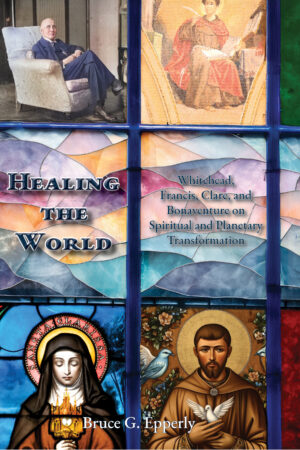
    Healing the World: Whitehead, Francis, Clare, and Bonaventure on Spiritual and Planetary Transformation by Bruce G. Epperly offers a timely and profound vision for addressing the urgent crises of our time, from climate change and international upheaval to political incivility and social division. This book masterfully weaves together the philosophical depth of Alfred North Whitehead’s process theology with the rich, practical spirituality of Franciscan thought, embodied by Francis of Assisi, Clare of Assisi, and St. Bonaventure.

    Epperly, an acclaimed theologian and author known for his extensive works, argues that a genuine transformation of our world requires a holistic approach, linking inner spiritual growth with outer social and ecclesiastical change. The book challenges prevailing views of a lifeless, godless universe, asserting instead a “God-filled world” where all creation sings praises to God and is interconnected. This perspective counters authoritarian images of God that fuel division and destruction, presenting instead a relational, empathetic, and persuasive Deity.

    Readers will discover how Francis of Assisi, affirmed as the “Second Christ”, modeled a life of simplicity, universal hospitality, and deep harmony with all creation, from “Brother Sun” to “Sister Mother Earth”. He saw no “other,” extending love and respect even to enemies and outcasts, advocating for a world of peace and justice. Clare of Assisi, his “luminous” spiritual companion, focused on “gazing at Jesus” to internalize and imitate Christ’s empathetic, suffering love, providing a model for women’s spiritual empowerment and identifying God with the pain of the vulnerable. St. Bonaventure, the “mind” of the Franciscan movement, envisioned God as an “infinite sphere whose center is everywhere and whose circumference is nowhere,” a “Fountain of Love” constantly flowing through all things, giving life, energy, and purpose to the universe.

    Complementing these Franciscan insights, Alfred North Whitehead’s process philosophy offers a dynamic vision of a value-laden, interdependent universe where “God is in all things. All things in God”. Whitehead describes God as the “fellow sufferer who understands” and the “joyful companion who celebrates,” whose power is persuasive, not coercive, inspiring creation towards the “production of beauty”. His “Galilean vision” of Christianity champions humility and love over dominating power, advocating for a “democracy of revelation” where all creatures are touched by God and deserve respect.

    Healing the World is an invitation to readers to become “saints in the making,” embracing “holy simplicity” and “world loyalty” to address contemporary challenges. Each chapter is enriched with spiritual practices> that translate these profound theological and philosophical concepts into actionable steps for personal and political life, fostering peace, ecojustice, and a deeper connection with the divine presence in ourselves and the world. Epperly’s work ultimately aims to inspire us to be “earth healers,” partnering with God to advance the moral and spiritual arcs of history toward a “Beloved Community”.

    The book is a testament to the enduring relevance of these visionaries in our time.

  • I Know We’re All Welcome at the Table

    I Know We’re All Welcome at the Table

    Have you ever wondered how it’s possible to love your enemies when you’d rather not even be in the same room with them, much less eating at the same table?


    Already Registered?

    Once you have purchased this course, you can access it here. You can also visit this page to see a list of the course modules and units.

    This instructor-involved course will help you tackle the things that hold you back.  It isn’t about simply tolerating those who are different or hold opposing views; it delves into the deeper work of understanding, respecting, and even cherishing their stories. Drawing from the Christian tradition, while also incorporating wisdom from other faith traditions and secular spiritual insights, the course offers a nuanced approach to bridging divides.

    In today’s increasingly polarized world, the ability to engage with those who challenge our beliefs and values is more critical than ever. This course acknowledges the very real challenges involved in loving one’s enemies, recognizing the instinctive human tendency towards self-preservation, defensiveness, and judgment. It doesn’t shy away from the emotional struggles that arise when confronted with opposing viewpoints, but offers tools and practices to navigate these challenges with greater awareness and compassion.

    The course emphasizes that loving one’s enemies is not about condoning harmful behavior or compromising one’s values. Rather, it’s about cultivating an inner posture of openness, curiosity, and respect, even amidst disagreement. It encourages participants to move beyond simplistic “us vs. them” thinking and to recognize the shared humanity that connects us all.

    Throughout the course, participants will explore six key practices: three focused on “blessing them” (our enemies or those with whom we struggle) and three focused on “changing me” (our own inner landscape). The “blessing them” practices include:

    • Praying for their well-being: This involves shifting from praying for others to change to praying for their safety, health, and happiness, free from any personal agenda.
    • Being willing to feel a little of their pain: This explores the power of empathy and the importance of recognizing the shared human experience of suffering.
    • Cherishing their story: This focuses on developing deep listening skills and cultivating a genuine interest in understanding another person’s perspective, even when it differs drastically from our own.

    The “changing me” practices delve into the inner work required for genuine transformation and peace-making:

    • Being willing to be vulnerable: This examines the role of defensiveness in perpetuating conflict and explores the courage required to open oneself to connection and understanding.
    • Refusing to diminish another person: This addresses the harmful practice of reducing individuals to stereotypes or dismissing their worth and value.
    • Talking from feelings instead of just thoughts: This emphasizes the importance of expressing emotions authentically and connecting with others on a deeper, more human level.

    The course is designed to be engaging, empowering, and even playful, using a conversational and accessible style. Plus, you will be guided each step of the way by your instructor who will be available to assist you. It includes self-reflection exercises, practical tools, and inspiring stories to illustrate these transformative concepts. While the subject matter is serious, the tone is relaxed, making the material approachable and easy to understand. Ultimately, this course invites participants on a journey of personal growth, offering a pathway toward greater understanding, connection, and peace, both within themselves and in their interactions with others.

    Once you have registered, your course link is: I Know We’re All Welcome at the Table

  • Miss Daisy Dupree and Her Afternoon Tea

    Miss Daisy Dupree and Her Afternoon Tea

    A story full of warmth, wonder, heart, and whimsy, Miss Daisy Dupree and Her Afternoon Tea invites readers, young and old, to delight not only in the beauty around us, but also in the joy that comes from friendship and helping others!

    You’ll be captivated by the stunning illustrations, a collaboration between two gifted artists with a special connection to the author. A dearest friend, Ellen Holland, and the author’s son, Noah Leal, worked together to bring Miss Daisy’s enchanting world to life. Families will fall in love with each charming character, such as Mr. Pepper, a top hat-wearing squirrel, or young Jack, a hedgehog with blackberry juice dripping down his face (to name a few). These and more were hand-painted using vibrant watercolors in a nostalgic artistic style, along with the whimsical wooded scenes, mushrooms, and willow trees, making this fantastic children’s book a work of art and an instant classic.

    Miss Daisy will warm hearts everywhere, opening eyes as hers to the beauty and wonder of the world. Most of all, she’ll encourage readers to see that the very best, most beautiful moments come from sharing and caring for one another.

  • Saving Progressive Christianity to Save the Planet

    Saving Progressive Christianity to Save the Planet

    Calling for a faith that lives by what it affirms, not just by what it denies, this book outlines a positive, engaging message supported by active spiritual practices, and carried out in action for a better community and planet.

    In doing so, Bruce Epperly calls for rethinking and reviving many Christian themes, often neglected or discarded in progressive Christianity, to help carry out this mission.

    Among these themes are:

    • Mystical experience and vision
    • Spiritual healing
    • Genuine dialog
    • Reclaiming a relationship with Jesus
    • Reclaiming and affirming the work of the Holy Spirit
    • Practicing God’s kindom and peace rather than an expectation of doom
    • Being witnesses in the world
    • Speaking and acting prophetically, bringing hope

    In bringing life to these themes, Epperly looks to Jesus and to scripture without demeaning other faiths. He evokes a relational, non-coercive God as the foundation of a relational and non-coercive presence in the world.

    This book will provide both a challenge and a hope to progressive congregations, especially those struggling with diminishing numbers, but it will also provide an excellent antidote to the charge that progressive Christianity is not an affirmative, active, and hopeful faith.

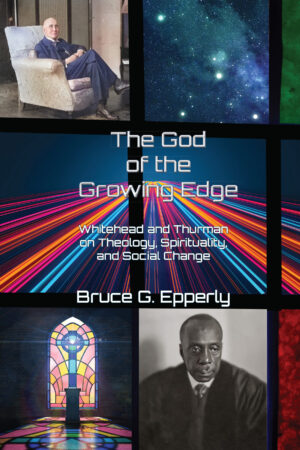
  • The God of the Growing Edge

    The God of the Growing Edge

    What can we learn by combining the wisdom of two major theological pioneers of the 20th century?

    The God of the Growing Edge: Whitehead and Thurman on Theology, Spirituality, and Social Change explores the intersecting spiritual visions of two such towering figures: Alfred North Whitehead, the eminent philosopher and process theologian, and Howard Thurman, the influential African American mystic, theologian, and civil rights leader. This book offers a timely resource for contemplative activists seeking a deeper integration of spirituality and social transformation in our turbulent times.

    While Whitehead, a privileged white academic, developed an intricate metaphysical system describing a dynamic and relational universe, Thurman, experiencing firsthand the brutal realities of racism and injustice, articulated a profound mystical theology centered on empathy, social action, and the inherent worth of every individual. Despite their vastly different backgrounds, both converged on a vision of God as a dynamic presence intimately involved in the world’s unfolding.

    Whitehead’s process theology portrays God not as a static, distant sovereign but as a fellow sufferer who understands, a “poet of the universe” luring creation toward greater beauty, truth, and goodness. God is the ultimate empath, valuing every moment of experience and nurturing the freedom and creativity of all beings. This dynamic vision challenges static, authoritarian images of God that have fueled division and injustice throughout history.

    Thurman, deeply influenced by his experience of growing up in the Jim Crow South, emphasized the inherent dignity of every person as bearing the image of God. His mystical spirituality, shaped by the wisdom of the spirituals and the courageous witness of the civil rights movement, grounded social activism in the experience of God’s love and liberating presence. Thurman’s vision of an interconnected universe, where every creature reflects God’s glory, calls for a radical commitment to justice, compassion, and the pursuit of Beloved Community.

    The God of the Growing Edge examines these intersecting visions, highlighting their complementary strengths. Whitehead’s metaphysics provides a robust intellectual framework for understanding a universe of interconnectedness, change, and possibility, while Thurman’s lived experience of oppression and spiritual resistance infuses this framework with prophetic urgency and practical wisdom. Together, they offer a powerful and timely message for today’s world, inspiring:

    • A renewed understanding of God: moving beyond static, impersonal images to embrace a God of relationality, empathy, and creative love.
    • A deeper connection between spirituality and action: uniting personal transformation with a commitment to social justice and planetary well-being.
    • A more inclusive vision of humanity: recognizing the inherent worth and dignity of every individual, regardless of background or circumstance.
    • A vibrant sense of hope and resilience: finding strength and inspiration in the face of personal and global challenges.

    This book is not merely an academic study but a personal and spiritual exploration. Drawing on the author’s own experiences as a theologian, minister, and activist, The God of the Growing Edge invites readers to embark on a “holy adventure” guided by the wisdom of Whitehead and Thurman. It offers practical spiritual practices at the end of each chapter, along with powerful prayers by Thurman, to help readers integrate these insights into their daily lives. By exploring the “growing edge” of faith, this book offers a compelling path toward a more just, compassionate, and sustainable future.

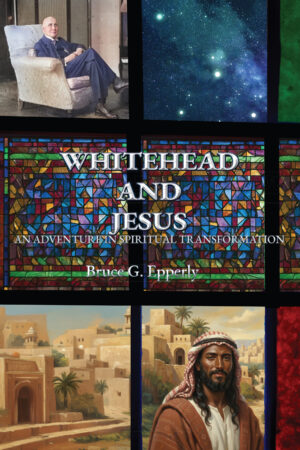
  • Whitehead and Jesus

    Whitehead and Jesus

    Can the philosophical vision of Alfred North Whitehead and the life of Jesus of Nazareth unite to ignite a deeply personal and progressively transformative faith?

    In Whitehead and Jesus, author Bruce G. Epperly charts a deeply personal and theological journey spanning over fifty years, exploring the dynamic interplay between the renowned philosopher Alfred North Whitehead and Jesus. This text is both autobiographical and theological, detailing how both figures transformed, and continue to transform, the author’s life.

    Epperly, a theologian shaped by both his cradle evangelical roots and a progressive, process-relational perspective, seeks to explore the imaginative and textual impact of Jesus on Whitehead’s philosophical vision. He aims to inspire Christians to see how process theology can be enriched by a personal and mystical relationship with Jesus.

    Discover a “Bigger Jesus” and a Relational God:

    Through this unique synthesis, readers will encounter a vision of God and faith that moves beyond fear and dogma toward love and adventure. This book reveals:

    • Jesus as the Divine Companion: Jesus is presented as the Teacher, Healer, Companion, and Guide, embodying the Word and Wisdom of God. He reveals God as the “great companion – the fellow sufferer who understands”.
    • A Non-Coercive Vision of Power: The work highlights the profound truth, divined by Plato and supremely revealed in Christ, that the divine element in the world is a “persuasive agency and not as a coercive agency”.
    • The Realm of God as Shalom: Epperly joins Whitehead’s cosmology with Jesus’s prophetic vision, emphasizing that the Kingdom of Heaven is “with us today”. The realm of God is a quest for Shalom, wholeness, justice, and reconciliation that must be realized “on earth”.
    • An Adventure of the Spirit: Faith is framed not as a “rule of safety” but as “an adventure of the spirit, a flight after the unattainable”. This adventure leads to a lively, open, and holistic vision of Jesus that joins contemplation and action (contemplative activism) to help heal the earth.
    • Universal Love: The book affirms a “bigger Jesus,” known by love and hospitality, who opens us to appreciate truth wherever it is found. Jesus is “historically and intimately localized” but also “universalized, unbounded, and global in impact”.

    Whitehead and Jesus is an insightful call to embrace an “open-spirited and growing relationship” with Jesus and claim your vocation as God’s companion in the continuing Holy Adventure of creation.

  • I Know We’re All Welcome at the Table, But Do I Have to Sit Next to You?

    I Know We’re All Welcome at the Table, But Do I Have to Sit Next to You?

    In a world increasingly characterized by division and hostility, Reverend Janice Jean Springer offers a profound and practical guide to fostering peace and understanding. With its eye-catching title, I Know We’re All Welcome at the Table, But Do I Have to Sit Next to You?, this book immediately resonates with anyone struggling to connect across differences. It speaks directly to the challenges of the “political divide,” rising hate crimes, and the pervasive “us versus them” mentality.

    Drawing on over 35 years of experience as an ordained Minister in the United Church of Christ, a spiritual director, and a seasoned workshop leader, Reverend Springer presents a refreshingly personal, honest, and humble path to transformation. At the heart of her approach is the poignant and powerful mantra: “Bless them – Change me!”. This isn’t just about passive acceptance; it’s an invitation to a rewarding, though at times uneasy, journey of inner change and outward peacemaking.

    This book is uniquely designed for broad appeal, moving beyond a purely Christian perspective to incorporate interfaith insights from Buddhist, Hindu, Jewish, and Islamic traditions, making it “accessible and useful to all people, regardless of the tradition in which they stand or the spirituality that they practice”. It offers six simple yet not easy tools for navigating conflict and building bridges:

    • Bless Them: Pray for their well-being, be willing to feel at least a little of their pain, and cherish their story.
    • Change Me: Be willing to be vulnerable, refuse to diminish another person, and talk from your feelings instead of your thoughts.

    The effectiveness of these tools has been proven in numerous workshops and retreats, with over 350 participants expressing “enthusiasm and appreciation” for the material that originated from helping diverse church communities in “open conflict”.

    For those looking to share these transformative teachings, the book includes a comprehensive Leader’s Guide (Part 3). This invaluable resource provides practical suggestions for structuring classes, workshops, or retreats in diverse settings—from faith communities and high school groups to men’s or women’s gatherings. It includes advice on creating a welcoming setting, community-building activities, sample schedules (one-day, overnight, weekend, and weekly classes), worship/reflection ideas, optional exercises, and ready-to-copy handouts.

    I Know We’re All Welcome at the Table, But Do I Have to Sit Next to You? is an essential resource for interfaith peacemaking and community building, helping individuals and groups cultivate “accepting and loving relationships” and find “compassion over judgment.” It empowers readers to become the change they wish to see by providing the courage, community, prayer, patience, and humor needed for this vital work of inner and outer transformation.


    A conversation hosted by Rev. Steve Kindle with Rev. Janice Springer and Dr. Bruce Epperly

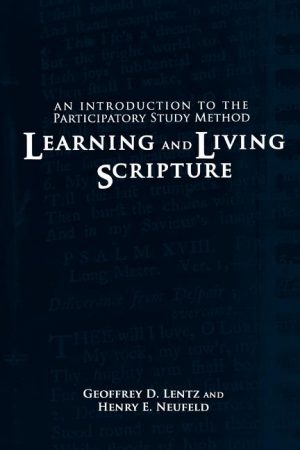
  • Learning and Living Scripture

    Learning and Living Scripture

    Tired of passive Bible study? Unlock a vibrant, personal encounter with Scripture!

    Learning and Living Scripture: an Introduction to the Participatory Study Method by Geoffrey D. Lentz and Henry E. Neufeld offers a fresh approach to Bible study. This guide helps you move beyond merely learning about God to experiencing God firsthand. The Participatory Study Method invites you to become part of the Bible story, finding your place and living positively according to God’s will. It’s designed to help you learn and grow spiritually by studying empathetically.

    A critical element of this method is sharing your experiences with others. This isn’t simply a time to inform others of what you’ve learned, but a crucial learning experience for you as well. Sharing helps you to think more clearly about your study, allows you to hear other perspectives to expand your own understanding, and provides accountability, preventing overly personal interpretations. The book provides a comprehensive method for reading scripture, getting the most out of it, and applying its principles directly to your life and community. It is suitable for private study or for leading a small group.

    Ready to not just learn scripture, but to truly live it? Get your copy of Learning and Living Scripture today!

Energion Direct
Privacy Overview

This website uses cookies so that we can provide you with the best user experience possible. Cookie information is stored in your browser and performs functions such as recognising you when you return to our website and helping our team to understand which sections of the website you find most interesting and useful.